
Teaching Practice of Ideological and Political Education in Curriculums of Artificial Intelligence Major



Article Information
Abstract
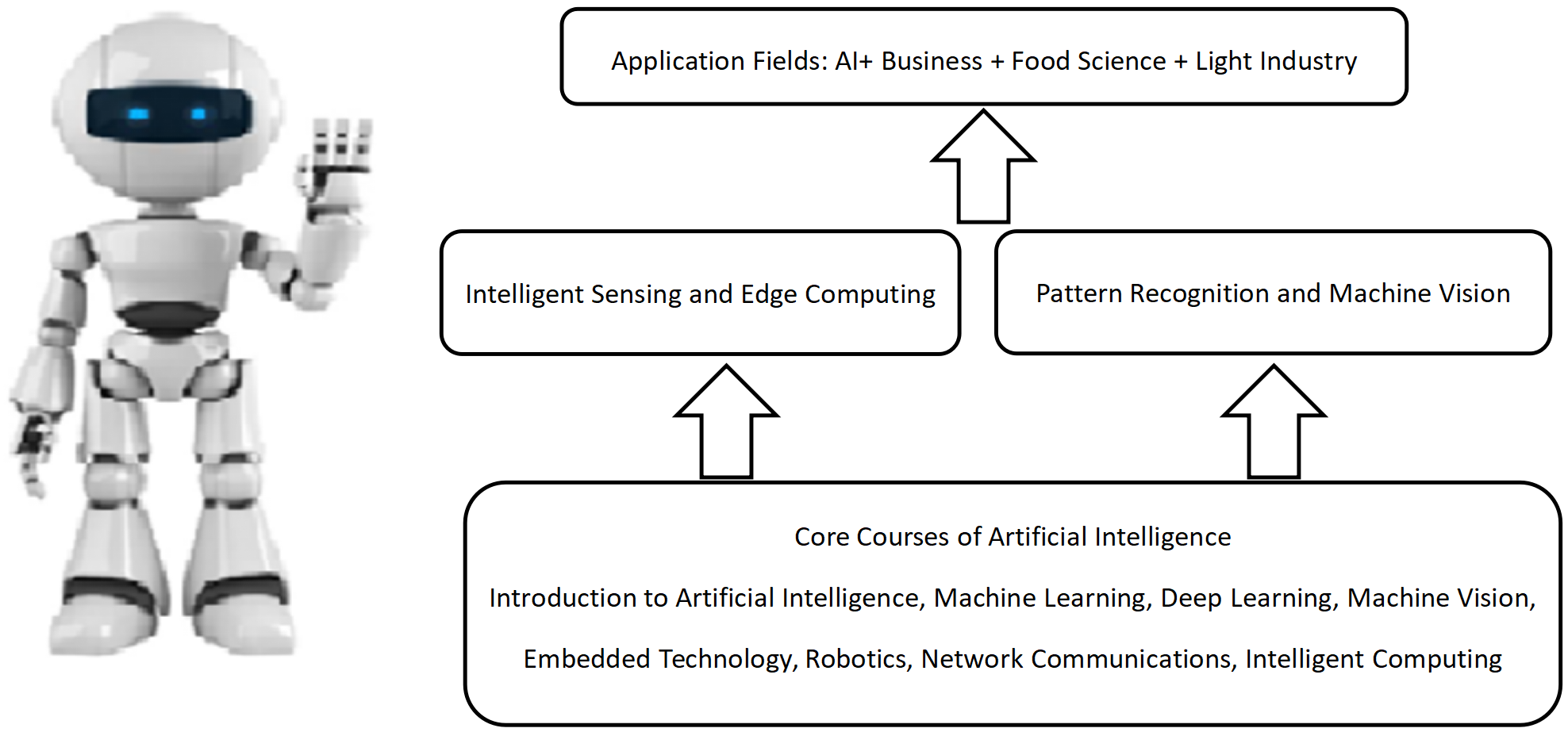
This paper focuses on the ideological and political education in artificial intelligence (AI) specialized courses. A fusion model characterized by knowledge height (disciplinary expertise), knowledge temperature (value orientation) and knowledge length (holistic education) is constructed, emphasizing the organic unity of knowledge transmission and value cultivation. Firstly, through cross-team collaboration, a tripartite educational team comprising disciplinary instructors, ideological and political educators, and student counselors is established, alongside a collective lesson-planning mechanism. Secondly, via pedagogical integration, the objective of socialist core values is operationalized and decomposed into course syllabi, through diverse approaches including case studies, interactive discussions, and digital tools. Finally, through assessment innovation, ideological and political goals are embedded into the full-cycle evaluation system spanning in-class performance to final examinations. Long-term practice demonstrates that this model has significantly enhanced students’ learning motivation and comprehensive competence, offering an all-participant, full-process comprehensive ideological and political education system.
Graphical Abstract
Keywords
Data Availability Statement
Funding
Conflicts of Interest
AI Use Statement
Ethical Approval and Consent to Participate
References
- Central Committee of the Communist Party of China, & State Council of the People's Republic of China. (2017, February 27). Opinions on strengthening and improving ideological and political work in colleges and universities under the new situation. https://www.gov.cn/xinwen/2017-02/27/content_5182502.htm
[Google Scholar] - Zhang, Z., & Jiang, T. (2023). Practical paths in the construction of curriculum ideological and political in colleges and universities. Curriculum and Teaching Methodology, 6(8), 89-95. http://166.62.7.99/assets/default/article/2023/05/31/article_1685528339.pdf
[Google Scholar] - Liu, X., Xiantong, Z., & Starkey, H. (2023). Ideological and political education in Chinese Universities: structures and practices. Asia Pacific Journal of Education, 43(2), 586-598.
[CrossRef] [Google Scholar] - Cheng, P. (2022). Evaluation method of ideological and political classroom teaching quality based on analytic hierarchy process. Scientific Programming, 2022(1), 6554084.
[CrossRef] [Google Scholar] - Dou, X. K. (2020, June 9). Adhering to fostering virtue and cultivating talents, building a comprehensive pattern for curriculum-based ideological and political education [Speech transcript]. Ministry of Education.
[Google Scholar] - Liu, W., & He, C. (2022). Curriculum-Based Ideological and Political Education: Research Focuses and Evolution. International Education Studies, 15(5), 28-35. https://eric.ed.gov/?id=EJ1362548
[Google Scholar] - Zhang, A., Sheng, L., & Wang, J. (2024). Empirical Research on Curriculum-based Ideological and Political Teaching of Universities. Int. J. Educ. Humanit, 13, 34-38. https://pdfs.semanticscholar.org/32ff/f4f07df5b5b0e8b0294a29227fa62754120e.pdf
[Google Scholar] - LIU, T., & CUI, J. (2025). A Study on the Innovative Model of AI-Empowered Ideological and Political Education in College English Teaching. US-China Education Review, 15(10), 722-727.
[CrossRef] [Google Scholar] - Wang, G. (2025). The Integration Strategy of Ideological and Political Education for College Students Based on Course-based Ideological and Political Education. Educational Innovation Research, 3(2), 18-23.
[CrossRef] [Google Scholar] - Zhang, L. (2025). Exploration of Collaborative Education between Higher Vocational Ideological and Political Courses and Curriculum-based Ideological and Political Education. Journal of Modern Educational Theory and Practice, 2(7).
[CrossRef] [Google Scholar]
Cite This Article
TY  - JOUR
AU  - Xiao, Hongbing
AU  - Wang, Yu
AU  - Li, Wen
AU  - Zhao, Yan
AU  - Yao, Hongyue
PY  - 2026
DA  - 2026/05/29
TI  - Teaching Practice of Ideological and Political Education in Curriculums of Artificial Intelligence Major
JO  - Frontiers in Educational Innovation and Research
T2  - Frontiers in Educational Innovation and Research
JF  - Frontiers in Educational Innovation and Research
VL  - 2
IS  - 2
SP  - 33
EP  - 39
DO  - 10.62762/FEIR.2026.254272
UR  - https://www.icck.org/article/abs/feir.2026.254272
KW  - artificial intelligence
KW  - specialized courses
KW  - ideological and political education in curriculums
AB  - This paper focuses on the ideological and political education in artificial intelligence (AI) specialized courses. A fusion model characterized by knowledge height (disciplinary expertise), knowledge temperature (value orientation) and knowledge length (holistic education) is constructed, emphasizing the organic unity of knowledge transmission and value cultivation. Firstly, through cross-team collaboration, a tripartite educational team comprising disciplinary instructors, ideological and political educators, and student counselors is established, alongside a collective lesson-planning mechanism. Secondly, via pedagogical integration, the objective of socialist core values is operationalized and decomposed into course syllabi, through diverse approaches including case studies, interactive discussions, and digital tools. Finally, through assessment innovation, ideological and political goals are embedded into the full-cycle evaluation system spanning in-class performance to final examinations. Long-term practice demonstrates that this model has significantly enhanced students’ learning motivation and comprehensive competence, offering an all-participant, full-process comprehensive ideological and political education system.
SN  - 3068-5664
PB  - Institute of Central Computation and Knowledge
LA  - English
ER  -
@article{Xiao2026Teaching,
  author = {Hongbing Xiao and Yu Wang and Wen Li and Yan Zhao and Hongyue Yao},
  title = {Teaching Practice of Ideological and Political Education in Curriculums of Artificial Intelligence Major},
  journal = {Frontiers in Educational Innovation and Research},
  year = {2026},
  volume = {2},
  number = {2},
  pages = {33-39},
  doi = {10.62762/FEIR.2026.254272},
  url = {https://www.icck.org/article/abs/feir.2026.254272},
  abstract = {This paper focuses on the ideological and political education in artificial intelligence (AI) specialized courses. A fusion model characterized by knowledge height (disciplinary expertise), knowledge temperature (value orientation) and knowledge length (holistic education) is constructed, emphasizing the organic unity of knowledge transmission and value cultivation. Firstly, through cross-team collaboration, a tripartite educational team comprising disciplinary instructors, ideological and political educators, and student counselors is established, alongside a collective lesson-planning mechanism. Secondly, via pedagogical integration, the objective of socialist core values is operationalized and decomposed into course syllabi, through diverse approaches including case studies, interactive discussions, and digital tools. Finally, through assessment innovation, ideological and political goals are embedded into the full-cycle evaluation system spanning in-class performance to final examinations. Long-term practice demonstrates that this model has significantly enhanced students’ learning motivation and comprehensive competence, offering an all-participant, full-process comprehensive ideological and political education system.},
  keywords = {artificial intelligence, specialized courses, ideological and political education in curriculums},
  issn = {3068-5664},
  publisher = {Institute of Central Computation and Knowledge}
}
Article Metrics
Publisher's Note
ICCK stays neutral with regard to jurisdictional claims in published maps and institutional affiliations.
Rights and Permissions
 Copyright © 2026 by the Author(s). Published by Institute of Central Computation and Knowledge. This article is an open access article distributed under the terms and conditions of the Creative Commons Attribution (CC BY) license (https://creativecommons.org/licenses/by/4.0/), which permits use, sharing, adaptation, distribution and reproduction in any medium or format, as long as you give appropriate credit to the original author(s) and the source, provide a link to the Creative Commons licence, and indicate if changes were made.


Portico
