
-
CiteScore
-
Impact Factor
Volume 2, Issue 4, ICCK Transactions on Intelligent Systematics
Volume 2, Issue 4, 2025
Submit Manuscript Edit a Special Issue
Article QR Code
Article QR Code
Scan the QR code for reading
Popular articles
ICCK Transactions on Intelligent Systematics, Volume 2, Issue 4, 2025: 224-237

Free to Read | Research Article | 06 November 2025
Lightweight Cascaded Feature Reweighting for Fall Detection through Context-Aware YOLOv8 Architecture
1 Faculty of Computer Science and Biomedical Engineering, Graz University of Technology, 8010 Graz, Austria
2 Department of Computer Science, School of Sciences, Democritus University of Thrace, 65404 Kavala, Greece
3 Heriot-Watt University, Edinburgh Campus, Edinburgh EH14 4AS, United Kingdom
4 BRAINS Institute Peshawar, Peshawar 25000, Pakistan
* Corresponding Author: Faryal Zahoor, [email protected]
Received: 22 May 2025, Accepted: 03 July 2025, Published: 06 November 2025  
Abstract
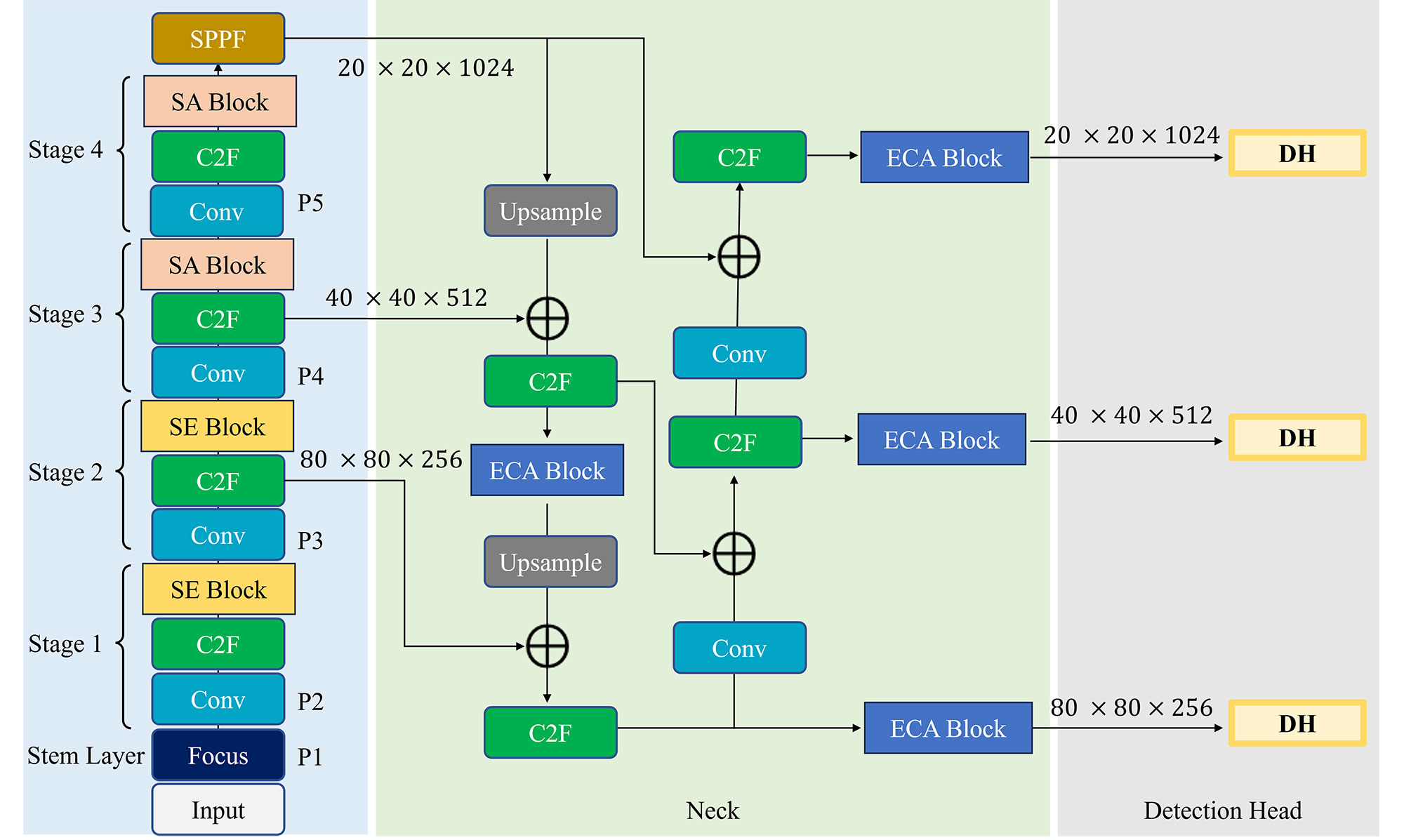
Falls represent a significant global health concern, particularly among older adults, with delayed detection often leading to severe medical complications. Although computer vision-based fall detection systems offer promising solutions, they usually struggle with diverse real-world scenarios and computational efficiency. This paper introduces a novel lightweight cascaded feature reweighting approach that enhances YOLOv8 for reliable fall detection through a context-aware architecture. We strategically integrate three complementary attention mechanisms: Squeeze-and-Excitation blocks in the early stages, Spatial Attention modules in the later stages, and Efficient Channel Attention in the neck section, creating a progressive feature refinement pipeline that leverages the bilateral symmetry properties of human posture. Our approach achieves significant performance improvements, with an mAP of 0.878, an increase of 1.5% over the baseline YOLOv8, while maintaining minimal computational overhead. This makes it well-suited for real-world deployment in resource-constrained environments. Comprehensive evaluations across two diverse datasets, including DiverseFall and CAUCAFall, demonstrate that our model outperforms state-of-the-art (SOTA) detectors, including Faster R-CNN and earlier YOLO variants. Our approach shows particularly pronounced advantages under challenging and varied environmental conditions. Ablation studies confirm the effectiveness of our architectural design choices, demonstrating that each attention mechanism makes a unique contribution to overall performance improvement. The proposed lightweight architecture represents a significant advancement in vision-based fall detection, striking a balance between high accuracy and computational efficiency while maintaining robust performance in diverse real-world scenarios.

Graphical Abstract
Lightweight Cascaded Feature Reweighting for Fall Detection through Context-Aware YOLOv8 Architecture

Keywords
fall detection
lightweight architecture
feature reweighting
healthcare monitoring
elderly care
elderly fall detection
computer vision in healthcare

Data Availability Statement
Data will be made available on request.

Funding
This work was supported without any funding.

Conflicts of Interest
Faryal Zahoor is an employee of BRAINS Institute Peshawar, Peshawar, 25000, Pakistan. The authors declare no conflicts of interest. 

Ethical Approval and Consent to Participate
Not applicable.

References
  1. Falls. (2021, April 26). World Health Organization (WHO). Retrieved from https://www.who.int/news-room/fact-sheets/detail/falls
    [Google Scholar]
  2. Ren, L., & Peng, Y. (2019). Research of fall detection and fall prevention technologies: A systematic review. IEEE Access, 7, 77702-77722.
    [CrossRef]   [Google Scholar]
  3. Ma, L., Liu, M., Wang, N., Wang, L., Yang, Y., & Wang, H. (2020). Room-level fall detection based on ultra-wideband (UWB) monostatic radar and convolutional long short-term memory (LSTM). Sensors, 20(4), 1105.
    [CrossRef]   [Google Scholar]
  4. Wang, K., Zhan, G., & Chen, W. (2019). A new approach for IoT-based fall detection system using commodity mmWave sensors. In Proceedings of the 2019 7th International Conference on Information Technology: IoT and Smart City (pp. 197-201).
    [CrossRef]   [Google Scholar]
  5. Sheng-lan, Z., Yi-fan, Y., Li-fu, G., & Diao, W. (2019, November). Research and design of a fall detection system based on multi-axis sensor. In Proceedings of the 4th International Conference on Intelligent Information Processing (pp. 303-309).
    [CrossRef]   [Google Scholar]
  6. Er, P. V., & Tan, K. K. (2020). Wearable solution for robust fall detection. In Assistive Technology for the Elderly (pp. 81-105). Academic Press.
    [CrossRef]   [Google Scholar]
  7. Charfi, I., Miteran, J., Dubois, J., Atri, M., & Tourki, R. (2012, November). Definition and performance evaluation of a robust SVM based fall detection solution. In 2012 eighth international conference on signal image technology and internet based systems (pp. 218-224). IEEE.
    [CrossRef]   [Google Scholar]
  8. Mastorakis, G., & Makris, D. (2014). Fall detection system using Kinect’s infrared sensor. Journal of Real-Time Image Processing, 9(4), 635-646.
    [CrossRef]   [Google Scholar]
  9. Alam, E., Sufian, A., Dutta, P., & Leo, M. (2022). Vision-based human fall detection systems using deep learning: A review. Computers in Biology and Medicine, 146, 105626.
    [CrossRef]   [Google Scholar]
  10. Zhang, Z., Conly, C., & Athitsos, V. (2014, December). Evaluating depth-based computer vision methods for fall detection under occlusions. In International symposium on visual computing (pp. 196-207). Cham: Springer International Publishing.
    [CrossRef]   [Google Scholar]
  11. Raza, A., Yousaf, M. H., & Velastin, S. A. (2022, June). Human fall detection using yolo: A real-time and ai-on-the-edge perspective. In 2022 12th International Conference on Pattern Recognition Systems (ICPRS) (pp. 1-6). IEEE.
    [CrossRef]   [Google Scholar]
  12. Martínez-Villaseñor, L., Ponce, H., Brieva, J., Moya-Albor, E., Núñez-Martínez, J., & Peñafort-Asturiano, C. (2019). UP-fall detection dataset: A multimodal approach. Sensors, 19(9), 1988.
    [CrossRef]   [Google Scholar]
  13. Wang, X., Ellul, J., & Azzopardi, G. (2020). Elderly fall detection systems: A literature survey. Frontiers in Robotics and AI, 7, 71.
    [CrossRef]   [Google Scholar]
  14. Qi, P., Chiaro, D., & Piccialli, F. (2023). FL-FD: Federated learning-based fall detection with multimodal data fusion. Information Fusion, 99, 101890.
    [CrossRef]   [Google Scholar]
  15. Galvão, Y. M., Ferreira, J., Albuquerque, V. A., Barros, P., & Fernandes, B. J. T. (2021). A multimodal approach using deep learning for fall detection. Expert Systems with Applications, 168, 114226.
    [CrossRef]   [Google Scholar]
  16. Lee, E., Kim, J. S., Park, D. K., & Whangbo, T. (2024). YOLO-MR: Meta-Learning-Based Lesion Detection Algorithm for Resolving Data Imbalance. IEEE Access, 12, 49762-49771.
    [CrossRef]   [Google Scholar]
  17. An, J. (2024). Route Positioning System for Campus Shuttle Bus Service Using a Single Camera. Electronics, 13(11), 2004.
    [CrossRef]   [Google Scholar]
  18. Redmon, J., & Farhadi, A. (2017). YOLO9000: Better, Faster, Stronger. In 2017 IEEE Conference on Computer Vision and Pattern Recognition (CVPR) (pp. 6517-6525).
    [CrossRef]   [Google Scholar]
  19. Killian, L., Maitre, J., Bouchard, K., Lussier, M., Bottari, C., Couture, M., Bier, N., Giroux, S., & Gaboury, S. (2021). Fall prevention and detection in smart homes using monocular cameras and an interactive social robot. In Proceedings of the Conference on Information Technology for Social Good (pp. 7-12).
    [CrossRef]   [Google Scholar]
  20. Zhao, D., Song, T., Gao, J., Li, D., & Niu, Y. (2024). Yolo-fall: A novel convolutional neural network model for fall detection in open spaces. IEEE Access, 12, 26137-26149.
    [CrossRef]   [Google Scholar]
  21. Khekan, A. R., Aghdasi, H. S., & Salehpour, P. (2024). The impact of YOLO Algorithms within fall detection application: A review. IEEE Access, 13, 6793-6809.
    [CrossRef]   [Google Scholar]
  22. Papan, V., & Maheswari, S. (2024, August). Intelligent Fall Detection and Alert System for the Elderly Using Yolov8 and Cloud-Based Analytics. In 2024 5th International Conference on Electronics and Sustainable Communication Systems (ICESC) (pp. 580-588). IEEE.
    [CrossRef]   [Google Scholar]
  23. Gaya-Morey, F. X., Manresa-Yee, C., & Buades-Rubio, J. M. (2024). Deep learning for computer vision based activity recognition and fall detection of the elderly: a systematic review. Applied Intelligence, 54(19), 8982-9007.
    [CrossRef]   [Google Scholar]
  24. Usman, M. T., Khan, H., Rida, I., & Koo, J. (2025). Lightweight transformer-driven multi-scale trapezoidal attention network for saliency detection. Engineering Applications of Artificial Intelligence, 155, 110917.
    [CrossRef]   [Google Scholar]
  25. Guo, M. H., Xu, T. X., Liu, J. J., Liu, Z. N., Jiang, P. T., Mu, T. J., ... & Hu, S. M. (2022). Attention mechanisms in computer vision: A survey. Computational visual media, 8(3), 331-368.
    [CrossRef]   [Google Scholar]
  26. Chen, H., Gu, W., Zhang, Q., Li, X., & Jiang, X. (2024). Integrating attention mechanism and multi-scale feature extraction for fall detection. Heliyon, 10(10).
    [CrossRef]   [Google Scholar]
  27. Kwolek, B., & Kepski, M. (2015). Improving fall detection by the use of depth sensor and accelerometer. Neurocomputing, 168, 637-645.
    [CrossRef]   [Google Scholar]
  28. Yacchirema, D., De Puga, J. S., Palau, C., & Esteve, M. (2018). Fall detection system for elderly people using IoT and big data. Procedia Computer Science, 130, 603-610.
    [CrossRef]   [Google Scholar]
  29. Seredin, O. S., Kopylov, A. V., Huang, S.-C., & Rodionov, D. S. (2019). A skeleton features-based fall detection using Microsoft Kinect v2 with one class-classifier outlier removal. The International Archives of the Photogrammetry, Remote Sensing and Spatial Information Sciences, 42, 189-195.
    [CrossRef]   [Google Scholar]
  30. Chen, L., Li, R., Zhang, H., Tian, L., & Chen, N. (2019). Intelligent fall detection method based on accelerometer data from a wrist-worn smart watch. Measurement, 140, 215-226.
    [CrossRef]   [Google Scholar]
  31. Chen, T., Ding, Z., & Li, B. (2022). Elderly Fall Detection Based on Improved YOLOv5s Network. IEEE Access, 10, 91273-91282.
    [CrossRef]   [Google Scholar]
  32. Ke, Y., Yao, Y., Xie, Z., Xie, H., Lin, H., & Dong, C. (2023). Empowering Intelligent Home Safety: Indoor Family Fall Detection with YOLOv5. In 2023 IEEE Intl Conf on Dependable, Autonomic and Secure Computing, Intl Conf on Pervasive Intelligence and Computing, Intl Conf on Cloud and Big Data Computing, Intl Conf on Cyber Science and Technology Congress (DASC/PiCom/CBDCom/CyberSciTech) (pp. 0942-0949).
    [CrossRef]   [Google Scholar]
  33. Khan, H., Ullah, I., Shabaz, M., Omer, M. F., Usman, M. T., Guellil, M. S., & Koo, J. (2024). Visionary vigilance: Optimized YOLOV8 for fallen person detection with large-scale benchmark dataset. Image and Vision Computing, 149, 105195.
    [CrossRef]   [Google Scholar]
  34. Lezzar, F., Benmerzoug, D., & Kitouni, I. (2020). Camera-based fall detection system for the elderly with occlusion recognition. Applied Medical Informatics, 42(3), 169-179.
    [Google Scholar]

Cite This Article
APA Style
Ali, F., Gazis, A., & Zahoor, F. (2025). Lightweight Cascaded Feature Reweighting for Fall Detection through Context-Aware YOLOv8 Architecture. ICCK Transactions on Intelligent Systematics, 2(4), 224–237. https://doi.org/10.62762/TIS.2025.196437
Export Citation
RIS Format
Compatible with EndNote, Zotero, Mendeley, and other reference managers
RIS format data for reference managers
TY  - JOUR
AU  - Ali, Farhan
AU  - Gazis, Alexandros
AU  - Zahoor, Faryal
PY  - 2025
DA  - 2025/11/06
TI  - Lightweight Cascaded Feature Reweighting for Fall Detection through Context-Aware YOLOv8 Architecture
JO  - ICCK Transactions on Intelligent Systematics
T2  - ICCK Transactions on Intelligent Systematics
JF  - ICCK Transactions on Intelligent Systematics
VL  - 2
IS  - 4
SP  - 224
EP  - 237
DO  - 10.62762/TIS.2025.196437
UR  - https://www.icck.org/article/abs/TIS.2025.196437
KW  - fall detection
KW  - lightweight architecture
KW  - feature reweighting
KW  - healthcare monitoring
KW  - elderly care
KW  - elderly fall detection
KW  - computer vision in healthcare
AB  - Falls represent a significant global health concern, particularly among older adults, with delayed detection often leading to severe medical complications. Although computer vision-based fall detection systems offer promising solutions, they usually struggle with diverse real-world scenarios and computational efficiency. This paper introduces a novel lightweight cascaded feature reweighting approach that enhances YOLOv8 for reliable fall detection through a context-aware architecture. We strategically integrate three complementary attention mechanisms: Squeeze-and-Excitation blocks in the early stages, Spatial Attention modules in the later stages, and Efficient Channel Attention in the neck section, creating a progressive feature refinement pipeline that leverages the bilateral symmetry properties of human posture. Our approach achieves significant performance improvements, with an mAP of 0.878, an increase of 1.5% over the baseline YOLOv8, while maintaining minimal computational overhead. This makes it well-suited for real-world deployment in resource-constrained environments. Comprehensive evaluations across two diverse datasets, including DiverseFall and CAUCAFall, demonstrate that our model outperforms state-of-the-art (SOTA) detectors, including Faster R-CNN and earlier YOLO variants. Our approach shows particularly pronounced advantages under challenging and varied environmental conditions. Ablation studies confirm the effectiveness of our architectural design choices, demonstrating that each attention mechanism makes a unique contribution to overall performance improvement. The proposed lightweight architecture represents a significant advancement in vision-based fall detection, striking a balance between high accuracy and computational efficiency while maintaining robust performance in diverse real-world scenarios.
SN  - 3068-5079
PB  - Institute of Central Computation and Knowledge
LA  - English
ER  - 
BibTeX Format
Compatible with LaTeX, BibTeX, and other reference managers
BibTeX format data for LaTeX and reference managers
@article{Ali2025Lightweigh,
  author = {Farhan Ali and Alexandros Gazis and Faryal Zahoor},
  title = {Lightweight Cascaded Feature Reweighting for Fall Detection through Context-Aware YOLOv8 Architecture},
  journal = {ICCK Transactions on Intelligent Systematics},
  year = {2025},
  volume = {2},
  number = {4},
  pages = {224-237},
  doi = {10.62762/TIS.2025.196437},
  url = {https://www.icck.org/article/abs/TIS.2025.196437},
  abstract = {Falls represent a significant global health concern, particularly among older adults, with delayed detection often leading to severe medical complications. Although computer vision-based fall detection systems offer promising solutions, they usually struggle with diverse real-world scenarios and computational efficiency. This paper introduces a novel lightweight cascaded feature reweighting approach that enhances YOLOv8 for reliable fall detection through a context-aware architecture. We strategically integrate three complementary attention mechanisms: Squeeze-and-Excitation blocks in the early stages, Spatial Attention modules in the later stages, and Efficient Channel Attention in the neck section, creating a progressive feature refinement pipeline that leverages the bilateral symmetry properties of human posture. Our approach achieves significant performance improvements, with an mAP of 0.878, an increase of 1.5\% over the baseline YOLOv8, while maintaining minimal computational overhead. This makes it well-suited for real-world deployment in resource-constrained environments. Comprehensive evaluations across two diverse datasets, including DiverseFall and CAUCAFall, demonstrate that our model outperforms state-of-the-art (SOTA) detectors, including Faster R-CNN and earlier YOLO variants. Our approach shows particularly pronounced advantages under challenging and varied environmental conditions. Ablation studies confirm the effectiveness of our architectural design choices, demonstrating that each attention mechanism makes a unique contribution to overall performance improvement. The proposed lightweight architecture represents a significant advancement in vision-based fall detection, striking a balance between high accuracy and computational efficiency while maintaining robust performance in diverse real-world scenarios.},
  keywords = {fall detection, lightweight architecture, feature reweighting, healthcare monitoring, elderly care, elderly fall detection, computer vision in healthcare},
  issn = {3068-5079},
  publisher = {Institute of Central Computation and Knowledge}
}

Article Metrics
Citations:

Crossref

0

Scopus

0

Web of Science

0
Article Access Statistics:
Views: 485
PDF Downloads: 74

Publisher's Note
ICCK stays neutral with regard to jurisdictional claims in published maps and institutional affiliations.

Rights and Permissions
Institute of Central Computation and Knowledge (ICCK) or its licensor (e.g. a society or other partner) holds exclusive rights to this article under a publishing agreement with the author(s) or other rightsholder(s); author self-archiving of the accepted manuscript version of this article is solely governed by the terms of such publishing agreement and applicable law.
ICCK Transactions on Intelligent Systematics

ICCK Transactions on Intelligent Systematics

ISSN: 3068-5079 (Online) | ISSN: 3069-003X (Print)

Email: [email protected]

Portico

Portico

All published articles are preserved here permanently:
https://www.portico.org/publishers/icck/