Volume 2, Issue 2


Volume 2, Issue 2 (June, 2026) – 5 articles
Citations: Crossref logo 0,   0   |   Viewed: 3726, Download: 1259

Table of Contents

Open Access | Research Article | 29 June 2026
Phase, Microstructure and Dielectric Properties of Sodium Bismuth Titanate Based Ceramics
Journal of Advanced Electronic Materials | Volume 2, Issue 2: 64-68, 2026 | DOI: 10.62762/JAEM.2026.298040
Abstract
In this study, ceramics in the 0.90Na$_{0.5}$Bi$_{0.5-x}$La$_{x}$TiO$_{3}$--0.03NaNbO$_{3}$ --0.07 Ba(Zr$_{0.2}$ Ti$_{0.8}$)O$_{3}$ series (where $x = 0.00, 0.03,$ $ 0.05, 0.07$) were processed via a solid-state reaction method. The phase, microstructural features, and dielectric properties, particularly the dielectric constant and dielectric loss, were studied using X-ray diffraction (XRD), scanning electron microscopy (SEM), and dielectric spectroscopic techniques, respectively. XRD analysis revealed a single perovskite phase, while SEM analysis showed a dense microstructure with reduced grain size as the $x$ content increased. The increase in doping content enhanced the relaxor characteri... More >

Graphical Abstract
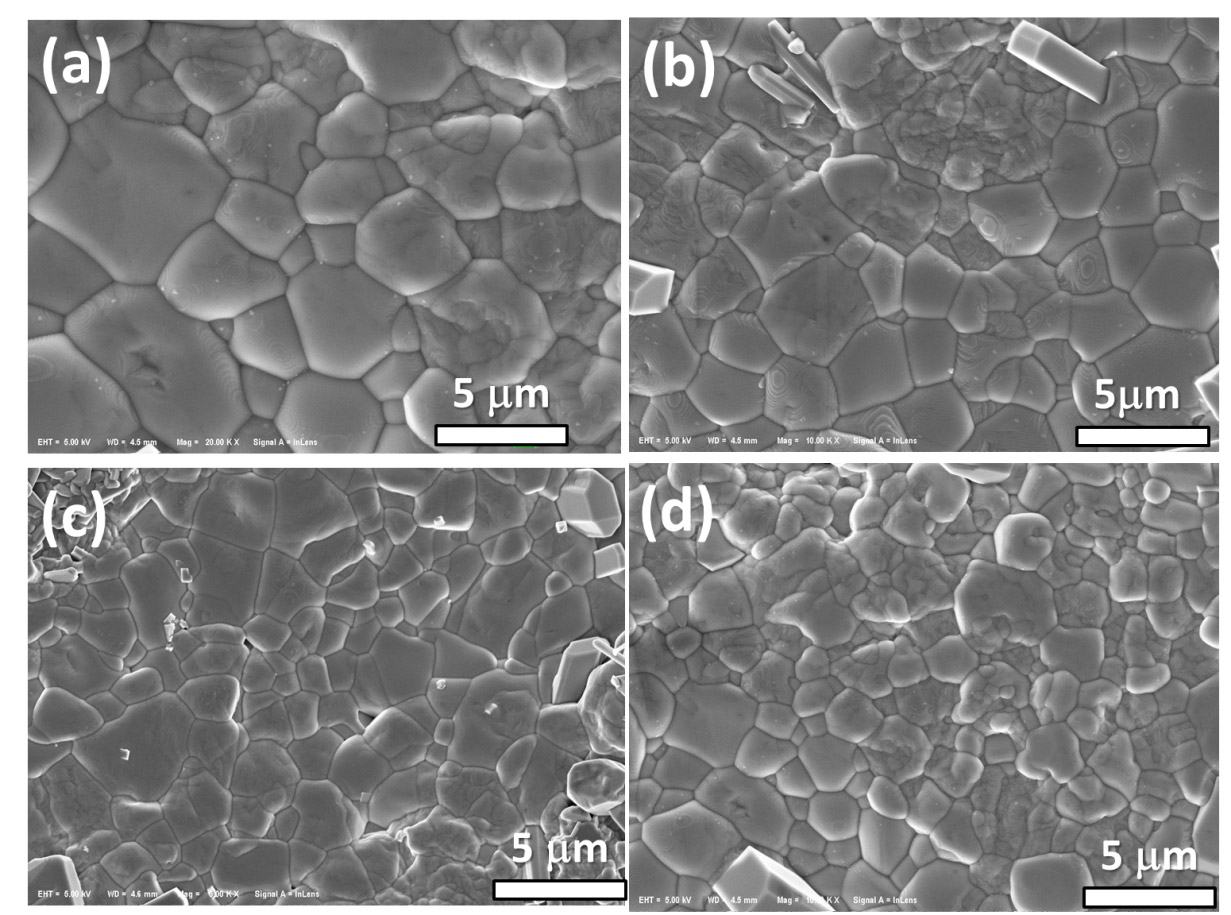
Phase, Microstructure and Dielectric Properties of Sodium Bismuth Titanate Based Ceramics
Open Access | Perspective | 25 June 2026
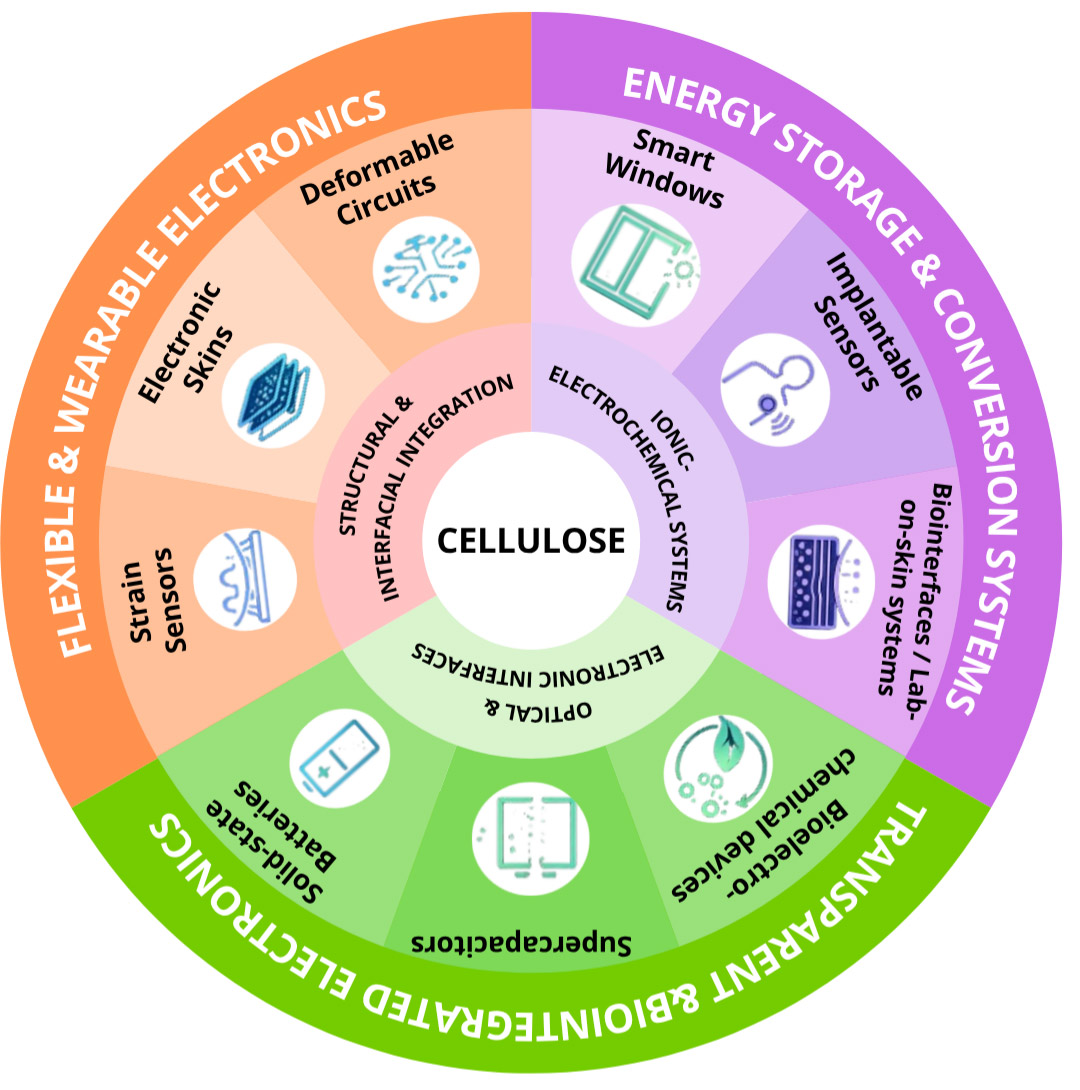
Cellulose Beyond Substrates: Emerging Functional Roles in Sustainable Advanced Electronics
Journal of Advanced Electronic Materials | Volume 2, Issue 2: 58-63, 2026 | DOI: 10.62762/JAEM.2026.198129
Abstract
Cellulose, the most abundant natural polymer, is emerging as a versatile biomaterial platform for sustainable advanced electronics beyond its conventional role as a passive substrate. Its hierarchical fibrillar architecture and hydroxyl-rich chemistry enable unique combinations of mechanical compliance, interfacial reactivity, ionic transport, and optical transparency. This perspective highlights cellulose as a multifunctional system spanning structural and interfacial integration, ionic-electrochemical behavior, and optoelectronic interfaces, which together underpin its growing relevance in flexible, energy, and transparent electronic technologies. However, intrinsic coupling between hydrat... More >

Graphical Abstract
Cellulose Beyond Substrates: Emerging Functional Roles in Sustainable Advanced Electronics
Open Access | Communication | 22 June 2026
Ferroelectric and Dielectric Properties of Lead-free $K_{0.5}Bi_{0.5}TiO_3$-BiFeO$_3$ Ceramics
Journal of Advanced Electronic Materials | Volume 2, Issue 2: 51-57, 2026 | DOI: 10.62762/JAEM.2026.712321
Abstract
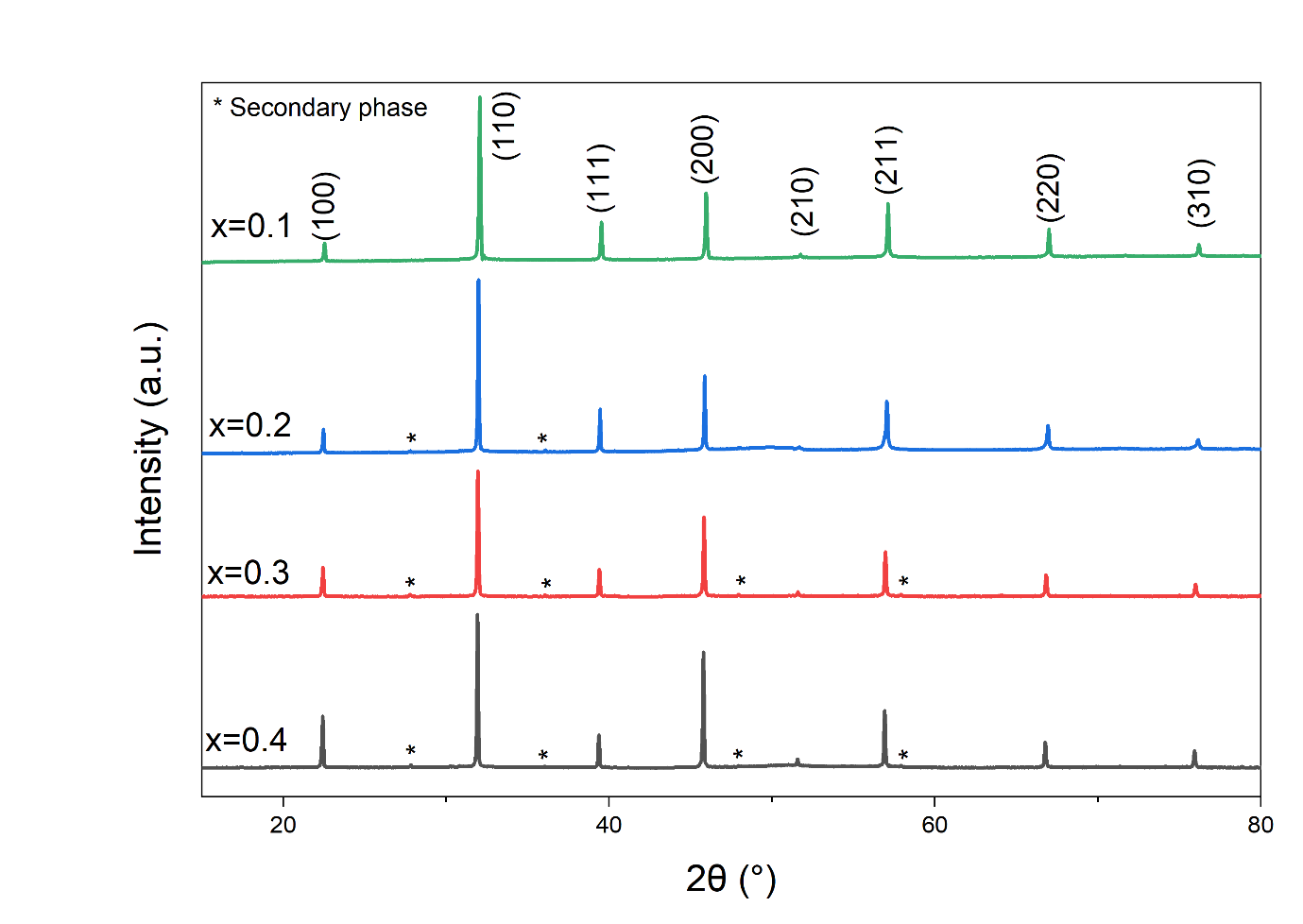
Lead-free (1-$x$)K$_{0.5}$Bi$_{0.5}$TiO$_3$-$x$BiFeO$_3$ ceramics with $x = 0.1$-0.4 were prepared by a conventional solid-state reaction. X-ray diffraction coupled with Rietveld refinement confirmed main perovskite phase with pseudo-cubic structure. Temperature-dependent dielectric measurements revealed broad dielectric anomalies and frequency dispersion, indicating relaxor behaviour. At 100 kHz, the highest room-temperature relative permittivity of 925 was obtained at $x = 0.2$. The highest maximum and remanent polarisation were obtained at $x = 0.3$ with 30 and 16 $\mu$C cm$^{-2}$, respectively. This work demonstrates a new lead-free solid solution for dielectric and ferroelectric applica... More >

Graphical Abstract
Ferroelectric and Dielectric Properties of Lead-free $K_{0.5}Bi_{0.5}TiO_3$-BiFeO$_3$ Ceramics
Open Access | Research Article | 10 May 2026
Ionic Conduction in Cold-Sintered Metakaolin Ceramics
Journal of Advanced Electronic Materials | Volume 2, Issue 2: 44-50, 2026 | DOI: 10.62762/JAEM.2026.769607
Abstract
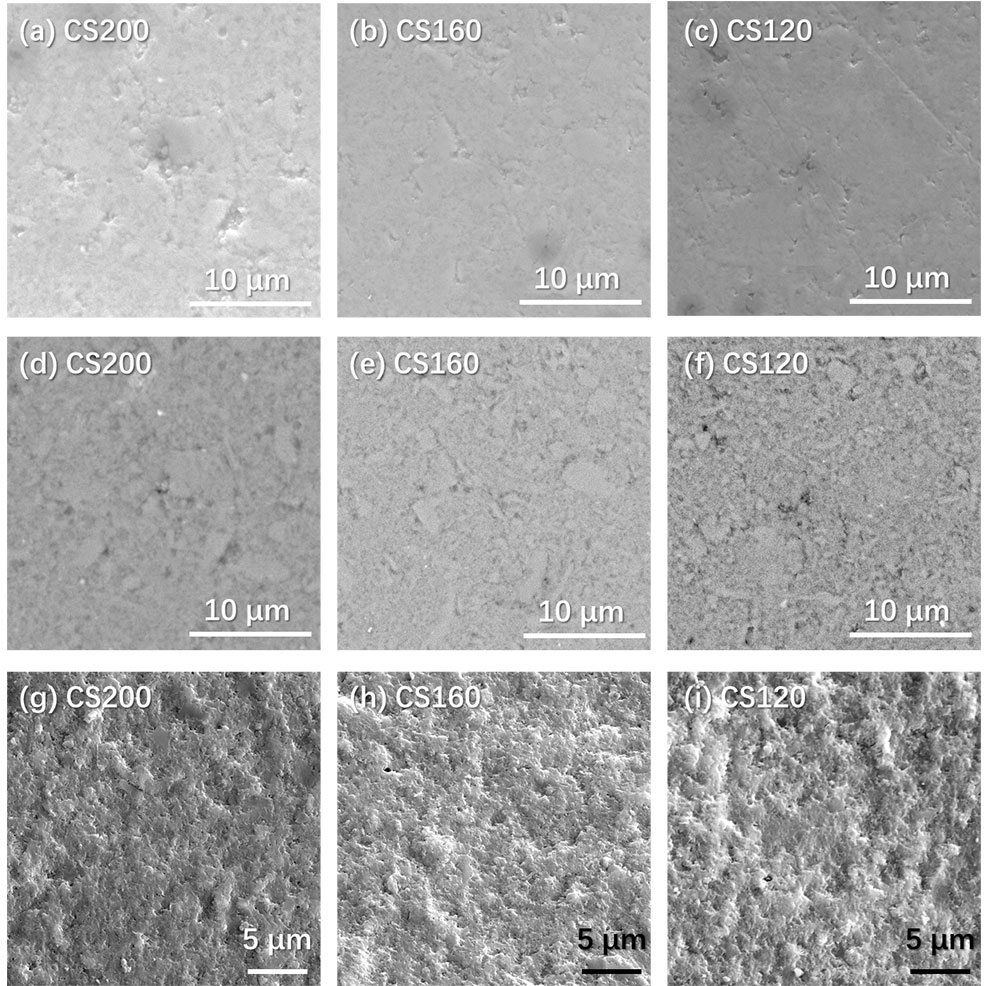
The influence of process conditions and post-annealing treatments on the ionic transport properties of metakaolin (MK) ceramics prepared by the cold sintering process (CSP) were investigated. Within the temperature range of 120–200 °C, CSP temperature has little influence on densification and microstructure. Impedance spectroscopy revealed that all as-sintered ceramics exhibited significant ionic conduction, with bulk conductivity of approximately 0.001 S/cm at 600 °C. The associated activation energies are confined to a narrow range of 0.63–0.65 eV. In contrast, post-annealing significantly alters the electrical microstructure, giving rise to an additional grain boundary response. Aft... More >

Graphical Abstract
Ionic Conduction in Cold-Sintered Metakaolin Ceramics
Open Access | Research Article | 02 April 2026
Dielectric Properties of Lead-Free (1-x)SrTiO$_{3}$-xCaZrO$_3$ Solid-Solution Ceramics Prepared by Solid-State Sintering
Journal of Advanced Electronic Materials | Volume 2, Issue 2: 38-43, 2026 | DOI: 10.62762/JAEM.2026.626525
Abstract
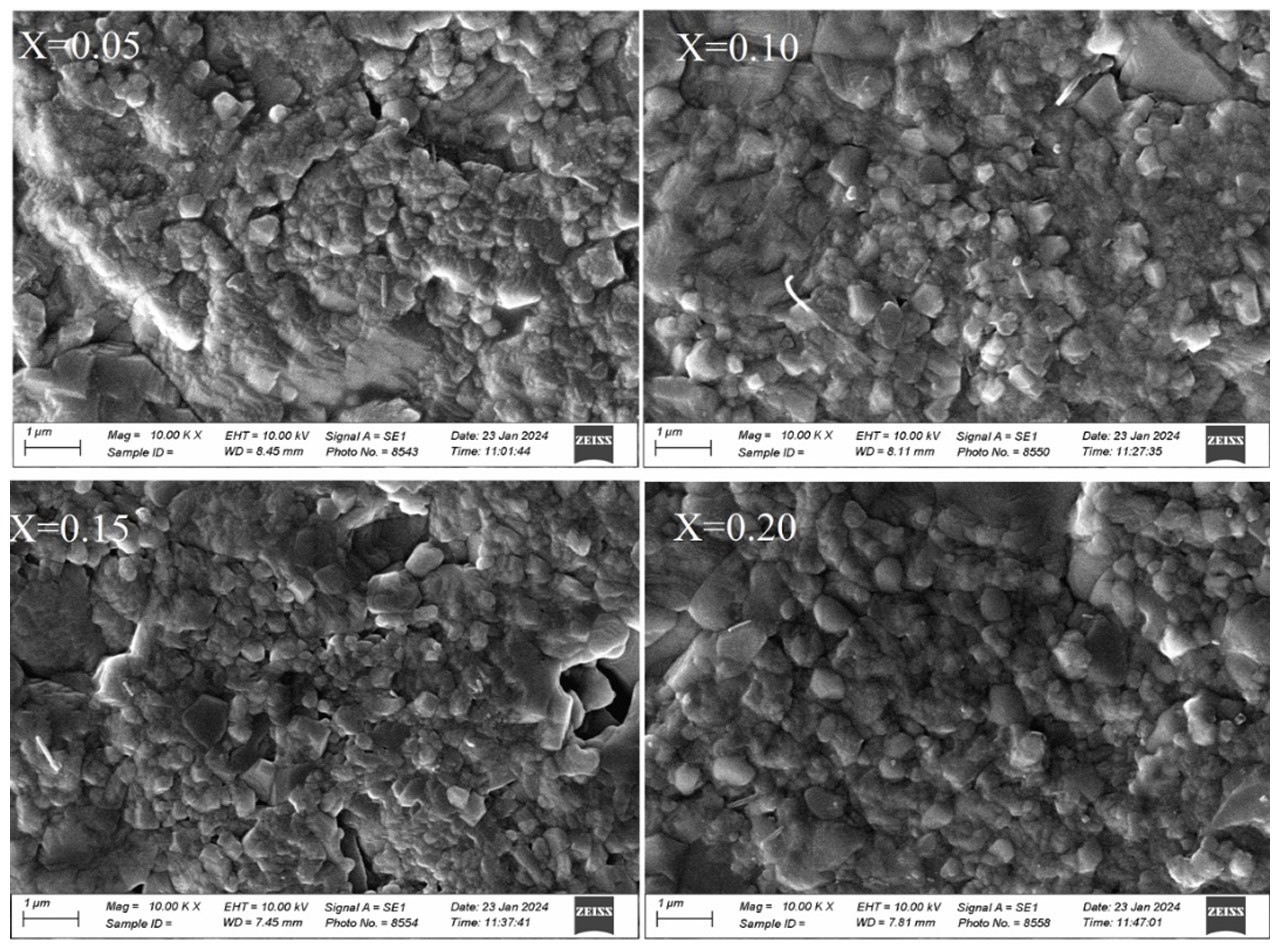
Lead-free (1-$x$)SrTiO$_3$-$x$CaZrO$_3$ solid-solution ceramics ($x$ = 0.05, 0.10, 0.15, 0.20) were synthesized via the conventional solid-state route to investigate structure-microstructure-dielectric relationships. X-ray diffraction patterns of the samples confirmed single-phase formation for all compositions, forming cubic perovskite structure (space group $Pm-3m$). Raman spectra were consistent with the perovskite lattice and local vibrational features, confirming perovskite structure. SEM micrographs revealed noticeable porosity for lower CaZrO$_3$ contents ($x$ = 0.05-0.15) and a more compact morphology at higher CaZrO$_3$ content, with a slight decrease in grain size as $x$ increases... More >

Graphical Abstract
Dielectric Properties of Lead-Free (1-x)SrTiO$_{3}$-xCaZrO$_3$ Solid-Solution Ceramics Prepared by Solid-State Sintering