Volume 2, Issue 2


Volume 2, Issue 2 (June, 2026) – 5 articles
Citations: Crossref logo 38,   36   |   Viewed: 7570, Download: 1727

Table of Contents

Open Access | Research Article | 26 May 2026 | Cited: Crossref logo  2 , Scopus 3
Effect of Water Injection Rate on the Distribution of Water-driven Oil in the Tankou Oilfield
Journal of Geo-Energy and Environment | Volume 2, Issue 2: 163-177, 2026 | DOI: 10.62762/JGEE.2026.867883
Abstract
Supplementing formation energy through water injection is the main way to develop old oil fields. However, formation non-homogeneity leads to the uncertainty of waterline advancement, which generates residual oil. In order to study the effect of water injection rate on the distribution of water-driven oil, we carried out water injection simulation experiments using the Tankou oilfield as an example. The oil saturation contour maps of several time points in the water-driven oil process were plotted by determining the trend of resistance value changes. We studied the drive path during the water-driven oil process, determined the location of residual oil distribution in the plane and longitudin... More >

Graphical Abstract
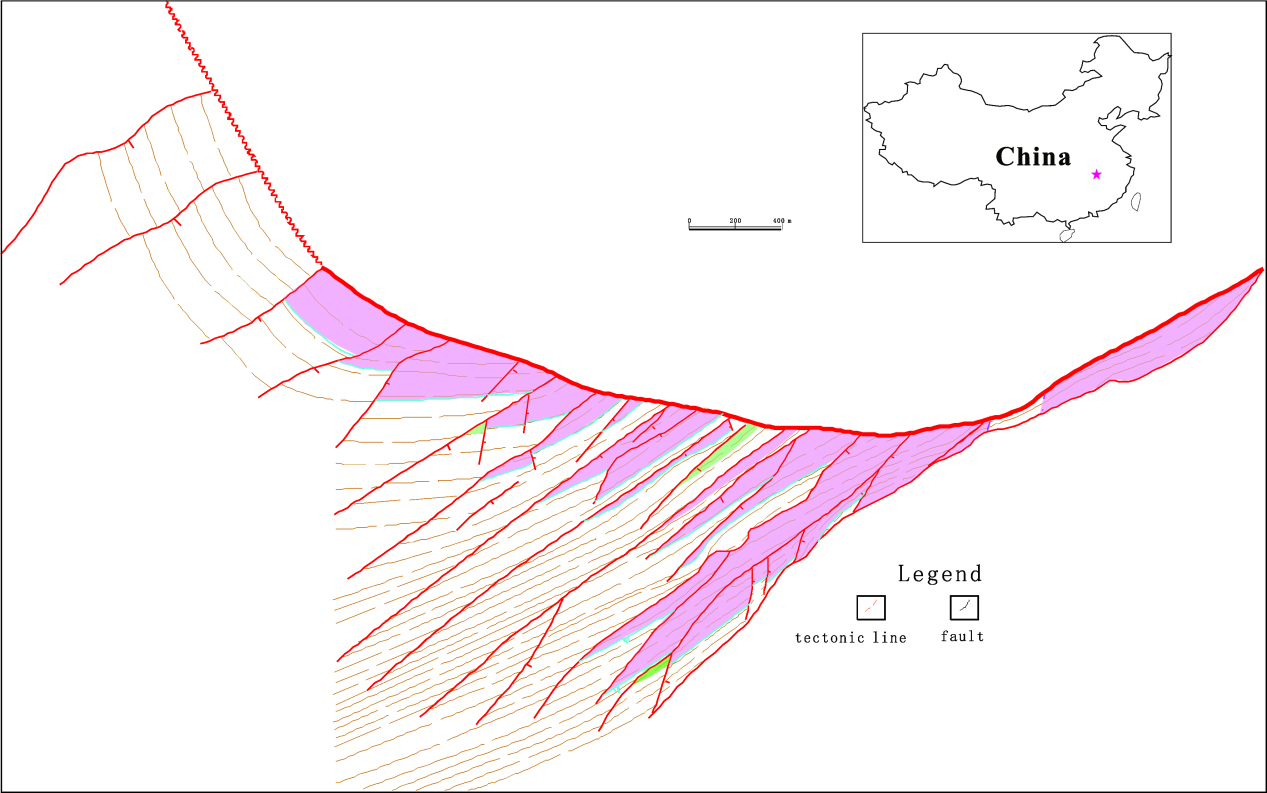
Effect of Water Injection Rate on the Distribution of Water-driven Oil in the Tankou Oilfield
Open Access | Review Article | 09 May 2026 | Cited: Crossref logo  1 , Scopus 1
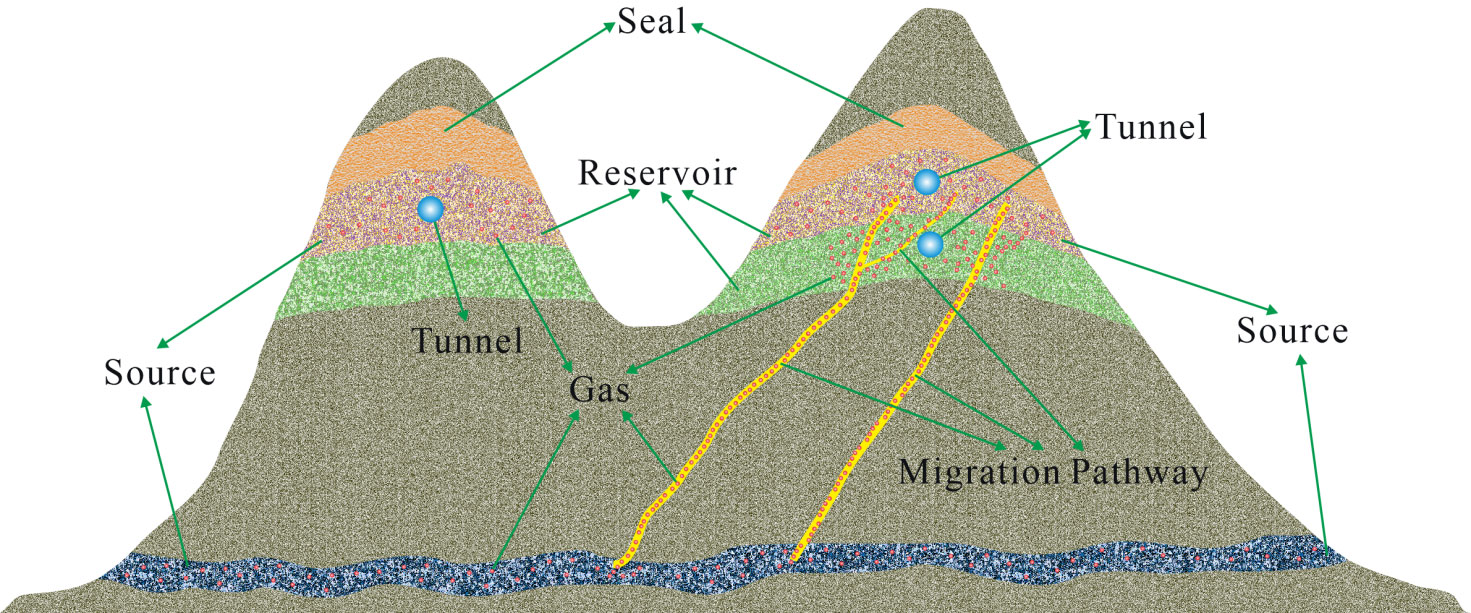
Gas Tunnels in Non-Coal Strata in China: A Systematic Review of Conceptual Framework, Genetic Typology and Regional Distribution
Journal of Geo-Energy and Environment | Volume 2, Issue 2: 147-162, 2026 | DOI: 10.62762/JGEE.2026.795616
Abstract
The expansion of transportation infrastructure into geologically complex mountainous regions of China has increased encounters with gas-bearing non-coal strata during tunnel construction. Unlike coal-measure gas systems, gas occurrences in carbonate, clastic, and metamorphic rocks present distinct challenges due to multi-source origins, structurally controlled accumulation, and abrupt outburst mechanisms. This review examines existing research to establish a conceptual framework for this hazard category. Analysis of gas sources, reservoir characteristics, and geological controls indicates that non-coal gas tunnels require theoretical approaches distinct from coal-gas methodologies. A genetic... More >

Graphical Abstract
Gas Tunnels in Non-Coal Strata in China: A Systematic Review of Conceptual Framework, Genetic Typology and Regional Distribution
Open Access | Research Article | 16 April 2026 | Cited: Crossref logo  15 , Scopus 14
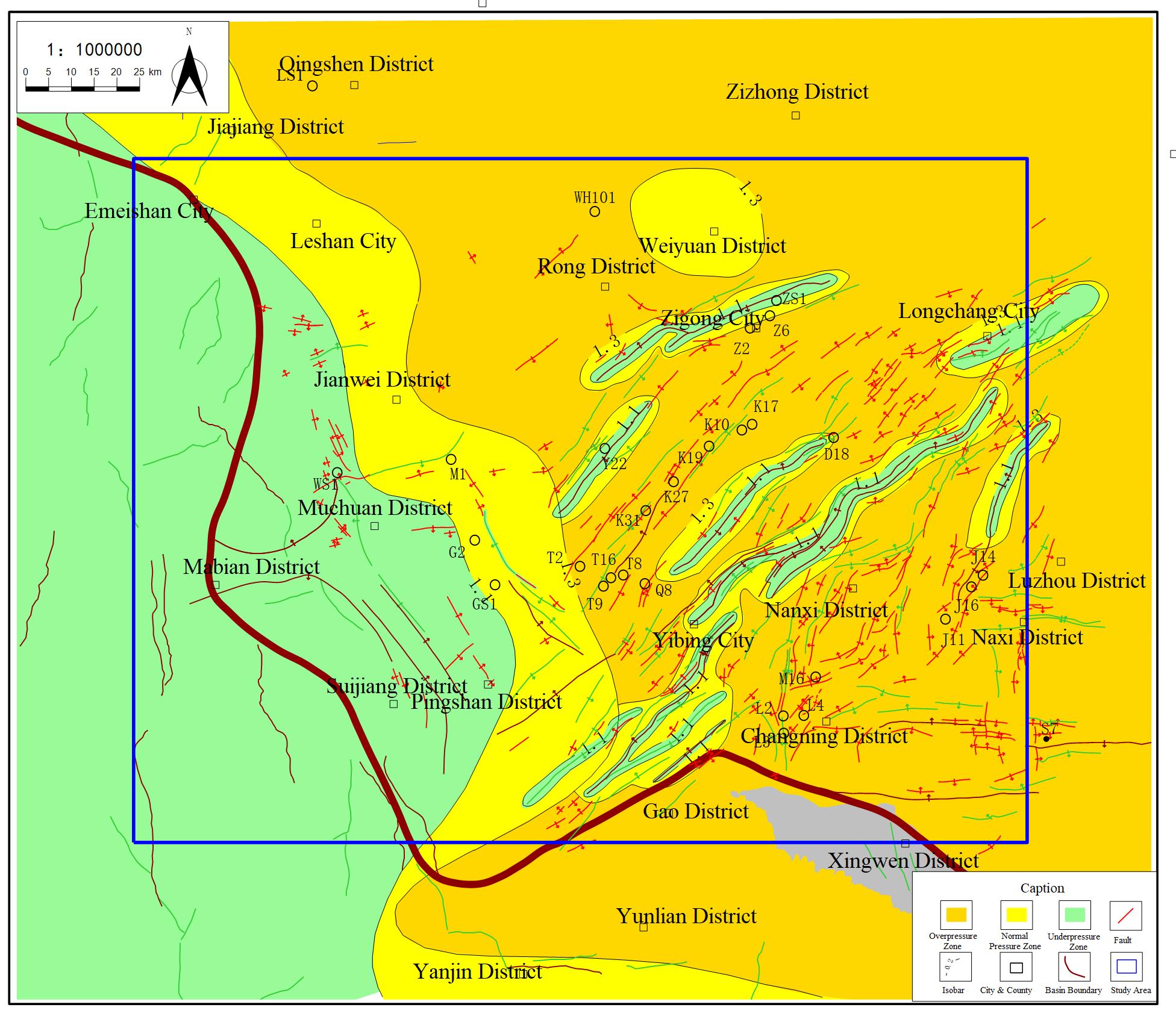
Hydrocarbon Preservation Conditions and Evaluation of the Maokou Formation in the Leshan-Yibin Area, Southern Sichuan Basin, China
Journal of Geo-Energy and Environment | Volume 2, Issue 2: 132-146, 2026 | DOI: 10.62762/JGEE.2026.299392
Abstract
The southern Sichuan Basin is rich in natural gas and is a key area for hydrocarbon exploration. Due to multi-phase tectonic movements, structural characteristics and preservation conditions are critical for gas accumulation. Focusing on the Middle Permian Maokou Formation in the LY area, this study analyzes the regional and local structural framework to assess structural features and their impact on preservation conditions. Using indicators such as deformation intensity, caprock properties, formation water chemistry, and pressure coefficients, an evaluation system is established to identify favorable exploration zones. Results show that the LY area lies in the southern Sichuan low-steep str... More >

Graphical Abstract
Hydrocarbon Preservation Conditions and Evaluation of the Maokou Formation in the Leshan-Yibin Area, Southern Sichuan Basin, China
Open Access | Research Article | 15 April 2026 | Cited: Crossref logo  8 , Scopus 7
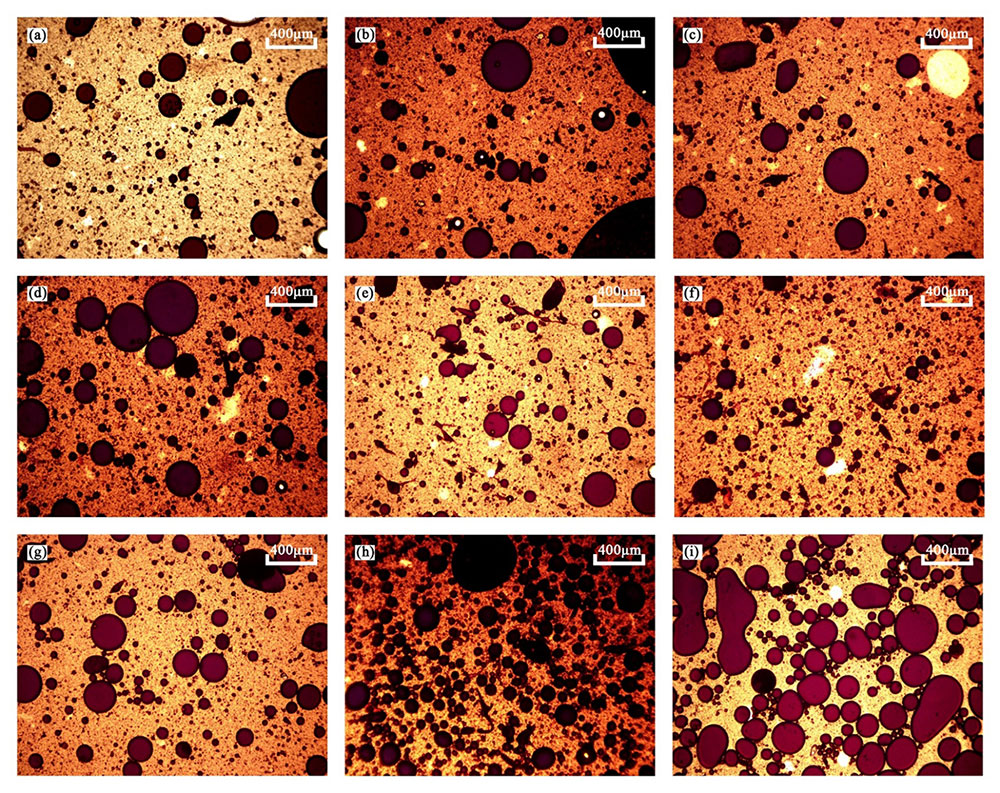
A Method for Determining Crude Oil Concentration in Drilling Fluid Based on Laser Raman Spectroscopy Technology
Journal of Geo-Energy and Environment | Volume 2, Issue 2: 118-131, 2026 | DOI: 10.62762/JGEE.2026.666728
Abstract
Laser Raman spectroscopy is a promising technique for real-time oil and gas detection in drilling fluids during drilling operations; however, the distribution of crude oil and its coupling with Raman spectral responses under varying temperature conditions remain insufficiently understood, which limits its quantitative applications in downhole environments. This study investigates the temperature- and concentration-dependent behavior of crude oil in oil-containing drilling fluids and develops a quantitative analytical method based on Raman spectroscopy for geological guidance. Crude oil is modeled as dispersed droplets within a continuous fluid phase, and Raman spectra are collected under dif... More >

Graphical Abstract
A Method for Determining Crude Oil Concentration in Drilling Fluid Based on Laser Raman Spectroscopy Technology
Open Access | Research Article | 05 March 2026 | Cited: Crossref logo  12 , Scopus 11
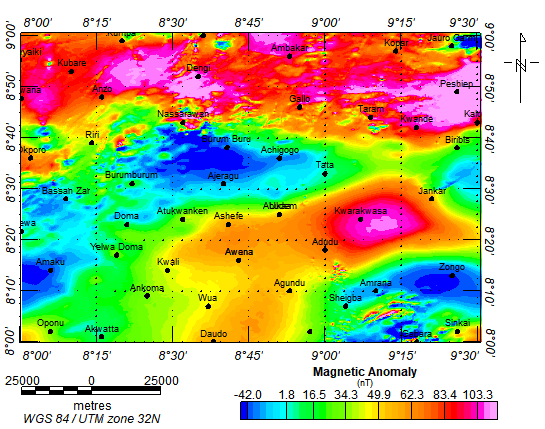
A Machine Learning Framework for the Investigation of Energy-Critical Mineralized Geologic Structures from Gravity and Magnetic Datasets: Implications for Sustainable Exploration
Journal of Geo-Energy and Environment | Volume 2, Issue 2: 95-117, 2026 | DOI: 10.62762/JGEE.2026.309205
Abstract
Mineral exploration faces challenges from complex geological architectures and subtle geophysical expressions of mineralization. This study proposes a joint gravity–magnetic machine learning framework integrating magnetic anomaly, analytic signal, gravity, and Source Parameter Imaging depth estimates to enhance mineralization prediction in Nigeria's Middle Benue Trough and adjoining basement terrain. Five supervised algorithms were evaluated, with Random Forest achieving the highest performance (accuracy=0.954, precision=0.889, recall=0.819, macro-F1=0.850, ROC-AUC=0.978). Correlation analysis revealed low feature redundancy, while unsupervised clustering confirmed structural partitions co... More >

Graphical Abstract
A Machine Learning Framework for the Investigation of Energy-Critical Mineralized Geologic Structures from Gravity and Magnetic Datasets: Implications for Sustainable Exploration