Volume 2, Issue 2


Volume 2, Issue 2 (June, 2026) – 5 articles
Citations: Crossref logo 0,   0   |   Viewed: 7540, Download: 1722

Table of Contents

Open Access | Review Article | 30 June 2026
Waste Management and Circular Economy: A Comprehensive Review of AIoT Applications in Intelligent Waste Sorting, Data Analytics for Resource Recovery, and Sustainable Infrastructure Development
Next-Generation Computing Systems and Technologies | Volume 2, Issue 2: 64-69, 2026 | DOI: 10.62762/NGCST.2026.790821
Abstract
Artificial Intelligence of Things (AIoT) is transforming linear waste management into intelligent, data-driven solutions that support circular economy (CE) principles. This narrative review synthesizes peer-reviewed studies from 2020–2025 on AIoT applications across intelligent waste sorting, data analytics for resource recovery, and sustainable infrastructure development. The review examines IoT-enabled smart bins, computer-vision robotic sorting, machine learning classifiers (VGG-16/19: 97.11–99.7% accuracy, ResNet: 91.5–98.16%), predictive analytics, and graph-based route optimization. Reported improvements include up to 50% reduction in overflow events, 15.5–30% fuel savings, and... More >

Graphical Abstract
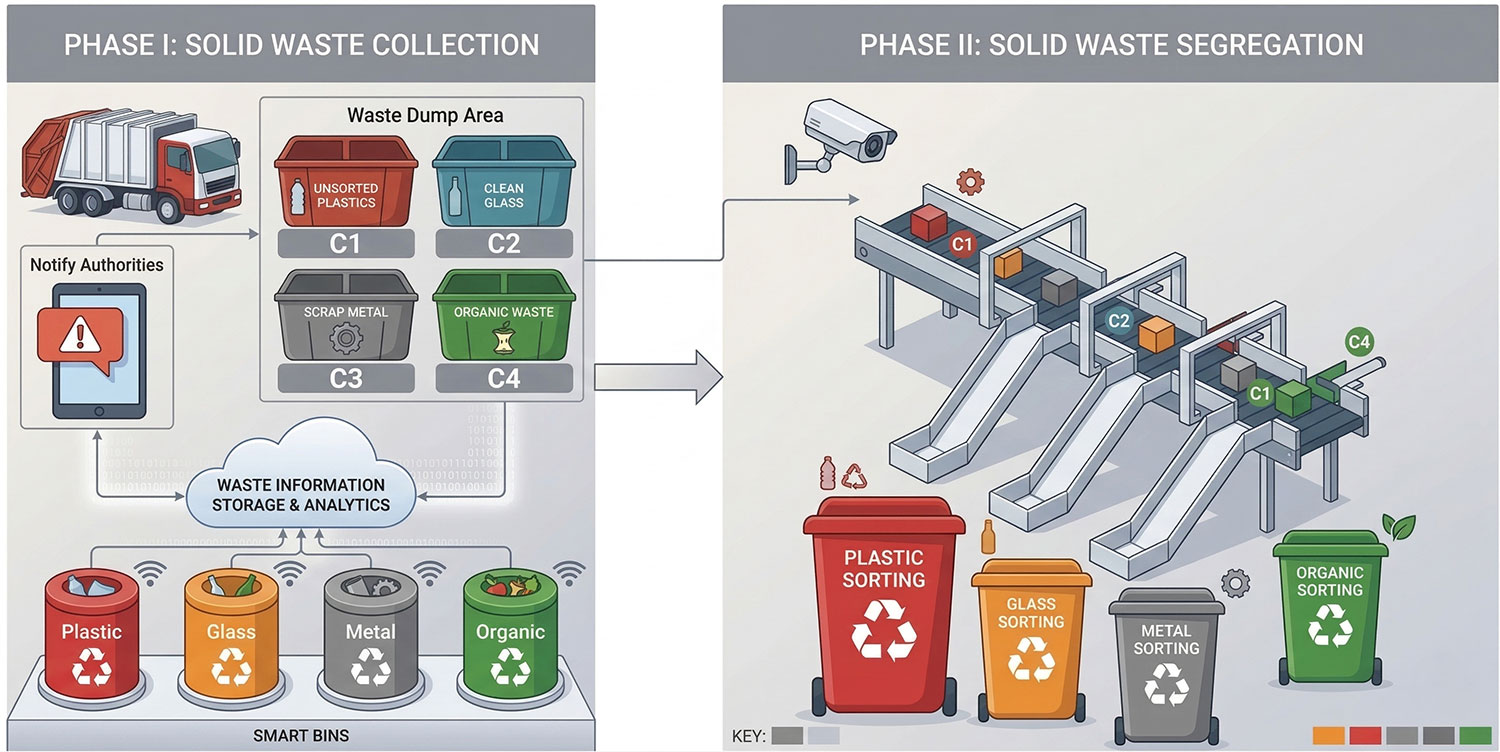
Waste Management and Circular Economy: A Comprehensive Review of AIoT Applications in Intelligent Waste Sorting, Data Analytics for Resource Recovery, and Sustainable Infrastructure Development
Open Access | Research Article | 27 June 2026
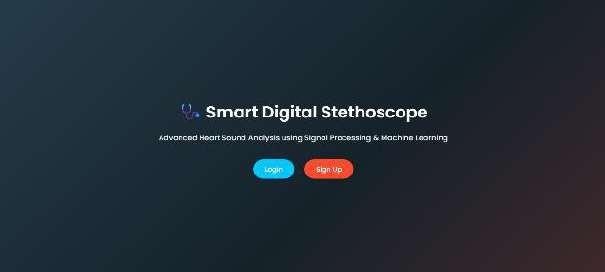
Smart Digital Stethoscope Using Artificial Intelligence, Machine Learning, and IoT
Next-Generation Computing Systems and Technologies | Volume 2, Issue 2: 59-63, 2026 | DOI: 10.62762/NGCST.2026.345581
Abstract
There is an increase in heart diseases at a very high rate in today's world, and therefore early detection becomes a necessity in the treatment of such cases. In this paper, we present a digital stethoscope with AI and ML that records heart sounds automatically. Phonocardiogram (PCG) signals are recorded by the system, and the recorded signals are then processed using filtering, normalization, and peak detection to obtain features including heart sounds S1 and S2. The extracted features are fed into the classification algorithm, which in this case is the Random Forest Classifier, and they are classified as either abnormal or normal heart conditions. IoT is implemented in the system to ensure... More >

Graphical Abstract
Smart Digital Stethoscope Using Artificial Intelligence, Machine Learning, and IoT
Open Access | Review Article | 26 June 2026
Energy-Efficient AIoT Solutions: A Critical Review of Power Consumption Models, Machine Learning-Based Energy Optimization, and Deployment Strategies for Sustainable IoT Networks
Next-Generation Computing Systems and Technologies | Volume 2, Issue 2: 51-58, 2026 | DOI: 10.62762/NGCST.2026.276719
Abstract
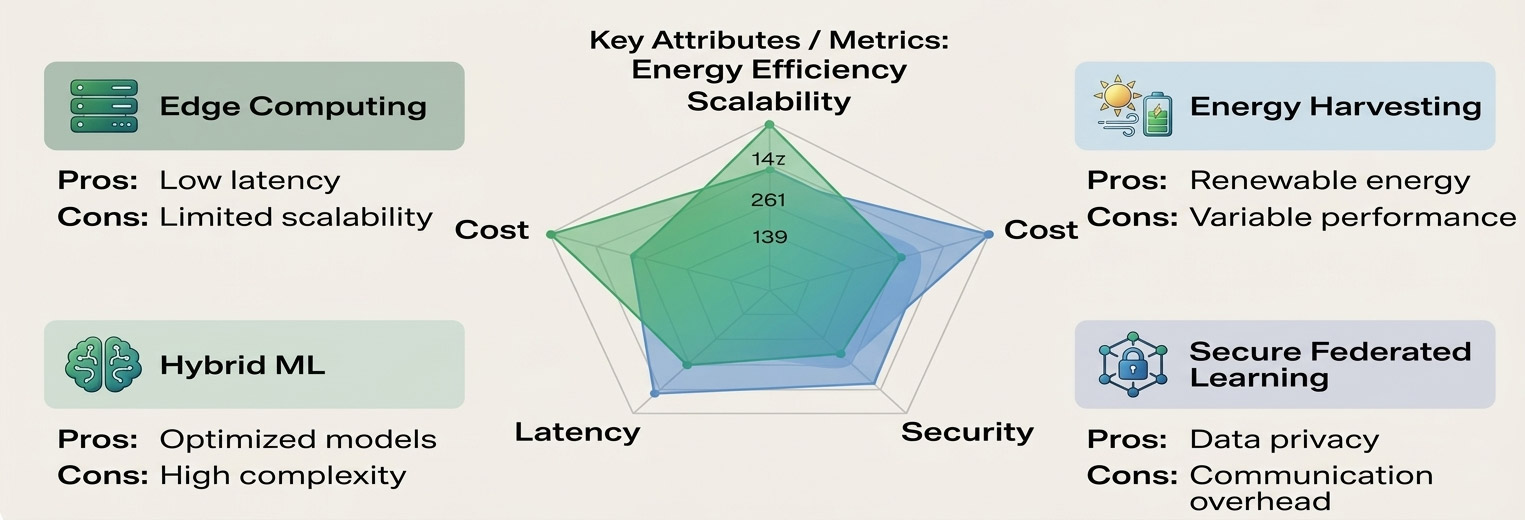
The integration of artificial intelligence and the Internet of Things (AIoT) enables advanced edge computing but creates significant energy challenges for resource-constrained devices. To address these challenges, this paper introduces a novel comparative taxonomy and a systematic gap analysis matrix that directly maps hardware-aware TinyML paradigms to network-layer scheduling in sustainable AIoT systems. Synthesizing recent empirical studies (2023–2026) on power consumption models for IoT edge devices, machine learning techniques for energy optimization, and sustainable deployment strategies, we demonstrate that additive and regression-based models achieve low prediction error (MAPE 4–... More >

Graphical Abstract
Energy-Efficient AIoT Solutions: A Critical Review of Power Consumption Models, Machine Learning-Based Energy Optimization, and Deployment Strategies for Sustainable IoT Networks
Open Access | Research Article | 17 June 2026
Scalable Trust through Strategic Verification: A Game-Theoretic Framework for Multi-Agent Systems
Next-Generation Computing Systems and Technologies | Volume 2, Issue 2: 35-50, 2026 | DOI: 10.62762/NGCST.2026.430053
Abstract
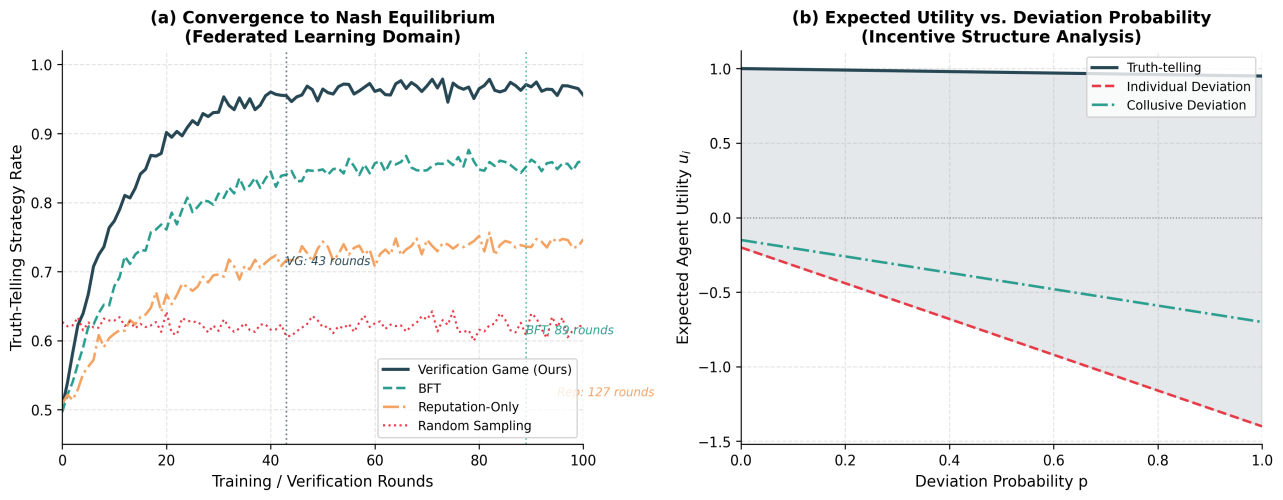
These days, many eco-systems related to federated learning, blockchain, self-driving cars, and scientific computing have many agents working together, each doing its own part. Using a single central system to check if all the agents are doing their work correctly is slow and gets more expensive as more agents are added. This paper introduces a new way called the Verification Game (VG). The agents don’t depend on a central system. The agents check each other’s work. If the agents are honest, they get rewards, so telling the truth is the best option. This type of method also saves a lot of computing power because it doesn’t check every single task. We also came up with a method called Ad... More >

Graphical Abstract
Scalable Trust through Strategic Verification: A Game-Theoretic Framework for Multi-Agent Systems
Open Access | Research Article | 30 May 2026
A Course-Specific Agentic RAG Chatbot for IT Student Support: Architecture, Local Deployment, and Preliminary Evaluation at Hai Phong University
Next-Generation Computing Systems and Technologies | Volume 2, Issue 2: 21-34, 2026 | DOI: 10.62762/NGCST.2026.601800
Abstract
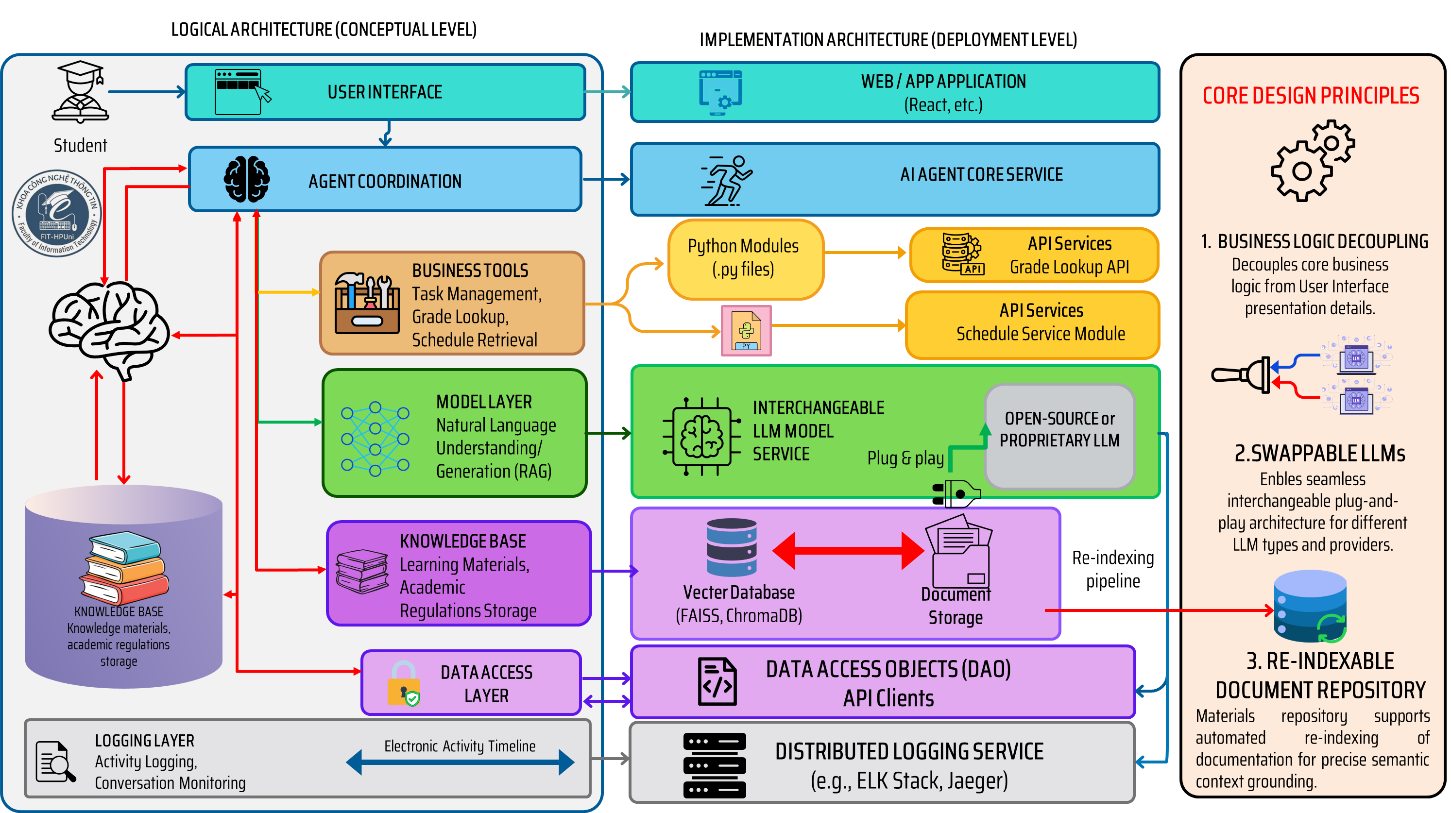
This paper introduces a course-specific agentic retrieval-augmented generation (RAG) chatbot developed to support Information Technology students at Hai Phong University. The proposed system addresses the limitations of static FAQ bots, which are unable to manage open-ended academic tasks, and model-only large language model (LLM) assistants, which may generate fluent yet insufficiently grounded responses. The prototype combines local LLM deployment, semantic retrieval of course materials, and constrained, tool-oriented orchestration to perform four key tasks: question answering, document summarization, study planning, and quiz generation. The primary contributions include a six-layer privac... More >

Graphical Abstract
A Course-Specific Agentic RAG Chatbot for IT Student Support: Architecture, Local Deployment, and Preliminary Evaluation at Hai Phong University