
Volume 2, Issue 2


Volume 2, Issue 2 (June, 2026) – 5 articles
Citations: Crossref logo 24,   21   |   Viewed: 14709, Download: 2715

Table of Contents

Free Access | Research Article | 08 March 2026 | Cited: Crossref logo  7 , Scopus 6
M-SAITS: A Dual-Stage Time Series Imputation Network via Decoupled Large-Kernel Convolution and Diagonally-Masked Attention
ICCK Transactions on Machine Intelligence | Volume 2, Issue 2: 106-115, 2026 | DOI: 10.62762/TMI.2026.671182
Abstract
Missing value imputation in multivariate time series is a critical challenge in the field of data mining. Although Transformer-based methods excel in modeling long-range dependencies, their inherent point-wise attention mechanisms often lack explicit modeling of local inductive biases in time series, making it difficult to effectively capture local smoothness and evolutionary trends. Furthermore, existing feature embedding strategies struggle to fully decouple the internal temporal evolution of variables from complex cross-variable dependencies. To address these limitations, this paper proposes a novel dual-stage imputation framework named M-SAITS. This framework innovatively introduces a de... More >

Graphical Abstract
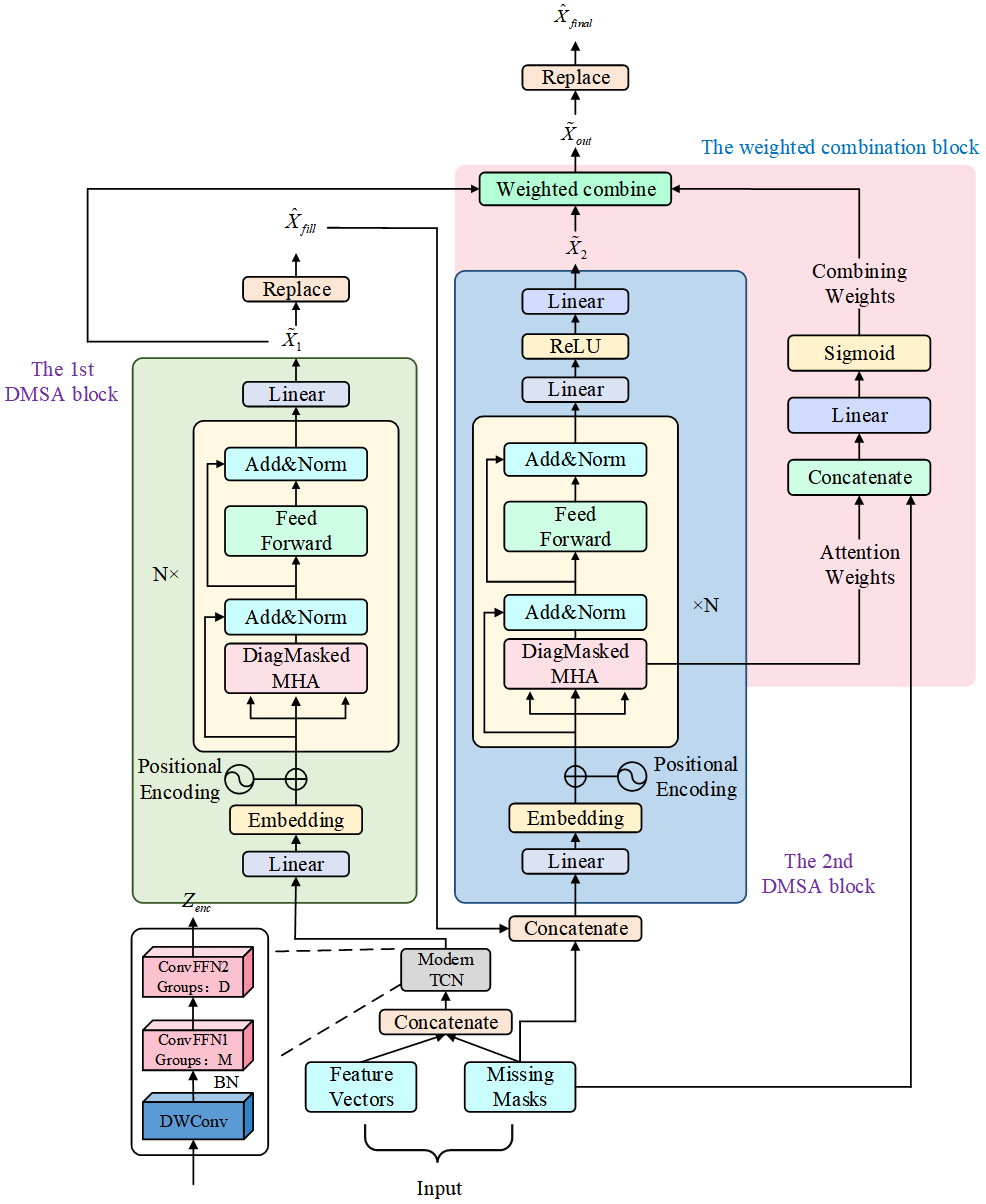
M-SAITS: A Dual-Stage Time Series Imputation Network via Decoupled Large-Kernel Convolution and Diagonally-Masked Attention
Free Access | Research Article | 01 March 2026 | Cited: Crossref logo  2 , Scopus 2
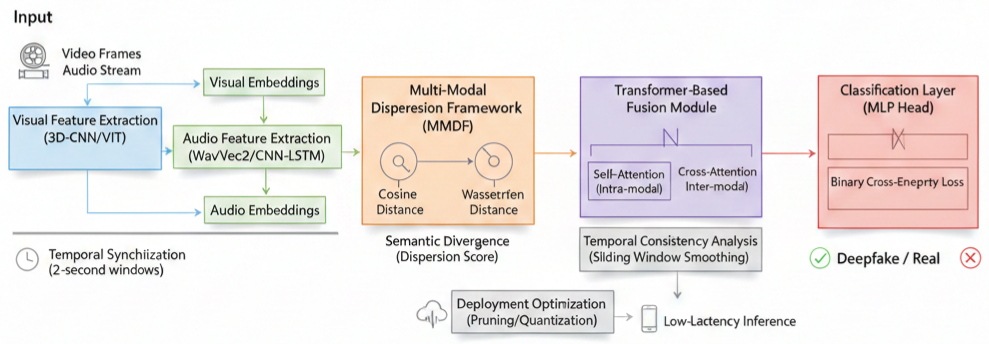
Intelligent Deepfake Detector Using Audio-Visual Clues
ICCK Transactions on Machine Intelligence | Volume 2, Issue 2: 100-105, 2026 | DOI: 10.62762/TMI.2025.601369
Abstract
Deepfake media is growing rapidly and causing significant harm. Malicious actors now use AI to create fake videos that appear increasingly realistic. Traditional detection tools often fail because they analyze audio or visual signals in isolation. This paper introduces an intelligent Deepfake Detection system that addresses this limitation through a novel Multi-Modal Dispersion Framework. The system identifies subtle inconsistencies by tracking how lip movements align with speech patterns. By projecting these features into a shared latent space, the model quantifies the semantic divergence between modalities. A transformer module then captures cross-modal context to detect fine-grained manip... More >

Graphical Abstract
Intelligent Deepfake Detector Using Audio-Visual Clues
Free Access | Research Article | 10 February 2026 | Cited: Crossref logo  5 , Scopus 4
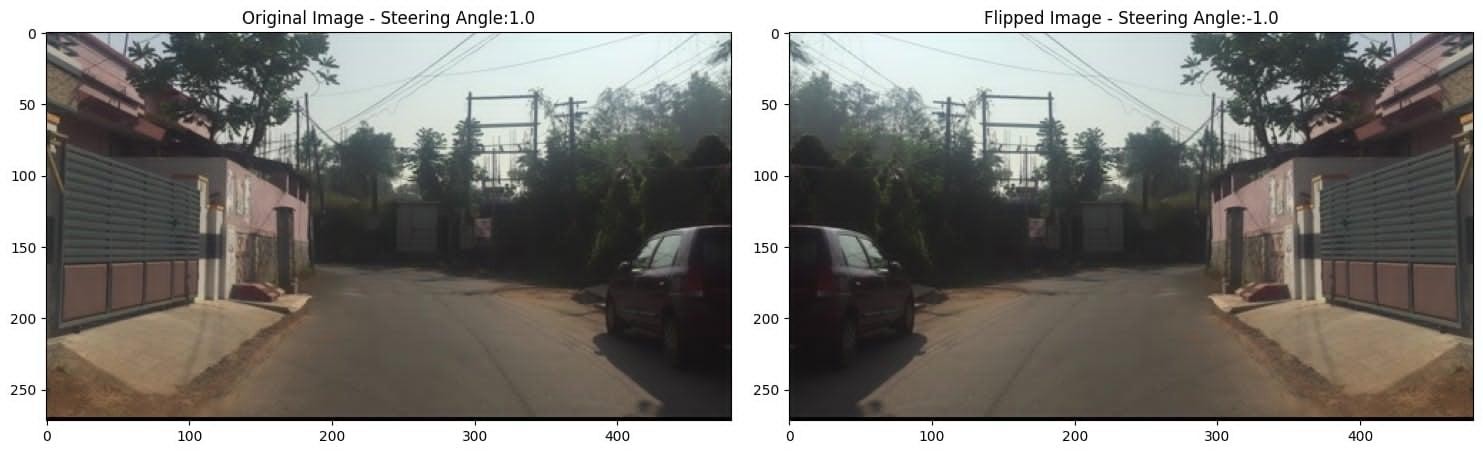
Optimizing CNN Architectures for Steering Angle Prediction for Self-Driving Vehicles in Unstructured Roads: A Comparative Study of Activation Functions and Model Complexity
ICCK Transactions on Machine Intelligence | Volume 2, Issue 2: 88-99, 2026 | DOI: 10.62762/TMI.2025.759110
Abstract
This study investigates convolutional neural network (CNN) architectures for predicting steering angles in self-driving vehicles navigating unstructured roads, using road-facing image data. Two complementary experiments are conducted. First, the impact of three activation functions—Exponential Linear Unit (ELU), Rectified Linear Unit (ReLU), and Leaky ReLU—is evaluated on a baseline CNN model. Trained on 14,754 images and validated on 3,585 images, the model with ELU activation achieves the lowest validation mean squared error (MSE) compared to ReLU and Leaky ReLU, demonstrating superior convergence and generalization. Second, the effect of model complexity is examined using ELU activati... More >

Graphical Abstract
Optimizing CNN Architectures for Steering Angle Prediction for Self-Driving Vehicles in Unstructured Roads: A Comparative Study of Activation Functions and Model Complexity
Free Access | Research Article | 09 February 2026 | Cited: Crossref logo  5 , Scopus 4
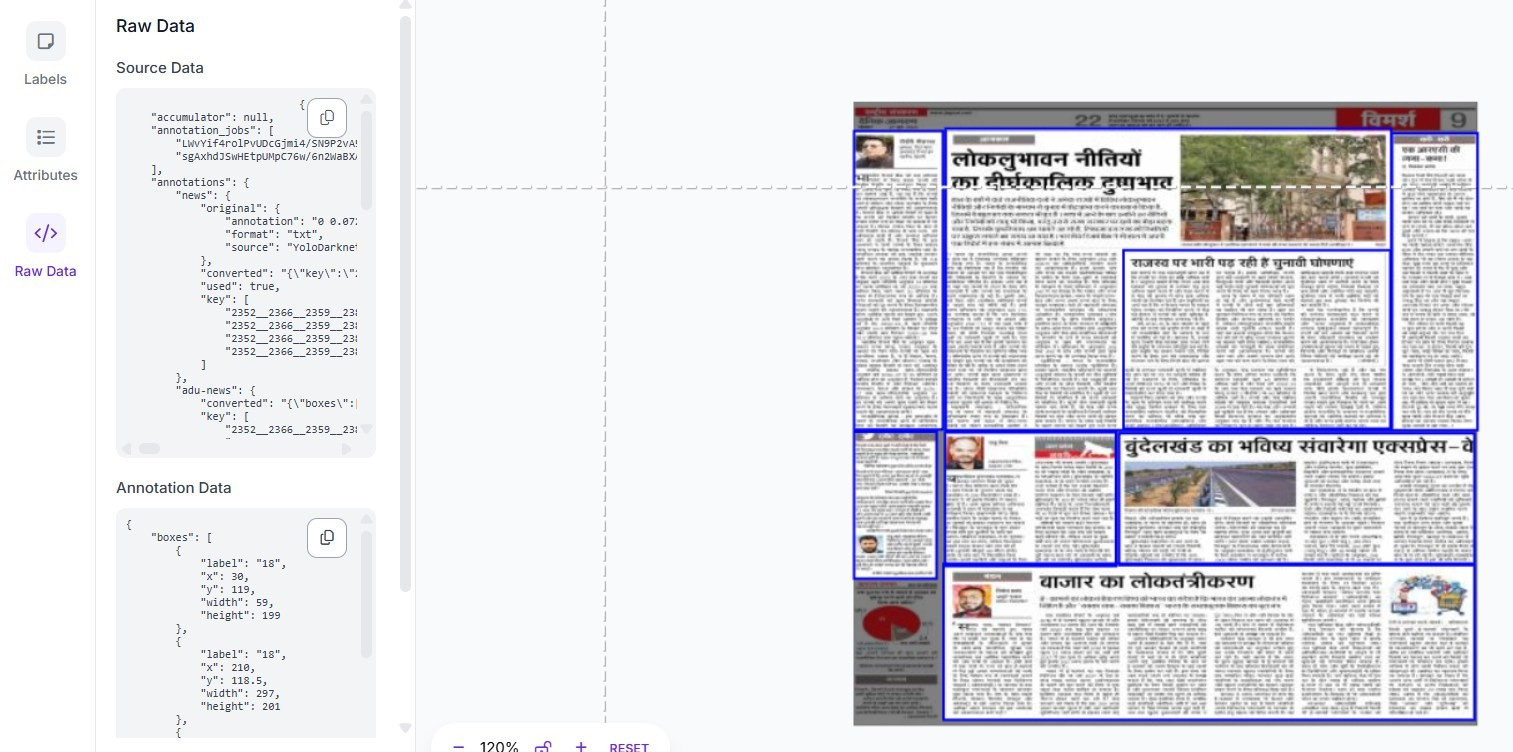
Detection of Newspaper Layouts Using YOLO12
ICCK Transactions on Machine Intelligence | Volume 2, Issue 2: 77-87, 2026 | DOI: 10.62762/TMI.2025.846033
Abstract
This study presents a robust and scalable method for automatic layout detection in digitized newspapers to facilitate efficient knowledge extraction and information retrieval. A custom dataset comprising annotated newspaper images in English, Hindi, and other languages was developed, with layout regions categorized into five primary classes. An enhanced YOLOv12 object detection model was trained on this dataset and evaluated using the mean Average Precision (mAP) metric across various Intersection over Union (IoU) thresholds. The model achieved a mAP@50 of 0.88, demonstrating strong detection performance and outperforming several stateof-the-art object detection models in the same task. The... More >

Graphical Abstract
Detection of Newspaper Layouts Using YOLO12
Free Access | Research Article | 08 February 2026 | Cited: Crossref logo  5 , Scopus 5
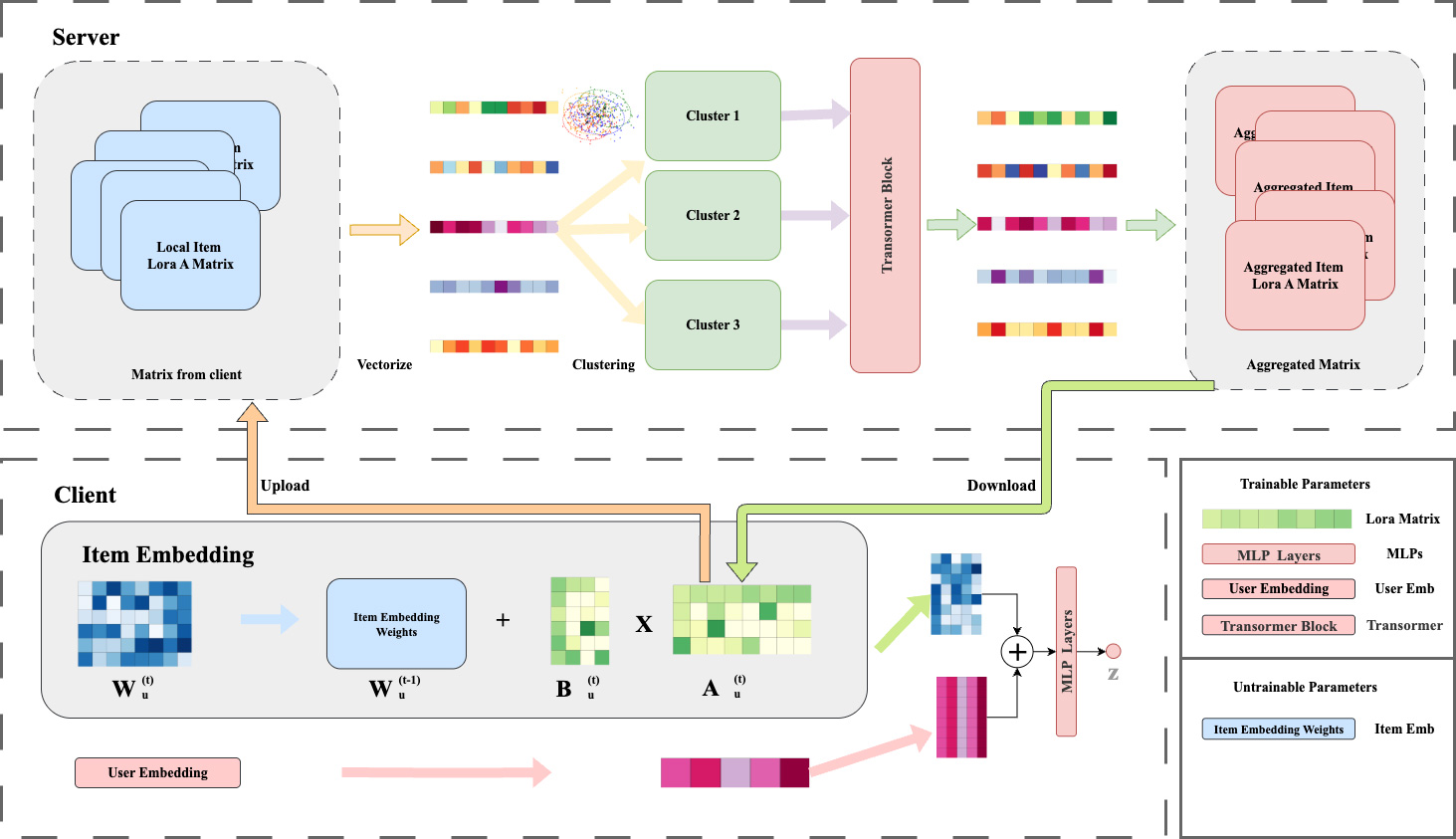
FedTLRec: Federated Recommendation with Transformer-based Parameter Aggregation and LoRA Compression
ICCK Transactions on Machine Intelligence | Volume 2, Issue 2: 65-76, 2026 | DOI: 10.62762/TMI.2025.882476
Abstract
Federated learning has emerged as a key paradigm in privacy-preserving computing due to its "data usable but not visible" property, enabling users to collaboratively train models without sharing raw data. Motivated by this, federated recommendation systems offer a promising architecture that balances user privacy with recommendation accuracy through distributed collaborative learning. However, existing federated recommendation systems face significant challenges in balancing model performance, communication efficiency, and user privacy. In this paper, we propose FedTLRec (Federated Recommendation with Transformer-based Parameter Aggregation and Collaborative LoRA), which introduces a federat... More >

Graphical Abstract
FedTLRec: Federated Recommendation with Transformer-based Parameter Aggregation and LoRA Compression