Volume 1, Issue 2


Volume 1, Issue 2 (June, 2025) – 4 articles
Citations: Crossref logo 3,   4   |   Viewed: 8326, Download: 4238

Table of Contents

Open Access | Research Article | 30 June 2025 | Cited: Scopus 1
Comparison of Machine Learning and Deep Learning Models for Part-of-Speech Tagging
ICCK Transactions on Advanced Computing and Systems | Volume 1, Issue 2: 106-116, 2025 | DOI: 10.62762/TACS.2025.493945
Abstract
Part-of-speech (POS) tagging—the automatic assignment of grammatical categories to every token in a text corpus—is a foundational preprocessing step for AI-driven language applications such as machine translation, sentiment analysis, and information retrieval. For morphologically complex, low-resource languages such as Pashto, the scarcity of annotated data and standardised tools makes this task particularly challenging. This paper presents a systematic comparative evaluation of six machine learning (ML) and deep learning (DL) algorithms—Support Vector Machine (SVM), Decision Tree (DT), Random Forest (RF), K-Nearest Neighbor (KNN), Multi-Layer Perceptron (MLP), and Naïve Bayes (NB)—... More >

Graphical Abstract
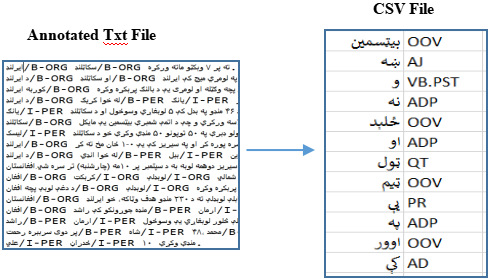
Comparison of Machine Learning and Deep Learning Models for Part-of-Speech Tagging
Open Access | Review Article | 27 May 2025 | Cited: Crossref logo  1
Metaverse Journey Exploring Requirements, Architectural Frameworks, Standards, Challenges and Vision
ICCK Transactions on Advanced Computing and Systems | Volume 1, Issue 2: 97-105, 2025 | DOI: 10.62762/TACS.2024.309607
Abstract
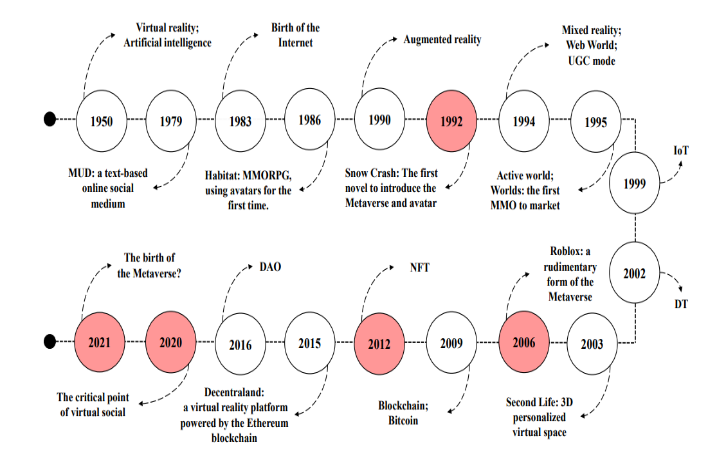
The Metaverse is an emerging paradigm that integrates immersive digital technologies to create a unified, persistent, and interconnected 3D virtual space with transformative potential across work, education, healthcare, and daily life. This paper presents a comprehensive review of the Metaverse, covering its historical evolution, core characteristics, architectural frameworks, key enabling technologies, standardization efforts, and open challenges. We propose a tripartite architecture comprising infrastructure, interactivity, and ecosystem layers, and provide a structured overview of relevant standards including IEEE 2888, IEEE P2048, IEEE P7016, and ISO/IEC 23005. Seven essential technologi... More >

Graphical Abstract
Metaverse Journey Exploring Requirements, Architectural Frameworks, Standards, Challenges and Vision
Open Access | Research Article | 25 May 2025 | Cited: Crossref logo  1 , Scopus 1
Comparing Fine-Tuned RoBERTa with Traditional Machine Learning Models for Stance Detection in Political Tweets
ICCK Transactions on Advanced Computing and Systems | Volume 1, Issue 2: 78-96, 2025 | DOI: 10.62762/TACS.2025.928069
Abstract
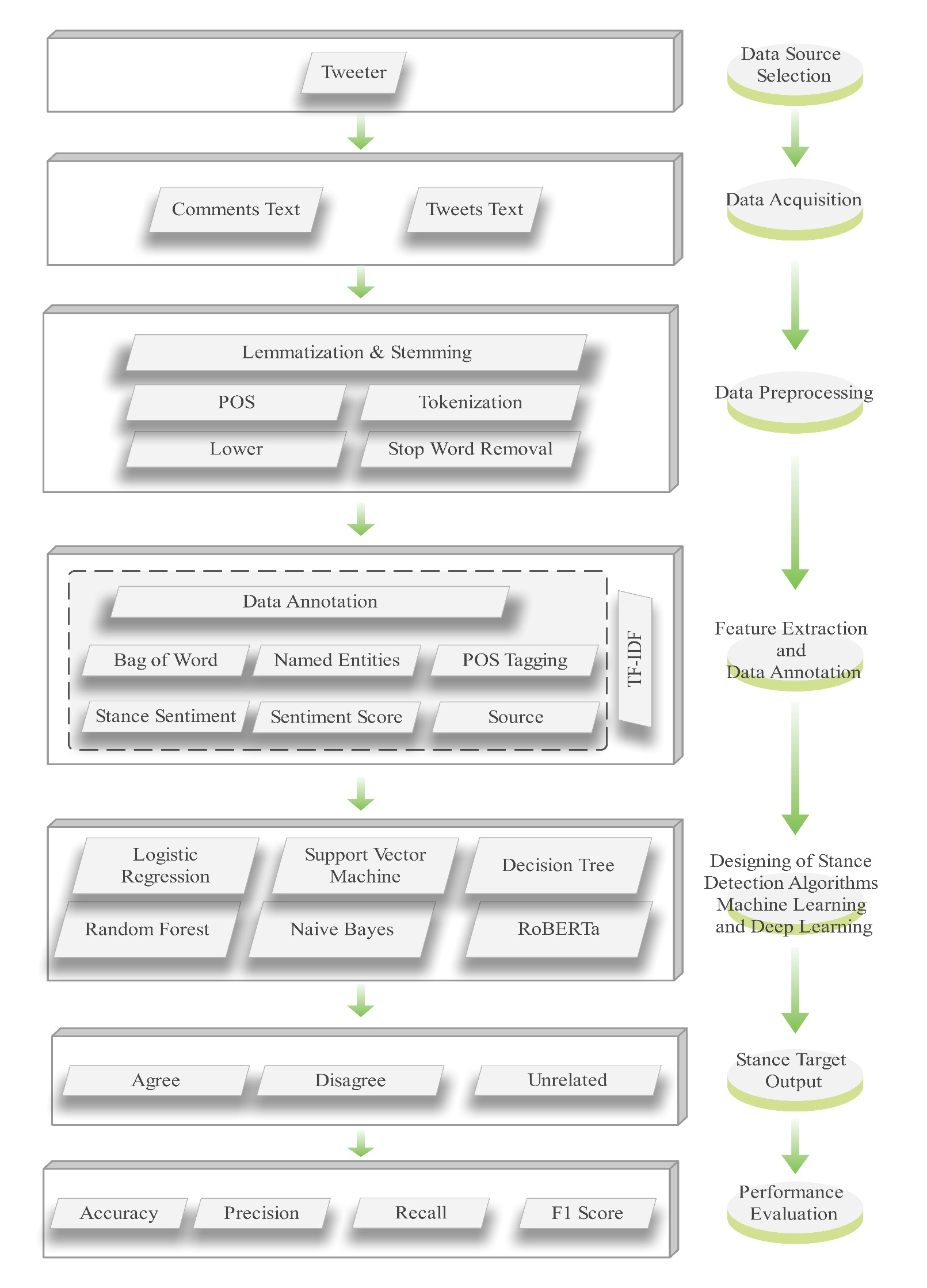
Stance detection identifies a text’s position or attitude toward a given subject. A major challenge in Roman Urdu is the lack of a publicly available dataset for political stance detection. To address this gap, we constructed a high-quality dataset of 8,374 political tweets and comments using the Twitter API, annotated with stance labels: agree, disagree, and unrelated. The dataset captures diverse political viewpoints and user interactions. For feature representation, we employed TF-IDF due to its effectiveness in handling high-dimensional, context-sensitive Roman Urdu text. Several machine learning classifiers were evaluated, with Random Forest achieving the highest accuracy of 95%. Addi... More >

Graphical Abstract
Comparing Fine-Tuned RoBERTa with Traditional Machine Learning Models for Stance Detection in Political Tweets
Open Access | Research Article | 15 May 2025 | Cited: Crossref logo  1 , Scopus 2
FuzzDL-HeartPredict: Heart Attack Risk Prediction Using Fuzzy Logic and Deep Learning
ICCK Transactions on Advanced Computing and Systems | Volume 1, Issue 2: 63-77, 2025 | DOI: 10.62762/TACS.2025.794425
Abstract
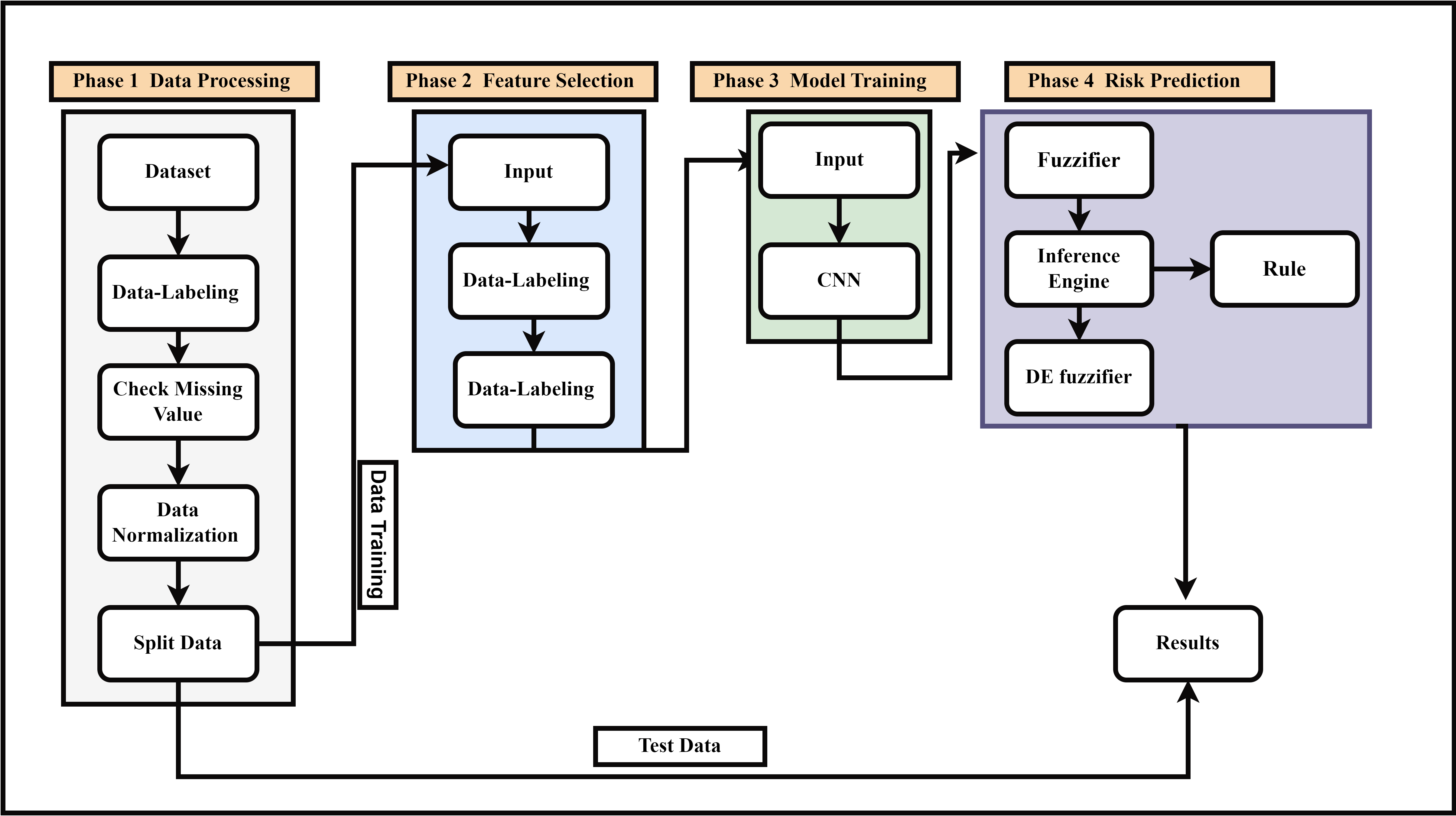
Across the globe, heart diseases rank as the top cause of death, with their incidence steadily rising. However, early detection before a cardiac event (e.g., cardiac arrest) remains a significant challenge. Although the healthcare sector possesses extensive data on heart disease, the effective use of this data for timely detection is essential to protect from such events. This paper proposes an innovative approach using fuzzy logic (FL), convolutional neural network (CNN) models, and feature selection to more accurately assess the risk of heart attacks. Our study also emphasizes the importance of data preprocessing, including data transformation, cleaning, and normalization, to facilitate th... More >

Graphical Abstract
FuzzDL-HeartPredict: Heart Attack Risk Prediction Using Fuzzy Logic and Deep Learning