

Influence of Heat Treatment Processes on the Machinability and Surface Integrity of Ti-6Al-4V Alloy During Precision Machining


Article Information
Abstract
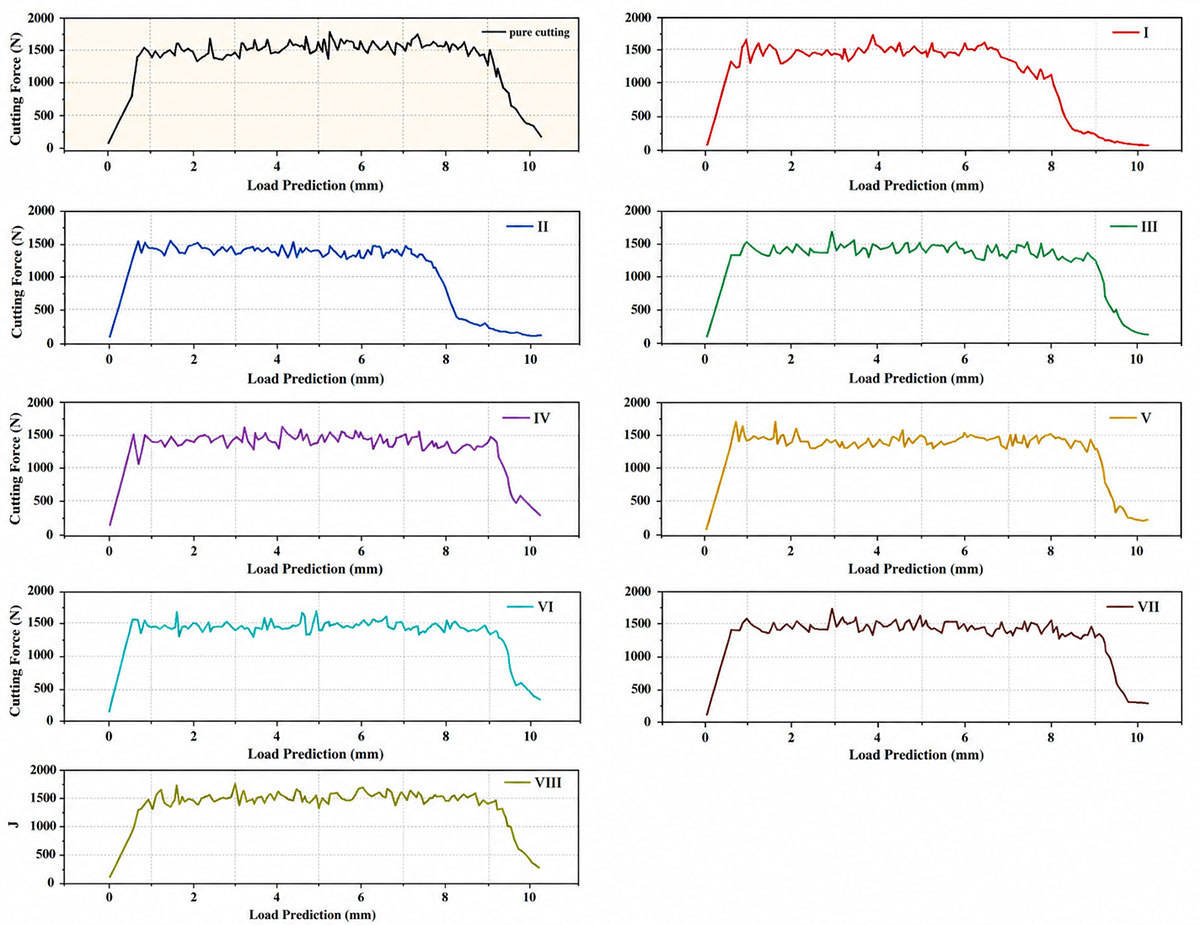
Ti-6Al-4V titanium alloy (TC4) has been extensively applied in advanced manufacturing fields owing to its outstanding combination of mechanical properties and corrosion resistance. However, its poor machinability remains a critical challenge that limits further application. In this study, the effects of three categories of heat treatment processes, including annealing, solution treatment, and aging treatment, comprising eight specific heat treatment schemes, on the precision cutting performance of TC4 alloy were systematically investigated using DEFORM-3D numerical simulations. The results demonstrate that stress-relief annealing and full annealing effectively reduce cutting forces by up to 15.17% through grain refinement and residual stress relaxation, while also lowering cutting temperatures and improving residual stress distribution, with the stress gradient decreasing to 50–80 MPa/$\mu$m. In contrast, solution treatment increases hardness, resulting in intensified fluctuations in cutting forces. Aging treatment promotes the precipitation of strengthening phases, achieving the most significant reduction in cutting force with a maximum decrease of 43.09%, though it introduces localized thermal accumulation during cutting. This study reveals the regulation mechanism of heat treatment on machining performance through the sequential interaction of microstructure evolution–mechanical property modification–cutting response transformation. Among the investigated processes, annealing exhibits the most comprehensive improvement in overall machinability. The findings provide theoretical guidance for the synergistic optimization of heat treatment strategies and cutting parameters for TC4 titanium alloy machining.
Graphical Abstract
Keywords
Data Availability Statement
Funding
Conflicts of Interest
AI Use Statement
Ethical Approval and Consent to Participate
References
- Williams, J. C., & Boyer, R. R. (2020). Opportunities and issues in the application of titanium alloys for aerospace components. Metals, 10(6), 705.
[CrossRef] [Google Scholar] - Chen, G., Ren, C., Yang, X., Jin, X., & Guo, T. (2011). Finite element simulation of high-speed machining of titanium alloy (Ti-6Al-4V) based on ductile failure model. The International Journal of Advanced Manufacturing Technology, 56(9), 1027-1038.
[CrossRef] [Google Scholar] - Abbasi, S. A., Feng, P., Ma, Y., Zhang, J., Yu, D., & Wu, Z. (2016). Influence of microstructure and hardness on machinability of heat-treated titanium alloy Ti-6Al-4V in end milling with polycrystalline diamond tools. The International Journal of Advanced Manufacturing Technology, 86(5), 1393-1405.
[CrossRef] [Google Scholar] - Xu, X., Zhang, J., Outeiro, J., Xu, B., & Zhao, W. (2020). Multiscale simulation of grain refinement induced by dynamic recrystallization of Ti6Al4V alloy during high speed machining. Journal of Materials Processing Technology, 286, 116834.
[CrossRef] [Google Scholar] - Liu, G., Zhang, D., & Yao, C. (2023). Investigation of the grain refinement mechanism in machining Ti-6Al-4V: Experiments and simulations. Journal of Manufacturing Processes, 94, 479-496.
[CrossRef] [Google Scholar] - Zhong, B., Dang, J., Wang, D., Liu, Z., An, Q., & Chen, M. (2024). Experimental microstructure evolution and cutting simulation for dynamic mechanical behaviors of 18CrNiMo7-6 steel considering heat treatment conditions. Journal of Manufacturing Processes, 119, 888-901.
[CrossRef] [Google Scholar] - Ni, C., Zhu, J., Zhang, B., An, K., Wang, Y., Liu, D., ... & Liu, C. (2025). Recent advance in laser powder bed fusion of Ti-6Al-4V alloys: Microstructure, mechanical properties and machinability. Virtual and Physical Prototyping, 20(1), e2446952.
[CrossRef] [Google Scholar] - Seo, S., Jung, M., & Park, J. (2024). Microstructure control for enhancing the combination of strength and elongation in Ti-6Al-4V through heat treatment. Metals, 14(9), 985.
[CrossRef] [Google Scholar] - Qian, X., & Duan, X. (2019). Constitutive model and cutting simulation of titanium alloy Ti6Al4V after heat treatment. Materials, 12(24), 4145.
[CrossRef] [Google Scholar] - Cui, A. Y., Zhao, J. L., Shan, B. R., Wei, H. K., Sun, W. Q., & Wang, Z. Z. (2024). Effects of Post-Annealing Heat Treatment on the Microstructure and Performance of TC4 Titanium Alloy in Curved Path Laser Wire Filling Welding. Strength of Materials, 56(6), 1223-1232.
[CrossRef] [Google Scholar] - Pfeffer, N., Jäger, S. N., Kaiser, M. A., Meyer, T., Stark, A., & Höppel, H. W. (2025). Enhancing mechanical strength of Ti-6Al-4V sheet material by short-time sub-$\beta$-transus solution heat treatment and additional short-time annealing. Materials Science and Engineering: A, 926, 147787.
[CrossRef] [Google Scholar] - Sun, P., Su, B., Tan, C., Tang, B., Li, J., & Yuan, R. (2025). The influence of heat treatment on the high temperature tensile properties of a near-$\alpha$ as-cast titanium alloy. Journal of Alloys and Compounds, 1010, 178148.
[CrossRef] [Google Scholar] - Chen, Z., Wu, X., He, L., Zhao, M., Shen, J., & Zhu, L. (2024). Effect of heat treatment on the anisotropic machinability of additive manufactured titanium alloys in micro-milling. Journal of Materials Research and Technology, 32, 331-3332.
[CrossRef] [Google Scholar] - Wang, C., Xu, N., Zhang, G., Xu, G., & Xing, F. (2024). Effect of heat treatment on microstructures and properties of vacuum laser welding Ti-6Al-4V titanium alloy. Journal of Materials Research and Technology, 30, 6309-6320.
[CrossRef] [Google Scholar] - Elshaer, R. N., El-Hadad, S., & Nofal, A. (2023). Influence of heat treatment processes on microstructure evolution, tensile and tribological properties of Ti6Al4V alloy. Scientific Reports, 13(1), 11292.
[CrossRef] [Google Scholar] - Jamhari, F. I., Foudzi, F. M., Buhairi, M. A., Sulong, A. B., Radzuan, N. A. M., Muhamad, N., ... & Tan, K. S. (2023). Influence of heat treatment parameters on microstructure and mechanical performance of titanium alloy in LPBF: A brief review. Journal of Materials Research and Technology, 24, 4091-4110.
[CrossRef] [Google Scholar] - Niu, W., Bermingham, M. J., Baburamani, P. S., Palanisamy, S., Dargusch, M. S., Turk, S., ... & Sharp, P. K. (2013). The effect of cutting speed and heat treatment on the fatigue life of Grade 5 and Grade 23 Ti-6Al-4V alloys. Materials & Design (1980-2015), 46, 640-644.
[CrossRef] [Google Scholar] - Li, L., Pan, X., Liu, B., Liu, B., Li, P., & Liu, Z. (2023). Strength and toughness of hot-rolled TA15 aviation titanium alloy after heat treatment. Aerospace, 10(5), 436.
[CrossRef] [Google Scholar] - Du, S., Song, Y., He, Y., Wei, C., Chen, R., Guo, S., ... & Liu, X. (2024). Evolution of microstructure and mechanical properties of Ti-6Al-4V alloy under heat treatment and multi-axial forging. Materials, 17(5), 1060.
[CrossRef] [Google Scholar] - Hoareau, E., Billot, T., Deleuze, C., Andrieu, S., Maawad, E., Thebault, Y., ... & Dehmas, M. (2024). Phase transformation kinetics in Ti 575 titanium alloy during heat treatment: Role of the initial microstructure during ageing. Journal of Alloys and Compounds, 1009, 176906.
[CrossRef] [Google Scholar] - Guo, M., Huang, T., Luo, T., Huang, X., Li, J. S., & Lai, M. J. (2024). Manipulation of the $\alpha$-phase precipitation behavior through dual-aging treatment and its correlation with mechanical properties in a metastable $\beta$ titanium alloy. Journal of Alloys and Compounds, 1005, 175891.
[CrossRef] [Google Scholar] - Zhou, H., Li, J., Zhang, S., Yang, B., Gui, Y., Li, X., ... & Qiao, Y. (2026). Research progress on the microstructure, mechanical properties, and corrosion behavior of TC4 alloy fabricated by Selective Laser Melting. Metals, 16(3), 284.
[CrossRef] [Google Scholar] - Shekhar, S., Sarkar, R., Kar, S. K., & Bhattacharjee, A. (2015). Effect of solution treatment and aging on microstructure and tensile properties of high strength $\beta$ titanium alloy, Ti-5Al-5V-5Mo-3Cr. Materials & Design, 66, 596-610.
[CrossRef] [Google Scholar] - Obiko, J. O., Mwema, F. M., & Bodunrin, M. O. (2021). Validation and optimization of cutting parameters for Ti-6Al-4V turning operation using DEFORM 3D simulations and Taguchi method. Manufacturing Review, 8, 1-13.
[CrossRef] [Google Scholar] - Thepsonthi, T., & Özel, T. (2015). 3-D finite element process simulation of micro-end milling Ti-6Al-4V titanium alloy: experimental validations on chip flow and tool wear. Journal of Materials Processing Technology, 221, 128-145.
[CrossRef] [Google Scholar] - Lesuer, D. R. (2000). Experimental investigations of material models for Ti-6Al-4V titanium and 2024-T3 aluminum. Final Report DOT/FAA/AR-00/25, US Department of Transportation, Federal Aviation Administration.
[Google Scholar]
Cite This Article
TY  - JOUR
AU  - Zhao, Zhimin
AU  - Gao, Jie
AU  - Wang, Hua
AU  - Yang, Hui
PY  - 2026
DA  - 2026/09/02
TI  - Influence of Heat Treatment Processes on the Machinability and Surface Integrity of Ti-6Al-4V Alloy During Precision Machining
JO  - Journal of Materials Durability and Engineering
T2  - Journal of Materials Durability and Engineering
JF  - Journal of Materials Durability and Engineering
VL  - 1
IS  - 1
SP  - 35
EP  - 51
DO  - 10.62762/JMDE.2026.741108
UR  - https://www.icck.org/article/abs/JMDE.2026.741108
KW  - heat treatment
KW  - Ti-6Al-4V titanium alloy
KW  - precision machining
KW  - mechanical properties
KW  - microstructural evolution
AB  - Ti-6Al-4V titanium alloy (TC4) has been extensively applied in advanced manufacturing fields owing to its outstanding combination of mechanical properties and corrosion resistance. However, its poor machinability remains a critical challenge that limits further application. In this study, the effects of three categories of heat treatment processes, including annealing, solution treatment, and aging treatment, comprising eight specific heat treatment schemes, on the precision cutting performance of TC4 alloy were systematically investigated using DEFORM-3D numerical simulations. The results demonstrate that stress-relief annealing and full annealing effectively reduce cutting forces by up to 15.17% through grain refinement and residual stress relaxation, while also lowering cutting temperatures and improving residual stress distribution, with the stress gradient decreasing to 50–80 MPa/$\mu$m. In contrast, solution treatment increases hardness, resulting in intensified fluctuations in cutting forces. Aging treatment promotes the precipitation of strengthening phases, achieving the most significant reduction in cutting force with a maximum decrease of 43.09%, though it introduces localized thermal accumulation during cutting. This study reveals the regulation mechanism of heat treatment on machining performance through the sequential interaction of microstructure evolution–mechanical property modification–cutting response transformation. Among the investigated processes, annealing exhibits the most comprehensive improvement in overall machinability. The findings provide theoretical guidance for the synergistic optimization of heat treatment strategies and cutting parameters for TC4 titanium alloy machining.
SN  - pending
PB  - Institute of Central Computation and Knowledge
LA  - English
ER  -
@article{Zhao2026Influence,
  author = {Zhimin Zhao and Jie Gao and Hua Wang and Hui Yang},
  title = {Influence of Heat Treatment Processes on the Machinability and Surface Integrity of Ti-6Al-4V Alloy During Precision Machining},
  journal = {Journal of Materials Durability and Engineering},
  year = {2026},
  volume = {1},
  number = {1},
  pages = {35-51},
  doi = {10.62762/JMDE.2026.741108},
  url = {https://www.icck.org/article/abs/JMDE.2026.741108},
  abstract = {Ti-6Al-4V titanium alloy (TC4) has been extensively applied in advanced manufacturing fields owing to its outstanding combination of mechanical properties and corrosion resistance. However, its poor machinability remains a critical challenge that limits further application. In this study, the effects of three categories of heat treatment processes, including annealing, solution treatment, and aging treatment, comprising eight specific heat treatment schemes, on the precision cutting performance of TC4 alloy were systematically investigated using DEFORM-3D numerical simulations. The results demonstrate that stress-relief annealing and full annealing effectively reduce cutting forces by up to 15.17\% through grain refinement and residual stress relaxation, while also lowering cutting temperatures and improving residual stress distribution, with the stress gradient decreasing to 50–80 MPa/\$\mu\$m. In contrast, solution treatment increases hardness, resulting in intensified fluctuations in cutting forces. Aging treatment promotes the precipitation of strengthening phases, achieving the most significant reduction in cutting force with a maximum decrease of 43.09\%, though it introduces localized thermal accumulation during cutting. This study reveals the regulation mechanism of heat treatment on machining performance through the sequential interaction of microstructure evolution–mechanical property modification–cutting response transformation. Among the investigated processes, annealing exhibits the most comprehensive improvement in overall machinability. The findings provide theoretical guidance for the synergistic optimization of heat treatment strategies and cutting parameters for TC4 titanium alloy machining.},
  keywords = {heat treatment, Ti-6Al-4V titanium alloy, precision machining, mechanical properties, microstructural evolution},
  issn = {pending},
  publisher = {Institute of Central Computation and Knowledge}
}
Article Metrics
Publisher's Note
ICCK stays neutral with regard to jurisdictional claims in published maps and institutional affiliations.
Rights and Permissions
 Copyright © 2026 by the Author(s). Published by Institute of Central Computation and Knowledge. This article is an open access article distributed under the terms and conditions of the Creative Commons Attribution (CC BY) license (https://creativecommons.org/licenses/by/4.0/), which permits use, sharing, adaptation, distribution and reproduction in any medium or format, as long as you give appropriate credit to the original author(s) and the source, provide a link to the Creative Commons licence, and indicate if changes were made.


Portico
