
Research on Policy-Oriented Technology Forecasting of China's Offshore Platform Based on Multidimensional Information




Article Information
Abstract
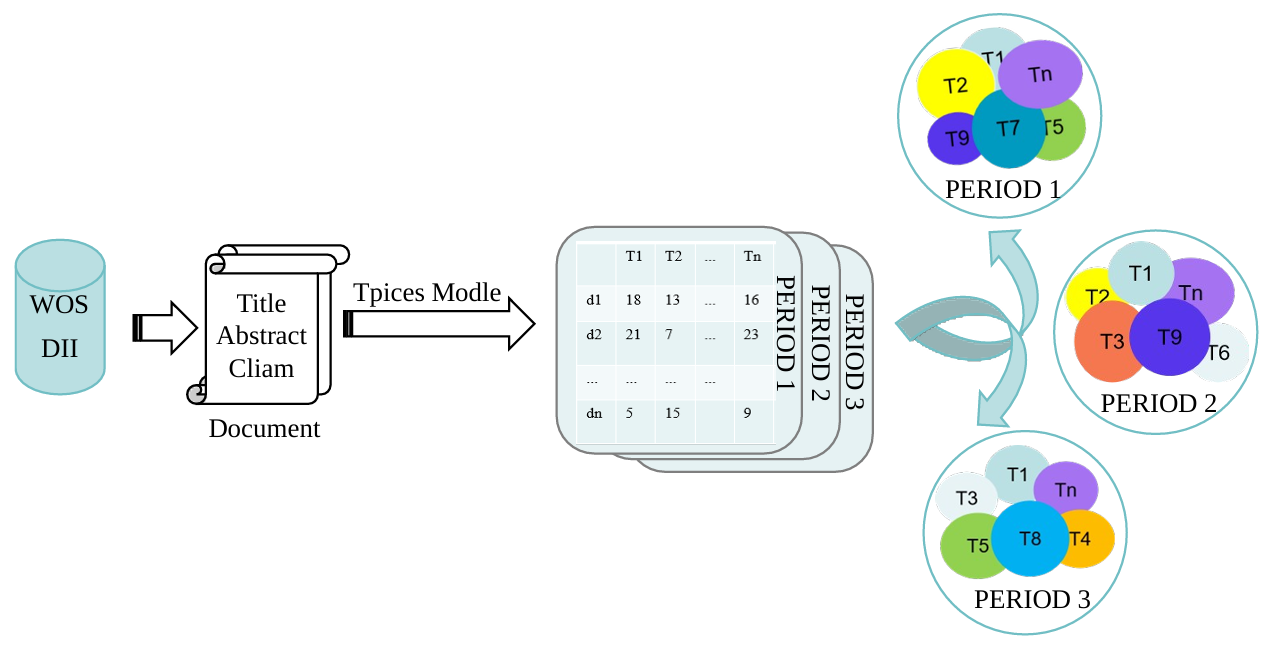
The development and utilization of offshore platforms have significantly enhanced the efficiency of energy extraction and have become crucial for national energy security and the stable operation of marine energy social systems. Consequently, offshore platform technology is not merely a marker of scientific and technological progress but also a key element of national strategic layout and marine industrial policy formulation. This paper combines text mining with expert evaluation and integrates multidimensional data from academic papers, patents, and industry reports to develop a novel policy decision-support technology forecasting model. Data on China's offshore platform technology from 2004 to 2023 are analyzed to assess its current state through comparative technology curves and to explain the mapping relationship between technological evolution and industrial policy adjustment. Furthermore, topic clustering of papers and patents is used to construct a hierarchical structure that clarifies the relationships among different technological areas and the operation logic of the marine industry. On this basis, the trajectories of technological evolution derived from papers and patents are compared, and future trends are projected to identify potential areas of innovation and policy optimization. The findings provide actionable insights and strategic guidance for Chinese corporations and government decision-makers on the development and optimization of offshore platform technology, thereby supporting the long-term coordinated governance of marine energy social systems.
Graphical Abstract
Keywords
Data Availability Statement
Funding
Conflicts of Interest
AI Use Statement
Ethical Approval and Consent to Participate
References
- Edwards, E. C., Holcombe, A., Brown, S., Ransley, E., Hann, M., & Greaves, D. (2023). Evolution of floating offshore wind platforms: A review of at-sea devices. Renewable and Sustainable Energy Reviews, 183, 113416.
[CrossRef] [Google Scholar] - Amaechi, C. V., Reda, A., Butler, H. O., Ja'e, I. A., & An, C. (2022). Review on fixed and floating offshore structures. Part I: Types of platforms with some applications. Journal of Marine Science and Engineering, 10(8), 1074.
[CrossRef] [Google Scholar] - Gao, L., Porter, A. L., Wang, J., Fang, S., Zhang, X., Ma, T., ... & Huang, L. (2013). Technology life cycle analysis method based on patent documents. Technological Forecasting and Social Change, 80(3), 398-407.
[CrossRef] [Google Scholar] - Haleem, A., Mannan, B., Luthra, S., Kumar, S., & Khurana, S. (2019). Technology forecasting (TF) and technology assessment (TA) methodologies: a conceptual review. Benchmarking: An International Journal, 26(1), 48-72.
[CrossRef] [Google Scholar] - Rowe, G., & Wright, G. (1999). The Delphi technique as a forecasting tool: issues and analysis. International journal of forecasting, 15(4), 353-375.
[CrossRef] [Google Scholar] - Lee, C., Kwon, O., Kim, M., & Kwon, D. (2018). Early identification of emerging technologies: A machine learning approach using multiple patent indicators. Technological Forecasting and Social Change, 127, 291-303.
[CrossRef] [Google Scholar] - Zhou, X., Huang, L., Zhang, Y., & Yu, M. (2019). A hybrid approach to detecting technological recombination based on text mining and patent network analysis. Scientometrics, 121(2), 699-737.
[CrossRef] [Google Scholar] - Zhang, Y., Zhang, G., Chen, H., Porter, A. L., Zhu, D., & Lu, J. (2016). Topic analysis and forecasting for science, technology and innovation: Methodology with a case study focusing on big data research. Technological forecasting and social change, 105, 179-191.
[CrossRef] [Google Scholar] - Li, X., Fan, M., Zhou, Y., Fu, J., Yuan, F., & Huang, L. (2020). Monitoring and forecasting the development trends of nanogenerator technology using citation analysis and text mining. Nano Energy, 71, 104636.
[CrossRef] [Google Scholar] - Xu, H., Yue, Z., Pang, H., Elahi, E., Li, J., & Wang, L. (2022). Integrative model for discovering linked topics in science and technology. Journal of Informetrics, 16(2), 101265.
[CrossRef] [Google Scholar] - Ren, H., & Zhao, Y. (2021). Technology opportunity discovery based on constructing, evaluating, and searching knowledge networks. Technovation, 101, 102196.
[CrossRef] [Google Scholar] - Tseng, Y. H., Lin, C. J., & Lin, Y. I. (2007). Text mining techniques for patent analysis. Information processing & management, 43(5), 1216-1247.
[CrossRef] [Google Scholar] - Kim, S., Jang, D., Jun, S., & Park, S. (2015). A novel forecasting methodology for sustainable management of defense technology. Sustainability, 7(12), 16720-16736.
[CrossRef] [Google Scholar] - Kim, J. M., Kim, N. K., Jung, Y., & Jun, S. (2019). Patent data analysis using functional count data model. Soft computing, 23(18), 8815-8826.
[CrossRef] [Google Scholar] - Ba, Z., Meng, K., Ma, Y., & Xia, Y. (2024). Discovering technological opportunities by identifying dynamic structure-coupling patterns and lead-lag distance between science and technology. Technological Forecasting and Social Change, 200, 123147.
[CrossRef] [Google Scholar] - Li, X., Xie, Q., Jiang, J., Zhou, Y., & Huang, L. (2019). Identifying and monitoring the development trends of emerging technologies using patent analysis and Twitter data mining: The case of perovskite solar cell technology. Technological Forecasting and Social Change, 146, 687-705.
[CrossRef] [Google Scholar] - Li, Y., Zhou, Y., Ma, X., & Zhang, Y. (2021). Forecasting the Development of Self‐Driving Technology in China by Multidimensional Information. Journal of advanced transportation, 2021(1), 1693459.
[CrossRef] [Google Scholar] - Chen, Y. H., Chen, C. Y., & Lee, S. C. (2011). Technology forecasting and patent strategy of hydrogen energy and fuel cell technologies. International Journal of Hydrogen Energy, 36(12), 6957-6969.
[CrossRef] [Google Scholar] - Chen, C. (2006). CiteSpace II: Detecting and visualizing emerging trends and transient patterns in scientific literature. Journal of the American Society for information Science and Technology, 57(3), 359-377.
[CrossRef] [Google Scholar] - Choi, S., Park, H., Kang, D., Lee, J. Y., & Kim, K. (2012). An SAO-based text mining approach to building a technology tree for technology planning. Expert systems with applications, 39(13), 11443-11455.
[CrossRef] [Google Scholar] - Bildosola, I., Río-Bélver, R. M., Garechana, G., & Cilleruelo, E. (2017). TeknoRoadmap, an approach for depicting emerging technologies. Technological Forecasting and Social Change, 117, 25-37.
[CrossRef] [Google Scholar] - Yoon, B., & Park, Y. (2005). A systematic approach for identifying technology opportunities: Keyword-based morphology analysis. Technological Forecasting and Social Change, 72(2), 145-160.
[CrossRef] [Google Scholar] - Shibata, N., Kajikawa, Y., & Sakata, I. (2010). Extracting the commercialization gap between science and technology—Case study of a solar cell. Technological Forecasting and Social Change, 77(7), 1147-1155.
[CrossRef] [Google Scholar] - Lin, Y., Zheng, H., Mi, J. J., & Li, Y. (2025). A novel approach to identify technological innovation opportunities using patent mining for floating liquefied natural gas systems. Journal of Marine Science and Engineering, 13(3), 567.
[CrossRef] [Google Scholar]
Cite This Article
TY  - JOUR
AU  - Zhou, Yan
AU  - Huang, Jiepeng
AU  - Xie, Chunmei
AU  - Zhang, Yunxing
PY  - 2026
DA  - 2026/11/23
TI  - Research on Policy-Oriented Technology Forecasting of China's Offshore Platform Based on Multidimensional Information
JO  - Journal of Social Systems and Policy Analysis
T2  - Journal of Social Systems and Policy Analysis
JF  - Journal of Social Systems and Policy Analysis
VL  - 3
IS  - 4
SP  - 207
EP  - 222
DO  - 10.62762/JSSPA.2026.488693
UR  - https://www.icck.org/article/abs/jsspa.2026.488693
KW  - technology forecasting model
KW  - offshore platform technology
KW  - multidimensional information
KW  - topic analysis
KW  - marine energy policy
AB  - The development and utilization of offshore platforms have significantly enhanced the efficiency of energy extraction and have become crucial for national energy security and the stable operation of marine energy social systems. Consequently, offshore platform technology is not merely a marker of scientific and technological progress but also a key element of national strategic layout and marine industrial policy formulation. This paper combines text mining with expert evaluation and integrates multidimensional data from academic papers, patents, and industry reports to develop a novel policy decision-support technology forecasting model. Data on China's offshore platform technology from 2004 to 2023 are analyzed to assess its current state through comparative technology curves and to explain the mapping relationship between technological evolution and industrial policy adjustment. Furthermore, topic clustering of papers and patents is used to construct a hierarchical structure that clarifies the relationships among different technological areas and the operation logic of the marine industry. On this basis, the trajectories of technological evolution derived from papers and patents are compared, and future trends are projected to identify potential areas of innovation and policy optimization. The findings provide actionable insights and strategic guidance for Chinese corporations and government decision-makers on the development and optimization of offshore platform technology, thereby supporting the long-term coordinated governance of marine energy social systems.
SN  - 3068-5540
PB  - Institute of Central Computation and Knowledge
LA  - English
ER  -
@article{Zhou2026Research,
  author = {Yan Zhou and Jiepeng Huang and Chunmei Xie and Yunxing Zhang},
  title = {Research on Policy-Oriented Technology Forecasting of China's Offshore Platform Based on Multidimensional Information},
  journal = {Journal of Social Systems and Policy Analysis},
  year = {2026},
  volume = {3},
  number = {4},
  pages = {207-222},
  doi = {10.62762/JSSPA.2026.488693},
  url = {https://www.icck.org/article/abs/jsspa.2026.488693},
  abstract = {The development and utilization of offshore platforms have significantly enhanced the efficiency of energy extraction and have become crucial for national energy security and the stable operation of marine energy social systems. Consequently, offshore platform technology is not merely a marker of scientific and technological progress but also a key element of national strategic layout and marine industrial policy formulation. This paper combines text mining with expert evaluation and integrates multidimensional data from academic papers, patents, and industry reports to develop a novel policy decision-support technology forecasting model. Data on China's offshore platform technology from 2004 to 2023 are analyzed to assess its current state through comparative technology curves and to explain the mapping relationship between technological evolution and industrial policy adjustment. Furthermore, topic clustering of papers and patents is used to construct a hierarchical structure that clarifies the relationships among different technological areas and the operation logic of the marine industry. On this basis, the trajectories of technological evolution derived from papers and patents are compared, and future trends are projected to identify potential areas of innovation and policy optimization. The findings provide actionable insights and strategic guidance for Chinese corporations and government decision-makers on the development and optimization of offshore platform technology, thereby supporting the long-term coordinated governance of marine energy social systems.},
  keywords = {technology forecasting model, offshore platform technology, multidimensional information, topic analysis, marine energy policy},
  issn = {3068-5540},
  publisher = {Institute of Central Computation and Knowledge}
}
Article Metrics
Publisher's Note
ICCK stays neutral with regard to jurisdictional claims in published maps and institutional affiliations.
Rights and Permissions
 Copyright © 2026 by the Author(s). Published by Institute of Central Computation and Knowledge. This article is an open access article distributed under the terms and conditions of the Creative Commons Attribution (CC BY) license (https://creativecommons.org/licenses/by/4.0/), which permits use, sharing, adaptation, distribution and reproduction in any medium or format, as long as you give appropriate credit to the original author(s) and the source, provide a link to the Creative Commons licence, and indicate if changes were made.


Portico
