


ICCK

Dr Pandey Anish

Kalinga Institute of Industrial Technology (KIIT) Deemed to be University, IN

ORCID
Section 01

Academic Profile

Dr. Anish Pandey is a Professor (Associate) at the School of Mechanical Engineering, KIIT Deemed to be University, Bhubaneswar, Odisha, India. He earned his Ph.D. in Robotics and Control (Mechanical Engineering – Design Specialization) from the National Institute of Technology, Rourkela in July 2016. With more than ten years of post-doctoral teaching and research experience, Dr. Pandey specializes in Bio-Inspired Optimization Methods, Fuzzy Logic, Neural Networks, Machine Learning, AI, and Evolutionary Algorithms for robot motion and orientation control. His current research emphasizes the design and fabrication of autonomous cleaning robots, roller walker robots, articulated robots, and humanoid robots (NAO platform). Dr. Pandey has many publications, including 32 SCI/SCIE-indexed papers and 29 Scopus/WoS-indexed papers, along with several book chapters and international conference proceedings. His contributions have received significant recognition, with 3394 citations on Google Scholar (h-index: 23, i10-index: 41) and 2005 Scopus citations (h-index: 16) across 92 documents. In addition to research, he has demonstrated strong innovation capability, having been granted 113 Indian patents (Utility and Design) and filing 34 patents. He has successfully supervised seven M.Tech projects, numerous B.Tech projects, and three Ph.D. scholars, while also leading funded projects, including an industry-sponsored consultancy project and three sponsored projects under TIH, IIT Guwahati. As an educator, he has taught a wide range of undergraduate and postgraduate courses, including Robotics, Mechatronics, Mobile and Autonomous Robotics, Machine Learning, Industry 4.0 Technologies, Machine Design, Mechanics of Solids, Engineering Graphics, Finite Element Method, Mechanical Vibration and Noise Engineering, and Intelligent Manufacturing Systems (AI-based). Dr. Pandey also actively contributes to the global robotics research community. Since October 2022, he has served as an Associate Editor for the Journal of Field Robotics (Wiley, IF 5.2, Q1) and is an editorial board member of the International Journal of Advance Robotics & Expert Systems (JARES), Journal of Mechanical and Manufacturing Process, and Artificial Intelligence Advances (AIA). He regularly reviews for leading journals, including those from IEEE, Elsevier, Wiley, Springer, Emerald, and SAGE. His achievements include receiving the Outstanding Reviewer Award from ISA Transactions (Elsevier) in 2017 and the Best Paper Award from Defence Technology (Q1, IF 5.9) in 2023.

Section 02

ICCK Publications

Export all 1 BibTeX RIS
Open Access | Research Article | 18 Nov 2026
An Explainable Hybrid Deep Learning Framework with Multi-Scale Feature Fusion and Uncertainty-Aware Clinical Decision Support for Brain Tumor Classification
ICCK Transactions on Emerging Topics in Artificial Intelligence | Volume 3, Issue 4: 267-305, 2026 | DOI: 10.62762/TETAI.2026.693634
Abstract
Accurate diagnosis of brain tumors from magnetic resonance imaging (MRI) is crucial but is challenged by inter-observer variability and by the limited explainability of deep models. Most existing studies use standalone CNNs or Transformers without uncertainty assessment or explanation capabilities. We propose an explainable hybrid deep learning framework that combines multi-scale feature fusion with uncertainty-aware clinical decision support. On a four-class brain MRI benchmark, it was compared with EfficientNetV2, ConvNeXt, and Swin Transformer. Five explainability methods (Grad-CAM, SHAP, LIME, Integrated Gradients, and Attention Rollout) explain predictions, while Monte Carlo dropout qua... More >

Graphical Abstract
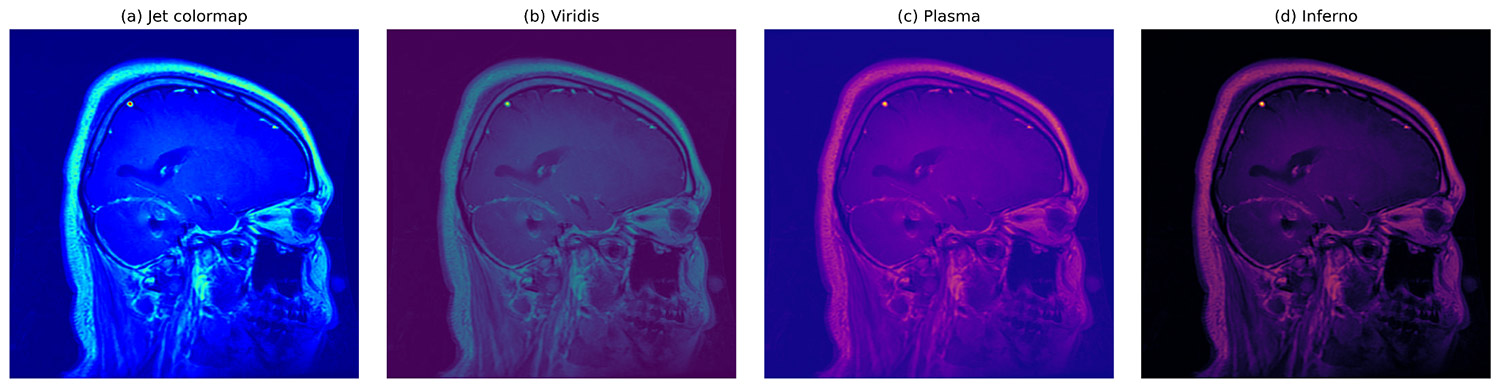
An Explainable Hybrid Deep Learning Framework with Multi-Scale Feature Fusion and Uncertainty-Aware Clinical Decision Support for Brain Tumor Classification