Biomedical Informatics and Smart Healthcare | Volume 2, Issue 4: 191-200, 2026 | DOI: 10.62762/BISH.2026.482168
Abstract
Brain MRI uses a strong static magnetic field to align the nuclei in the region of interest, a gradient field to localize them, and a radiofrequency (RF) pulse to raise them to higher energy states. When the pulse is switched off, the nuclei relax and emit energy, which a coil records to map their positions. MRI scanners are common in hospitals and research centers and are central to the diagnosis of brain disorders. Detecting brain abnormalities requires a reliable way to decide whether a patient has a given condition, and image classification is useful when diseases are hard to separate by eye. In this study, MRI scans of people with and without Alzheimer's disease (AD) are analyzed, and a... More >
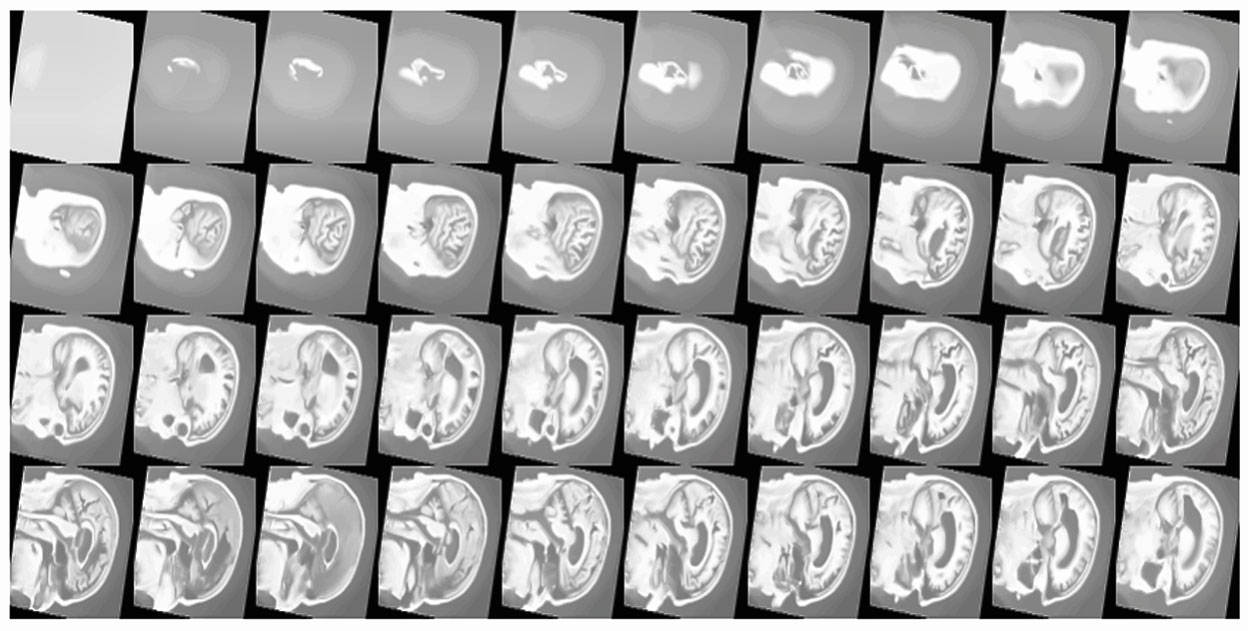
Graphical Abstract