


ICCK

Ibrar Ali

University Of Swat, KP, Pakistan

Section 01

Academic Profile

No academic profile information available at the moment.

Section 02

Editorial Roles

This user currently does not serve as an editor for any ICCK journals.

Section 03

ICCK Publications

Open Access | Research Article | 31 May 2026
Multi-Scale CSPResNet50 with Feature Pyramid Aggregation and SE Attention for Breast Cancer Histopathological Subtype Classification and Malignancy Detection
ICCK Journal of Image Analysis and Processing | Volume 2, Issue 3: 122-140, 2026 | DOI: 10.62762/JIAP.2026.746947
Abstract
Breast cancer is a leading cause of cancer-related mortality worldwide, making accurate histopathological subtype discrimination critical for timely clinical intervention. Existing deep learning approaches often evaluate limited settings (binary or multi-class, single magnification), restricting comparative utility and clinical interpretability. This study proposes a unified Cross Stage Partial Network (CSPNet)-based framework for comprehensive classification on the BreaKHis dataset. A CSPResNet50 backbone pre-trained on ImageNet was extended with a multi-scale Feature Pyramid-style aggregation head, Squeeze-and-Excitation channel attention, dual Global Average and Max Pooling per scale (153... More >

Graphical Abstract
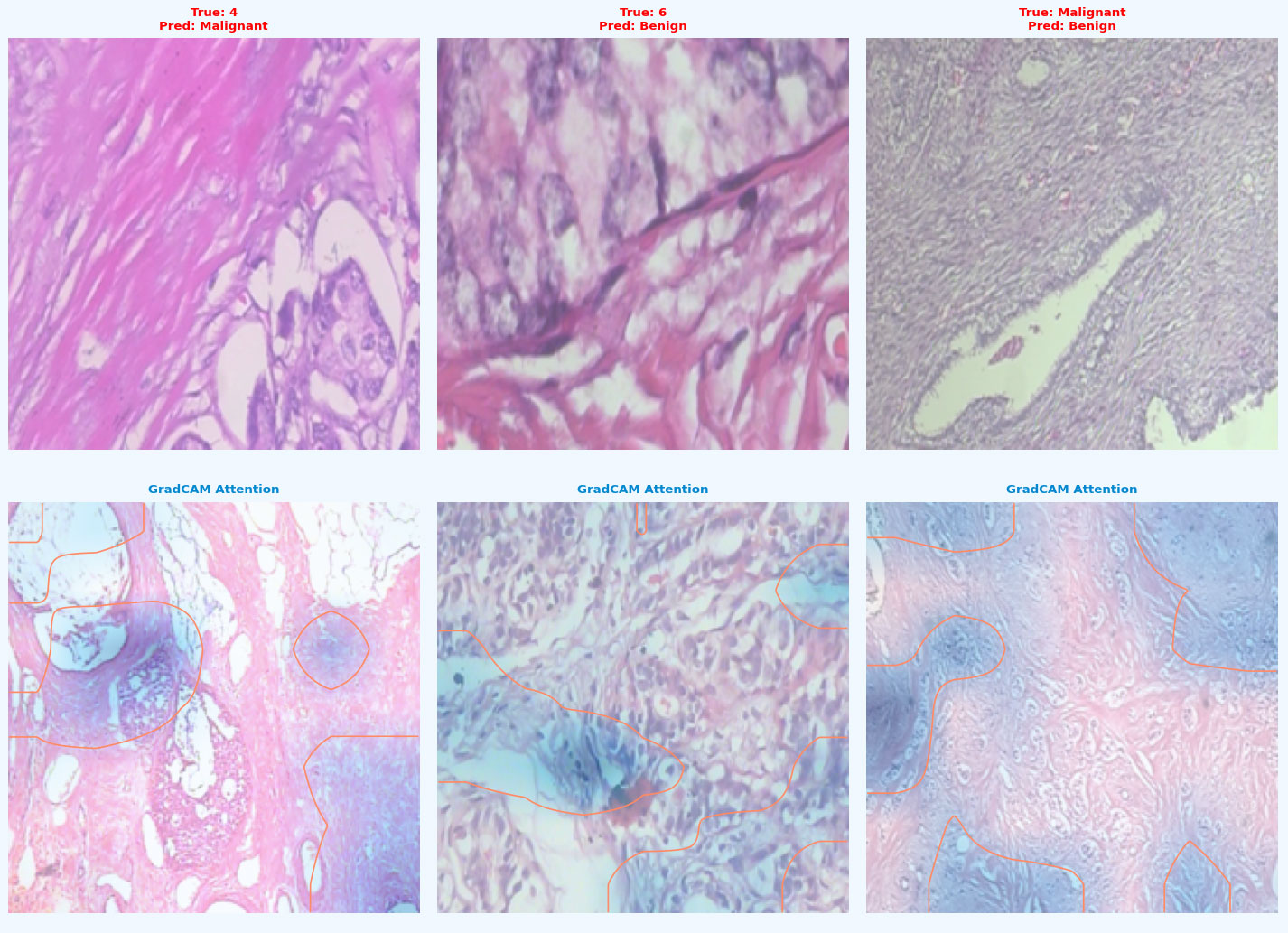
Multi-Scale CSPResNet50 with Feature Pyramid Aggregation and SE Attention for Breast Cancer Histopathological Subtype Classification and Malignancy Detection
Open Access | Research Article | 16 February 2025 | Cited: Crossref logo  4 , Scopus 4
Leveraging Machine Learning and Deep Learning for Advanced Malaria Detection Through Blood Cell Images
ICCK Journal of Image Analysis and Processing | Volume 1, Issue 1: 17-26, 2025 | DOI: 10.62762/JIAP.2025.514726
Abstract
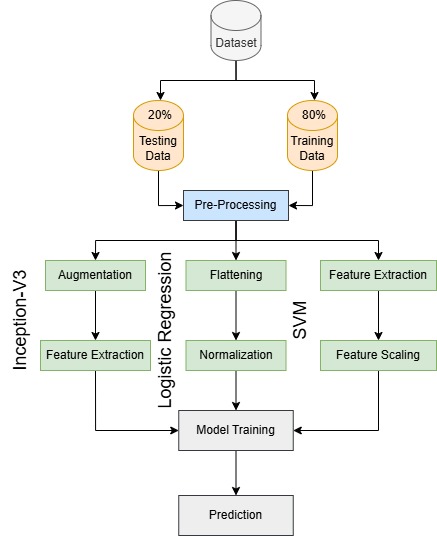
Malaria remains a significant global health challenge, causing hundreds of thousands of deaths annually, particularly in tropical and subtropical regions. This study proposes an advanced automated approach for malaria detection by classifying red blood cell images using machine learning and deep learning techniques. Three distinct models: Logistic Regression (LR), Support Vector Machine (SVM), and Inception-V3 were implemented and rigorously evaluated on a dataset comprising 27,558 cell images. The LR model achieved an accuracy of 65.38%, while SVM demonstrated improved classification performance with an accuracy of 84%. The deep learning-based Inception-V3 model outperformed both, achieving... More >

Graphical Abstract
Leveraging Machine Learning and Deep Learning for Advanced Malaria Detection Through Blood Cell Images