
Praveen Myakala is a software engineer and AI researcher who focuses on intelligent systems, cloud-native architectures, and distributed machine learning. His work spans several peer-reviewed publications and collaborative research projects in emerging areas of artificial intelligence. He enjoys building practical solutions that blend scalable engineering with thoughtful innovation.
Editorial Roles
No Editorial Roles
This user currently does not serve as an editor for any ICCK journals.
ICCK Publications
Total Publications: 2
Free Access
|
Research Article
| 20 May 2025
| Cited:
1
,
1
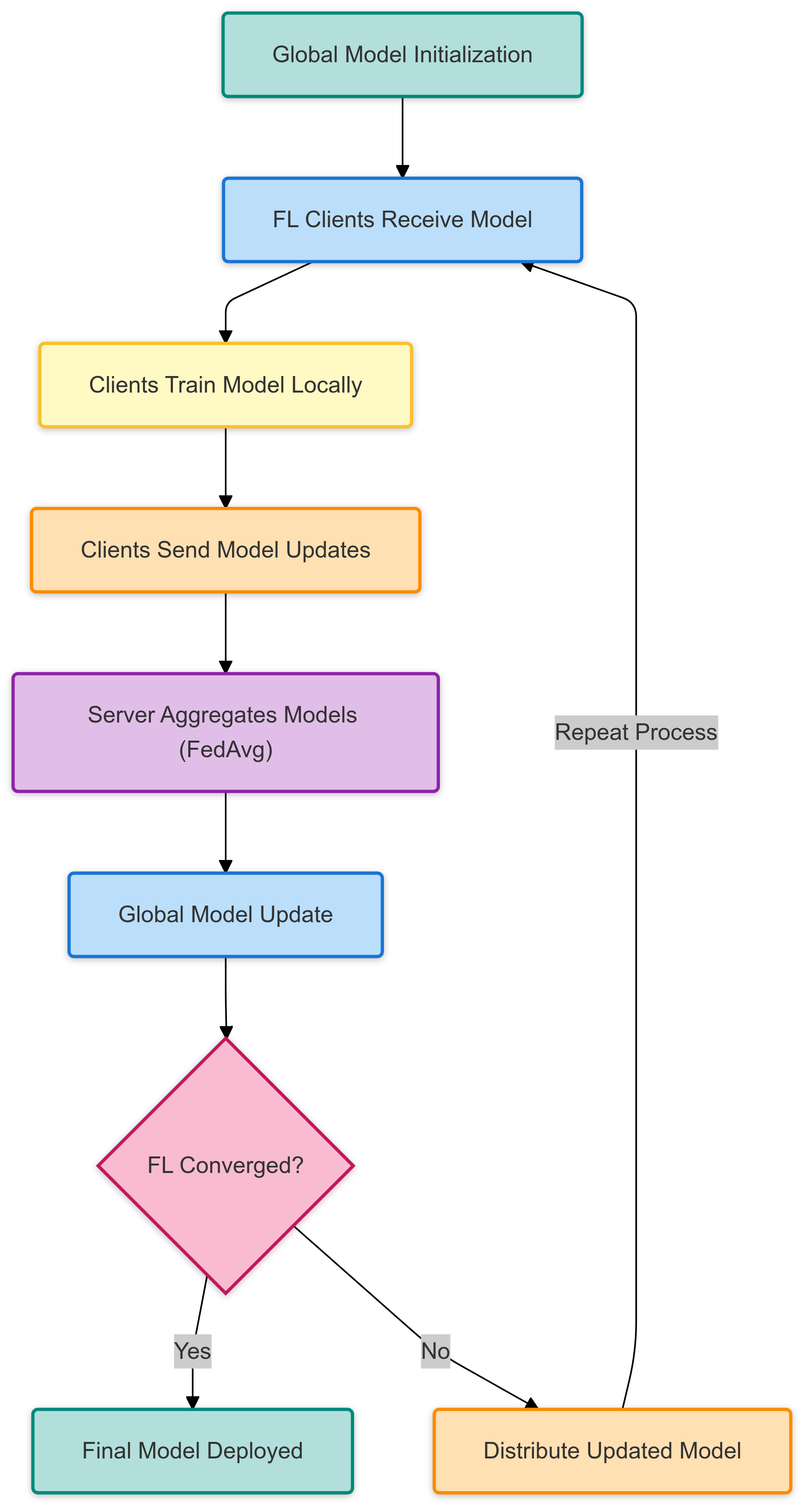
Traditional centralized machine learning approaches for IoT botnet detection pose significant privacy risks, as they require transmitting sensitive device data to a central server. This study presents a privacy-preserving Federated Learning (FL) approach that employs Federated Averaging (FedAvg) to detect prevalent botnet attacks, such as Mirai and Gafgyt, while ensuring that raw data remain on local IoT devices. Using the N-BaIoT dataset, which contains real-world benign and malicious traffic, we evaluated both the IID and non-IID data distributions to assess the effects of decentralized training. Our approach achieved 97.5% accuracy in IID and 95.2% in highly skewed non-IID scenarios, clos... More >
Graphical Abstract
Open Access
|
Research Article
| 15 March 2025
| Cited:
11
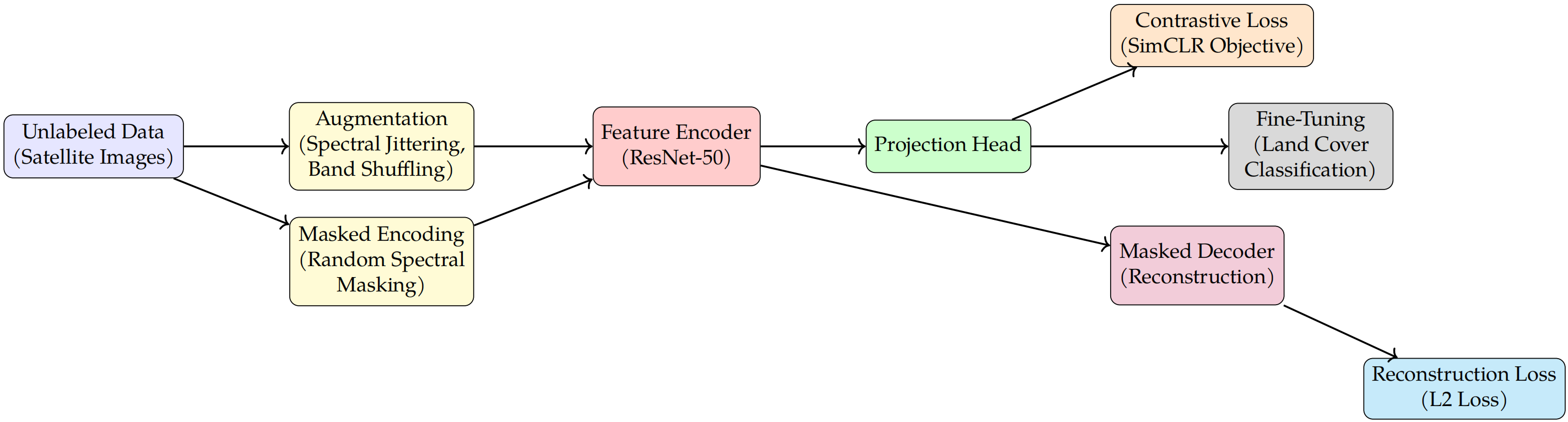
The scalability of modern AI is fundamentally limited by the availability of labeled data. While supervised learning achieves remarkable performance, it relies on large annotated datasets, which are expensive and time-consuming to acquire. This work explores self-supervised learning (SSL) as a promising solution to this challenge, enabling AI to scale effectively in data-scarce scenarios. This study demonstrates the effectiveness of the proposed SSL framework using the EuroSAT dataset, a benchmark for land cover classification where labeled data is limited and costly. The proposed approach integrates contrastive learning with multi-spectral augmentations, such as spectral jittering and band... More >
Graphical Abstract
We use cookies to improve your experience. By continuing to browse, you agree to our use of essential cookies.
Learn more