ICCK

Amir Hussain

Edinburgh Napier University, Scotland

Section 01

Academic Profile

No academic profile information available at the moment.

Section 02

Editorial Roles

This user currently does not serve as an editor for any ICCK journals.

Section 03

ICCK Publications

Free Access | Research Article | 28 April 2026
Multi-Attack Audio-Visual Spoof Detection for Secure Hearing-Assistive Systems Using Transformer Fusion
ICCK Transactions on Information Security and Cryptography | Volume 2, Issue 2: 101-108, 2026 | DOI: 10.62762/TISC.2026.221187
Abstract
Audio-visual spoofing attacks have emerged as a serious threat to modern hearing-assistive systems due to rapid advances in text-to-speech synthesis, neural vocoders, and lip-sync deepfake generation. Advanced hearing aids and cochlear implants increasingly incorporate AI-based speech enhancement and multimodal perception modules, which makes them vulnerable to manipulated or synthetic inputs. Traditional spoof detection approaches are often limited to binary classification between bonafide and spoofed speech, failing to capture the diversity of emerging multi-modal attack types.In this paper, we propose a multi-attack audio-visual spoof detection framework designed that explicitly models fo... More >

Graphical Abstract
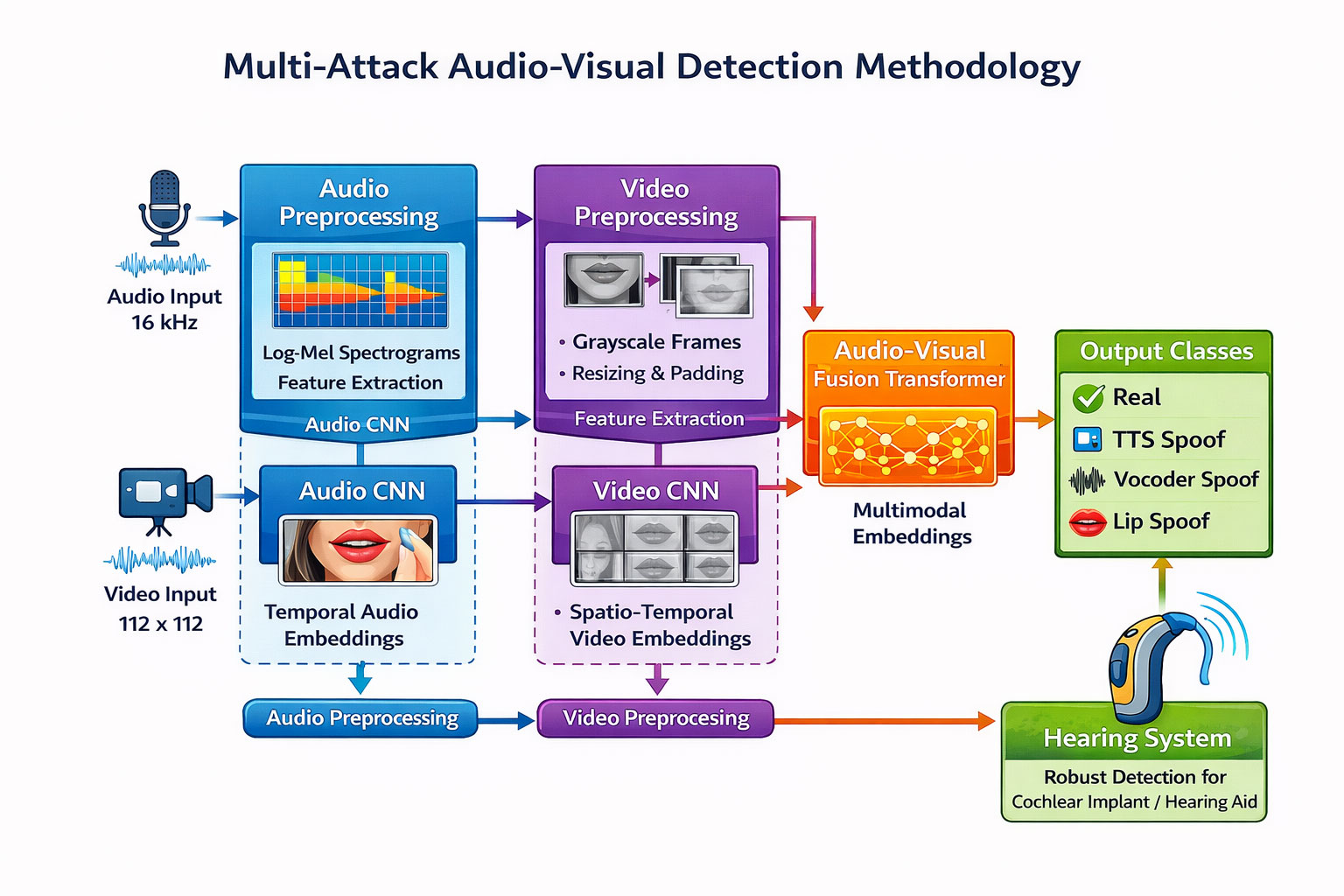
Multi-Attack Audio-Visual Spoof Detection for Secure Hearing-Assistive Systems Using Transformer Fusion
Free Access | Research Article | 10 April 2026
Privacy-Preserving Artificial Intelligence for Diabetes Prediction: A Comparison of Centralised and Federated Learning
ICCK Transactions on Information Security and Cryptography | Volume 2, Issue 2: 73-81, 2026 | DOI: 10.62762/TISC.2025.335076
Abstract
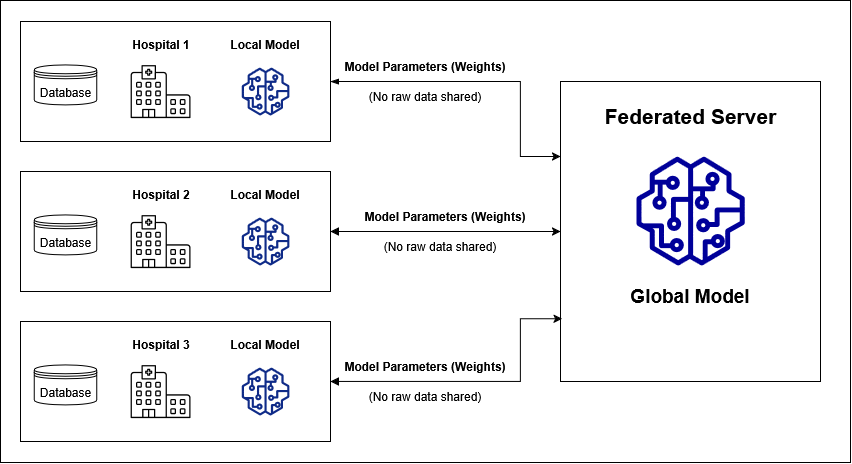
Artificial intelligence (AI) is increasingly used in healthcare to support disease prediction and clinical decision-making. Traditional centralised machine learning approaches often require the aggregation of sensitive patient data into a single repository, which raises substantial privacy, ethical, and regulatory concerns. Federated learning has emerged as a privacy-preserving alternative that enables collaborative model training across distributed data sources without sharing raw patient data. In this study, we investigate whether federated learning can achieve predictive performance comparable to that of centralised machine learning when applied to structured healthcare data. Using the PI... More >

Graphical Abstract
Privacy-Preserving Artificial Intelligence for Diabetes Prediction: A Comparison of Centralised and Federated Learning