

ICCK

Saddam Hussain

School of Digital Science, Universiti Brunei Darussalam, Jalan Tungku Link, Gadong BE1410, Brunei Darussalam

Section 01

Academic Profile

Saddam Hussain received Bachelor’s and Master’s degrees from Islamia College, Peshawar, and Hazara University, Masehra Pakistan in 2017 and 2021 respectively. Received a Ph.D. from the School of Digital Science, Universiti Brunei Darussalam, Gadong Brunei. He has published several papers in well-reputed journals including IEEE, JISA Elsevier, Cluster Computing, Computer Communication, IoTJ, and Electronics. He is serving as a reviewer in reputed journals including IEEE Access, the International Journal of Wireless Information Networks, the Scientific Journal of Electrical Computer and Informatics Engineering, and CMC. His research interests include Cryptography, Network Security, Wireless Sensor Networking (WSN), Information-Centric Networking (ICN), Named Data Networking (NDN), smart grid, Internet of Things (IoT), IIoT, Quantum Computing, Cloud Computing, and Edge Computing.

Section 02

Editorial Roles

This user currently does not serve as an editor for any ICCK journals.

Section 03

ICCK Publications

Free Access | Review Article | 20 September 2026
Security Vulnerabilities in Proxy Signature Schemes: Cryptanalysis, Design Weaknesses, and Open Challenges
ICCK Transactions on Information Security and Cryptography | Volume 2, Issue 3: 136-158, 2026 | DOI: 10.62762/TISC.2026.211619
Abstract
Proxy signature schemes allow an original signer to delegate signing authority to a proxy signer, supporting flexible authentication in distributed and resource-constrained environments such as cloud computing, blockchain, and Internet of Things (IoT) networks. Although many constructions have been proposed, a large number have later been broken due to flawed design assumptions, weak delegation binding, or the absence of rigorous provable security. This paper surveys proxy signature schemes with a focus on their security weaknesses. {It presents} a taxonomy of existing constructions by cryptographic primitive, delegation mechanism, and proof framework, {and then consolidates} known cryptanal... More >

Graphical Abstract
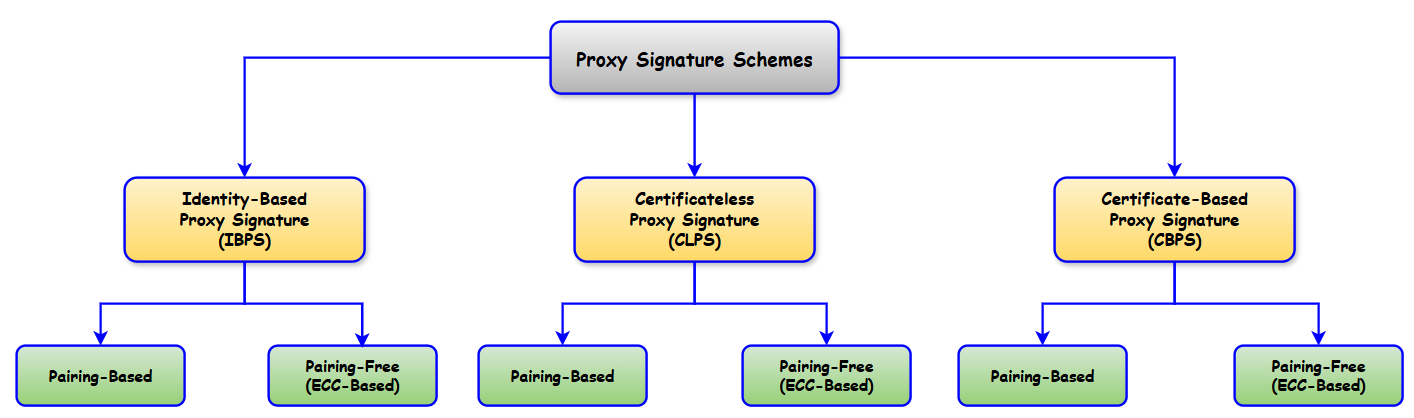
Security Vulnerabilities in Proxy Signature Schemes: Cryptanalysis, Design Weaknesses, and Open Challenges
Open Access | Research Article | 22 August 2025
Quantum-Based Optical Pulse Control and Phase Shifts in Chiral Media for IoT Applications
Journal of Quantum Cryptography | Volume 1, Issue 1: 5-13, 2025 | DOI: 10.62762/JQC.2025.506482
Abstract
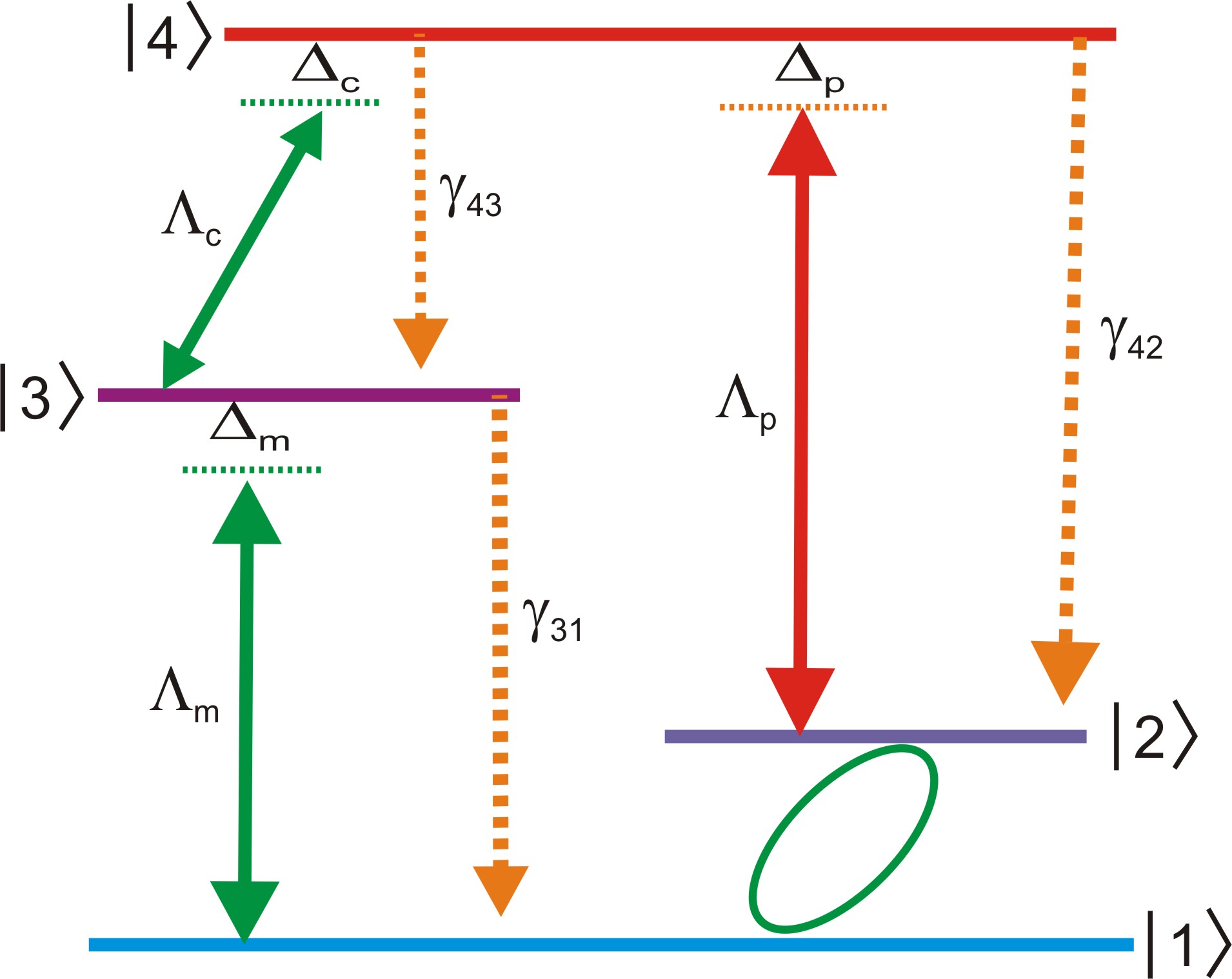
Quantum–based models are used to improve the Internet of Things (IoT) ecosystems' efficiency, storage capacity, processing speed, and security. These models investigate quantum effects such as subluminality/superluminality, time delay, and phase shifting to achieve the mentioned goals. Mostly, these models use achiral atomic media that deal with the light beam in a straight path and fail to provide the most needed properties of efficient decision-making, optical routing, control of polarization, and enhanced security. In order to make up for these deficiencies, an investigation into the propagation of a light beam through a chiral atomic medium has been carried out. A decision-making and o... More >

Graphical Abstract
Quantum-Based Optical Pulse Control and Phase Shifts in Chiral Media for IoT Applications