Dr. Brojo Kishore Mishra is a distinguished academician, researcher, and professor in the Department of Computer Science & Engineering at NIST University, Odisha, India. He holds a Ph.D. in Computer Science from Berhampur University, along with Master’s degrees in Computer Applications and Mathematics.
With over 20 years of experience in teaching, research, and academic administration, Dr. Mishra has held several key leadership roles, including Associate Dean (International Affairs), Institutional IQAC Coordinator, Principal, Prof. i/c (Examinations), and Head of Department. He has also served as an adjunct and visiting faculty at reputed institutions such as Lincoln University College (Malaysia), SIMATS Chennai, and IISER Berhampur.
Dr. Mishra has made substantial contributions to the field of computer science, with over 200 publications in reputed journals, conferences, and book chapters. He has also authored 3 books and edited 25 books, and his work on emerging technologies has led to the filing and granting of several patents, copyrights, and a trademark.
His research interests span Artificial Intelligence, Machine Learning, Data Mining, Cloud Computing, and the Internet of Things (IoT). He has successfully supervised numerous postgraduate and doctoral scholars, contributing to impactful research areas such as supply chain recommendation systems, sentiment analysis, and multilingual speech data processing.
Beyond research, Dr. Mishra is actively involved in curriculum development, academic quality assurance, and industry-academia collaboration, playing a vital role in shaping the next generation of computing professionals.
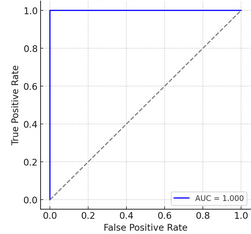
The integration of sixth-generation (6G) networks with Wireless Sensor Networks (WSNs) creates unprecedented opportunities for developing secure and scalable smart city infrastructures. However, the proliferation of heterogeneous devices and exponential data growth demand more robust security solutions. While existing hybrid deep learning approaches combining convolutional, recurrent, and attention-based architectures show promise in attack detection, they face limitations including high false-positive rates, inadequate modeling of topological dependencies, and vulnerability to adversarial attacks. This paper presents an enhanced intrusion detection framework that integrates Graph Neural Net... More >
The electric vehicle (EV) manufacturing industry rapidly progresses from Industry 4.0 to Industry 5.0, next-generation computing technologies are emerging as disruptive enablers. This paper explores about the advanced computing paradigms to improve efficiency, robustness and adaptation across EV manufacturing ecosystems in the revolved vehicle industry in order to satisfy the increasing needs of intelligent automation, real-time decision-making and sustainable production. Through the integration of industrial case studies, literature reviews and rigorous technology mapping, the paper work validates the potential of these technologies to optimize resource utilization, speed up computer operat... More >
Graphical Abstract
We use cookies
Our website uses cookies that are essential for its operation and additional cookies to track performance, or to improve and personalize our services. By clicking "Allow all cookies", you agree to the storing of cookies on your device. For more information on how we use cookies, please see our Cookie Policy.