Journal of Advanced Electronic Materials | Volume 2, Issue 2: 58-63, 2026 | DOI: 10.62762/JAEM.2026.198129
Abstract
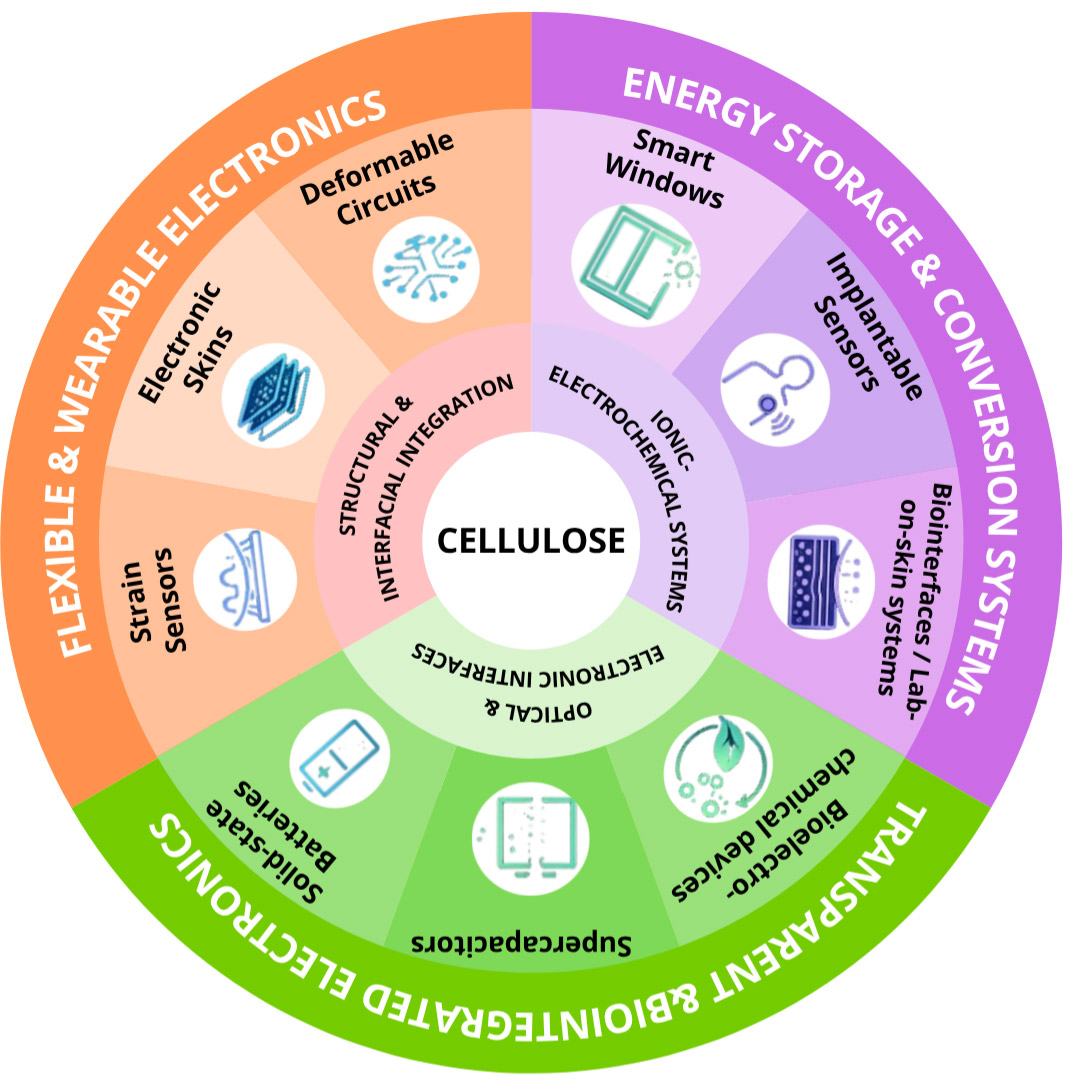
Cellulose, the most abundant natural polymer, is emerging as a versatile biomaterial platform for sustainable advanced electronics beyond its conventional role as a passive substrate. Its hierarchical fibrillar architecture and hydroxyl-rich chemistry enable unique combinations of mechanical compliance, interfacial reactivity, ionic transport, and optical transparency. This perspective highlights cellulose as a multifunctional system spanning structural and interfacial integration, ionic-electrochemical behavior, and optoelectronic interfaces, which together underpin its growing relevance in flexible, energy, and transparent electronic technologies. However, intrinsic coupling between hydrat... More >
Graphical Abstract