


Molecular Regulatory Network and Therapeutic Potential of Ferroptosis in Gastric Cancer: An Exploration Combining Bibliometrics and Mechanistic Review


Article Information
Abstract
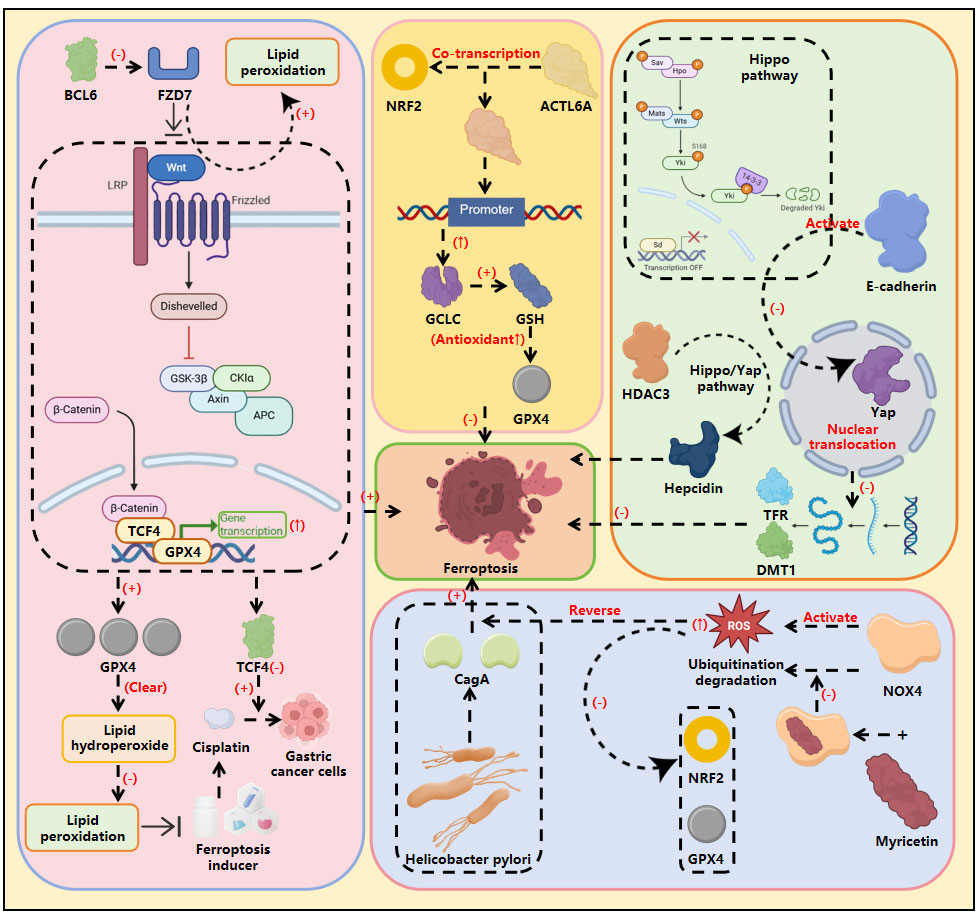
Gastric cancer, a prevalent malignancy of the digestive tract, continues to pose significant challenges in pathogenesis and prognosis improvement. Ferroptosis has emerged as a promising therapeutic breakthrough due to its critical role in inhibiting tumor growth and reversing drug resistance. This study employs bibliometric and visual analysis tools, utilizing the Web of Science database (up to October 20, 2025), to systematically analyze 362 English-language papers on ferroptosis in gastric cancer (GC), authored by 2,458 researchers across 16 countries and published in 189 journals. The analysis reveals a rapidly growing field, with 74.86\% of papers published in the last three years, and identifies China, the USA, and Japan as leading contributors. Using VOSviewer and CiteSpace, the study maps publication trends, collaboration networks, and keyword co-occurrence, identifying core research hotspots centered on the molecular regulatory framework of ferroptosis. Meanwhile, we systematically summarize and comprehensively discuss the potential mechanisms of ferroptosis involved in GC occurrence and progression. By integrating bibliometric analysis with comprehensive review, this study clarifies the intrinsic relationship between gastric cancer and ferroptosis. Current efforts are focused on identifying and developing novel strategies to inhibit cancer proliferation and overcome drug resistance. By systematically outlining the knowledge structure, research evolution, and future directions of GC ferroptosis, this work provides a comprehensive foundation for researchers, fostering deeper insights and accelerating the translation of fundamental discoveries into clinical applications.
Graphical Abstract
Keywords
Data Availability Statement
Funding
Conflicts of Interest
AI Use Statement
Ethical Approval and Consent to Participate
References
- Yang, W. J., Zhao, H. P., Yu, Y., Wang, J. H., Guo, L., Liu, J. Y., ... & Lv, J. (2023). Updates on global epidemiology, risk and prognostic factors of gastric cancer. World journal of gastroenterology, 29(16), 2452.
[CrossRef] [Google Scholar] - Yang, W. S., SriRamaratnam, R., Welsch, M. E., Shimada, K., Skouta, R., Viswanathan, V. S., ... & Stockwell, B. R. (2014). Regulation of ferroptotic cancer cell death by GPX4. Cell, 156(1), 317-331.
[CrossRef] [Google Scholar] - Morgan, E., Arnold, M., Camargo, M. C., Gini, A., Kunzmann, A. T., Matsuda, T., ... & Soerjomataram, I. (2022). The current and future incidence and mortality of gastric cancer in 185 countries, 2020–40: a population-based modelling study. EClinicalMedicine, 47.
[CrossRef] [Google Scholar] - Ilic, M., & Ilic, I. (2022). Epidemiology of stomach cancer. World journal of gastroenterology, 28(12), 1187.
[CrossRef] [Google Scholar] - Lu, L., Mullins, C. S., Schafmayer, C., Zeißig, S., & Linnebacher, M. (2021). A global assessment of recent trends in gastrointestinal cancer and lifestyle‐associated risk factors. Cancer Communications, 41(11), 1137-1151.
[CrossRef] [Google Scholar] - Yang, L., Ying, X., Liu, S., Lyu, G., Xu, Z., Zhang, X., ... & Ji, J. (2020). Gastric cancer: Epidemiology, risk factors and prevention strategies. Chinese Journal of Cancer Research, 32(6), 695.
[CrossRef] [Google Scholar] - Hui, Y., Tu, C., Liu, D., Zhang, H., & Gong, X. (2023). Risk factors for gastric cancer: A comprehensive analysis of observational studies. Frontiers in Public Health, 10, 892468.
[CrossRef] [Google Scholar] - Li, S., Zhang, G., Hu, J., Tian, Y., & Fu, X. (2024). Ferroptosis at the nexus of metabolism and metabolic diseases. Theranostics, 14(15), 5826.
[CrossRef] [Google Scholar] - Hadian, K., & Stockwell, B. R. (2020). SnapShot: ferroptosis. cell, 181(5), 1188.
[CrossRef] [Google Scholar] - Xu, H., Lu, Y., Zeng, Q., Zhu, X., Guan, W., & Liu, S. (2025). Ferroptosis of immune cells in infection, inflammation and tumor progression. Biomolecules, 15(10), 1464.
[CrossRef] [Google Scholar] - Zhang, J., Liu, M., & Li, Z. (2025). tRNA-derived small RNAs: emerging regulators of ferroptosis in human diseases. Human Cell, 38(6), 162.
[CrossRef] [Google Scholar] - Zhang, R., Kang, R., & Tang, D. (2023). Ferroptosis in gastrointestinal cancer: from mechanisms to implications. Cancer Letters, 561, 216147.
[CrossRef] [Google Scholar] - Zhao, H., Ao, L., Sorina, Wei, Y., Yin, H. Z., Zhang, N., ... & Zhou, G. L. (2025). Ferroptosis and gastric cancer: from molecular mechanisms to clinical implications. Frontiers in Immunology, 16, 1581928.
[CrossRef] [Google Scholar] - Lei, G., Zhuang, L., & Gan, B. (2022). Targeting ferroptosis as a vulnerability in cancer. Nature Reviews Cancer, 22(7), 381-396.
[CrossRef] [Google Scholar] - Le, J., Pan, G., Zhang, C., Chen, Y., Tiwari, A. K., & Qin, J. J. (2024). Targeting ferroptosis in gastric cancer: Strategies and opportunities. Immunological reviews, 321(1), 228-245.
[CrossRef] [Google Scholar] - Dixon, S. J., & Olzmann, J. A. (2024). The cell biology of ferroptosis. Nature reviews Molecular cell biology, 25(6), 424-442.
[CrossRef] [Google Scholar] - Jiang, X., Stockwell, B. R., & Conrad, M. (2021). Ferroptosis: mechanisms, biology and role in disease. Nature reviews Molecular cell biology, 22(4), 266-282.
[CrossRef] [Google Scholar] - Chen, X., Kang, R., Kroemer, G., & Tang, D. (2021). Broadening horizons: the role of ferroptosis in cancer. Nature reviews Clinical oncology, 18(5), 280-296.
[CrossRef] [Google Scholar] - Guan, Z., Chen, J., Li, X., & Dong, N. (2020). Tanshinone IIA induces ferroptosis in gastric cancer cells through p53-mediated SLC7A11 down-regulation. Bioscience reports, 40(8), BSR20201807.
[CrossRef] [Google Scholar] - Wei, J., Zeng, Y., Gao, X., & Liu, T. (2021). A novel ferroptosis-related lncRNA signature for prognosis prediction in gastric cancer. BMC cancer, 21(1), 1221.
[CrossRef] [Google Scholar] - Wang, M., Ding, Q., Su, W., Luo, M., Yang, R., Chen, G., ... & Xiao, Y. (2025). A Mitochondrion‐Targeted NIR‐II Modulator for Synergistic Ferroptosis–Immunotherapy. Small, 21(22), 2501397.
[CrossRef] [Google Scholar] - Fu, D., Wang, C., Yu, L., & Yu, R. (2021). Induction of ferroptosis by ATF3 elevation alleviates cisplatin resistance in gastric cancer by restraining Nrf2/Keap1/xCT signaling. Cellular & molecular biology letters, 26(1), 26.
[CrossRef] [Google Scholar] - Cai, S., Fu, S., Zhang, W., Yuan, X., Cheng, Y., & Fang, J. (2021). SIRT6 silencing overcomes resistance to sorafenib by promoting ferroptosis in gastric cancer. Biochemical and biophysical research communications, 577, 158-164.
[CrossRef] [Google Scholar] - Qiu, C. J., Wang, X. B., Zheng, Z. R., Yang, C. Z., Lin, K., Zhang, K., ... & Gao, W. T. (2021). Development and validation of a ferroptosis-related prognostic model in pancreatic cancer. Investigational New Drugs, 39(6), 1507-1522.
[CrossRef] [Google Scholar] - Lee, J. Y., Nam, M., Son, H. Y., Hyun, K., Jang, S. Y., Kim, J. W., ... & Lee, S. C. (2020). Polyunsaturated fatty acid biosynthesis pathway determines ferroptosis sensitivity in gastric cancer. Proceedings of the National Academy of Sciences, 117(51), 32433-32442.
[CrossRef] [Google Scholar] - Ning, Y., Fang, S., Zhang, R., Fang, J., Lin, K., Ding, Y., ... & Wang, F. (2024). Simvastatin induces ferroptosis and activates anti-tumor immunity to sensitize anti-PD-1 immunotherapy in microsatellite stable gastric cancer. International Immunopharmacology, 142, 113244.
[CrossRef] [Google Scholar] - Ma, M., Kong, P., Huang, Y., Wang, J., Liu, X., Hu, Y., ... & Yang, H. (2022). Activation of MAT2A-ACSL3 pathway protects cells from ferroptosis in gastric cancer. Free Radical Biology and Medicine, 181, 288-299.
[CrossRef] [Google Scholar] - Lei, G., Horbath, A., Li, Z., & Gan, B. (2022). PKCβII–ACSL4 pathway mediating ferroptosis execution and anti‐tumor immunity. Cancer Communications, 42(7), 583-586.
[CrossRef] [Google Scholar] - Mao, X., Wang, L., Chen, Z., Huang, H., Chen, J., Su, J., ... & Hu, Y. (2024). SCD1 promotes the stemness of gastric cancer stem cells by inhibiting ferroptosis through the SQLE/cholesterol/mTOR signalling pathway. International journal of biological macromolecules, 275, 133698.
[CrossRef] [Google Scholar] - Wang, Y., Zheng, L., Shang, W., Yang, Z., Li, T., Liu, F., ... & Jia, J. (2022). Wnt/beta-catenin signaling confers ferroptosis resistance by targeting GPX4 in gastric cancer. Cell Death & Differentiation, 29(11), 2190-2202.
[CrossRef] [Google Scholar] - Guo, S., Deng, J., Wang, P., Kou, F., Wu, Z., Zhang, N., ... & Yang, L. (2023). The malignancy suppression and ferroptosis facilitation of BCL6 in gastric cancer mediated by FZD7 repression are strengthened by RNF180/RhoC pathway. Cell & bioscience, 13(1), 73.
[CrossRef] [Google Scholar] - Yang, Z., Zou, S., Zhang, Y., Zhang, J., Zhang, P., Xiao, L., ... & Fang, L. (2023). ACTL6A protects gastric cancer cells against ferroptosis through induction of glutathione synthesis. Nature communications, 14(1), 4193.
[CrossRef] [Google Scholar] - Lu, Y., Sun, J., Yang, M., Xing, Y., Zhu, W., Zhu, J., ... & Jia, Y. (2024). Myricetin induces ferroptosis and inhibits gastric cancer progression by targeting NOX4. Journal of Agricultural and Food Chemistry, 72(12), 6178-6188.
[CrossRef] [Google Scholar] - Minikes, A. M., Song, Y., Feng, Y., Yoon, C., Yoon, S. S., & Jiang, X. (2023). E-cadherin is a biomarker for ferroptosis sensitivity in diffuse gastric cancer. Oncogene, 42(11), 848-857.
[CrossRef] [Google Scholar] - Meng, H., Yu, Y., Xie, E., Wu, Q., Yin, X., Zhao, B., ... & Wang, F. (2023). Hepatic HDAC3 regulates systemic iron homeostasis and ferroptosis via the hippo signaling pathway. Research, 6, 0281.
[CrossRef] [Google Scholar] - Zhang, H., Deng, T., Liu, R., Ning, T., Yang, H., Liu, D., ... & Ba, Y. (2020). CAF secreted miR-522 suppresses ferroptosis and promotes acquired chemo-resistance in gastric cancer. Molecular cancer, 19(1), 43.
[CrossRef] [Google Scholar] - Yao, L., Hou, J., Wu, X., Lu, Y., Jin, Z., Yu, Z., ... & Su, L. (2023). Cancer-associated fibroblasts impair the cytotoxic function of NK cells in gastric cancer by inducing ferroptosis via iron regulation. Redox Biology, 67, 102923.
[CrossRef] [Google Scholar] - Sun, D., Cui, X., Yang, W., Wei, M., Yan, Z., Zhang, M., & Yu, W. (2025). Simvastatin inhibits PD-L1 via ILF3 to induce ferroptosis in gastric cancer cells. Cell death & disease, 16(1), 208.
[CrossRef] [Google Scholar] - Peng, Y., Lei, X., Yang, Q., Zhang, G., He, S., Wang, M., ... & Li, G. (2024). Helicobacter pylori CagA-mediated ether lipid biosynthesis promotes ferroptosis susceptibility in gastric cancer. Experimental & molecular medicine, 56(2), 441-452.
[CrossRef] [Google Scholar] - Zhao, L., Peng, Y., He, S., Li, R., Wang, Z., Huang, J., ... & Ma, Q. (2021). Apatinib induced ferroptosis by lipid peroxidation in gastric cancer. Gastric Cancer, 24(3), 642-654.
[CrossRef] [Google Scholar] - Mao, S. H., Zhu, C. H., Nie, Y., Yu, J., & Wang, L. (2021). Levobupivacaine induces ferroptosis by miR-489-3p/SLC7A11 signaling in gastric cancer. Frontiers in pharmacology, 12, 681338.
[CrossRef] [Google Scholar] - Liu, Y., Song, Z., Liu, Y., Ma, X., Wang, W., Ke, Y., ... & Liu, H. (2021). Identification of ferroptosis as a novel mechanism for antitumor activity of natural product derivative a2 in gastric cancer. Acta Pharmaceutica Sinica B, 11(6), 1513-1525.
[CrossRef] [Google Scholar] - Wang, J., Wang, T., Zhang, Y., Liu, J., Song, J., Han, Y., ... & Yu, X. (2021). CPEB1 enhances erastin‐induced ferroptosis in gastric cancer cells by suppressing twist1 expression. IUBMB life, 73(9), 1180-1190.
[CrossRef] [Google Scholar] - Xia, M., Guo, Z., Liu, X., Wang, Y., & Xiao, C. (2022). A glutathione-responsive sulfur dioxide polymer prodrug selectively induces ferroptosis in gastric cancer therapy. Biomaterials science, 10(15), 4184-4192.
[CrossRef] [Google Scholar] - Chen, Z., Li, Z., Li, C., Huang, H., Ren, Y., Li, Z., ... & Guo, W. (2022). Manganese-containing polydopamine nanoparticles as theranostic agents for magnetic resonance imaging and photothermal/chemodynamic combined ferroptosis therapy treating gastric cancer. Drug Delivery, 29(1), 1201-1211.
[CrossRef] [Google Scholar] - Chen, K., Li, A., Wang, J., Li, D., Wang, X., Liu, C., & Wang, Z. (2023). Arenobufagin causes ferroptosis in human gastric cancer cells by increasing rev-erb$\alpha$ expression. Journal of Traditional and Complementary Medicine, 13(1), 72-80.
[CrossRef] [Google Scholar] - Wang, T., Zhou, Z., Wang, C., Qin, Y., Wu, L., Hu, B., ... & Huang, M. (2022). LTBP2 knockdown promotes ferroptosis in gastric cancer cells through p62‐Keap1‐Nrf2 pathway. BioMed Research International, 2022(1), 6532253.
[CrossRef] [Google Scholar] - Zhang, J., Gao, M., Niu, Y., & Sun, J. (2022). From DNMT1 degrader to ferroptosis promoter: Drug repositioning of 6-Thioguanine as a ferroptosis inducer in gastric cancer. Biochemical and biophysical research communications, 603, 75-81.
[CrossRef] [Google Scholar] - Li, R., Yin, B., Zeng, D., & Liu, Z. (2022). A novobiocin derivative, XN4, triggers ferroptosis in gastric cancer cells via the activation of NOX4. Pharmaceutical biology, 60(1), 1449-1457.
[CrossRef] [Google Scholar] - Huang, G., Xiang, Z., Wu, H., He, Q., Dou, R., Lin, Z., ... & Xiong, B. (2022). The lncRNA BDNF-AS/WDR5/FBXW7 axis mediates ferroptosis in gastric cancer peritoneal metastasis by regulating VDAC3 ubiquitination. International journal of biological sciences, 18(4), 1415.
[CrossRef] [Google Scholar] - Ye, Y., Li, X., Feng, G., Ma, Y., Ye, F., Shen, H., ... & Miao, S. (2022). 3, 3'-Diindolylmethane induces ferroptosis by BAP1–IP3R axis in BGC-823 gastric cancer cells. Anti-Cancer Drugs, 33(4), 362-370.
[CrossRef] [Google Scholar] - Cui, J. X., Xu, X. H., He, T., Liu, J. J., Xie, T. Y., Tian, W., & Liu, J. Y. (2023). L-kynurenine induces NK cell loss in gastric cancer microenvironment via promoting ferroptosis. Journal of Experimental & Clinical Cancer Research, 42(1), 52.
[CrossRef] [Google Scholar] - Gao, X., & Wang, X. L. (2023). Dexmedetomidine promotes ferroptotic cell death in gastric cancer via hsa\_circ\_0008035/miR‐302a/E2F7 axis. The Kaohsiung Journal of Medical Sciences, 39(4), 390-403.
[CrossRef] [Google Scholar] - Zheng, F., Wang, Y., Zhang, Q., Chen, Q., Liang, C. L., Liu, H., ... & Dai, Z. (2023). Polyphyllin I suppresses the gastric cancer growth by promoting cancer cell ferroptosis. Frontiers in Pharmacology, 14, 1145407.
[CrossRef] [Google Scholar] - Zhu, W., Liu, D., Lu, Y., Sun, J., Zhu, J., Xing, Y., ... & Jia, Y. (2023). PHKG2 regulates RSL3-induced ferroptosis in Helicobacter pylori related gastric cancer. Archives of Biochemistry and Biophysics, 740, 109560.
[CrossRef] [Google Scholar] - Liu, B., Li, Y., Xu, Y., Xue, W., & Jin, Z. (2023). Jian Yun Qing Hua Decoction inhibits malignant behaviors of gastric carcinoma cells via COL12A1 mediated ferroptosis signal pathway. Chinese Medicine, 18(1), 118.
[CrossRef] [Google Scholar] - Wang, H., Niu, H., Luo, X., Zhu, N., Xiang, J., He, Y., ... & Hu, Y. (2023). Radiosensitizing effects of pyrogallol-loaded mesoporous or-ganosilica nanoparticles on gastric cancer by amplified ferroptosis. Frontiers in Bioengineering and Biotechnology, 11, 1171450.
[CrossRef] [Google Scholar] - Zheng, F., Bi, J. C., Wei, Y. Y., Wang, Y., Zhang, Q., Liang, C. L., ... & Dai, Z. (2023). MiR-124-3p mediates gastric cancer cell ferroptosis induced by an anti-cancer drug polyphyllin I. Frontiers in pharmacology, 14, 1285799.
[CrossRef] [Google Scholar] - Tang, F., Xu, Y., Gao, E., Zhang, W., Zhang, F., Xiang, Y., ... & Dong, F. (2023). Amentoflavone attenuates cell proliferation and induces ferroptosis in human gastric cancer by miR‐496/ATF2 axis. Chemical Biology & Drug Design, 102(4), 782-792.
[CrossRef] [Google Scholar] - Sun, B., Zheng, X., Zhang, X., Zhang, H., & Jiang, Y. (2024). Oxaliplatin-loaded Mil-100 (Fe) for chemotherapy–ferroptosis combined therapy for gastric cancer. ACS Omega, 9(14), 16676.
[CrossRef] [Google Scholar] - Li, Q., Guo, G., Chen, Y., Lu, L., Li, H., Zhou, Z., ... & Liu, X. (2024). HCP5 derived novel microprotein triggers progression of gastric cancer through regulating ferroptosis. Advanced Science, 11(46), 2407012.
[CrossRef] [Google Scholar] - Jenke, R., Oliinyk, D., Zenz, T., Körfer, J., Schäker-Hübner, L., Hansen, F. K., ... & Büch, T. (2024). HDAC inhibitors activate lipid peroxidation and ferroptosis in gastric cancer. Biochemical Pharmacology, 225, 116257.
[CrossRef] [Google Scholar] - Yang, H., Li, Q., Chen, X., Weng, M., Huang, Y., Chen, Q., ... & Ma, M. (2024). Targeting SOX13 inhibits assembly of respiratory chain supercomplexes to overcome ferroptosis resistance in gastric cancer. Nature Communications, 15(1), 4296.
[CrossRef] [Google Scholar] - Guan, X., Wang, Y., Yu, W., Wei, Y., Lu, Y., Dai, E., ... & Qin, J. J. (2024). Blocking ubiquitin‐specific protease 7 induces ferroptosis in gastric cancer via targeting Stearoyl‐CoA desaturase. Advanced Science, 11(18), 2307899.
[CrossRef] [Google Scholar] - Fan, Y., Zhang, X., Zhao, J., Chen, S., & Liang, J. (2024). Cancer cell membrane-camouflaged curcumin nanoparticles trigger ferroptosis for accurate gastric cancer therapy. European Journal of Pharmaceutics and Biopharmaceutics, 204, 114509.
[CrossRef] [Google Scholar] - Xi, S., Ding, W., Weng, D., Zeng, Y., Gao, K., Wu, Q., ... & Yue, H. (2024). Chrysophanol induces apoptosis and ferroptosis of gastric cancer cells by targeted regulation of mTOR. Chemical Biology & Drug Design, 103(1), e14417.
[CrossRef] [Google Scholar] - Yan, N., Li, G., Zhao, L., Guo, Q., Yang, J., Liu, J., ... & Luo, Y. (2025). Crocin promotes ferroptosis in gastric cancer via the Nrf2/GGTLC2 pathway. Frontiers in Pharmacology, 16, 1527481.
[CrossRef] [Google Scholar] - Zhang, J., Tian, T., Li, X., Xu, K., Lu, Y., Li, X., ... & Xu, Y. (2025). p53 inhibits OTUD5 transcription to promote GPX4 degradation and induce ferroptosis in gastric cancer. Clinical and Translational Medicine, 15(3), e70271.
[CrossRef] [Google Scholar] - Niu, Y., Liu, C., Jia, L., Zhao, F., Wang, Y., Wang, L., ... & Wen, Y. (2025). STX1A regulates ferroptosis and chemoresistance in gastric cancer through mitochondrial function modulation. Human Cell, 38(3), 66.
[CrossRef] [Google Scholar] - Zou, Y., Zhao, J., Li, C., Wang, R., Jiang, X., Zhu, Z., ... & Xiao, M. (2025). Total Astragalus saponins promote ferroptosis in gastric cancer cells by upregulating SIRT3. Translational Cancer Research, 14(2), 1311.
[CrossRef] [Google Scholar] - Xu, Y., Qian, X., Cai, G., Lin, Z., Huang, W., Wang, C., ... & Zhang, Q. (2025). WTX-L/$\beta$-arrestin2/LCN2 axis controls vulnerability to ferroptosis in gastric cancer. Iscience, 28(3).
[CrossRef] [Google Scholar] - Wang, Y., Xu, M., Liu, C., Wang, X., Zhang, X., Sheng, W., & Wang, X. (2025). Induction of ferroptosis by shikonin in gastric cancer via the DLEU1/mTOR/GPX4 axis. Cell Biology International, 49(7), 757-771.
[CrossRef] [Google Scholar] - Zhao, Q., Wu, T., Tang, C., Li, J., Wu, M., Wu, J., ... & Li, X. (2025). Biomimetic nanocrystals co-deliver paclitaxel and small-molecule LF3 for ferroptosis-combined chemotherapy for gastric cancer. Colloids and Surfaces B: Biointerfaces, 251, 114586.
[CrossRef] [Google Scholar] - Yu, H., Kou, Q., Yuan, H., Qi, Y., Li, Q., Li, L., ... & Li, K. (2025). Alkannin triggered apoptosis and ferroptosis in gastric cancer by suppressing lipid metabolism mediated by the c-Fos/SREBF1 axis. Phytomedicine, 140, 156604.
[CrossRef] [Google Scholar] - Xu, L., Wang, Y., Hu, Y., Dai, X., Sun, C., & Cheng, J. (2025). ROS-responsive oridonin and dihydroartemisinin hetero-polymeric prodrug NPs for potentiating ferroptosis in gastric cancer by disrupting redox balance. Colloids and Surfaces B: Biointerfaces, 252, 114637.
[CrossRef] [Google Scholar] - Dai, X., Hu, Y., Sun, C., Wang, Y., Sun, Z., Man, Y., ... & Xu, L. (2025). Qizhu Jianwei decoction triggers ferroptosis by exosome-mediated miR-199–3p/ACSL4 signaling pathways. Journal of Ethnopharmacology, 344, 119529.
[CrossRef] [Google Scholar] - Fu, Y., Huang, G., Cai, Y., Ren, M., Cheng, R., Chai, Y., ... & Liu, X. (2025). Integrated network pharmacology, bioinformatics, and experiment analysis to decipher the molecular mechanism of Salidroside on Gastric cancer via targeting NCOA4-mediated ferritinophagy. Chemico-Biological Interactions, 407, 111368.
[CrossRef] [Google Scholar] - Yue, Z., Yuan, Y., Zhou, Q., Sheng, J., & Xin, L. (2024). Ferroptosis and its current progress in gastric cancer. Frontiers in Cell and Developmental Biology, 12, 1289335.
[CrossRef] [Google Scholar] - Zhu, X., Zheng, W., Wang, X., Li, Z., Shen, X., Chen, Q., ... & Liu, S. (2024). Enhanced photodynamic therapy synergizing with inhibition of tumor neutrophil ferroptosis boosts anti‐PD‐1 therapy of gastric cancer. Advanced Science, 11(12), 2307870.
[CrossRef] [Google Scholar] - Zhang, B., Yu, C., Zhang, S., & Zhang, M. (2025). Brucine inhibits gastric cancer via activation of ferroptosis through regulating the NF‐$\kappa$B signaling pathway. Journal of Biochemical and Molecular Toxicology, 39(9), e70479.
[CrossRef] [Google Scholar] - Li, M., Tao, J., Qian, R., Jiang, F., Song, Y., Zeng, Z., & Cai, C. (2023). Development of alternative herbals remedy for gastric cancer based on transcriptomic analysis of immune infiltration and ferroptosis. Frontiers in Genetics, 14, 1086368.
[CrossRef] [Google Scholar] - Shao, L., Zhu, L., Su, R., Yang, C., Gao, X., Xu, Y., ... & Li, H. (2024). Baicalin enhances the chemotherapy sensitivity of oxaliplatin-resistant gastric cancer cells by activating p53-mediated ferroptosis. Scientific Reports, 14(1), 10745.
[CrossRef] [Google Scholar] - Huang, J., Chen, J., & Li, J. (2024). Quercetin promotes ATG5-mediating autophagy-dependent ferroptosis in gastric cancer. Journal of molecular histology, 55(2), 211-225.
[CrossRef] [Google Scholar] - Yang, T. T., Ma, X. X., Zhang, X., Han, Z. Q., Zhang, S., Wang, Q., ... & Liu, J. R. (2025). $\beta$-Ionone promotes ferroptosis of human gastric cancer cells by inhibiting the Wnt/$\beta$-catenin pathway in vitro and in vivo. Pathology-Research and Practice, 156180.
[CrossRef] [Google Scholar] - Zheng, X., Liu, J., Hu, W., Jiang, B., Zhou, X., Zhang, M., & Song, M. (2024). Curcumin induces autophagy-mediated ferroptosis by targeting the PI3K/AKT/mTOR signaling pathway in gastric cancer. The Turkish Journal of Gastroenterology, 35(8), 625.
[CrossRef] [Google Scholar] - Yao, L., Yan, J., Gan, L., Zheng, L., Liu, P., Lei, L., & Huang, Y. (2025). The synergistic antitumor effects of psoralidin and cisplatin in gastric cancer by inducing ACSL4-mediated ferroptosis. Hereditas, 162(1), 223.
[CrossRef] [Google Scholar] - Feng, Z., Luan, M., Zhu, W., Xing, Y., Ma, X., Wang, Y., & Jia, Y. (2025). Sanguinarine inhibits gastric cancer progression by targeting the NOS2/SOD1 axis to promote ferroptosis. The American Journal of Chinese Medicine, 53(05), 1545-1571.
[CrossRef] [Google Scholar] - Liu, Y., Yu, Y., Luo, Z., Fang, R., Zhang, X., Liao, Z., & Li, W. (2025). Artesunate induces ferroptosis in gastric cancer by targeting the TFRC-HSPA9 axis for iron homeostasis regulation. Redox Biology, 103867.
[CrossRef] [Google Scholar] - Hu, C., Zu, D., Xu, J., Xu, H., Yuan, L., Chen, J., ... & Cheng, X. (2023). Polyphyllin B suppresses gastric tumor growth by modulating iron metabolism and inducing ferroptosis. International Journal of Biological Sciences, 19(4), 1063.
[CrossRef] [Google Scholar] - Lu, D., Yuan, L., Wang, Z., Xu, D., Meng, F., Jia, S., ... & Nan, Y. (2025). Dioscin induces ferroptosis to suppress the metastasis of gastric cancer through the SLC7A11/GPX4 axis. Free radical research, 59(5), 426-441.
[CrossRef] [Google Scholar] - Ke, A., Yang, W., Zhang, W., Chen, Y., Meng, X., Liu, J., & Dai, D. (2025). The cardiac glycoside periplocymarin sensitizes gastric cancer to ferroptosis via the ATP1A1-Src-YAP/TAZ-TFRC axis. Phytomedicine, 142, 156804.
[CrossRef] [Google Scholar] - Nie, J., Zhang, H., Li, X., Qin, J., Zhou, J., Lu, Y., ... & Li, C. (2024). Pachymic acid promotes ferroptosis and inhibits gastric cancer progression by suppressing the PDGFRB-mediated PI3K/Akt pathway. Heliyon, 10(20).
[CrossRef] [Google Scholar] - Yang, C., Xue, R., Qin, C., Huang, L., Nie, R., Luo, Y., ... & Tan, Q. (2025). Celastrol induces ferroptosis by regulating CERKL to exert anti-gastric cancer effect. The American Journal of Chinese Medicine, 53(03), 931-949.
[CrossRef] [Google Scholar] - Wang, H., Lu, C., Zhou, H., Zhao, X., Huang, C., Cheng, Z., ... & You, X. (2025). Synergistic effects of dihydroartemisinin and cisplatin on inducing ferroptosis in gastric cancer through GPX4 inhibition. Gastric Cancer, 28(2), 187-210.
[CrossRef] [Google Scholar] - Feng, T., Zhou, Y., Mao, X., Rui, X., & Cai, L. (2024). Curcumol enhances the sensitivity of gastric cancer to cisplatin resistance by inducing ferroptosis through the P62/KEAP1/NRF2 pathway. Integrative Cancer Therapies, 23, 15347354241294043.
[CrossRef] [Google Scholar] - Ye, C., Yao, Z., Wang, Y., & Zhang, C. (2024). Asiaticoside promoted ferroptosis and suppressed immune escape in gastric cancer cells by downregulating the Wnt/$\beta$-catenin pathway. International Immunopharmacology, 134, 112175.
[CrossRef] [Google Scholar] - Mi, Y., Shan, H., Wang, B., Tang, H., Jia, J., Liu, X., & Yang, Q. (2024). Genipin inhibits proliferation of gastric cancer cells by inducing ferroptosis: an integrated study of network pharmacology and bioinformatics study. Medical Oncology, 41(2), 46.
[CrossRef] [Google Scholar] - Xia, M., Wu, Y., Zhu, H., & Duan, W. (2023). Tanshinone I induces ferroptosis in gastric cancer cells via the KDM4D/p53 pathway. Human & Experimental Toxicology, 42, 09603271231216963.
[CrossRef] [Google Scholar] - Ni, H., Ruan, G., Sun, C., Yang, X., Miao, Z., Li, J., ... & Li, X. (2022). Tanshinone IIA inhibits gastric cancer cell stemness through inducing ferroptosis. Environmental toxicology, 37(2), 192-200.
[CrossRef] [Google Scholar] - Qian, C. M., Yang, L., Wang, Y. Y., Wang, Z. L., Xu, Z. H., Xu, M. D., ... & Wang, X. Y. (2025). Gambogic acid induces ferroptosis via miR-1291/FOXA2 Axis in gastric cancer. The American Journal of Chinese Medicine, 53(03), 951-971.
[CrossRef] [Google Scholar] - Ouyang, L., Wei, X., Wang, F., Huang, H., Qiu, X., Wang, Z., ... & Hu, Z. (2025). Chinese agarwood petroleum ether extract suppressed gastric cancer progression via up-regulation of DNA damage-induced G0/G1 phase arrest and HO-1-mediated ferroptosis. Chinese Journal of Natural Medicines, 23(10), 1210-1220.
[CrossRef] [Google Scholar] - Hu, X., Chang, H., Guo, Y., Yu, L., Li, J., Zhang, B., ... & Cui, H. (2025). Mori Folium ethanol extracts induce ferroptosis and suppress gastric cancer progression by inhibiting the AKT/GSK3$\beta$/NRF2 axis. Phytomedicine, 142, 156789.
[CrossRef] [Google Scholar] - Wang, Y., Guan, W. X., Zhou, Y., Zhang, X. Y., & Zhao, H. J. (2024). Red ginseng polysaccharide promotes ferroptosis in gastric cancer cells by inhibiting PI3K/Akt pathway through down-regulation of AQP3. Cancer biology & therapy, 25(1), 2284849.
[CrossRef] [Google Scholar] - Zheng, G., Liu, X., Abuduwufuer, A., Yu, H., He, S., & Ji, W. (2024). Poria cocos inhibits the invasion, migration, and epithelial–mesenchymal transition of gastric cancer cells by inducing ferroptosis in cells. European journal of medical research, 29(1), 531.
[CrossRef] [Google Scholar] - Chu, Y. M., Wang, T. X., Jia, X. F., Yang, Y., Shi, Z. M., Cui, G. H., ... & Zhang, X. Z. (2022). Fuzheng Nizeng Decoction regulated ferroptosis and endoplasmic reticulum stress in the treatment of gastric precancerous lesions: a mechanistic study based on metabolomics coupled with transcriptomics. Frontiers in Pharmacology, 13, 1066244.
[CrossRef] [Google Scholar] - Huang, W., Wen, F., Yang, P., Li, Y., Li, Q., & Shu, P. (2024). Yi-qi-hua-yu-jie-du decoction induces ferroptosis in cisplatin-resistant gastric cancer via the AKT/GSK3$\beta$/NRF2/GPX4 axis. Phytomedicine, 123, 155220.
[CrossRef] [Google Scholar] - Xinyuan, C. H. E. N., Chengting, W. U., Ruidi, L. I., Xueqin, P. A. N., Yaodan, Z. H. A. N. G., Junyu, T. A. O., & Caizhi, L. I. N. (2025). Shuangshu Decoction inhibits growth of gastric cancer cell xenografts by promoting cell ferroptosis via the P53/SLC7A11/GPX4 axis. Journal of Southern Medical University, 45(7), 1363.
[CrossRef] [Google Scholar] - Yue, L. I., Jinyan, D. E. N. G., Shanshan, P. I., Dan, Z. H. A. O., Yi, G. U. O., Yong’an, Y. E., ... & Hongbo, D. U. (2025). Weifuchun exerts therapeutic effects on gastric fundic gland polyps by promoting ferroptosis. Journal of Traditional Chinese Medicine, 45(3), 618.
[CrossRef] [Google Scholar] - Jia, Y. X., Liu, Y., Han, H. Q., Gao, Y. P., & Qin, Y. (2025). Retreatment with immune checkpoint inhibitors (ICIs) for patients with advanced gastric cancer: A retrospective, real-world study.
[CrossRef] [Google Scholar] - Wang, C., Huang, M., Dai, Y., Feng, W., Zhao, X., & Zhu, X. (2025). Fruquintinib combined with PD-1 inhibitors and chemotherapy in the first-line treatment of HER2-negative advanced gastric or gastroesophageal junction adenocarcinoma (FDZL-FIX): A single-arm, open-label phase 2 study.
[CrossRef] [Google Scholar] - Liu, M., Zhao, W., Cheng, Z., Zhang, J., & Xiong, Y. (2024). Efficacy and safety analysis of first-line tirelizumab combined with paclitaxel-containing chemotherapy regimen in 30 cases of real-world advanced gastric cancer in China.
[CrossRef] [Google Scholar]
Cite This Article
TY  - JOUR
AU  - Wang, Jijun
AU  - Yan, Xiangdong
AU  - Wu, Kun
AU  - Mou, Ziyuan
AU  - Wei, Dengwen
PY  - 2026
DA  - 2026/08/19
TI  - Molecular Regulatory Network and Therapeutic Potential of Ferroptosis in Gastric Cancer: An Exploration Combining Bibliometrics and Mechanistic Review
JO  - Oncology Communications
T2  - Oncology Communications
JF  - Oncology Communications
VL  - 1
IS  - 2
SP  - 64
EP  - 87
DO  - 10.62762/OC.2026.222998
UR  - https://www.icck.org/article/abs/OC.2026.222998
KW  - gastric cancer
KW  - ferroptosis
KW  - molecular regulatory network
KW  - therapeutic potential
KW  - bibliometric analysis
AB  - Gastric cancer, a prevalent malignancy of the digestive tract, continues to pose significant challenges in pathogenesis and prognosis improvement. Ferroptosis has emerged as a promising therapeutic breakthrough due to its critical role in inhibiting tumor growth and reversing drug resistance. This study employs bibliometric and visual analysis tools, utilizing the Web of Science database (up to October 20, 2025), to systematically analyze 362 English-language papers on ferroptosis in gastric cancer (GC), authored by 2,458 researchers across 16 countries and published in 189 journals. The analysis reveals a rapidly growing field, with 74.86\% of papers published in the last three years, and identifies China, the USA, and Japan as leading contributors. Using VOSviewer and CiteSpace, the study maps publication trends, collaboration networks, and keyword co-occurrence, identifying core research hotspots centered on the molecular regulatory framework of ferroptosis. Meanwhile, we systematically summarize and comprehensively discuss the potential mechanisms of ferroptosis involved in GC occurrence and progression. By integrating bibliometric analysis with comprehensive review, this study clarifies the intrinsic relationship between gastric cancer and ferroptosis. Current efforts are focused on identifying and developing novel strategies to inhibit cancer proliferation and overcome drug resistance. By systematically outlining the knowledge structure, research evolution, and future directions of GC ferroptosis, this work provides a comprehensive foundation for researchers, fostering deeper insights and accelerating the translation of fundamental discoveries into clinical applications.
SN  - 3142-8894
PB  - Institute of Central Computation and Knowledge
LA  - English
ER  -
@article{Wang2026Molecular,
  author = {Jijun Wang and Xiangdong Yan and Kun Wu and Ziyuan Mou and Dengwen Wei},
  title = {Molecular Regulatory Network and Therapeutic Potential of Ferroptosis in Gastric Cancer: An Exploration Combining Bibliometrics and Mechanistic Review},
  journal = {Oncology Communications},
  year = {2026},
  volume = {1},
  number = {2},
  pages = {64-87},
  doi = {10.62762/OC.2026.222998},
  url = {https://www.icck.org/article/abs/OC.2026.222998},
  abstract = {Gastric cancer, a prevalent malignancy of the digestive tract, continues to pose significant challenges in pathogenesis and prognosis improvement. Ferroptosis has emerged as a promising therapeutic breakthrough due to its critical role in inhibiting tumor growth and reversing drug resistance. This study employs bibliometric and visual analysis tools, utilizing the Web of Science database (up to October 20, 2025), to systematically analyze 362 English-language papers on ferroptosis in gastric cancer (GC), authored by 2,458 researchers across 16 countries and published in 189 journals. The analysis reveals a rapidly growing field, with 74.86\\% of papers published in the last three years, and identifies China, the USA, and Japan as leading contributors. Using VOSviewer and CiteSpace, the study maps publication trends, collaboration networks, and keyword co-occurrence, identifying core research hotspots centered on the molecular regulatory framework of ferroptosis. Meanwhile, we systematically summarize and comprehensively discuss the potential mechanisms of ferroptosis involved in GC occurrence and progression. By integrating bibliometric analysis with comprehensive review, this study clarifies the intrinsic relationship between gastric cancer and ferroptosis. Current efforts are focused on identifying and developing novel strategies to inhibit cancer proliferation and overcome drug resistance. By systematically outlining the knowledge structure, research evolution, and future directions of GC ferroptosis, this work provides a comprehensive foundation for researchers, fostering deeper insights and accelerating the translation of fundamental discoveries into clinical applications.},
  keywords = {gastric cancer, ferroptosis, molecular regulatory network, therapeutic potential, bibliometric analysis},
  issn = {3142-8894},
  publisher = {Institute of Central Computation and Knowledge}
}
Article Metrics
Publisher's Note
ICCK stays neutral with regard to jurisdictional claims in published maps and institutional affiliations.
Rights and Permissions
 Copyright © 2026 by the Author(s). Published by Institute of Central Computation and Knowledge. This article is an open access article distributed under the terms and conditions of the Creative Commons Attribution (CC BY) license (https://creativecommons.org/licenses/by/4.0/), which permits use, sharing, adaptation, distribution and reproduction in any medium or format, as long as you give appropriate credit to the original author(s) and the source, provide a link to the Creative Commons licence, and indicate if changes were made.

