


Tumor Immunotherapy Resistance: Underlying Mechanisms and Emerging Strategies to Overcome Therapeutic Bottlenecks



Article Information
Abstract
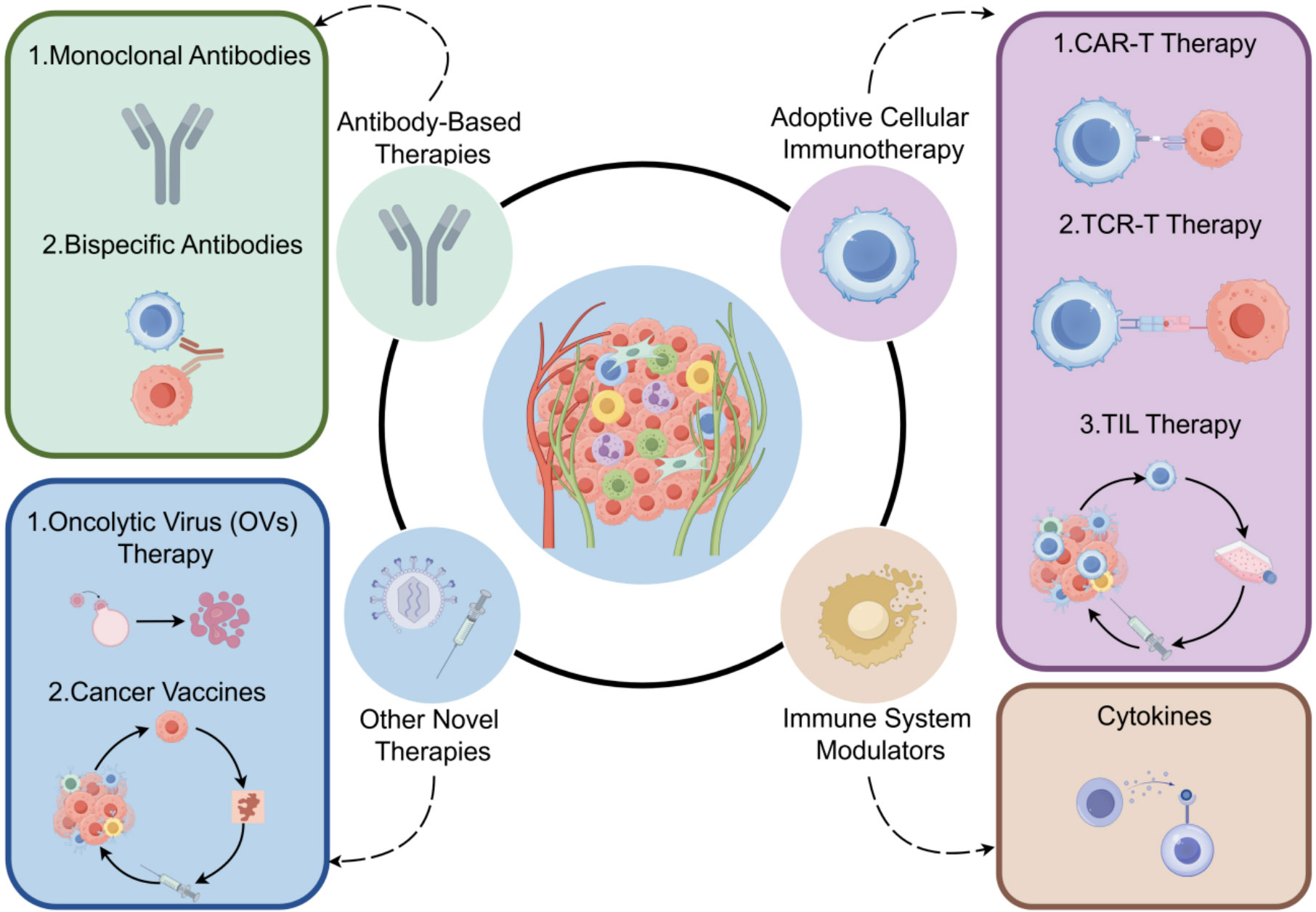
This review presents a systematic synthesis of the principal tumor immunotherapy strategies and their corresponding resistance mechanisms. Immunotherapies—including antibody-based therapies, adoptive cell therapies, immune modulators, and novel approaches such as oncolytic viruses and cancer vaccines—work by stimulating or enhancing the patient's immune system to target cancer cells. Nevertheless, they commonly encounter resistance in clinical applications. Resistance mechanisms predominantly stem from tumor-intrinsic factors and tumor microenvironment (TME) factors. To surmount resistance, combination therapies and personalized treatment strategies grounded in TME profiling and biomarkers represent critical future directions.
Graphical Abstract
Keywords
Data Availability Statement
Funding
Conflicts of Interest
AI Use Statement
Ethical Approval and Consent to Participate
References
- Hanahan, D., & Weinberg, R. A. (2011). Hallmarks of cancer: the next generation. Cell, 144(5), 646-674.
[CrossRef] [Google Scholar] - Sung, H., Ferlay, J., Siegel, R. L., Laversanne, M., Soerjomataram, I., Jemal, A., & Bray, F. (2021). Global cancer statistics 2020: GLOBOCAN estimates of incidence and mortality worldwide for 36 cancers in 185 countries. CA: a cancer journal for clinicians, 71(3), 209-249.
[CrossRef] [Google Scholar] - Rui, R., Zhou, L., & He, S. (2023). Cancer immunotherapies: advances and bottlenecks. Frontiers in immunology, 14, 1212476.
[CrossRef] [Google Scholar] - Xie, Y., Wang, X., Wang, W., & Li, Q. (2023). Editorial: Tumor microenvironment and cancer therapy. Frontiers In Cell and Developmental Biology, 11, 1290456.
[CrossRef] [Google Scholar] - Weiner, G. J. (2007). Monoclonal antibody mechanisms of action in cancer. Immunol Res, 39(1-3), 271-8.
[CrossRef] [Google Scholar] - Harris, T. J., & Drake, C. G. (2013). Primer on tumor immunology and cancer immunotherapy. Journal for immunotherapy of cancer, 1(1), 12.
[CrossRef] [Google Scholar] - Mayor, M., Yang, N., Sterman, D., Jones, D. R., & Adusumilli, P. S. (2015). Immunotherapy for non-small cell lung cancer: current concepts and clinical trials. European journal of cardio-thoracic surgery, 49(5), 1324-1333.
[CrossRef] [Google Scholar] - Scott, A. M., Wolchok, J. D., & Old, L. J. (2012). Antibody therapy of cancer. Nature reviews cancer, 12(4), 278-287.
[CrossRef] [Google Scholar] - Waldman, A. D., Fritz, J. M., & Lenardo, M. J. (2020). A guide to cancer immunotherapy: from T cell basic science to clinical practice. Nature Reviews Immunology, 20(11), 651-668.
[CrossRef] [Google Scholar] - Bhatia, A., & Kumar, Y. (2014). Cellular and molecular mechanisms in cancer immune escape: a comprehensive review. Expert review of clinical immunology, 10(1), 41-62.
[CrossRef] [Google Scholar] - Topalian, S. L., Drake, C. G., & Pardoll, D. M. (2015). Immune checkpoint blockade: a common denominator approach to cancer therapy. Cancer cell, 27(4), 450-461.
[CrossRef] [Google Scholar] - Brunet, J. F., Denizot, F., Luciani, M. F., Roux-Dosseto, M., Suzan, M., Mattei, M. G., & Golstein, P. (1987). A new member of the immunoglobulin superfamily—CTLA-4. Nature, 328(6127), 267-270.
[CrossRef] [Google Scholar] - Walunas, T. L., Lenschow, D. J., Bakker, C. Y., Linsley, P. S., Freeman, G. J., Green, J. M., ... & Bluestone, J. A. (1994). CTLA-4 can function as a negative regulator of T cell activation. Immunity, 1(5), 405-413.
[CrossRef] [Google Scholar] - Chen, D. S., & Mellman, I. (2013). Oncology Meets Immunology: The Cancer-Immunity Cycle. Immunity, 39(1), 1-10.
[CrossRef] [Google Scholar] - Parry, R. V., Chemnitz, J. M., Frauwirth, K. A., Lanfranco, A. R., Braunstein, I., Kobayashi, S. V., ... & Riley, J. L. (2005). CTLA-4 and PD-1 receptors inhibit T-cell activation by distinct mechanisms. Molecular and cellular biology, 25(21), 9543-9553.
[CrossRef] [Google Scholar] - Da Silva, I. L., Montero-Montero, L., Ferreira, E., & Quintanilla, M. (2018). New insights into the role of Qa-2 and HLA-G non-classical MHC-I complexes in malignancy. Frontiers in Immunology, 9, 2894.
[CrossRef] [Google Scholar] - Horvath, L., Thienpont, B., Zhao, L., Wolf, D., & Pircher, A. (2020). Overcoming immunotherapy resistance in non-small cell lung cancer (NSCLC)-novel approaches and future outlook. Molecular cancer, 19(1), 141.
[CrossRef] [Google Scholar] - Wolchok, J. D., Chiarion-Sileni, V., Gonzalez, R., Rutkowski, P., Grob, J. J., Cowey, C. L., ... & Larkin, J. (2017). Overall survival with combined nivolumab and ipilimumab in advanced melanoma. New England Journal of Medicine, 377(14), 1345-1356.
[CrossRef] [Google Scholar] - Labrijn, A. F., Janmaat, M. L., Reichert, J. M., & Parren, P. W. (2019). Bispecific antibodies: a mechanistic review of the pipeline. Nature reviews Drug discovery, 18(8), 585-608.
[CrossRef] [Google Scholar] - Qin, X., Ning, W., Liu, H., Liu, X., Luo, W., & Xia, N. (2024). Stepping forward: T-cell redirecting bispecific antibodies in cancer therapy. Acta Pharmaceutica Sinica B, 14(6), 2361-2377.
[CrossRef] [Google Scholar] - Sun, Y., Yu, X., Wang, X., Yuan, K., Wang, G., Hu, L., ... & Yang, P. (2023). Bispecific antibodies in cancer therapy: Target selection and regulatory requirements. Acta Pharmaceutica Sinica B, 13(9), 3583-3597.
[CrossRef] [Google Scholar] - June, C. H., & Sadelain, M. (2018). Chimeric antigen receptor therapy. New England Journal of Medicine, 379(1), 64-73.
[CrossRef] [Google Scholar] - Fujiwara, Y., Mittra, A., Naqash, A. R., & Takebe, N. (2020). A review of mechanisms of resistance to immune checkpoint inhibitors and potential strategies for therapy. Cancer Drug Resistance, 3(3), 252.
[CrossRef] [Google Scholar] - Rosenberg, S. A., Yang, J. C., Sherry, R. M., Kammula, U. S., Hughes, M. S., Phan, G. Q., ... & Dudley, M. E. (2011). Durable complete responses in heavily pretreated patients with metastatic melanoma using T-cell transfer immunotherapy. Clinical cancer research, 17(13), 4550-4557.
[CrossRef] [Google Scholar] - Garcia-Diaz, A., Shin, D. S., Moreno, B. H., Saco, J., Escuin-Ordinas, H., Rodriguez, G. A., ... & Ribas, A. (2017). Interferon receptor signaling pathways regulating PD-L1 and PD-L2 expression. Cell reports, 19(6), 1189-1201.
[CrossRef] [Google Scholar] - Kaufman, H. L., Kohlhapp, F. J., & Zloza, A. (2015). Oncolytic viruses: a new class of immunotherapy drugs. Nature reviews Drug discovery, 14(9), 642-662.
[CrossRef] [Google Scholar] - Saxena, M., van der Burg, S. H., Melief, C. J., & Bhardwaj, N. (2021). Therapeutic cancer vaccines. Nature Reviews Cancer, 21(6), 360-378.
[CrossRef] [Google Scholar] - Leach, D. R., Krummel, M. F., & Allison, J. P. (1996). Enhancement of antitumor immunity by CTLA-4 blockade. Science, 271(5256), 1734-1736.
[CrossRef] [Google Scholar] - Gettinger, S., Choi, J., Hastings, K., Truini, A., Datar, I., Sowell, R., ... & Politi, K. (2017). Impaired HLA class I antigen processing and presentation as a mechanism of acquired resistance to immune checkpoint inhibitors in lung cancer. Cancer discovery, 7(12), 1420-1435.
[CrossRef] [Google Scholar] - Seliger, B. (2008). Molecular mechanisms of MHC class I abnormalities and APM components in human tumors. Cancer Immunology, Immunotherapy, 57(11), 1719-1726.
[CrossRef] [Google Scholar] - Zaretsky, J. M., Garcia-Diaz, A., Shin, D. S., Escuin-Ordinas, H., Hugo, W., Hu-Lieskovan, S., ... & Ribas, A. (2016). Mutations associated with acquired resistance to PD-1 blockade in melanoma. New England Journal of Medicine, 375(9), 819-829.
[CrossRef] [Google Scholar] - Johnsen, A. K., Templeton, D. J., Sy, M. S., & Harding, C. V. (1999). Deficiency of transporter for antigen presentation (TAP) in tumor cells allows evasion of immune surveillance and increases tumorigenesis. The Journal of Immunology, 163(8), 4224-4231.
[CrossRef] [Google Scholar] - Del Campo, A. B., Kyte, J. A., Carretero, J., Zinchencko, S., Méndez, R., González‐Aseguinolaza, G., ... & Aptsiauri, N. (2014). Immune escape of cancer cells with beta2‐microglobulin loss over the course of metastatic melanoma. International journal of cancer, 134(1), 102-113.
[CrossRef] [Google Scholar] - Vitale, M., Pelusi, G., Taroni, B., Gobbi, G., Micheloni, C., Rezzani, R., ... & Ferrone, S. (2005). HLA class I antigen down-regulation in primary ovary carcinoma lesions: association with disease stage. Clinical Cancer Research, 11(1), 67-72.
[CrossRef] [Google Scholar] - Dissemond, J., Busch, M., Kothen, T., Mörs, J., Weimann, T. K., Lindeke, A., ... & Wagner, S. N. (2004). Differential downregulation of endoplasmic reticulum-residing chaperones calnexin and calreticulin in human metastatic melanoma. Cancer letters, 203(2), 225-231.
[CrossRef] [Google Scholar] - Seliger, B., Wollscheid, U., Momburg, F., Blankenstein, T., & Huber, C. (2001). Characterization of the major histocompatibility complex class I deficiencies in B16 melanoma cells. Cancer research, 61(3), 1095-1099.
[Google Scholar] - Garrido, F., Cabrera, T., & Aptsiauri, N. (2010). "Hard" and "soft" lesions underlying the HLA class I alterations in cancer cells: implications for immunotherapy. International journal of cancer, 127(2), 249-256.
[CrossRef] [Google Scholar] - Balkwill, F. R., Capasso, M., & Hagemann, T. (2012). The tumor microenvironment at a glance. Journal of cell science, 125(23), 5591-5596.
[CrossRef] [Google Scholar] - Jiang, W., He, Y., He, W., Wu, G., Zhou, X., Sheng, Q., ... & Hua, H. (2021). Exhausted CD8+ T cells in the tumor immune microenvironment: new pathways to therapy. Frontiers in immunology, 11, 622509.
[CrossRef] [Google Scholar] - Shin, D. S., Zaretsky, J. M., Escuin-Ordinas, H., Garcia-Diaz, A., Hu-Lieskovan, S., Kalbasi, A., ... & Ribas, A. (2017). Primary resistance to PD-1 blockade mediated by JAK1/2 mutations. Cancer discovery, 7(2), 188-201.
[CrossRef] [Google Scholar] - Zhang, Y., & Zhang, Z. (2020). The history and advances in cancer immunotherapy: understanding the characteristics of tumor-infiltrating immune cells and their therapeutic implications. Cellular & molecular immunology, 17(8), 807-821.
[CrossRef] [Google Scholar] - Doroshow, D. B., Bhalla, S., Beasley, M. B., Sholl, L. M., Kerr, K. M., Gnjatic, S., ... & Hirsch, F. R. (2021). PD-L1 as a biomarker of response to immune-checkpoint inhibitors. Nature reviews Clinical oncology, 18(6), 345-362.
[CrossRef] [Google Scholar] - De Giglio, A., De Biase, D., Favorito, V., Maloberti, T., Di Federico, A., Zacchini, F., ... & Ardizzoni, A. (2025). STK11 mutations correlate with poor prognosis for advanced NSCLC treated with first-line immunotherapy or chemo-immunotherapy according to KRAS, TP53, KEAP1, and SMARCA4 status. Lung Cancer, 199, 108058.
[CrossRef] [Google Scholar] - Skoulidis, F., Araujo, H. A., Do, M. T., Qian, Y., Sun, X., Galan-Cobo, A., ... & Heymach, J. V. (2024). CTLA4 blockade abrogates KEAP1/STK11-related resistance to PD-(L) 1 inhibitors. Nature, 635(8038), 462-471.
[CrossRef] [Google Scholar] - Knetki-Wróblewska, M., Wojas-Krawczyk, K., Krawczyk, P., & Krzakowski, M. (2024). Emerging insights into STK11, KEAP1 and KRAS mutations: implications for immunotherapy in patients with advanced non-small cell lung cancer. Translational Lung Cancer Research, 13(12), 3718-3730.
[CrossRef] [Google Scholar] - Wang, Z., Li, B., Li, S., Lin, W., Wang, Z., Wang, S., ... & Ye, Z. (2022). Metabolic control of CD47 expression through LAT2-mediated amino acid uptake promotes tumor immune evasion. Nature communications, 13(1), 6308.
[CrossRef] [Google Scholar] - Feng, M., Jiang, W., Kim, B. Y., Zhang, C. C., Fu, Y. X., & Weissman, I. L. (2019). Phagocytosis checkpoints as new targets for cancer immunotherapy. Nature Reviews Cancer, 19(10), 568-586.
[CrossRef] [Google Scholar] - Dhanasekaran, R., Deutzmann, A., Mahauad-Fernandez, W. D., Hansen, A. S., Gouw, A. M., & Felsher, D. W. (2022). The MYC oncogene—the grand orchestrator of cancer growth and immune evasion. Nature reviews Clinical oncology, 19(1), 23-36.
[CrossRef] [Google Scholar] - Lv, H., Lv, G., Chen, C., Zong, Q., Jiang, G., Ye, D., ... & Wang, H. (2021). NAD+ metabolism maintains inducible PD-L1 expression to drive tumor immune evasion. Cell metabolism, 33(1), 110-127.
[CrossRef] [Google Scholar] - Chan, T. A., Yarchoan, M., Jaffee, E., Swanton, C., Quezada, S. A., Stenzinger, A., & Peters, S. (2019). Development of tumor mutation burden as an immunotherapy biomarker: utility for the oncology clinic. Annals of oncology, 30(1), 44-56.
[CrossRef] [Google Scholar] - Havel, J. J., Chowell, D., & Chan, T. A. (2019). The evolving landscape of biomarkers for checkpoint inhibitor immunotherapy. Nature Reviews Cancer, 19(3), 133-150.
[CrossRef] [Google Scholar] - Ready, N., Hellmann, M. D., Awad, M. M., Otterson, G. A., Gutierrez, M., Gainor, J. F., ... & Ramalingam, S. S. (2019). First-line nivolumab plus ipilimumab in advanced non–small-cell lung cancer (CheckMate 568): outcomes by programmed death ligand 1 and tumor mutational burden as biomarkers. Journal of Clinical Oncology, 37(12), 992-1000.
[CrossRef] [Google Scholar] - Samstein, R. M., Lee, C. H., Shoushtari, A. N., Hellmann, M. D., Shen, R., Janjigian, Y. Y., ... & Morris, L. G. (2019). Tumor mutational load predicts survival after immunotherapy across multiple cancer types. Nature genetics, 51(2), 202-206.
[CrossRef] [Google Scholar] - Mouw, K. W., Goldberg, M. S., Konstantinopoulos, P. A., & D'Andrea, A. D. (2017). DNA damage and repair biomarkers of immunotherapy response. Cancer discovery, 7(7), 675-693.
[CrossRef] [Google Scholar] - Sharma, P., Hu-Lieskovan, S., Wargo, J. A., & Ribas, A. (2017). Primary, adaptive, and acquired resistance to cancer immunotherapy. Cell, 168(4), 707-723.
[CrossRef] [Google Scholar] - Torrejon, D. Y., Abril-Rodriguez, G., Champhekar, A. S., Tsoi, J., Campbell, K. M., Kalbasi, A., ... & Ribas, A. (2020). Overcoming genetically based resistance mechanisms to PD-1 blockade. Cancer discovery, 10(8), 1140-1157.
[CrossRef] [Google Scholar] - Wherry, E. J., & Kurachi, M. (2015). Molecular and cellular insights into T cell exhaustion. Nature reviews immunology, 15(8), 486-499.
[CrossRef] [Google Scholar] - Rodriguez-Garcia, A., Lynn, R. C., Poussin, M., Eiva, M. A., Shaw, L. C., O'Connor, R. S., ... & Powell Jr, D. J. (2021). CAR-T cell-mediated depletion of immunosuppressive tumor-associated macrophages promotes endogenous antitumor immunity and augments adoptive immunotherapy. Nature communications, 12(1), 877.
[CrossRef] [Google Scholar] - Anfray, C., Ummarino, A., Torres Andon, F., & Allavena, P. (2019). Current strategies to target tumor-associated-macrophages to improve anti-tumor immune responses. Cells, 9(1), 46.
[CrossRef] [Google Scholar] - Gejman, R. S., Chang, A. Y., Jones, H. F., DiKun, K., Hakimi, A. A., Schietinger, A., & Scheinberg, D. A. (2018). Rejection of immunogenic tumor clones is limited by clonal fraction. Elife, 7, e41090.
[CrossRef] [Google Scholar] - Li, J., Byrne, K. T., Yan, F., Yamazoe, T., Chen, Z., Baslan, T., ... & Stanger, B. Z. (2018). Tumor cell-intrinsic factors underlie heterogeneity of immune cell infiltration and response to immunotherapy. Immunity, 49(1), 178-193.
[CrossRef] [Google Scholar] - Wolf, Y., Bartok, O., Patkar, S., Eli, G. B., Cohen, S., Litchfield, K., ... & Samuels, Y. (2019). UVB-Induced Tumor Heterogeneity Diminishes Immune Response in Melanoma. Cell, 179(1), 219-235.e21.
[CrossRef] [Google Scholar] - Tanaka, M., Murota, H., & Katayama, I. (2025). Tumor cell heterogeneity drives spatial organization of the intratumoral immune response. Journal of Experimental Medicine, 222(6).
[CrossRef] [Google Scholar] - Das, R., Bar, N., Ferreira, M., Newman, A. M., Zhang, L., Bailur, J. K., ... & Dhodapkar, K. M. (2018). Early B cell changes predict autoimmunity following combination immune checkpoint blockade. The Journal of clinical investigation, 128(2), 715-720.
[CrossRef] [Google Scholar] - Hegoburu, A., Amer, M., Frizelle, F., & Purcell, R. (2025). B cells and tertiary lymphoid structures in cancer therapy response. BJC reports, 3(1), 40.
[CrossRef] [Google Scholar] - Sawada, J., Kato, T., & Nagai, H. (2025). Simultaneous STING and lymphotoxin-$\beta$ receptor activation induces B cell responses in tertiary lymphoid structures to potentiate antitumor immunity. Nature Immunology, 26(10), 1766-1780.
[CrossRef] [Google Scholar] - Peyraud, F., Guegan, J. P., Rey, C., Lara, O., Odin, O., Del Castillo, M., ... & Italiano, A. (2025). Spatially resolved transcriptomics reveal the determinants of primary resistance to immunotherapy in NSCLC with mature tertiary lymphoid structures. Cell Reports Medicine, 6(2).
[CrossRef] [Google Scholar] - Poltavets, V., Kochetkova, M., Pitson, S. M., & Samuel, M. S. (2018). The Role of the Extracellular Matrix and Its Molecular and Cellular Regulators in Cancer Cell Plasticity. Front Oncol, 8, 431.
[CrossRef] [Google Scholar] - Ishii, G., Ochiai, A., & Neri, S. (2016). Phenotypic and functional heterogeneity of cancer-associated fibroblast within the tumor microenvironment. Adv Drug Deliv Rev, 99(Pt B), 186-196.
[CrossRef] [Google Scholar] - Kalluri, R. (2016). The biology and function of fibroblasts in cancer. Nat Rev Cancer, 16(9), 582-98.
[CrossRef] [Google Scholar] - Tauriello, D. V. F., Palomo-Ponce, S., Stork, D., Berenguer-Llergo, A., Badia-Ramentol, J., Iglesias, M., ... & Batlle, E. (2018). TGF$\beta$ drives immune evasion in genetically reconstituted colon cancer metastasis. Nature, 554(7693), 538-543.
[CrossRef] [Google Scholar] - Mariathasan, S., Turley, S. J., Nickles, D., Castiglioni, A., Yuen, K., Wang, Y., ... & Powles, T. (2018). TGF$\beta$ attenuates tumour response to PD-L1 blockade by contributing to exclusion of T cells. Nature, 554(7693), 544-548.
[CrossRef] [Google Scholar] - Liu, Y. T., & Sun, Z. J. (2021). Turning cold tumors into hot tumors by improving T-cell infiltration. Theranostics, 11(11), 5365.
[CrossRef] [Google Scholar] - Brabletz, T., Pfeuffer, I., Schorr, E., Siebelt, F., Wirth, T., & Serfling, E. (1993). Transforming growth factor beta and cyclosporin A inhibit the inducible activity of the interleukin-2 gene in T cells through a noncanonical octamer-binding site. Mol Cell Biol, 13(2), 1155-62.
[CrossRef] [Google Scholar] - Shimabukuro-Vornhagen, A., Draube, A., Liebig, T. M., Rothe, A., Kochanek, M., & von Bergwelt-Baildon, M. S. (2012). The immunosuppressive factors IL-10, TGF-$\beta$, and VEGF do not affect the antigen-presenting function of CD40-activated B cells. Journal of Experimental & Clinical Cancer Research, 31(1), 47.
[CrossRef] [Google Scholar] - Szot, C., Saha, S., Zhang, X. M., Zhu, Z., Hilton, M. B., Morris, K., ... & Croix, B. S. (2018). Tumor stroma–targeted antibody-drug conjugate triggers localized anticancer drug release. The Journal of clinical investigation, 128(7), 2927-2943.
[CrossRef] [Google Scholar] - Sahai, E., Astsaturov, I., Cukierman, E., DeNardo, D. G., Egeblad, M., Evans, R. M., ... & Werb, Z. (2020). A framework for advancing our understanding of cancer-associated fibroblasts. Nature Reviews Cancer, 20(3), 174-186.
[CrossRef] [Google Scholar] - Ullman, N. A., Burchard, P. R., Dunne, R. F., & Linehan, D. C. (2022). Immunologic strategies in pancreatic cancer: making cold tumors hot. Journal of Clinical Oncology, 40(24), 2789-2805.
[CrossRef] [Google Scholar] - Mortezaee, K. (2020). CXCL12/CXCR4 axis in the microenvironment of solid tumors: A critical mediator of metastasis. Life sciences, 249, 117534.
[CrossRef] [Google Scholar] - Feig, C., Jones, J. O., Kraman, M., Wells, R. J., Deonarine, A., Chan, D. S., ... & Fearon, D. T. (2013). Targeting CXCL12 from FAP-expressing carcinoma-associated fibroblasts synergizes with anti–PD-L1 immunotherapy in pancreatic cancer. Proceedings of the National Academy of Sciences, 110(50), 20212-20217.
[CrossRef] [Google Scholar] - Wynn, T. A., Chawla, A., & Pollard, J. W. (2013). Macrophage biology in development, homeostasis and disease. Nature, 496(7446), 445-455.
[CrossRef] [Google Scholar] - Page, D. B., Postow, M. A., Callahan, M. K., Allison, J. P., & Wolchok, J. D. (2014). Immune modulation in cancer with antibodies. Annual review of medicine, 65(1), 185-202.
[CrossRef] [Google Scholar] - Sica, A., & Mantovani, A. (2012). Macrophage plasticity and polarization: in vivo veritas. The Journal of clinical investigation, 122(3), 787-795.
[CrossRef] [Google Scholar] - Pollard, J. W. (2009). Trophic macrophages in development and disease. Nature reviews immunology, 9(4), 259-270.
[CrossRef] [Google Scholar] - Aras, S., & Zaidi, M. R. (2017). TAMeless traitors: macrophages in cancer progression and metastasis. British journal of cancer, 117(11), 1583-1591.
[CrossRef] [Google Scholar] - Dwyer, A. R., Greenland, E. L., & Pixley, F. J. (2017). Promotion of tumor invasion by tumor-associated macrophages: the role of CSF-1-activated phosphatidylinositol 3 kinase and Src family kinase motility signaling. Cancers, 9(6), 68.
[CrossRef] [Google Scholar] - Kasikara, C., Davra, V., Calianese, D., Geng, K., Spires, T. E., Quigley, M., ... & Birge, R. B. (2019). Pan-TAM tyrosine kinase inhibitor BMS-777607 enhances anti–PD-1 mAb efficacy in a murine model of triple-negative breast cancer. Cancer research, 79(10), 2669-2683.
[CrossRef] [Google Scholar] - Zhou, Y., Fei, M., Zhang, G., Liang, W. C., Lin, W., Wu, Y., ... & Yan, M. (2020). Blockade of the phagocytic receptor MerTK on tumor-associated macrophages enhances P2X7R-dependent STING activation by tumor-derived cGAMP. Immunity, 52(2), 357-373.
[CrossRef] [Google Scholar] - Park, M., Kuen, D. S., Park, J., Choi, M., Kim, Y., Roh, E. C., ... & Kang, K. W. (2023). TYRO3 blockade enhances anti-PD-1 therapy response by modulating expression of CCN1 in tumor microenvironment. Journal for Immunotherapy of Cancer, 11(1), e006084.
[CrossRef] [Google Scholar] - Xia, Y., Rao, L., Yao, H., Wang, Z., Ning, P., & Chen, X. (2020). Engineering macrophages for cancer immunotherapy and drug delivery. Advanced materials, 32(40), 2002054.
[CrossRef] [Google Scholar] - Hunter, P. (2017). The fourth pillar: Despite some setbacks in the clinic, immunotherapy has made notable progress toward becoming an additional therapeutic option against cancer. The EMBO Reports, 18(11), 1889-1892.
[CrossRef] [Google Scholar] - Bule, P., Aguiar, S. I., Aires-Da-Silva, F., & Dias, J. N. R. (2021). Chemokine-directed tumor microenvironment modulation in cancer immunotherapy. International journal of molecular sciences, 22(18), 9804.
[CrossRef] [Google Scholar] - Tokunaga, R., Zhang, W., Naseem, M., Puccini, A., Berger, M. D., Soni, S., ... & Lenz, H. J. (2018). CXCL9, CXCL10, CXCL11/CXCR3 axis for immune activation - A target for novel cancer therapy. Cancer Treat Rev, 63, 40-47.
[CrossRef] [Google Scholar] - Goulart, M. R., Stasinos, K., Fincham, R. E. A., Delvecchio, F. R., & Kocher, H. M. (2021). T cells in pancreatic cancer stroma. World journal of gastroenterology, 27(46), 7956.
[CrossRef] [Google Scholar] - Strazza, M., & Mor, A. (2020). The complexity of targeting chemokines to promote a tumor immune response. Inflammation, 43(4), 1201-1208.
[CrossRef] [Google Scholar] - Do, H. T. T., Lee, C. H., & Cho, J. (2020). Chemokines and their receptors: multifaceted roles in cancer progression and potential value as cancer prognostic markers. Cancers, 12(2), 287.
[CrossRef] [Google Scholar] - Lee, E., Fertig, E. J., Jin, K., Sukumar, S., Pandey, N. B., & Popel, A. S. (2014). Breast cancer cells condition lymphatic endothelial cells within pre-metastatic niches to promote metastasis. Nature communications, 5(1), 4715.
[CrossRef] [Google Scholar] - Aguiar, R. B. D., & Moraes, J. Z. D. (2019). Exploring the immunological mechanisms underlying the anti-vascular endothelial growth factor activity in tumors. Frontiers in immunology, 10, 1023.
[CrossRef] [Google Scholar] - Harjunpää, H., Llort Asens, M., Guenther, C., & Fagerholm, S. C. (2019). Cell adhesion molecules and their roles and regulation in the immune and tumor microenvironment. Frontiers in immunology, 10, 1078.
[CrossRef] [Google Scholar] - Lamplugh, Z., & Fan, Y. (2021). Vascular microenvironment, tumor immunity and immunotherapy. Frontiers in immunology, 12, 811485.
[CrossRef] [Google Scholar] - Dieterich, L. C., Ikenberg, K., Cetintas, T., Kapaklikaya, K., Hutmacher, C., & Detmar, M. (2017). Tumor-associated lymphatic vessels upregulate PDL1 to inhibit T-cell activation. Frontiers in immunology, 8, 66.
[CrossRef] [Google Scholar] - Hu, K., Babapoor-Farrokhran, S., Rodrigues, M., Deshpande, M., Puchner, B., Kashiwabuchi, F., ... & Sodhi, A. (2016). Hypoxia-inducible factor 1 upregulation of both VEGF and ANGPTL4 is required to promote the angiogenic phenotype in uveal melanoma. Oncotarget, 7(7), 7816.
[CrossRef] [Google Scholar] - Benoit, A., Vogin, G., Duhem, C., Berchem, G., & Janji, B. (2023). Lighting up the fire in the microenvironment of cold tumors: A major challenge to improve cancer immunotherapy. Cells, 12(13), 1787.
[CrossRef] [Google Scholar] - Takeuchi, O., & Akira, S. (2010). Pattern recognition receptors and inflammation. Cell, 140(6), 805-820.
[CrossRef] [Google Scholar] - Morad, G., Helmink, B. A., Sharma, P., & Wargo, J. A. (2021). Hallmarks of response, resistance, and toxicity to immune checkpoint blockade. Cell, 184(21), 5309-5337.
[CrossRef] [Google Scholar] - DePeaux, K., & Delgoffe, G. M. (2021). Metabolic barriers to cancer immunotherapy. Nature Reviews Immunology, 21(12), 785-797.
[CrossRef] [Google Scholar] - Buck, M. D., Sowell, R. T., Kaech, S. M., & Pearce, E. L. (2017). Metabolic instruction of immunity. Cell, 169(4), 570-586.
[CrossRef] [Google Scholar] - Vander Heiden, M. G., Cantley, L. C., & Thompson, C. B. (2009). Understanding the Warburg effect: the metabolic requirements of cell proliferation. science, 324(5930), 1029-1033.
[CrossRef] [Google Scholar] - Vyas, S., Zaganjor, E., & Haigis, M. C. (2016). Mitochondria and cancer. Cell, 166(3), 555-566.
[CrossRef] [Google Scholar] - O'Neill, L. A., Kishton, R. J., & Rathmell, J. (2016). A guide to immunometabolism for immunologists. Nature reviews immunology, 16(9), 553-565.
[CrossRef] [Google Scholar] - Brand, A., Singer, K., Koehl, G. E., Kolitzus, M., Schoenhammer, G., Thiel, A., ... & Kreutz, M. (2016). LDHA-associated lactic acid production blunts tumor immunosurveillance by T and NK cells. Cell metabolism, 24(5), 657-671.
[CrossRef] [Google Scholar] - Opitz, C. A., Litzenburger, U. M., Sahm, F., Ott, M., Tritschler, I., Trump, S., ... & Platten, M. (2011). An endogenous tumour-promoting ligand of the human aryl hydrocarbon receptor. Nature, 478(7368), 197-203.
[CrossRef] [Google Scholar] - Ohta, A., Gorelik, E., Prasad, S. J., Ronchese, F., Lukashev, D., Wong, M. K., ... & Sitkovsky, M. (2006). A2A adenosine receptor protects tumors from antitumor T cells. Proceedings of the National Academy of Sciences, 103(35), 13132-13137.
[CrossRef] [Google Scholar] - Antonioli, L., Pacher, P., Vizi, E. S., & Haskó, G. (2013). CD39 and CD73 in immunity and inflammation. Trends in molecular medicine, 19(6), 355-367.
[CrossRef] [Google Scholar] - Wang, J., Yang, Y., Shao, F., Meng, Y., Guo, D., He, J., & Lu, Z. (2024). Acetate reprogrammes tumour metabolism and promotes PD-L1 expression and immune evasion by upregulating c-Myc. Nature metabolism, 6(5), 914-932.
[CrossRef] [Google Scholar] - Simpson, T. R., Li, F., Montalvo-Ortiz, W., Sepulveda, M. A., Bergerhoff, K., Arce, F., ... & Quezada, S. A. (2013). Fc-dependent depletion of tumor-infiltrating regulatory T cells co-defines the efficacy of anti–CTLA-4 therapy against melanoma. Journal of Experimental Medicine, 210(9), 1695-1710.
[CrossRef] [Google Scholar] - Chang, C. H., Qiu, J., O'Sullivan, D., Buck, M. D., Noguchi, T., Curtis, J. D., ... & Pearce, E. L. (2015). Metabolic competition in the tumor microenvironment is a driver of cancer progression. Cell, 162(6), 1229-1241.
[CrossRef] [Google Scholar] - Cadenas-De Miguel, S., Lucianer, G., & Elia, I. (2023). The metabolic cross-talk between cancer and T cells. Trends in biochemical sciences, 48(7), 597-609.
[CrossRef] [Google Scholar] - Chuang, Y. M., Tzeng, S. F., Ho, P. C., & Tsai, C. H. (2024). Immunosurveillance encounters cancer metabolism. EMBO reports, 25(2), 471.
[CrossRef] [Google Scholar] - Vesely, M. D., Zhang, T., & Chen, L. (2022). Resistance Mechanisms to Anti-PD Cancer Immunotherapy. Annu Rev Immunol, 40, 45-74.
[CrossRef] [Google Scholar] - Chang, H. C., Tsai, C. Y., Hsu, C. L., Tai, T. S., Cheng, M. L., Chuang, Y. M., ... & Yang, H. Y. (2025). Asparagine deprivation enhances T cell antitumour response in patients via ROS-mediated metabolic and signal adaptations. Nature metabolism, 7(5), 918-927.
[CrossRef] [Google Scholar] - Mao, X., Xu, J., Wang, W., Liang, C., Hua, J., Liu, J., ... & Shi, S. (2021). Crosstalk between cancer-associated fibroblasts and immune cells in the tumor microenvironment: new findings and future perspectives. Molecular cancer, 20(1), 131.
[CrossRef] [Google Scholar] - Salemme, V., Centonze, G., Cavallo, F., Defilippi, P., & Conti, L. (2021). The Crosstalk Between Tumor Cells and the Immune Microenvironment in Breast Cancer: Implications for Immunotherapy. Front Oncol, 11, 610303.
[CrossRef] [Google Scholar] - Fang, J., Li, J., & Chen, X. (2023). Exploring the crosstalk between endothelial cells, immune cells, and immune checkpoints in the tumor microenvironment: new insights and therapeutic implications. Cell Death Dis, 14(9), 586.
[CrossRef] [Google Scholar] - Kay, E. J., & Zanivan, S. (2025). The tumor microenvironment is an ecosystem sustained by metabolic interactions. Cell reports, 44(3), 115432.
[CrossRef] [Google Scholar] - Lei, W., Liu, Y., & Wang, Y. (2025). Gut microbiota shapes cancer immunotherapy responses. npj Biofilms and Microbiomes, 11(1), 143.
[CrossRef] [Google Scholar] - Xavier, J. B. (2025). Ecological management of the microbiota in patients with cancer. Nature Reviews Clinical Oncology, 22(9), 627-639.
[CrossRef] [Google Scholar] - Zhang, Y., Cui, J., Zheng, S., Kawaguchi, K., & Lin, Y. (2025). Advances in tumor microenvironment, immunology and immunotherapy of breast cancer. Frontiers in Oncology, 15, 1664563.
[CrossRef] [Google Scholar] - Braun, D. A., Moranzoni, G., Chea, V., McGregor, B. A., Blass, E., Tu, C. R., ... & Choueiri, T. K. (2025). A neoantigen vaccine generates antitumour immunity in renal cell carcinoma. Nature, 639(8054), 474-482.
[CrossRef] [Google Scholar] - Katsikis, P. D., Ishii, K. J., & Schliehe, C. (2024). Challenges in developing personalized neoantigen cancer vaccines. Nature Reviews Immunology, 24(3), 213-227.
[CrossRef] [Google Scholar] - Medina, T., Chesney, J. A., Kluger, H. M., Hamid, O., Whitman, E. D., Cusnir, M., ... & C-144-01 Investigators. (2025). Long-term efficacy and safety of lifileucel tumor-infiltrating lymphocyte cell therapy in patients with advanced melanoma: a 5-year analysis of the C-144-01 study. Journal of Clinical Oncology, 43(33), 3565-3572.
[CrossRef] [Google Scholar]
Cite This Article
TY  - JOUR
AU  - Yuan, Ziqing
AU  - Zhou, Chenxi
AU  - Zheng, Shaoquan
AU  - Liang, Jieying
PY  - 2026
DA  - 2026/08/12
TI  - Tumor Immunotherapy Resistance: Underlying Mechanisms and Emerging Strategies to Overcome Therapeutic Bottlenecks
JO  - Oncology Communications
T2  - Oncology Communications
JF  - Oncology Communications
VL  - 1
IS  - 2
SP  - 45
EP  - 63
DO  - 10.62762/OC.2026.289553
UR  - https://www.icck.org/article/abs/OC.2026.289553
KW  - tumor immunotherapy
KW  - resistance mechanisms
KW  - tumor microenvironment
KW  - combination therapy
AB  - This review presents a systematic synthesis of the principal tumor immunotherapy strategies and their corresponding resistance mechanisms. Immunotherapies—including antibody-based therapies, adoptive cell therapies, immune modulators, and novel approaches such as oncolytic viruses and cancer vaccines—work by stimulating or enhancing the patient's immune system to target cancer cells. Nevertheless, they commonly encounter resistance in clinical applications. Resistance mechanisms predominantly stem from tumor-intrinsic factors and tumor microenvironment (TME) factors. To surmount resistance, combination therapies and personalized treatment strategies grounded in TME profiling and biomarkers represent critical future directions.
SN  - 3142-8894
PB  - Institute of Central Computation and Knowledge
LA  - English
ER  -
@article{Yuan2026Tumor,
  author = {Ziqing Yuan and Chenxi Zhou and Shaoquan Zheng and Jieying Liang},
  title = {Tumor Immunotherapy Resistance: Underlying Mechanisms and Emerging Strategies to Overcome Therapeutic Bottlenecks},
  journal = {Oncology Communications},
  year = {2026},
  volume = {1},
  number = {2},
  pages = {45-63},
  doi = {10.62762/OC.2026.289553},
  url = {https://www.icck.org/article/abs/OC.2026.289553},
  abstract = {This review presents a systematic synthesis of the principal tumor immunotherapy strategies and their corresponding resistance mechanisms. Immunotherapies—including antibody-based therapies, adoptive cell therapies, immune modulators, and novel approaches such as oncolytic viruses and cancer vaccines—work by stimulating or enhancing the patient's immune system to target cancer cells. Nevertheless, they commonly encounter resistance in clinical applications. Resistance mechanisms predominantly stem from tumor-intrinsic factors and tumor microenvironment (TME) factors. To surmount resistance, combination therapies and personalized treatment strategies grounded in TME profiling and biomarkers represent critical future directions.},
  keywords = {tumor immunotherapy, resistance mechanisms, tumor microenvironment, combination therapy},
  issn = {3142-8894},
  publisher = {Institute of Central Computation and Knowledge}
}
Article Metrics
Publisher's Note
ICCK stays neutral with regard to jurisdictional claims in published maps and institutional affiliations.
Rights and Permissions
 Copyright © 2026 by the Author(s). Published by Institute of Central Computation and Knowledge. This article is an open access article distributed under the terms and conditions of the Creative Commons Attribution (CC BY) license (https://creativecommons.org/licenses/by/4.0/), which permits use, sharing, adaptation, distribution and reproduction in any medium or format, as long as you give appropriate credit to the original author(s) and the source, provide a link to the Creative Commons licence, and indicate if changes were made.

