

Bidirectional Deep Learning and Extended Fuzzy Markov Model for Sentiments Recognition



Article Information
Abstract
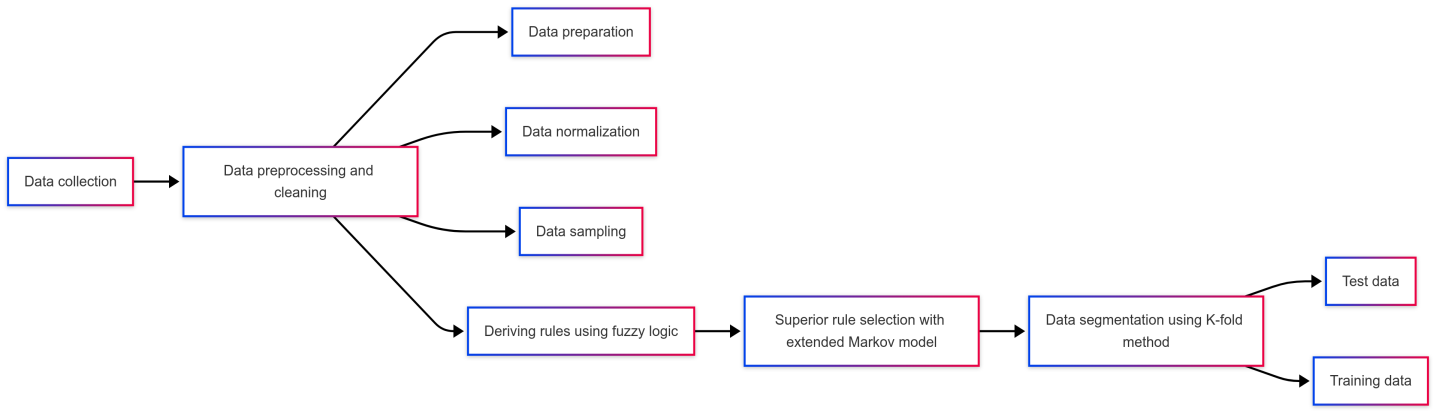
Currently, a considerable amount of people are sending messages on social networks such as Twitter, Amazon and Facebook. These media is colossal with data and information. Bearing in mind the need for these social media platforms to extract the appropriate negative or positive emotions from users and even news articles, opinion mining is required. Opinion mining provides the ability to assess social media users' opinions as well as the provided knowledge that assists in emotion detection. Some issues that have been more prevalent, in social media, include the lack of sentiment accuracy, transparency, and accuracy in measuring the users' sentiments. In social media, a variety of solutions based on different methods have been suggested in an attempt to capture the red flag on user's sentiments. For that reason, in this paper a system designed for the comment sentiment recognition problem is proposed and named Fuzzy-BIEM. This is based on extended Markov model (EM) with Bi-LSTM neural network and fuzzy logic. Rules were constructed with the fuzzy approach, and the Bi-LSTM deep neural network performed the sentiment recognition. EMM was employed to enhance the performance of the deep neural network. In this case, the input data were customer data from Amazon, Twitter, Facebook, Covid-19 fake news, and the Amazon fake news network. The application of fuzzy logic to the Fuzzy-BIEM approach did result in an increase of average emotion recognition accuracy. When fuzzy logic was used, the accuracy attained was 96.75%. Compared to the Fuzzy-BIEM approach without fuzzy logic, this is an increase of 7.62%. This was also an increase of 5.02% to the CSO-LSTMNN method.
Graphical Abstract
Keywords
Data Availability Statement
Funding
Conflicts of Interest
Ethical Approval and Consent to Participate
References
- Li, Z., Fan, Y., Jiang, B., Lei, T., & Liu, W. (2019). A survey on sentiment analysis and opinion mining for social multimedia. Multimedia Tools and Applications, 78(6), 6939--6967.
[CrossRef] [Google Scholar] - Wang, R., Zhou, D., Jiang, M., Si, J., & Yang, Y. (2019). A survey on opinion mining: From stance to product aspect. IEEE Access, 7, 41101--41124.
[CrossRef] [Google Scholar] - Mäntylä, M. V., Graziotin, D., & Kuutila, M. (2018). The evolution of sentiment analysis—A review of research topics, venues, and top cited papers. Computer Science Review, 27, 16-32.
[CrossRef] [Google Scholar] - Balazs, J. A., & Velásquez, J. D. (2016). Opinion mining and information fusion: a survey. Information Fusion, 27, 95-110.
[CrossRef] [Google Scholar] - Chen, M., Mao, S., & Liu, Y. (2014). Big data: A survey. Mobile networks and applications, 19, 171-209.
[Google Scholar] - Injadat, M., Salo, F., & Nassif, A. B. (2016). Data mining techniques in social media: A survey. Neurocomputing, 214, 654-670.
[CrossRef] [Google Scholar] - Mohammad, S. M., Kiritchenko, S., & Zhu, X. (2013). NRC-Canada: Building the state-of-the-art in sentiment analysis of tweets. arXiv preprint arXiv:1308.6242.
[CrossRef] [Google Scholar] - Narayanan, V., Arora, I., & Bhatia, A. (2013). Fast and accurate sentiment classification using an enhanced Naive Bayes model. In Intelligent Data Engineering and Automated Learning–IDEAL 2013: 14th International Conference, IDEAL 2013, Hefei, China, October 20-23, 2013. Proceedings 14 (pp. 194-201). Springer Berlin Heidelberg.
[CrossRef] [Google Scholar] - Ravi, K., & Ravi, V. (2015). A survey on opinion mining and sentiment analysis: tasks, approaches and applications. Knowledge-based systems, 89, 14-46.
[CrossRef] [Google Scholar] - Prasad, S. S., Kumar, J., Prabhakar, D. K., & Pal, S. (2015). Sentiment classification: an approach for Indian language tweets using decision tree. In Mining Intelligence and Knowledge Exploration: Third International Conference, MIKE 2015, Hyderabad, India, December 9-11, 2015, Proceedings 3 (pp. 656-663). Springer International Publishing.
[CrossRef] [Google Scholar] - Rezaee, M. R., Goedhart, B., Lelieveldt, B. P., & Reiber, J. H. (1999). Fuzzy feature selection. Pattern Recognition, 32(12), 2011-2019.
[Google Scholar] - Guo, H., Li, S., Qi, K., Guo, Y., & Xu, Z. (2018). Learning automata based competition scheme to train deep neural networks. IEEE Transactions on Emerging Topics in Computational Intelligence, 4(2), 151-158.
[CrossRef] [Google Scholar] - Mohbey, K. K. (2020). Multi-class approach for user behavior prediction using deep learning framework on twitter election dataset. Journal of Data, Information and Management, 2(1), 1-14.
[CrossRef] [Google Scholar] - Liu, W., Wang, Z., Liu, X., Zeng, N., Liu, Y., & Alsaadi, F. E. (2017). A survey of deep neural network architectures and their applications. Neurocomputing, 234, 11-26.
[CrossRef] [Google Scholar] - Mdhaffar, S., Bougares, F., Esteve, Y., & Hadrich-Belguith, L. (2017). Sentiment analysis of tunisian dialects: Linguistic ressources and experiments. In Third Arabic Natural Language Processing Workshop (WANLP) (pp. 55-61).
[CrossRef] [Google Scholar] - Al-Saqqa, S., Al-Naymat, G., & Awajan, A. (2018). A large-scale sentiment data classification for online reviews under apache spark. Procedia Computer Science, 141, 183-189.
[CrossRef] [Google Scholar] - El Alaoui, I., Gahi, Y., Messoussi, R., Chaabi, Y., Todoskoff, A., & Kobi, A. (2018). A novel adaptable approach for sentiment analysis on big social data. Journal of Big Data, 5(1), 1-18.
[CrossRef] [Google Scholar] - Yang, M., Yin, W., Qu, Q., Tu, W., Shen, Y., & Chen, X. (2019). Neural attentive network for cross-domain aspect-level sentiment classification. IEEE Transactions on Affective Computing, 12(3), 761-775.
[CrossRef] [Google Scholar] - Fu, Y., Liu, Y., & Peng, S. L. (2020). An integrated word embedding-based dual-task learning method for sentiment analysis. Arabian Journal for Science and Engineering, 45(4), 2571-2586.
[CrossRef] [Google Scholar] - Alahmary, R. M., Al-Dossari, H. Z., & Emam, A. Z. (2019). Sentiment analysis of Saudi dialect using deep learning techniques. In 2019 International Conference on Electronics, Information, and Communication (ICEIC) (pp. 1-6). IEEE.
[CrossRef] [Google Scholar] - Ramanathan, V. (2019). Prediction of Individual's Character in Social Media Using Contextual Semantic Sentiment Analysis. Mobile Networks and Applications, 24(6), 1763-1777.
[CrossRef] [Google Scholar] - Mandhula, T., Pabboju, S., & Gugulotu, N. (2020). Predicting the customer's opinion on amazon products using selective memory architecture-based convolutional neural network. The Journal of Supercomputing, 76(8), 5923-5947.
[CrossRef] [Google Scholar] - Zobeidi, S., Naderan, M., & Alavi, S. E. (2019). Opinion mining in Persian language using a hybrid feature extraction approach based on convolutional neural network. Multimedia Tools and Applications, 78(22), 32357-32378.
[CrossRef] [Google Scholar] - Awwalu, J., Bakar, A. A., & Yaakub, M. R. (2019). Hybrid N-gram model using Naïve Bayes for classification of political sentiments on Twitter. Neural Computing and Applications, 31(12), 9207-9220.
[CrossRef] [Google Scholar] - Chauhan, D., & Sutaria, K. (2019). Multidimensional sentiment analysis on twitter with semiotics. International Journal of Information Technology, 11(4), 677-682.
[CrossRef] [Google Scholar] - Balaguer, P., Teixidó, I., Vilaplana, J., Mateo, J., Rius, J., & Solsona, F. (2019). CatSent: a Catalan sentiment analysis website. Multimedia Tools and Applications, 78(19), 28137-28155.
[CrossRef] [Google Scholar] - Han, H., Bai, X., & Li, P. (2019). Augmented sentiment representation by learning context information. Neural Computing and Applications, 31(12), 8475-8482.
[CrossRef] [Google Scholar] - Choi, S., & Segev, A. (2020). Finding informative comments for video viewing. SN Computer Science, 1(1), 1-14.
[CrossRef] [Google Scholar] - Chen, L. C., Lee, C. M., & Chen, M. Y. (2020). Exploration of social media for sentiment analysis using deep learning. Soft Computing, 24(11), 8187-8197.
[CrossRef] [Google Scholar] - Phan, H. T., Tran, V. C., Nguyen, N. T., & Hwang, D. (2020). Improving the performance of sentiment analysis of tweets containing fuzzy sentiment using the feature ensemble model. IEEE Access, 8, 14630-14641.
[CrossRef] [Google Scholar] - Basiri, M. E., Nemati, S., Abdar, M., Cambria, E., & Acharya, U. R. (2021). ABCDM: An attention-based bidirectional CNN-RNN deep model for sentiment analysis. Future Generation Computer Systems, 115, 279-294.
[CrossRef] [Google Scholar] - Hossin, M., & Sulaiman, M. N. (2015). A review on evaluation metrics for data classification evaluations. International journal of data mining & knowledge management process, 5(2), 1.
[CrossRef] [Google Scholar] - Malik, J. S., Goyal, P., & Sharma, A. K. (2010, February). A comprehensive approach towards data preprocessing techniques & association rules. In Proceedings of the 4th National Conference (Vol. 132).
[Google Scholar] - Siami-Namini, S., Tavakoli, N., & Namin, A. S. (2019, December). The performance of LSTM and BiLSTM in forecasting time series. In 2019 IEEE International conference on big data (Big Data) (pp. 3285-3292). IEEE.
[CrossRef] [Google Scholar] - Alarifi, A., Tolba, A., Al-Makhadmeh, Z., & Said, W. (2020). A big data approach to sentiment analysis using greedy feature selection with cat swarm optimization-based long short-term memory neural networks. The Journal of Supercomputing, 76(6), 4414-4429.
[CrossRef] [Google Scholar] - Kaggle. (n.d.). Sentiment140 dataset. Retrieved from https://www.kaggle.com/datasets/kazanova/sentiment140
[Google Scholar] - Kaggle. (n.d.). Fake/real news dataset. Retrieved from https://www.kaggle.com/datasets/techykajal/fakereal-news
[Google Scholar] - Kaggle. (n.d.). COVID19 fake news dataset NLP. Retrieved from https://www.kaggle.com/datasets/elvinagammed/covid19-fake-news-dataset-nlp
[Google Scholar] - Kaggle. (n.d.). Sentiment labelled sentences data set. Retrieved from https://www.kaggle.com/datasets/marklvl/sentiment-labelled-sentences-data-set
[Google Scholar] - Zhou, C., Sun, C., Liu, Z., & Lau, F. (2015). A C-LSTM neural network for text classification. arXiv preprint arXiv:1511.08630.
[CrossRef] [Google Scholar] - Almansour, B. Y., Almansour, A. Y., J, J. I., Zahid, M., & Abbas, T. (2024). Application of Machine Learning and Rule Induction in Various Sectors. In 2024 International Conference on Decision Aid Sciences and Applications (pp. 1-8). Manama, Bahrain.
[CrossRef] [Google Scholar]
Cite This Article
TY  - JOUR
AU  - Ahamed, Asif
AU  - Tarafder, Md Tanvir Rahman
AU  - Rimon, SM Tamim Hossain
AU  - Ahmed, Nisher
PY  - 2025
DA  - 2025/03/30
TI  - Bidirectional Deep Learning and Extended Fuzzy Markov Model for Sentiments Recognition
JO  - ICCK Transactions on Neural Computing
T2  - ICCK Transactions on Neural Computing
JF  - ICCK Transactions on Neural Computing
VL  - 1
IS  - 1
SP  - 11
EP  - 29
DO  - 10.62762/TNC.2025.384898
UR  - https://www.icck.org/article/abs/TNC.2025.384898
KW  - opinion mining
KW  - sentiment analysis
KW  - extended markov model
KW  - deep neural network
KW  - fuzzy logic
AB  - Currently, a considerable amount of people are sending messages on social networks such as Twitter, Amazon and Facebook. These media is colossal with data and information. Bearing in mind the need for these social media platforms to extract the appropriate negative or positive emotions from users and even news articles, opinion mining is required. Opinion mining provides the ability to assess social media users' opinions as well as the provided knowledge that assists in emotion detection. Some issues that have been more prevalent, in social media, include the lack of sentiment accuracy, transparency, and accuracy in measuring the users' sentiments. In social media, a variety of solutions based on different methods have been suggested in an attempt to capture the red flag on user's sentiments. For that reason, in this paper a system designed for the comment sentiment recognition problem is proposed and named Fuzzy-BIEM. This is based on extended Markov model (EM) with Bi-LSTM neural network and fuzzy logic. Rules were constructed with the fuzzy approach, and the Bi-LSTM deep neural network performed the sentiment recognition. EMM was employed to enhance the performance of the deep neural network. In this case, the input data were customer data from Amazon, Twitter, Facebook, Covid-19 fake news, and the Amazon fake news network. The application of fuzzy logic to the Fuzzy-BIEM approach did result in an increase of average emotion recognition accuracy. When fuzzy logic was used, the accuracy attained was 96.75%. Compared to the Fuzzy-BIEM approach without fuzzy logic, this is an increase of 7.62%. This was also an increase of 5.02% to the CSO-LSTMNN method.
SN  - 3068-7519
PB  - Institute of Central Computation and Knowledge
LA  - English
ER  -
@article{Ahamed2025Bidirectio,
  author = {Asif Ahamed and Md Tanvir Rahman Tarafder and SM Tamim Hossain Rimon and Nisher Ahmed},
  title = {Bidirectional Deep Learning and Extended Fuzzy Markov Model for Sentiments Recognition},
  journal = {ICCK Transactions on Neural Computing},
  year = {2025},
  volume = {1},
  number = {1},
  pages = {11-29},
  doi = {10.62762/TNC.2025.384898},
  url = {https://www.icck.org/article/abs/TNC.2025.384898},
  abstract = {Currently, a considerable amount of people are sending messages on social networks such as Twitter, Amazon and Facebook. These media is colossal with data and information. Bearing in mind the need for these social media platforms to extract the appropriate negative or positive emotions from users and even news articles, opinion mining is required. Opinion mining provides the ability to assess social media users' opinions as well as the provided knowledge that assists in emotion detection. Some issues that have been more prevalent, in social media, include the lack of sentiment accuracy, transparency, and accuracy in measuring the users' sentiments. In social media, a variety of solutions based on different methods have been suggested in an attempt to capture the red flag on user's sentiments. For that reason, in this paper a system designed for the comment sentiment recognition problem is proposed and named Fuzzy-BIEM. This is based on extended Markov model (EM) with Bi-LSTM neural network and fuzzy logic. Rules were constructed with the fuzzy approach, and the Bi-LSTM deep neural network performed the sentiment recognition. EMM was employed to enhance the performance of the deep neural network. In this case, the input data were customer data from Amazon, Twitter, Facebook, Covid-19 fake news, and the Amazon fake news network. The application of fuzzy logic to the Fuzzy-BIEM approach did result in an increase of average emotion recognition accuracy. When fuzzy logic was used, the accuracy attained was 96.75\%. Compared to the Fuzzy-BIEM approach without fuzzy logic, this is an increase of 7.62\%. This was also an increase of 5.02\% to the CSO-LSTMNN method.},
  keywords = {opinion mining, sentiment analysis, extended markov model, deep neural network, fuzzy logic},
  issn = {3068-7519},
  publisher = {Institute of Central Computation and Knowledge}
}
Article Metrics
Publisher's Note
ICCK stays neutral with regard to jurisdictional claims in published maps and institutional affiliations.
Rights and Permissions
 Copyright © 2025 by the Author(s). Published by Institute of Central Computation and Knowledge. This article is an open access article distributed under the terms and conditions of the Creative Commons Attribution (CC BY) license (https://creativecommons.org/licenses/by/4.0/), which permits use, sharing, adaptation, distribution and reproduction in any medium or format, as long as you give appropriate credit to the original author(s) and the source, provide a link to the Creative Commons licence, and indicate if changes were made.


Portico

