Volume 2, Issue 3 (In Progress)


In Progress
Citations: Crossref logo 0,   0   |   Viewed: 2250, Download: 627

Table of Contents

Open Access | Research Article | 03 June 2026
Comparative Study of Transfer Learning Strategies for Multi-Class Skin Lesion Classification: Architectures, Fine-Tuning, and Data Augmentation
ICCK Journal of Image Analysis and Processing | Volume 2, Issue 3: 153-167, 2026 | DOI: 10.62762/JIAP.2026.390206
Abstract
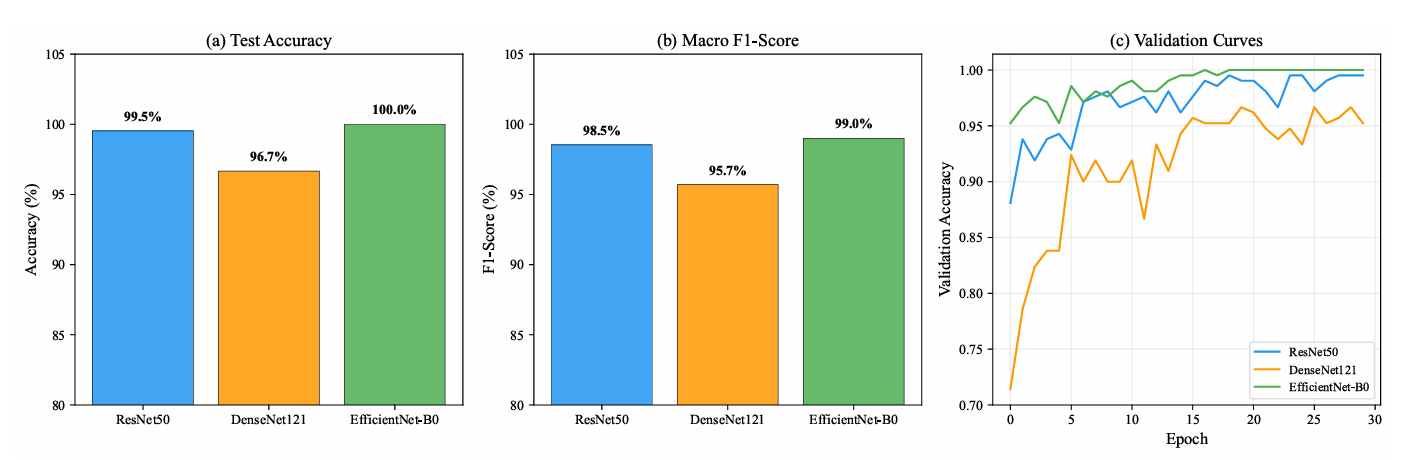
Skin lesion classification is critical in dermatological diagnosis, where early and accurate identification of malignant lesions can significantly improve patient outcomes. Deep learning approaches, particularly transfer learning with pre-trained CNNs, have demonstrated remarkable performance in automated dermoscopic image analysis. However, the optimal configuration of transfer learning components---including backbone architecture, fine-tuning strategy, and data augmentation intensity---remains an open question. In this paper, we present a systematic comparative study on the HAM10000 dataset, evaluating three CNN architectures (ResNet50, DenseNet121, EfficientNet-B0), three fine-tuning stra... More >

Graphical Abstract
Comparative Study of Transfer Learning Strategies for Multi-Class Skin Lesion Classification: Architectures, Fine-Tuning, and Data Augmentation
Open Access | Research Article | 01 June 2026
Maize Leaf Disease Classification Using a Hybrid Framework Integrated with Color and CNN-Derived Features
ICCK Journal of Image Analysis and Processing | Volume 2, Issue 3: 141-152, 2026 | DOI: 10.62762/JIAP.2026.176232
Abstract
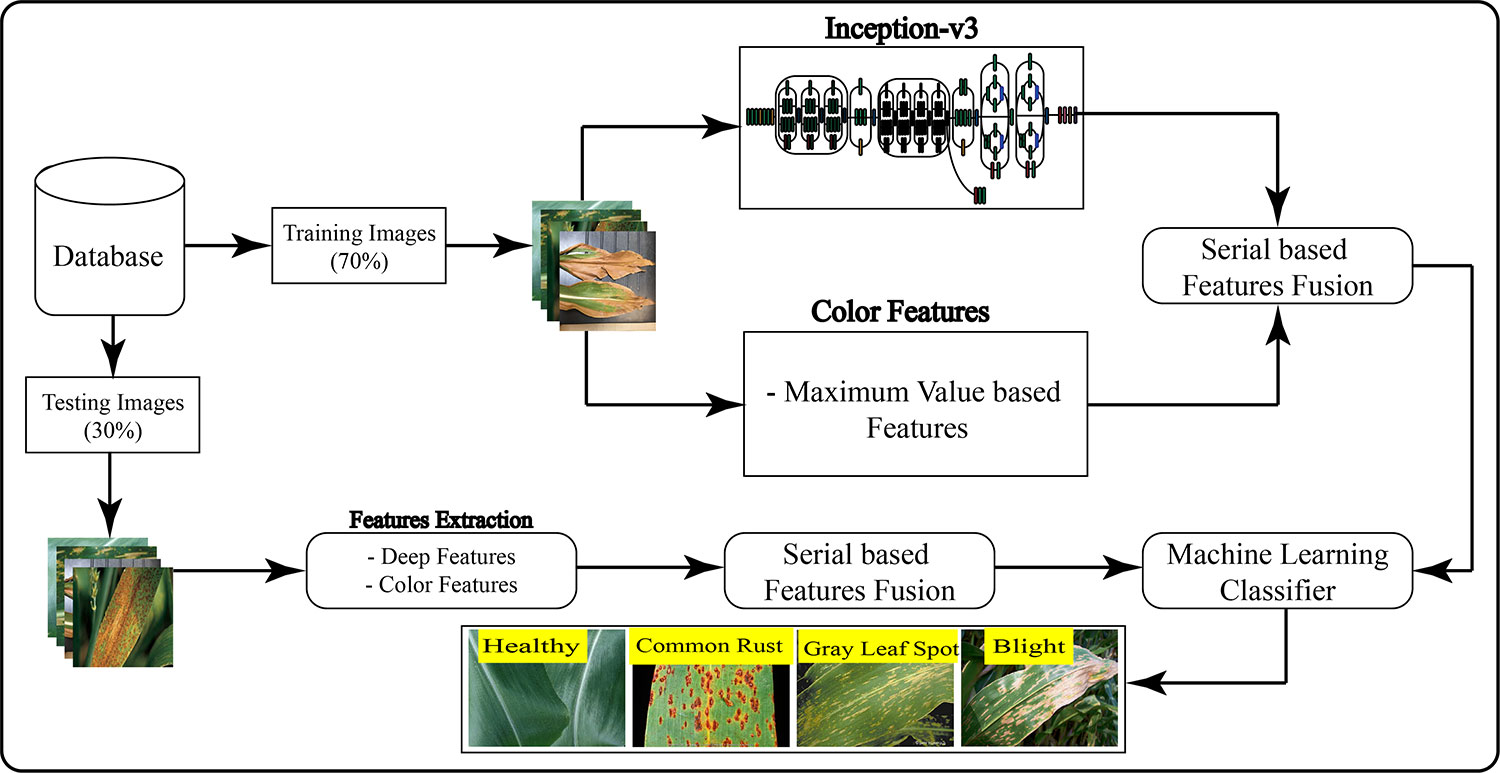
Early recognition of maize leaf disorders and applying precautionary measures on time may help to increase the yield and quality. This study introduces an architecture for the recognition and categorization of maize leaf diseases based on the deep Inception-v3 and maximum value-based color features. The core steps of the designed framework include data acquisition, feature extraction, fusion, and classification. The maize leaf image dataset is utilized, which is publicly available on Kaggle, comprising four classes. The deep learning features are collected by applying the transfer learning approach to the pre-trained Inception-v3 model. In addition to the deep features, maximum value-based c... More >

Graphical Abstract
Maize Leaf Disease Classification Using a Hybrid Framework Integrated with Color and CNN-Derived Features
Open Access | Research Article | 31 May 2026
Multi-Scale CSPResNet50 with Feature Pyramid Aggregation and SE Attention for Breast Cancer Histopathological Subtype Classification and Malignancy Detection
ICCK Journal of Image Analysis and Processing | Volume 2, Issue 3: 122-140, 2026 | DOI: 10.62762/JIAP.2026.746947
Abstract
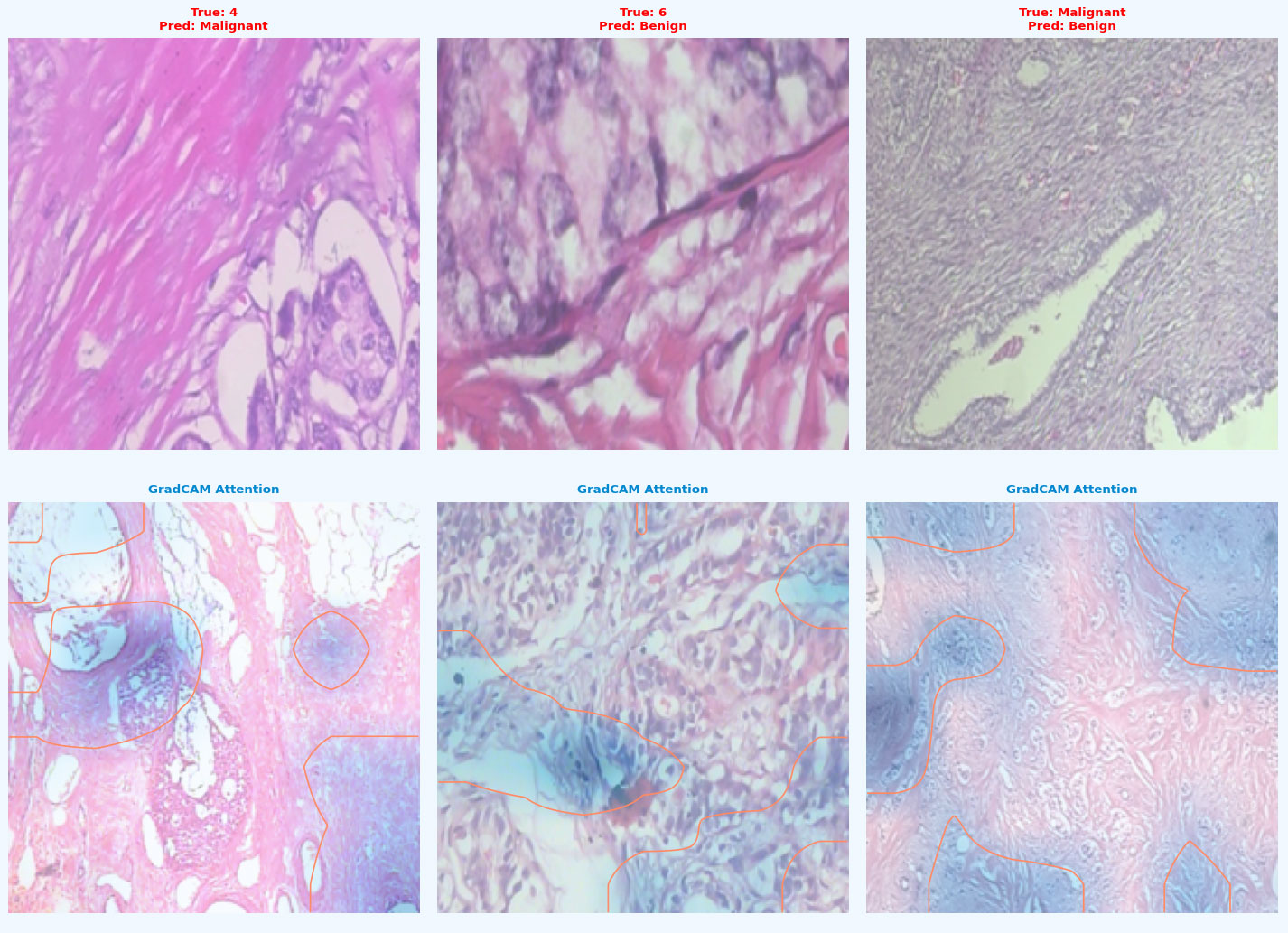
Breast cancer is a leading cause of cancer-related mortality worldwide, making accurate histopathological subtype discrimination critical for timely clinical intervention. Existing deep learning approaches often evaluate limited settings (binary or multi-class, single magnification), restricting comparative utility and clinical interpretability. This study proposes a unified Cross Stage Partial Network (CSPNet)-based framework for comprehensive classification on the BreaKHis dataset. A CSPResNet50 backbone pre-trained on ImageNet was extended with a multi-scale Feature Pyramid-style aggregation head, Squeeze-and-Excitation channel attention, dual Global Average and Max Pooling per scale (153... More >

Graphical Abstract
Multi-Scale CSPResNet50 with Feature Pyramid Aggregation and SE Attention for Breast Cancer Histopathological Subtype Classification and Malignancy Detection