Volume 2, Issue 3 (In Progress)


In Progress
Citations: Crossref logo 4,   2   |   Viewed: 2129, Download: 445

Table of Contents

Open Access | Research Article | 19 June 2026
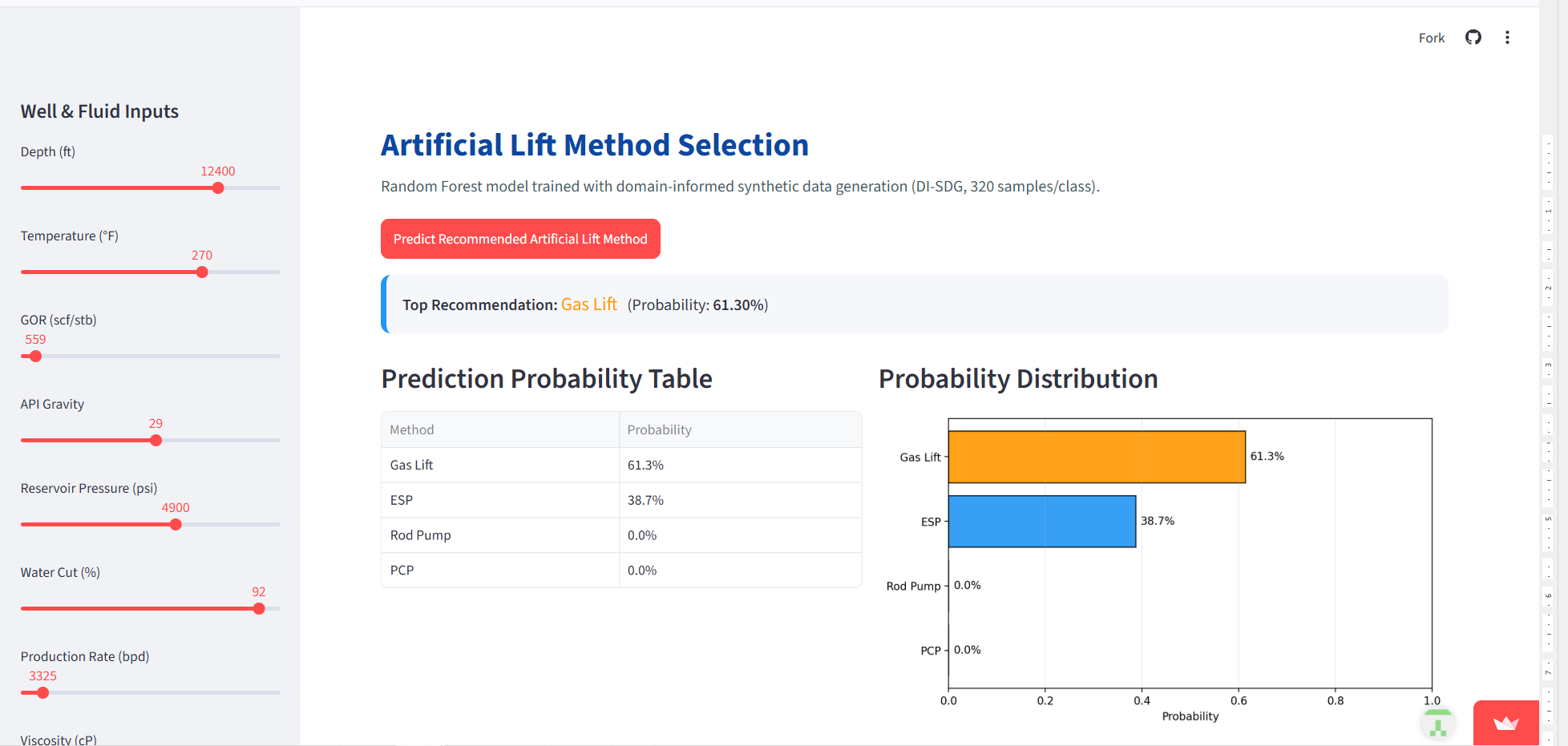
A Machine Learning Framework for Artificial Lift Method Selection with Physics-Informed Data Balancing
Reservoir Science | Volume 2, Issue 3: 228-260, 2026 | DOI: 10.62762/RS.2026.704585
Abstract
The selection of optimal artificial lift methods using machine learning remains challenging due to complex interactions among reservoir characteristics, fluid properties, and operational constraints. Conventional approaches rely on engineering expertise and static screening criteria, often insufficient to capture multifactorial dependencies. This study presents a framework for classifying the most suitable lift method from four common techniques: ESP, Gas Lift, Rod Pumps, and PCP. A dataset of 990 wells with twelve physically meaningful parameters was compiled, including depth, temperature, GOR, API gravity, reservoir pressure, water cut, production rate, viscosity, sand production, deviatio... More >

Graphical Abstract
A Machine Learning Framework for Artificial Lift Method Selection with Physics-Informed Data Balancing
Open Access | Research Article | 30 May 2026
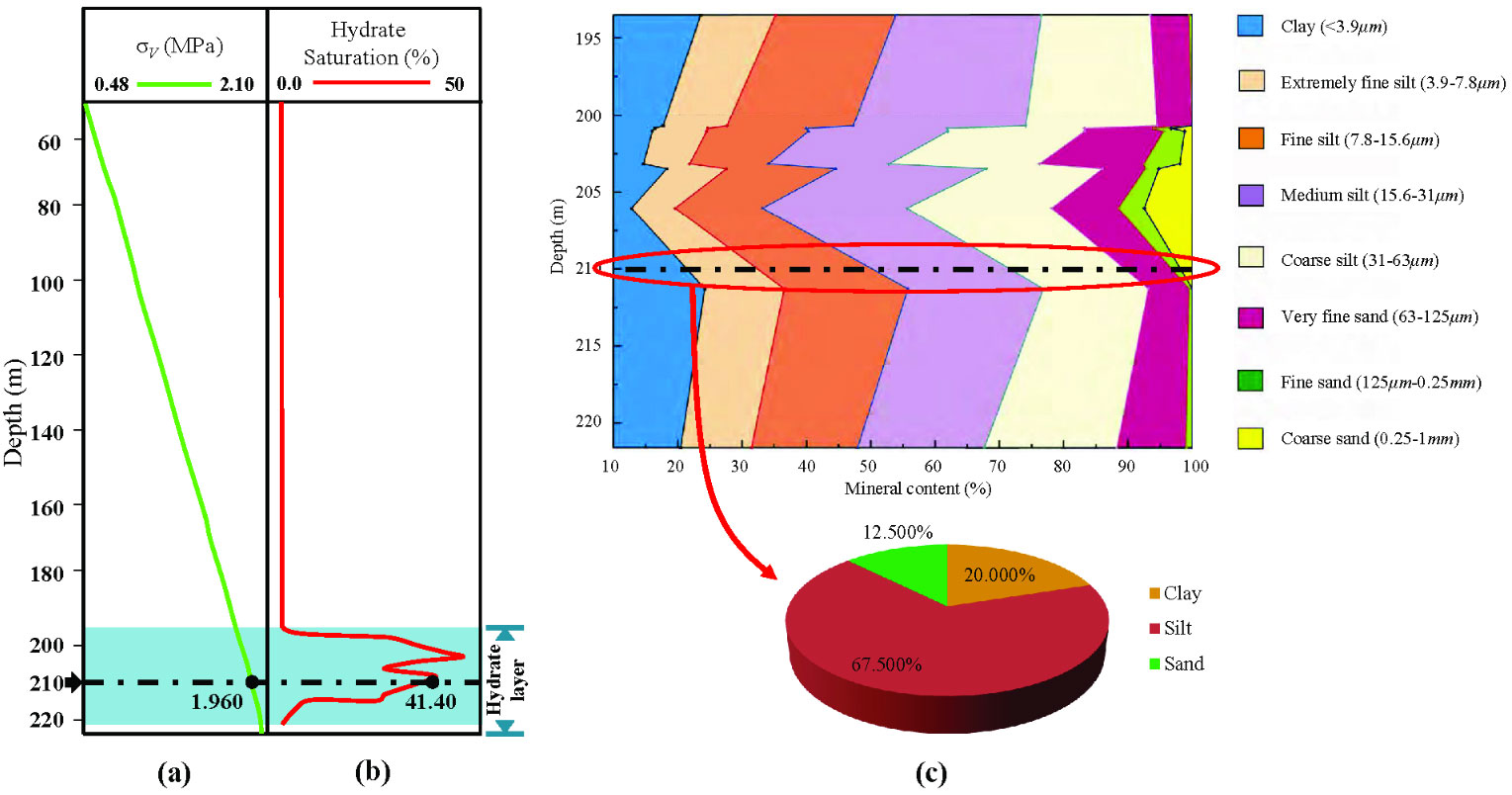
Simulation Analysis of Wellhead Sinking during the Development of Weakly Consolidated Marine Hydrate Deposits with Depressurization Strategy
Reservoir Science | Volume 2, Issue 3: 203-227, 2026 | DOI: 10.62762/RS.2026.527395
Abstract
Owing to their high calorific value and sustainable characteristics, natural gas hydrates are expected to serve as a promising alternative energy resource to conventional oil and gas in the near future. Of course, this prospect relies on the premise that hydrates can be developed in a safe and efficient manner. Hydrate-bearing sediments are highly sensitive to temperature and pressure conditions and are therefore particularly vulnerable to disturbances induced by production operation, which may result in challenges such as wellhead instability. In this study, the physical parameters of artificially prepared hydrate-bearing sediments were experimentally characterized to provide a parameter fo... More >

Graphical Abstract
Simulation Analysis of Wellhead Sinking during the Development of Weakly Consolidated Marine Hydrate Deposits with Depressurization Strategy
Open Access | Research Article | 09 May 2026
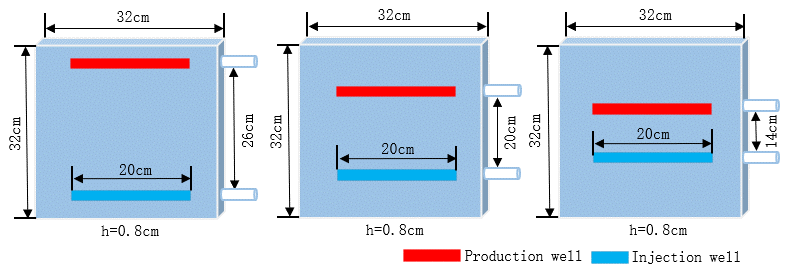
Oil Displacement Behavior of Polymer Flooding in Horizontal Well Patterns: Experimental and Numerical Simulation Approaches
Reservoir Science | Volume 2, Issue 3: 189-202, 2026 | DOI: 10.62762/RS.2026.142664
Abstract
Heavy oil reservoirs often retain substantial remaining oil after polymer flooding with vertical wells due to unfavorable oil-water mobility ratios and reservoir heterogeneity. Although horizontal wells can improve oil displacement efficiency by providing a larger contact area with the formation, systematic studies on the displacement behavior and key influencing factors of polymer flooding in opposed horizontal wells are still lacking. This study addresses this gap by combining two-dimensional physical simulation experiments with Eclipse numerical simulation to investigate the displacement dynamics and remaining oil distribution. The experimental results show that increasing well spacing pr... More >

Graphical Abstract
Oil Displacement Behavior of Polymer Flooding in Horizontal Well Patterns: Experimental and Numerical Simulation Approaches
Open Access | Research Article | 06 May 2026 | Cited: Crossref logo  4 , Scopus 2
Methane Interface Desorption Mechanism in Geological Reservoirs After Natural Gas Hydrate Decomposition
Reservoir Science | Volume 2, Issue 3: 172-188, 2026 | DOI: 10.62762/RS.2025.633924
Abstract
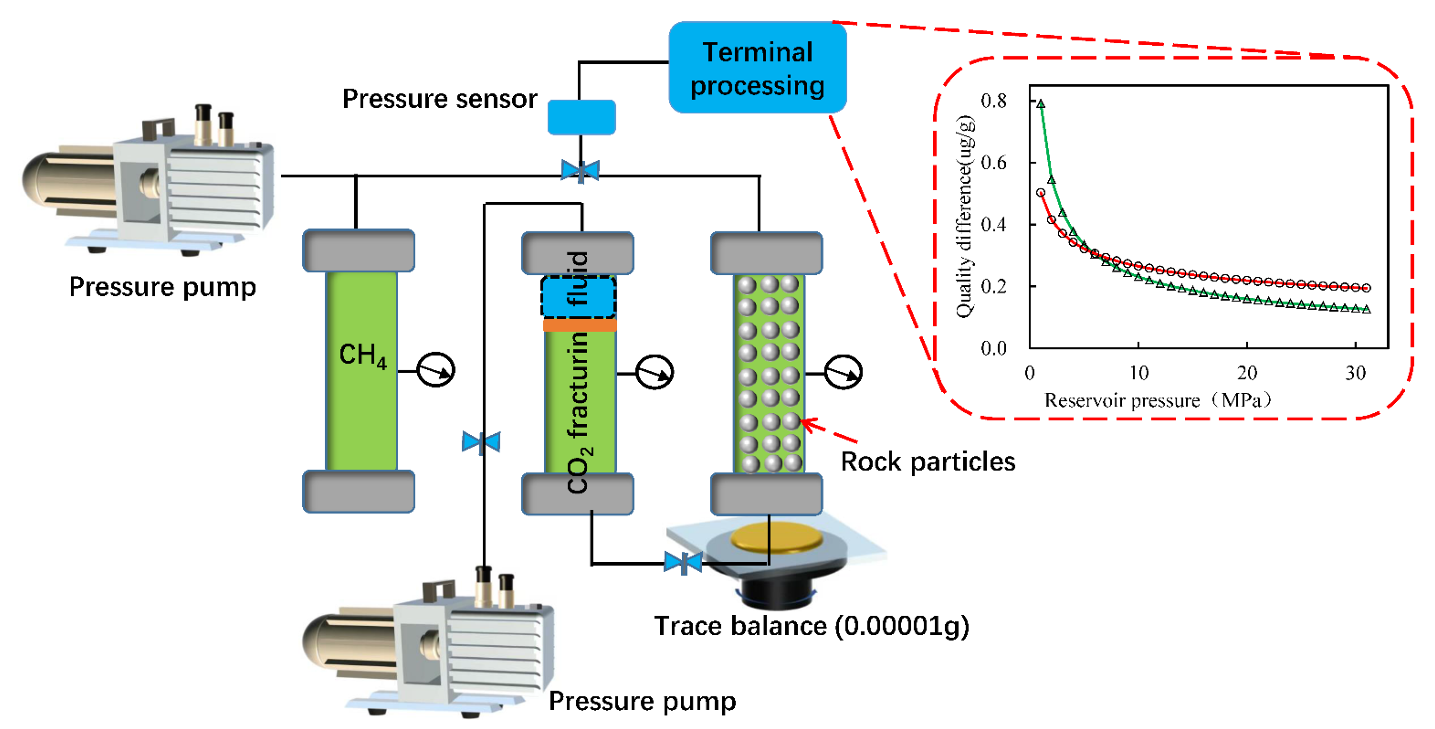
The morphological transformation of methane hydrates during re-exploitation, caused by depressurization and changes in reservoir environment, significantly impacts hydrate extraction. The present study explores the adsorption and desorption behaviour of methane under different environmental factors by constructing a rock adsorption and desorption device, which can contribute to the efficient extraction of methane during the decomposition of methane hydrates. The findings demonstrate that reservoir temperature strongly promotes methane desorption. Desorption capacity increased markedly above $100^{\circ}\mathrm{C}$, reaching $9.4~\mu\mathrm{g/g}$ at $120^{\circ}\mathrm{C}$, consistent with re... More >

Graphical Abstract
Methane Interface Desorption Mechanism in Geological Reservoirs After Natural Gas Hydrate Decomposition