Volume 2, Issue 1 (In Progress)


In Progress
Citations: Crossref logo 1,   0   |   Viewed: 6908, Download: 1053

Table of Contents

Free Access | Research Article | 09 April 2026
An Intelligent and Secure Application for Early Detection of Eye Disease
ICCK Transactions on Mobile and Wireless Intelligence | Volume 2, Issue 1: 44-55, 2026 | DOI: 10.62762/TMWI.2026.590606
Abstract
This paper presents a deep learning-based intelligent web application for the early detection of eye diseases using retinal fundus images. The dataset used in this study consists of 4,216 retinal fundus images collected from Kaggle, representing multiple eye disease categories. Multiple deep learning architectures, including CNN, DenseNet, InceptionV3, and ResNet, were evaluated and compared with a proposed modified MobileNetV2 architecture. The proposed architecture enhances the baseline MobileNetV2 by optimizing feature extraction and classification layers for improved performance in multi-class eye disease detection. Experimental results show that the proposed model achieved an overall cl... More >

Graphical Abstract
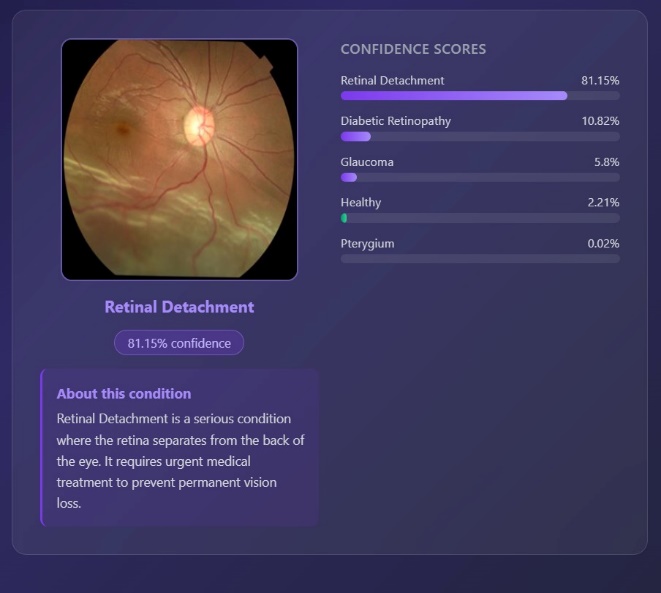
An Intelligent and Secure Application for Early Detection of Eye Disease
Free Access | Research Article | 21 March 2026
A Decentralised Multi-Agent DRL-based Approach for Pedestrian and Vehicle Traffic Signals Controlling Systems Optimisation
ICCK Transactions on Mobile and Wireless Intelligence | Volume 2, Issue 1: 31-43, 2026 | DOI: 10.62762/TMWI.2025.878487
Abstract
Urban traffic congestion is a major issue that negatively affects mobility efficiency, environmental sustainability and road safety. Many recent methods for controlling traffic signals have used methods based on deep reinforcement learning (DRL) and provided positive results. However, it focused primarily on vehicle flow and have not taken into account pedestrian dynamics due to inherent difficulty related to accurately sensing all pedestrians. As a result of these limitations, recent advances in sixth-generation (6G) localisation technology will provide new opportunities to provide precise, low-latency tracking of pedestrians at signalized intersections, allowing for improved control of ped... More >

Graphical Abstract
A Decentralised Multi-Agent DRL-based Approach for Pedestrian and Vehicle Traffic Signals Controlling Systems Optimisation
Free Access | Research Article | 14 February 2026
An Intelligent Smart Parking Framework Using Machine Learning–Based Automatic License Plate Recognition for Enhanced Security
ICCK Transactions on Mobile and Wireless Intelligence | Volume 2, Issue 1: 21-30, 2026 | DOI: 10.62762/TMWI.2026.886184
Abstract
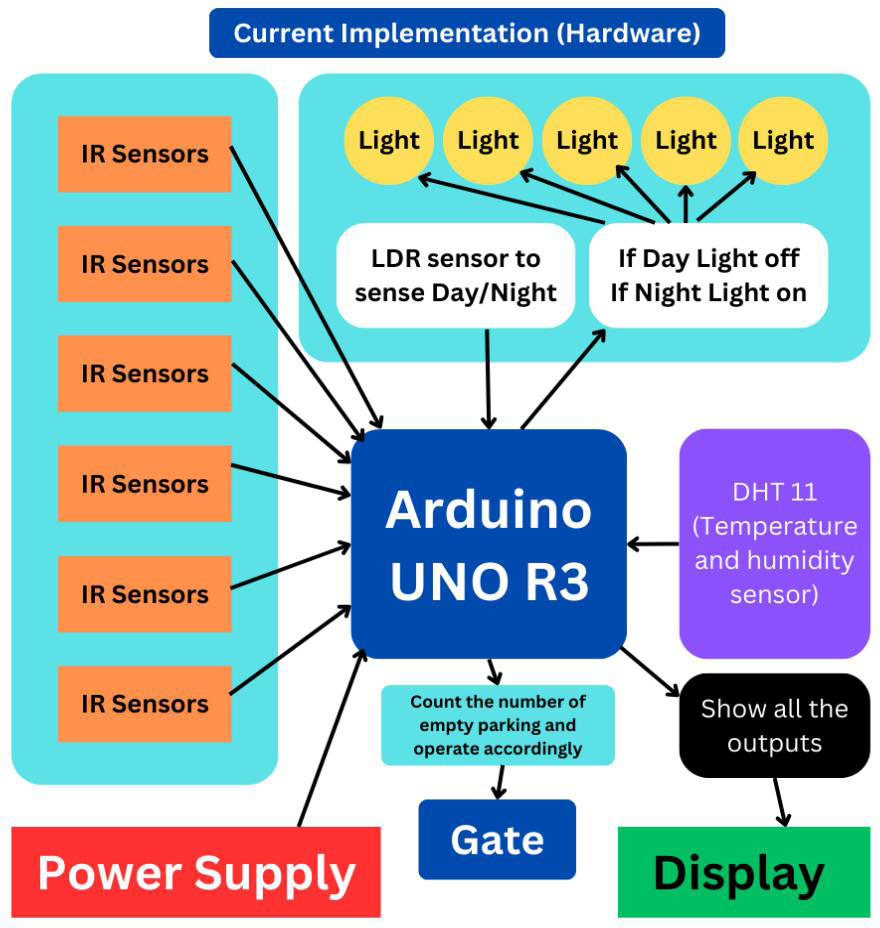
Urban parking inefficiency has become a critical challenge in modern cities, leading to increased traffic congestion, higher fuel consumption, and greater environmental impact. This paper proposes an intelligent smart parking management system that integrates hardware sensing, machine learning, and computer vision to enable real-time parking monitoring and automated vehicle identification. The system combines infrared sensors, camera modules, and microcontroller-based control with vision-based parking space detection and automatic license plate recognition (ALPR). Experimental results demonstrate that the parking space detection module achieves an accuracy of 93.97%, while the license plate... More >

Graphical Abstract
An Intelligent Smart Parking Framework Using Machine Learning–Based Automatic License Plate Recognition for Enhanced Security
Free Access | Review Article | 01 January 2026 | Cited: Crossref logo  1
Exploring the Spectrum Frontier: Comparative Analysis of RF, mmWave, and THz Communication for 6G and Beyond
ICCK Transactions on Mobile and Wireless Intelligence | Volume 2, Issue 1: 1-20, 2026 | DOI: 10.62762/TMWI.2025.996592
Abstract
Wireless communication technologies are becoming increasingly important in today's rapidly developing technological world. The widespread use of the Internet, the popularity of smartphones and other mobile devices, and the rise in industrial applications have all contributed to the start of a new wireless communication technology revolution. As a result, 6th generation (6G) wireless communication technology is intended to provide enhanced performance features such as faster speeds, larger bandwidths, lower latency, higher connection density, and improved reliability. mmWave-band communications are already having a vital impact on 5G. Similarly, communications in the TeraHertz (THz)-band will... More >

Graphical Abstract
Exploring the Spectrum Frontier: Comparative Analysis of RF, mmWave, and THz Communication for 6G and Beyond