
ICCK

Barnali Gupta Banik

Mahatma Gandhi Institute of Technology, Hyderabad, India

Section 01

Academic Profile

Dr. Barnali Gupta Banik is an Associate Professor in the Department of Computer Science and Engineering at Mahatma Gandhi Institute of Technology, Hyderabad. She holds a Ph.D. in Computer Science and Engineering from the University of Calcutta and has more than eighteen years of professional experience across academia, the IT industry in India and the UK, and government-funded research. She has also held positions as a Research Scientist at CR Rao Advanced Institute of Mathematics, Statistics and Computer Science and as a Blockchain Research Manager at KNNX Corp. Her research interests include information security, cryptography, steganography, blockchain technology, and artificial intelligence. She has authored more than forty-seven peer-reviewed publications, contributed to book chapters, and holds three patents (one national and two international). An IEEE Senior Member and an active member of the Cryptology Research Society of India, she has delivered invited talks, organized faculty development programs, and supervised doctoral and postgraduate research.

Section 02

Editorial Roles

This user currently does not serve as an editor for any ICCK journals.

Section 03

ICCK Publications

Open Access | Research Article | 12 March 2026
SAWAOS: Smart Agri-Waste Analysis and Optimization System
Digital Intelligence in Agriculture | Volume 2, Issue 1: 12-18, 2026 | DOI: 10.62762/DIA.2025.690210
Abstract
The growing volume of agricultural residues poses significant environmental and economic challenges, while existing waste management practices remain inefficient and unsustainable. This paper presents SAWAOS (Smart Agri-Waste Analysis and Optimization System), an applied AI-based decision-support framework for intelligent agricultural waste utilization. SAWAOS integrates waste characteristics, location information, and domain knowledge to generate context-aware recommendations for composting, bioenergy conversion, and industrial reuse. The system employs an explainable, rule-enhanced AI decision logic suitable for low-data rural environments and incorporates a digital marketplace that direct... More >

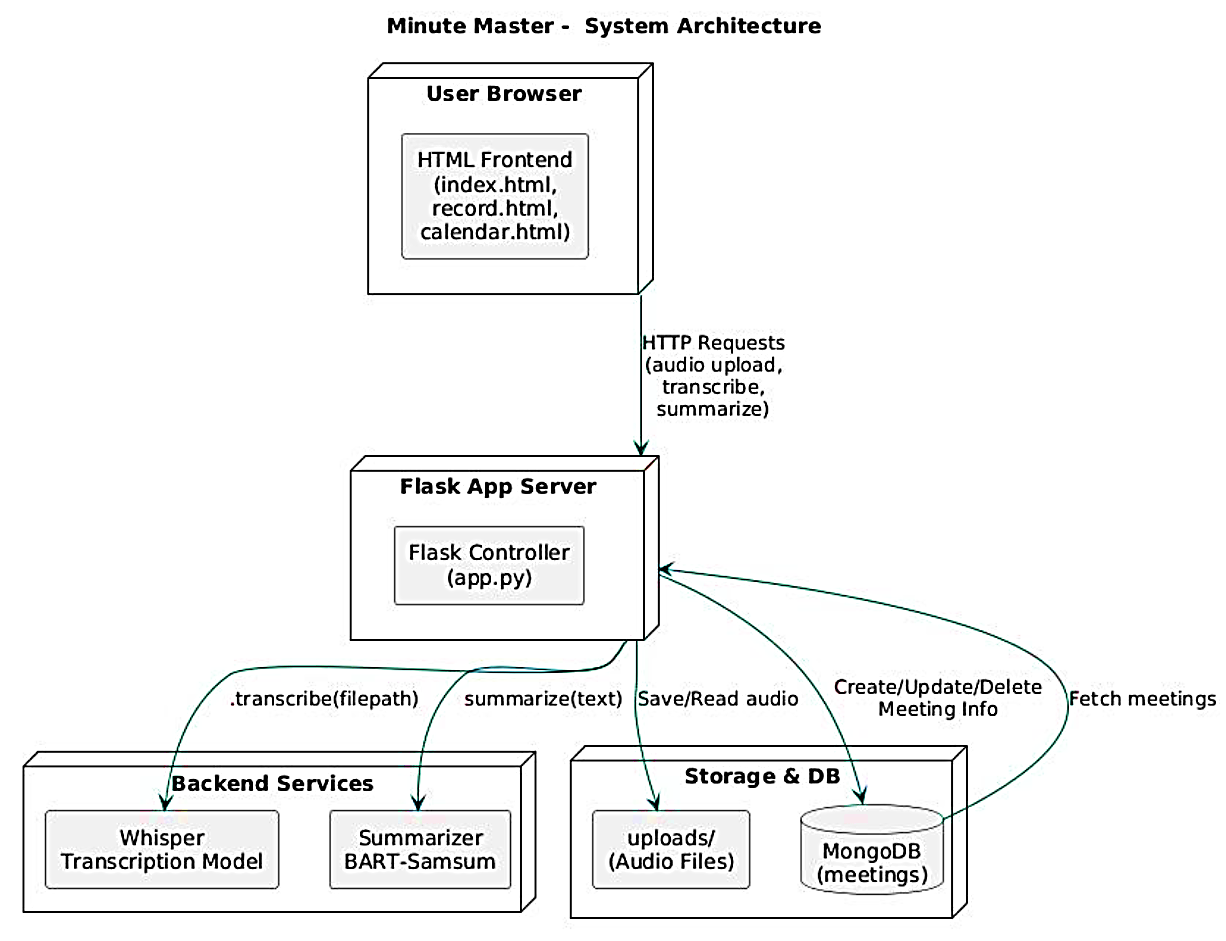
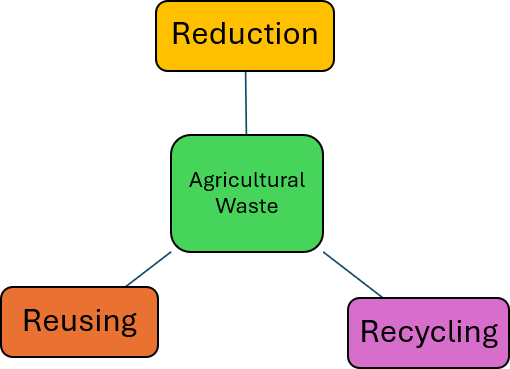
Graphical Abstract
SAWAOS: Smart Agri-Waste Analysis and Optimization System
Open Access | Research Article | 07 March 2026
Predicting University Admission Chances Using Machine Learning
Next-Generation Computing Systems and Technologies | Volume 2, Issue 1: 1-9, 2026 | DOI: 10.62762/NGCST.2026.766610
Abstract
In the current academic landscape, students often face challenges in identifying suitable institutions for higher studies based on their academic and profile attributes. Existing advisory services and online tools are either expensive or lack predictive accuracy. This research proposes a machine learning-based admission prediction system that estimates the probability of university admission using historical applicant data. Linear Regression serves as a baseline model to capture linear relationships, Random Forest models non-linear feature interactions, and CatBoost is selected for its robustness on structured tabular data and native handling of categorical features. Comparative evaluation u... More >

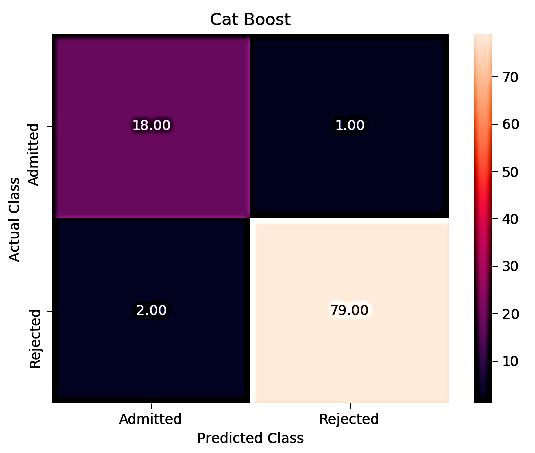
Graphical Abstract
Predicting University Admission Chances Using Machine Learning
Free Access | Research Article | 01 March 2026 | Cited: Crossref logo  1 , Scopus 1
Intelligent Deepfake Detector Using Audio-Visual Clues
ICCK Transactions on Machine Intelligence | Volume 2, Issue 2: 100-105, 2026 | DOI: 10.62762/TMI.2025.601369
Abstract
Deepfake media is growing rapidly and causing significant harm. Bad actors now use AI to create fake videos that appear increasingly realistic. Traditional detection tools often fail because they analyze audio or visual signals in isolation. This paper introduces an intelligent Deepfake Detection system that addresses this limitation through a novel Multi-Modal Dispersion Framework. The system identifies subtle inconsistencies by tracking how lip movements align with speech patterns. By projecting these features into a shared latent space, the model quantifies the semantic divergence between modalities. A transformer module then captures cross-modal context to detect fine-grained manipulatio... More >

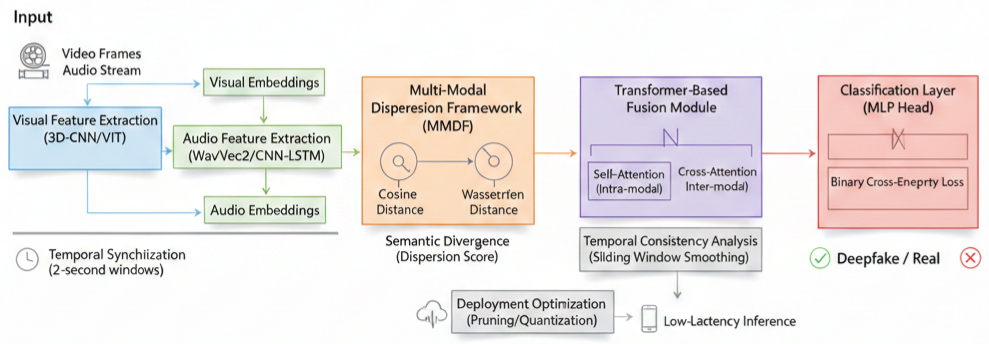
Graphical Abstract
Intelligent Deepfake Detector Using Audio-Visual Clues