ICCK

Francisco Morales‑Leal

Mexican Petroleum Institute

Section 01

Academic Profile

No academic profile information available at the moment.

Section 02

Editorial Roles

This user currently does not serve as an editor for any ICCK journals.

Section 03

ICCK Publications

Open Access | Perspective | 18 August 2026
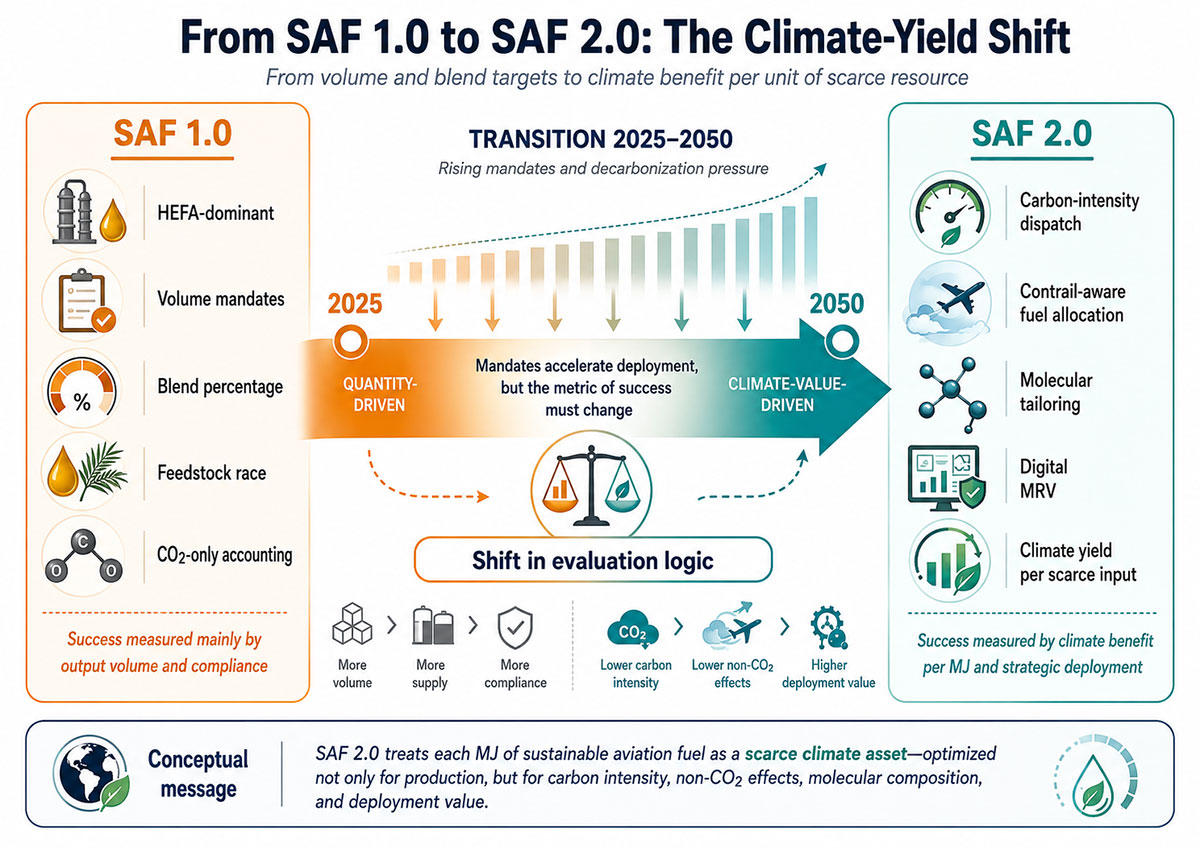
Sustainable Aviation Fuel 2.0: Carbon- and Contrail-Intensity Managed Refineries for Climate-Smart Aviation
Journal of Chemical Engineering and Renewable Fuels | Volume 2, Issue 3: 82-90, 2026 | DOI: 10.62762/JCERF.2026.855881
Abstract
Sustainable aviation fuel (SAF) is entering the mandate era while still representing a sub-percent share of global aviation fuel. This Perspective argues that the next bottleneck is not only production capacity, but climate allocation: which carbon sources, hydrogen, renewable electrons and molecular structures should become jet fuel, and where that fuel should be deployed to deliver the greatest avoided climate impact. SAF 2.0 is proposed as a carbon- and contrail-intensity managed refinery–airport architecture that links certified HEFA, Fischer–Tropsch, alcohol-to-jet, power-to-liquid/e-SAF and co-processing modules with molecular finishing, digital monitoring, reporting and verificati... More >

Graphical Abstract
Sustainable Aviation Fuel 2.0: Carbon- and Contrail-Intensity Managed Refineries for Climate-Smart Aviation
Open Access | Perspective | 24 October 2025
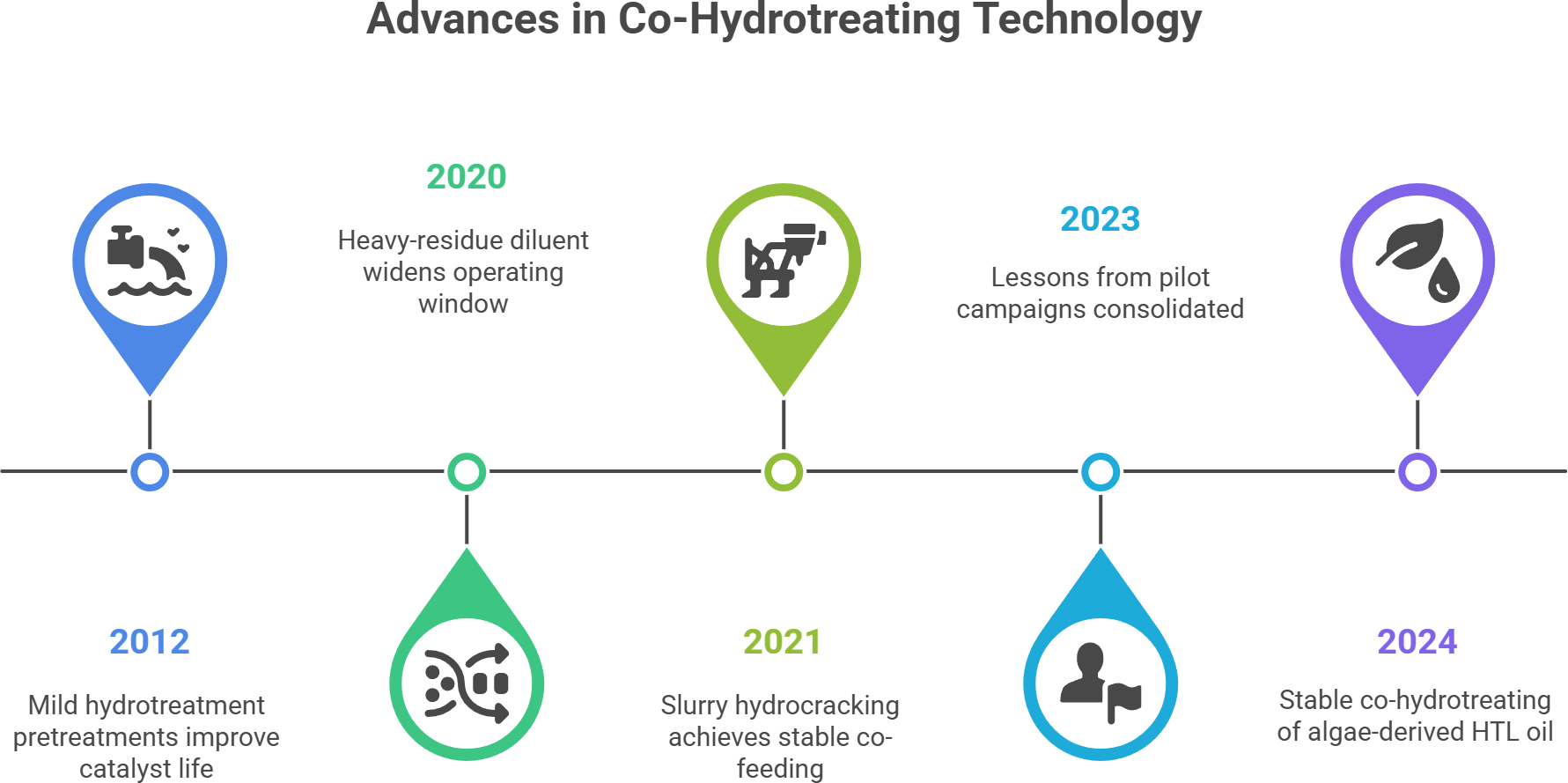
Bridging Refinery and Biorefinery: Modular Hydrotreating Pathways for Co-Processing Refractory Streams and Bio-Oils
Journal of Chemical Engineering and Renewable Fuels | Volume 2, Issue 1: 1-5, 2025 | DOI: 10.62762/JCERF.2025.769005
Abstract
Integrating biomass-derived oils into existing petroleum refineries is one of the fastest routes toward large-scale deployment of renewable liquid fuels. Yet co-processing bio-oils with refractory fossil streams, such as vacuum gas oil, cycle oils or coker gas oils, poses persistent hurdles: their high oxygen content, thermal instability and heteroatom-rich matrices accelerate catalyst fouling and drive hydrogen consumption. This Perspective argues that a modular hydrotreating strategy, in which tailored pretreatment, grading and active catalyst beds are arranged as interchangeable cartridges, offers a pragmatic path to bridge refinery and biorefinery operations. Drawing from recent continuo... More >

Graphical Abstract
Bridging Refinery and Biorefinery: Modular Hydrotreating Pathways for Co-Processing Refractory Streams and Bio-Oils