
ICCK

Liming Yang

Nanjing Forestry University

Section 01

Academic Profile

No academic profile information available at the moment.

Section 02

Editorial Roles

This user currently does not serve as an editor for any ICCK journals.

Section 03

ICCK Publications

Open Access | Review Article | 05 April 2026
Melatonin-Mediated Activation of the MKK5–MPK3/6 Cascade: A Molecular Framework for Integrated Drought Stress Tolerance in Plants
Plant Innovation Journal | Volume 1, Issue 1: 50-57, 2026 | DOI: 10.62762/PIJ.2026.832797
Abstract
Drought stress is one of the most devastating abiotic stresses threatening global food security. Melatonin (N-acetyl-5-methoxytryptamine) and Mitogen-Activated Protein Kinase Kinase 5 (MKK5) are independently recognized as central regulators of plant stress adaptation; however, the molecular intersection of their signaling axes remains poorly characterized. This review proposes and examines a coherent molecular framework wherein melatonin, perceived via the phytomelatonin receptor PMTR1/CAND2, may converge on MKK5-containing MPK3/6 signaling modules as part of a broader MKK4/5/7/9 MAPK response network to orchestrate an integrated drought stress response. Key convergence points include the A... More >

Graphical Abstract
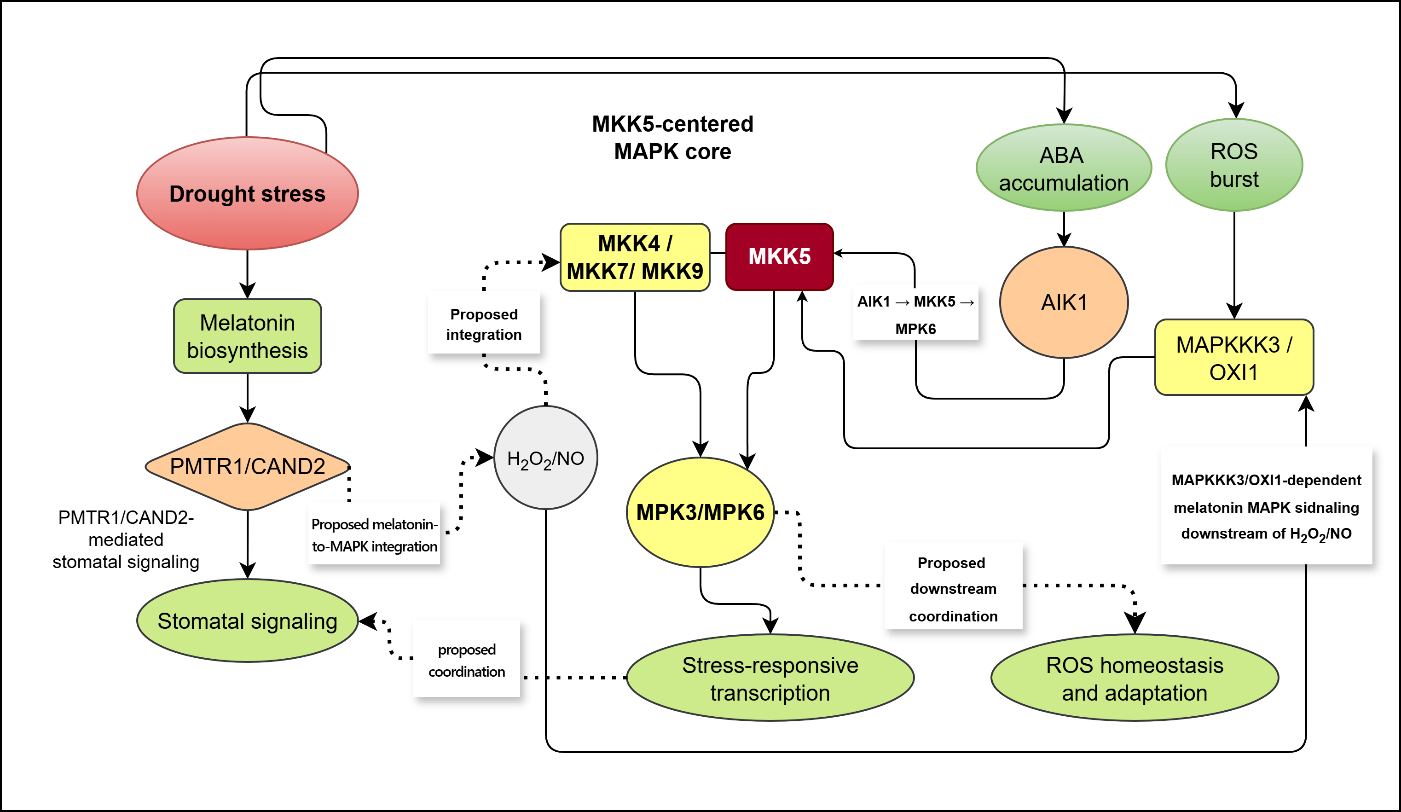
Melatonin-Mediated Activation of the MKK5–MPK3/6 Cascade: A Molecular Framework for Integrated Drought Stress Tolerance in Plants
Open Access | Review Article | 28 October 2025 | Cited: Scopus 1
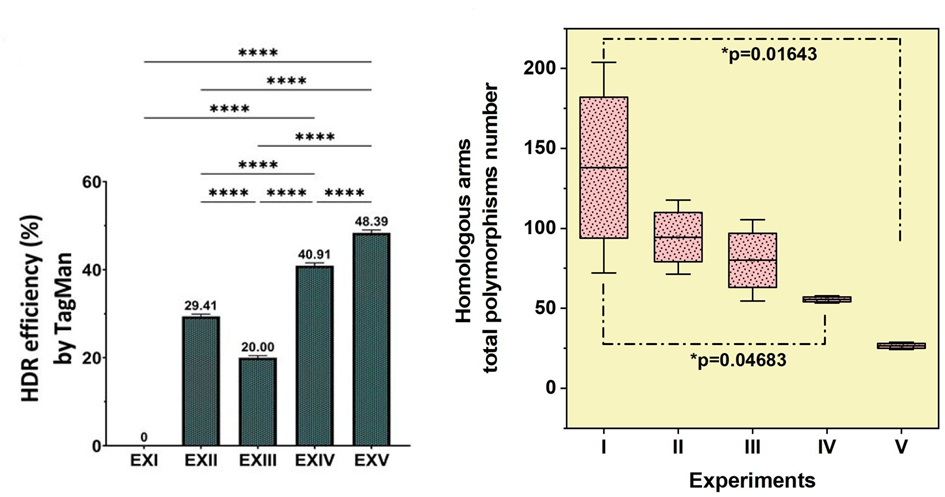
CRISPR-Cas Genome Editing in Plants: Revolutionizing Precision Agriculture and Plant Biotechnology
Plant Innovation Journal | Volume 1, Issue 1: 1-7, 2025 | DOI: 10.62762/PIJ.2025.263896
Abstract
Plant biotechnology has been transformed by CRISPR-Cas genome editing, which has improved crops with previously unheard-of accuracy and efficiency. Base editing, prime editing, and enhanced delivery systems are the most recent CRISPR applications for plant genome editing. Advances like CRISPR-Act3.0 and HDR-mediated precise insertions have expanded plant genetic engineering tools. We discuss successful applications in rice, wheat, maize, and woody species that have resulted in improvements in disease resistance, stress tolerance, and yield. Despite delivery efficiency and off-target effects, CRISPR technology suggests sustainable global agriculture and climate adaptation. More >

Graphical Abstract
CRISPR-Cas Genome Editing in Plants: Revolutionizing Precision Agriculture and Plant Biotechnology