


Summary

Chin Soon Ku received a PhD from the University of Malaya, Malaysia, in 2019. Currently an assistant professor in the Department of Computer Science, University of Tunku Abdul Rahman, Malaysia, his current research interests including AI techniques (such as genetic algorithm), computer vision, decision support tools, graphical authentication (authentication, picture-based password, graphical password), machine learning, deep learning, speech processing, natural language processing and autonomous logistics fleets. He has published papers on graphical password methods, including techniques to prevent shoulder-surfing attacks and improve password security. Additionally, he has contributed to research on information security, particularly in the context of chatbots and cryptography. He has explored techniques, features, and applications related to mobile phone data, including its use in crime applications and surveys of mobile phone data. In addition, he has worked on improving optimization algorithms for various applications, such as optimal allocation and scheduling of wind turbine and electric vehicle parking lots, and optimal design of hybrid energy systems. He has conducted research on equity forecasting and stock market predictions, including the use of long short-term memory methods and dynamic indicators.

Edited Journals

ICCK Contributions


Open Access | Review Article | 02 November 2025
Privacy and Trust in Blockchain-Federated Intrusion Detection Systems: Taxonomy, Challenges and Perspectives
Journal of Reliable and Secure Computing | Volume 1, Issue 1: 4-24, 2025 | DOI: 10.62762/JRSC.2025.399812
Abstract
Intrusion Detection Systems (IDS) play a critical role in protecting modern networks, but traditional centralized designs raise serious concerns regarding data privacy, trust, and scalability. Federated Learning (FL) reduces privacy risks through decentralized model training, and blockchain enhances trust by providing immutability and transparency. Combining these technologies creates a promising paradigm for secure and trustworthy IDS. This paper presents a comprehensive survey of blockchain-federated IDS with a particular focus on privacy and trust. The key contribution is a multi-dimensional taxonomy that integrates IDS architectures, FL strategies, blockchain types, and consensus mechani... More >

Graphical Abstract
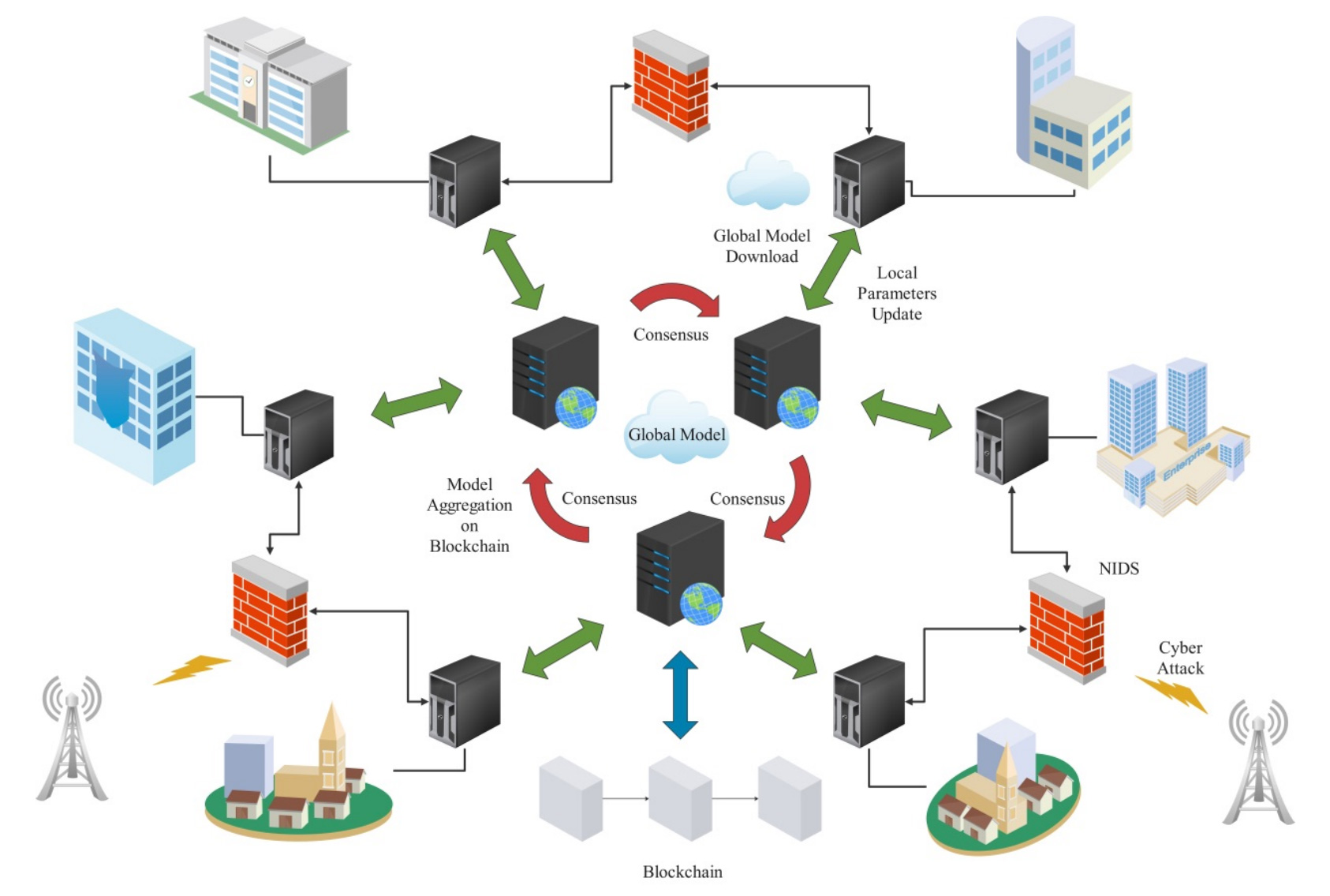
Privacy and Trust in Blockchain-Federated Intrusion Detection Systems: Taxonomy, Challenges and Perspectives