ICCK

Xuejun Li

School of Electronic Information Engineering, Huaiyin Institute of Technology, Huaian 223003, China

Section 01

Academic Profile

No academic profile information available at the moment.

Section 02

Editorial Roles

This user currently does not serve as an editor for any ICCK journals.

Section 03

ICCK Publications

Free Access | Research Article | 09 April 2026
Traffic Flow Prediction Model Based on Variant Hybrid Multi-Hop Graph Convolution
ICCK Transactions on Intelligent Systematics | Volume 3, Issue 2: 81-93, 2026 | DOI: 10.62762/TIS.2025.954751
Abstract
Accurate traffic flow prediction is a crucial step in building an intelligent transportation system, and it is of great significance for alleviating urban traffic congestion and optimizing travel routes. Due to the complex spatial topology of the transportation network and the highly nonlinear temporal dynamic characteristics of the flow data, traditional prediction methods are difficult to fully capture the inherent spatio-temporal dependencies. Therefore, this paper proposes a traffic flow prediction model based on variant hybrid multi-hop graph convolution. Firstly, by introducing a multi-hop graph convolution operator, the model explicitly aggregates the spatial information of multiple-o... More >

Graphical Abstract
Traffic Flow Prediction Model Based on Variant Hybrid Multi-Hop Graph Convolution
Open Access | Research Article | 29 January 2026 | Cited: Crossref logo  8 , Scopus 6
Enhanced Air Pollution Prediction via Adam-Optimized Multi-Head Attention and Hybrid Deep Learning
ICCK Transactions on Intelligent Systematics | Volume 3, Issue 1: 11-20, 2026 | DOI: 10.62762/TIS.2025.951370
Abstract
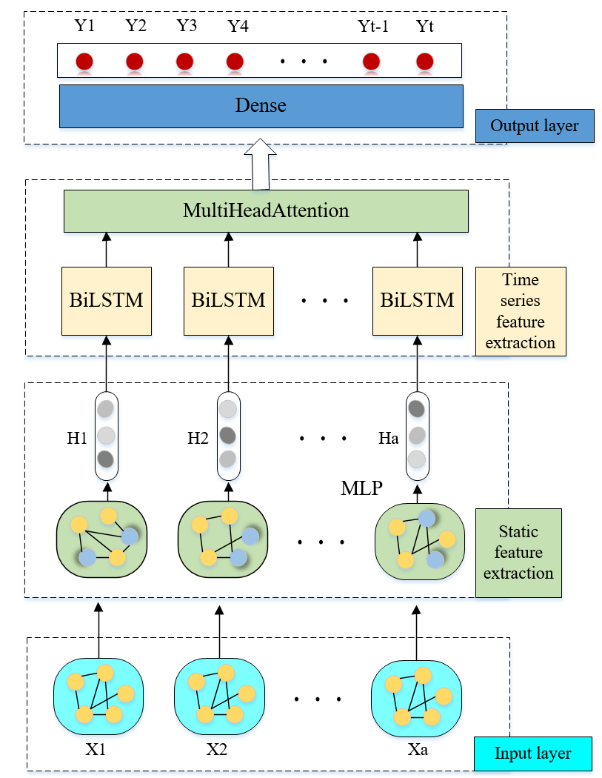
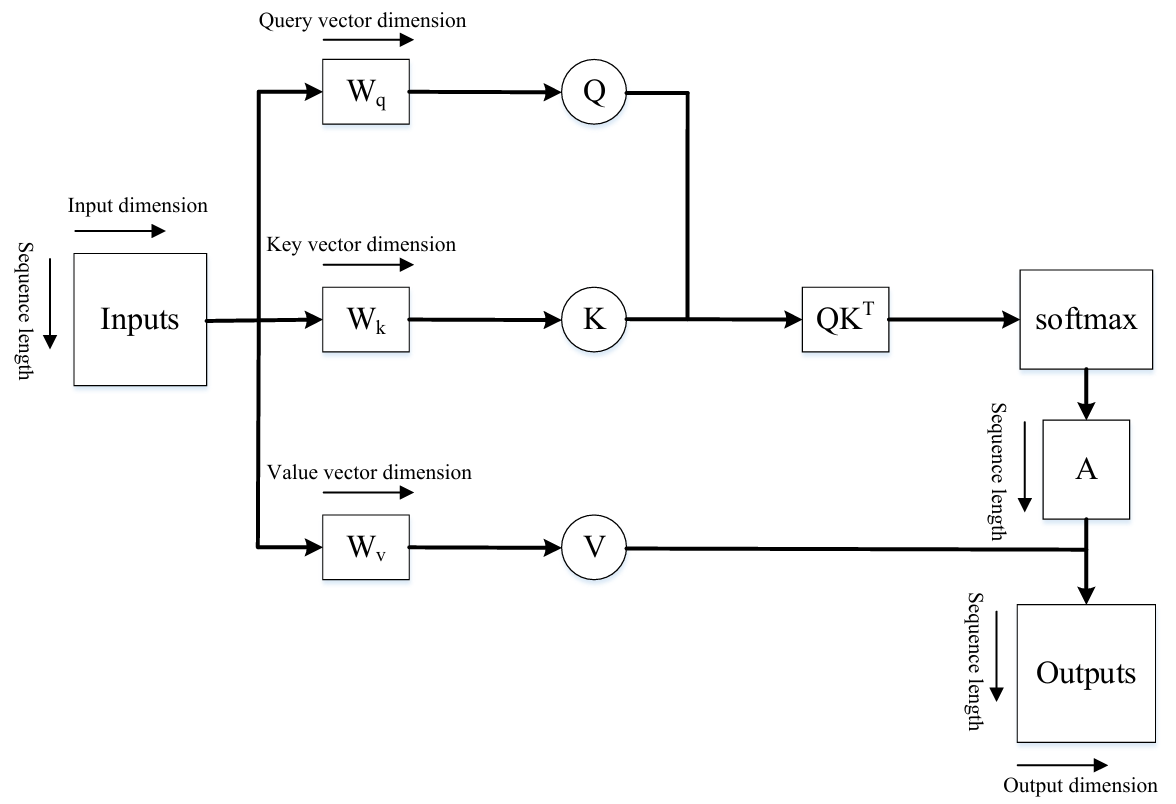
To address the challenge of traditional models in simultaneously capturing local fluctuations and global trends for air pollutant concentration prediction, this paper proposes a multimodal deep learning model named MLP-BiLSTM- MHAT. The model integrates static features via MLP, extracts temporal dependencies through bidirectional LSTM (BiLSTM), and employs a Multi-head Attention mechanism (MHAT) to fuse local and global features while enhancing interactions between static and temporal characteristics. An improved Adam algorithm dynamically optimizes learning rates to balance the influence of heterogenous features. Validated on multi-site air quality data from Beijing, experimental results de... More >

Graphical Abstract
Enhanced Air Pollution Prediction via Adam-Optimized Multi-Head Attention and Hybrid Deep Learning