

Plant Innovation Journal | Volume 1, Issue 1: 18-26, 2026 | DOI: 10.62762/PIJ.2025.283212
Abstract
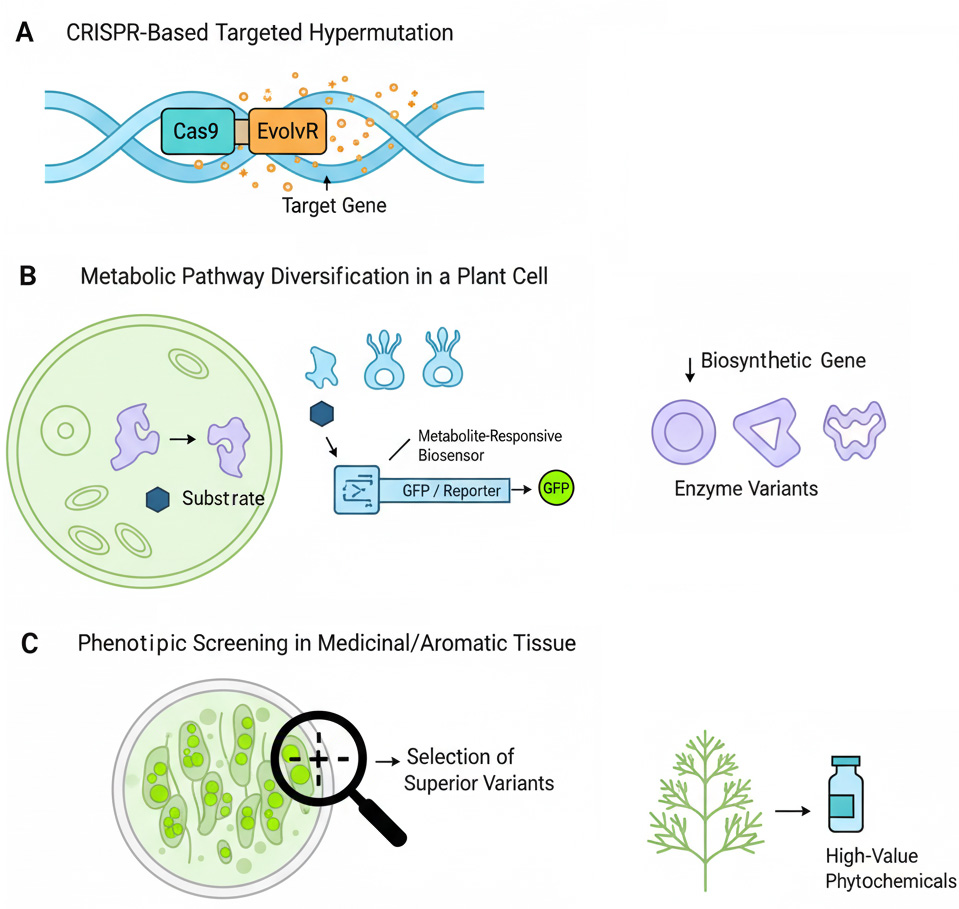
Medicinal and aromatic plants (MAPs) serve as biochemical factories producing valuable secondary metabolites, yet their potential is limited by low yields, tissue-specific accumulation, and co-production of toxic compounds. Traditional improvement methods have achieved only incremental gains, highlighting the need for precision metabolic engineering. CRISPR/Cas genome editing has revolutionized this field by enabling targeted modifications from gene knockouts to single-nucleotide changes. This review examines core strategies in applying genome editing to engineer MAP metabolic pathways, including gene disruption, transcriptional modulation, and multiplex editing to redirect flux, eliminate c... More >
Graphical Abstract