ICCK

Gul Zaman Khan

School of Software Technology, Dalian University of Technology, Dalian 116000, China

Section 01

Academic Profile

No academic profile information available at the moment.

Section 02

Editorial Roles

This user currently does not serve as an editor for any ICCK journals.

Section 03

ICCK Publications

Open Access | Review Article | 20 April 2026
AI Integration in Unmanned Aerial Vehicles: Key Challenges, Enabling Technologies, and Practical Solutions
ICCK Transactions on Applied Intelligence and Cybernetics | Volume 1, Issue 1: 67-95, 2026 | DOI: 10.62762/TAIC.2026.456667
Abstract
Over the last decade, Unmanned Aerial Vehicle (UAV) technology has rapidly developed by integrating AI tools and methodologies. UAVs are used across many fields, including wireless communication, logistics, agriculture, construction, security, and exploration. UAV systems are inherently complex and present numerous challenges. This study conducted a systematic literature review to identify the main challenges and the solutions researchers have proposed. A total of 141 research papers were collected and analyzed, with no restriction on publication year. The review identified 10 main challenges affecting AI in UAVs. These include problems with autonomous navigation, real-time decision-making,... More >

Graphical Abstract
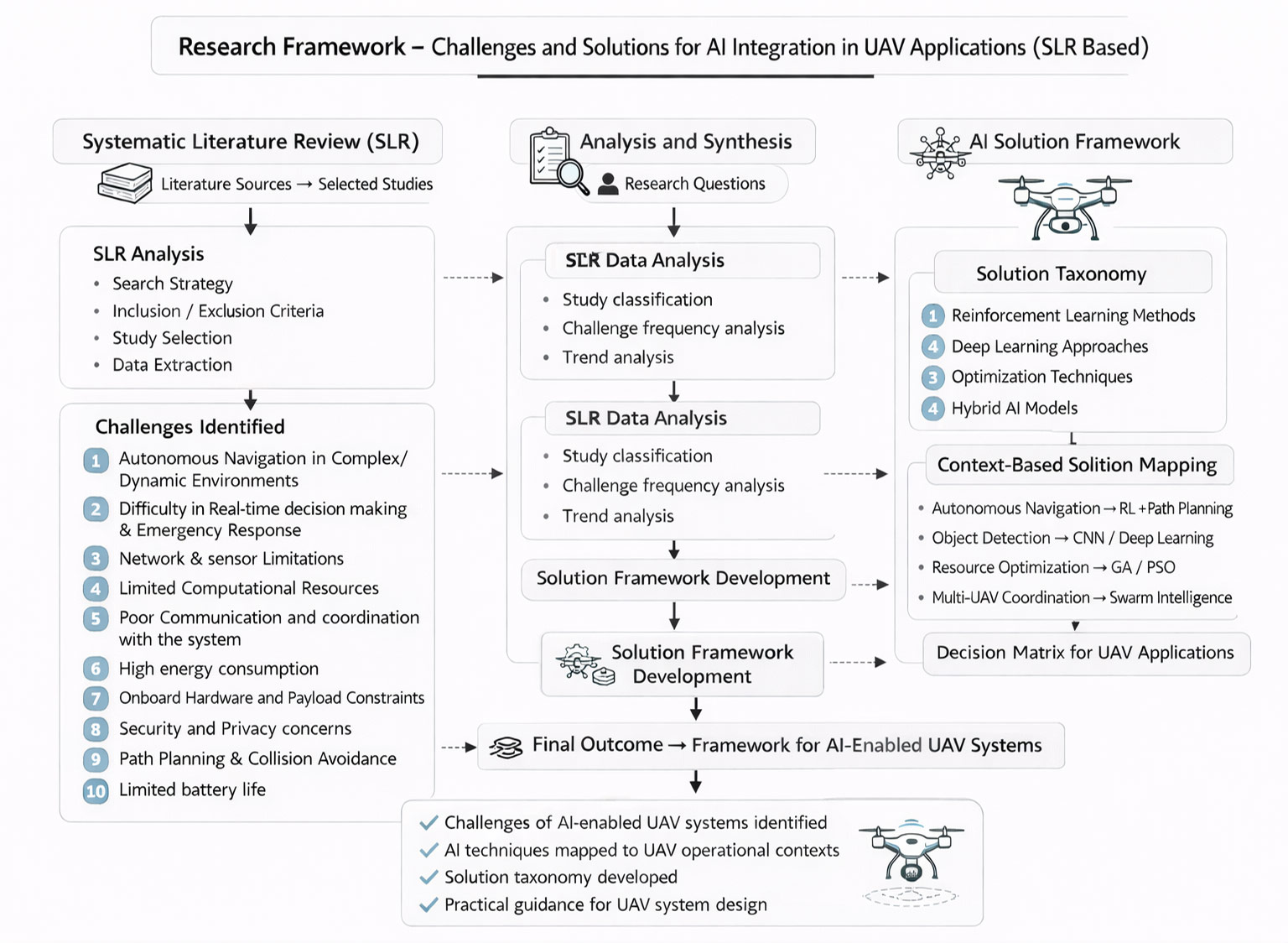
AI Integration in Unmanned Aerial Vehicles: Key Challenges, Enabling Technologies, and Practical Solutions
Open Access | Review Article | 03 March 2026
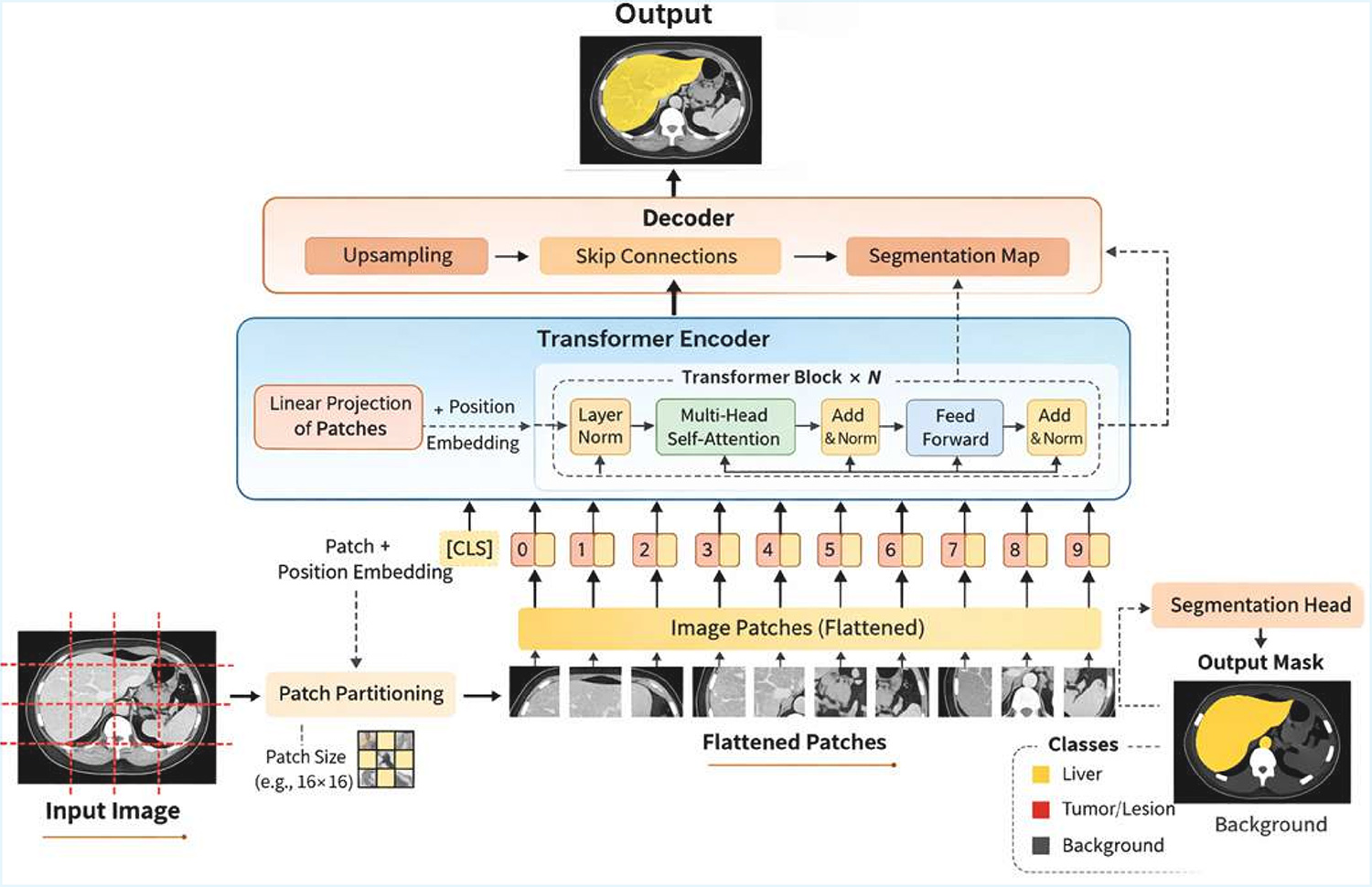
A Comprehensive Review on 3D Volumetric CT Liver Segmentation: Techniques, Challenges, Trends, and Future Research Directions
ICCK Transactions on Applied Intelligence and Cybernetics | Volume 1, Issue 1: 5-35, 2026 | DOI: 10.62762/TAIC.2025.965486
Abstract
Accurate liver segmentation from three-dimensional (3D) computed tomography (CT) volumes is a critical step in computer-aided diagnosis, surgical planning, and disease quantification. Despite substantial progress in deep learning, achieving robust and generalizable liver segmentation remains challenging due to complex organ boundaries, pathological variations, and domain shifts across scanners. This review provides a comprehensive overview of 3D volumetric liver segmentation techniques, spanning from classical model-based methods to contemporary transformer-driven frameworks. We categorize existing methods into three paradigms: (1) classical statistical and atlas-based methods, (2) deep conv... More >

Graphical Abstract
A Comprehensive Review on 3D Volumetric CT Liver Segmentation: Techniques, Challenges, Trends, and Future Research Directions