Chinese Journal of Information Fusion | Volume 3, Issue 2: 125-137, 2026 | DOI: 10.62762/CJIF.2025.869982
Abstract
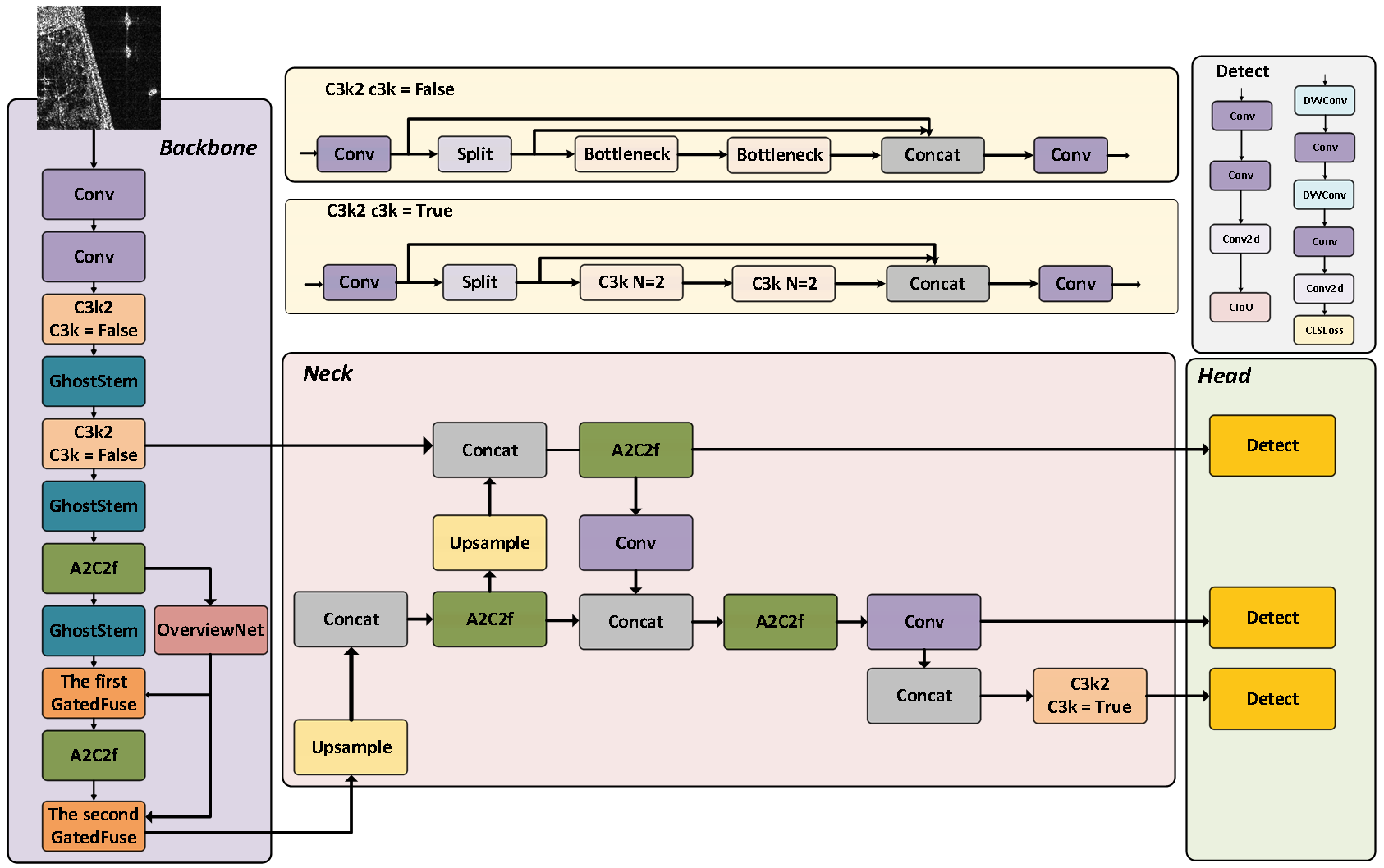
Ship detection in Synthetic Aperture Radar (SAR) imagery is crucial for maritime surveillance. However, it faces significant challenges, including small target sizes, complex sea clutter interference, and stringent requirements for computational efficiency in on-board processing. While detection frameworks like YOLOv12 have achieved a favorable balance between speed and accuracy by integrating attention mechanisms with convolutional neural networks (CNNs), their generic architectures are not optimized for the unique physical characteristics of SAR imagery and the scattering properties of ship targets. To develop a more suitable lightweight and high-precision model for SAR ship detection, thi... More >
Graphical Abstract