

Plant Innovation Journal | Volume 1, Issue 2: 88-98, 2026 | DOI: 10.62762/PIJ.2026.589587
Abstract
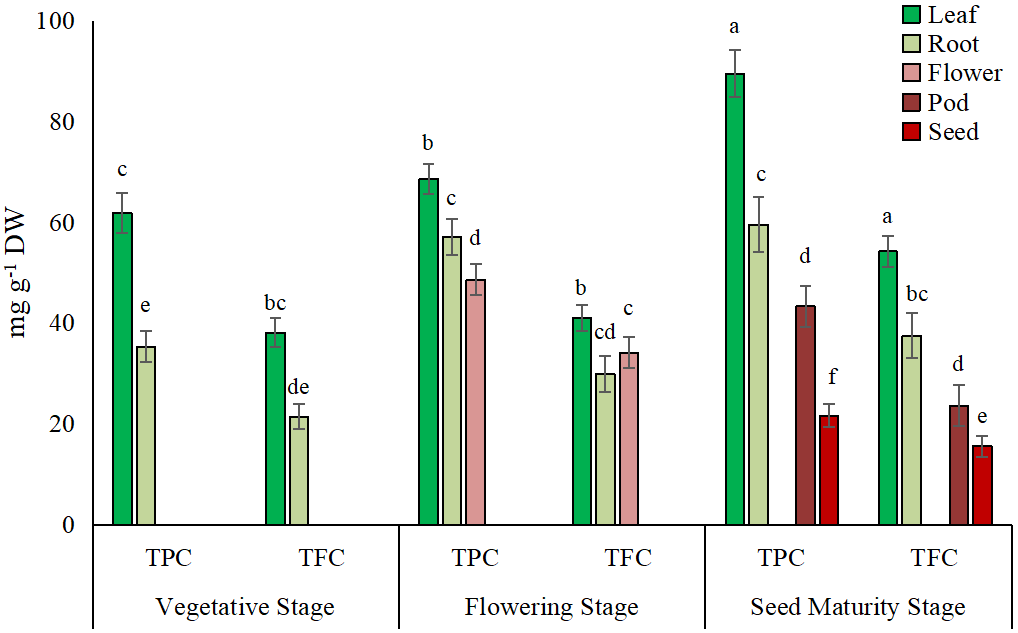
Plants are rich in phenolic chemicals, which have been demonstrated to have antibacterial activities. The current study aims to track changes in phenolic compound accumulation in Prosopis farcta organs (leaf, root, flower, pod, and seed) at various growth stages (vegetative, flowering, and seed maturity) and investigate the antibacterial activity of its extracts. At all growth stages, the highest total amount of phenolic compounds and flavonoids was observed in leaves, followed by roots, with the highest quantities measured at maturity. Flowers had the highest concentrations of several phenolics (caffeic acid, coumaric acid, luteolin, and diosmin). In P. farcta, there was a strong link betwe... More >
Graphical Abstract