

ICCK Transactions on Sensing, Communication, and Control | Volume 3, Issue 3: 176-196, 2026 | DOI: 10.62762/TSCC.2026.303040
Abstract
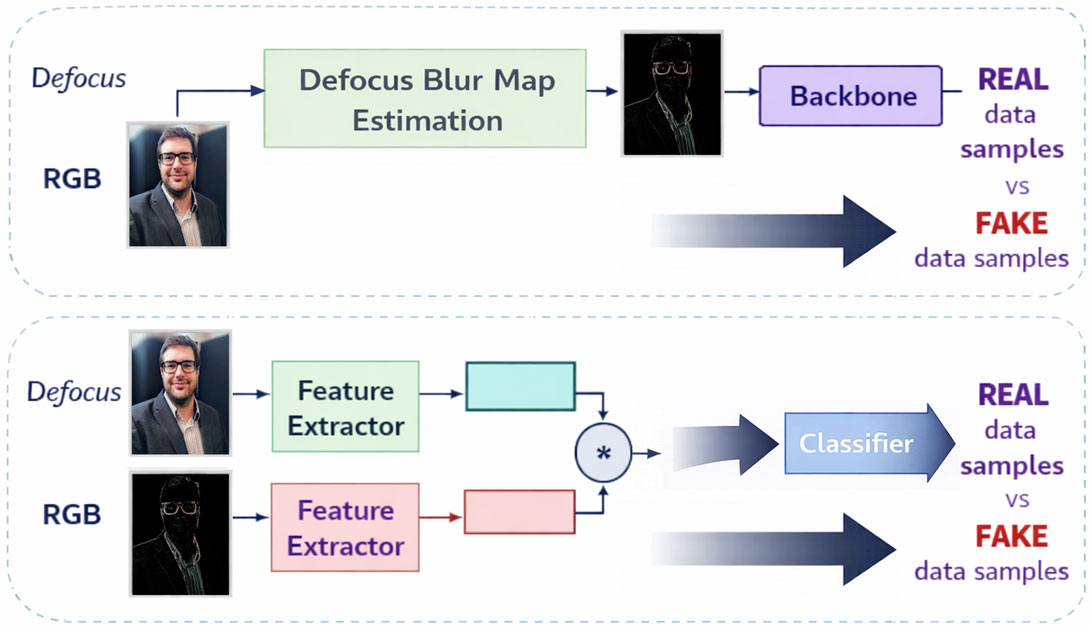
Deepfake technology has advanced swiftly, enabling the rapid production of hyper-realistic synthetic media that pose considerable threats to digital security, privacy, military operations, and information integrity. This paper extensively examines visual intelligence and computer vision methodologies for deepfake detection, covering recent developments in deep learning, adversarial strategies, and feature extraction. It reviews prevalent generation architectures—including GANs, autoencoders, neural rendering, and diffusion models—alongside novel adversarial tactics that enhance realism while evading detection, particularly in military and intelligence contexts. We also investigate visual... More >
Graphical Abstract