

Sensing Deepfake Detection: A Survey of Detection Architectures, Adversarial Challenges, and Critical Applications in Political, Educational, and Military Domains




Article Information
Abstract
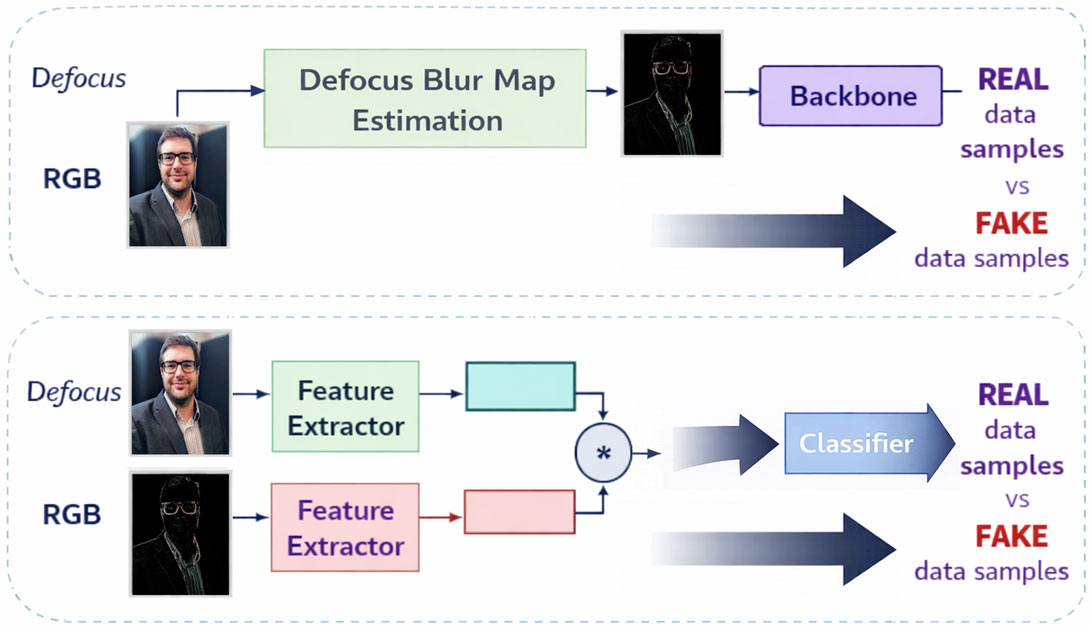
Deepfake technology has advanced swiftly, enabling the rapid production of hyper-realistic synthetic media that pose considerable threats to digital security, privacy, military operations, and information integrity. This paper extensively examines visual intelligence and computer vision methodologies for deepfake detection, covering recent developments in deep learning, adversarial strategies, and feature extraction. It reviews prevalent generation architectures—including GANs, autoencoders, neural rendering, and diffusion models—alongside novel adversarial tactics that enhance realism while evading detection, particularly in military and intelligence contexts. We also investigate visual artifacts and manipulation traces, scrutinizing physical discrepancies, digital fingerprints, and physiological signals as critical detection indicators. The article offers a comprehensive analysis of CNN-based, transformer-based, and frequency-domain detection methods, highlighting their advantages, drawbacks, and practical relevance. Furthermore, we examine assessment measures and generalization challenges, while emphasizing prospective research avenues such as explainable AI, self-supervised learning, and federated learning. This study serves as a significant resource for academics and practitioners combating deepfake disinformation in civilian, military, and hybrid threat environments, providing insights into detection improvements and impending issues in hostile AI.
Graphical Abstract
Keywords
Data Availability Statement
Funding
Conflicts of Interest
AI Use Statement
Ethical Approval and Consent to Participate
References
- Whittaker, L., Mulcahy, R., Letheren, K., Kietzmann, J., & Russell-Bennett, R. (2023). Mapping the deepfake landscape for innovation: A multidisciplinary systematic review and future research agenda. Technovation, 125, 102784.
[CrossRef] [Google Scholar] - Chadha, A., Kumar, V., Kashyap, S., & Gupta, M. (2021, May). Deepfake: an overview. In Proceedings of second international conference on computing, communications, and cyber-security: IC4S 2020 (pp. 557-566). Singapore: Springer Singapore.
[CrossRef] [Google Scholar] - Mirsky, Y., & Lee, W. (2021). The creation and detection of deepfakes: A survey. ACM computing surveys (CSUR), 54(1), 1-41.
[CrossRef] [Google Scholar] - Chesney, B., & Citron, D. (2019). Deep fakes: A looming challenge for privacy, democracy, and national security. Calif. L. Rev., 107, 1753. https://access.heinonline.com/HOL/LandingPage?handle=hein.journals/calr107&div=51
[Google Scholar] - Nguyen, T. T., Nguyen, Q. V. H., Nguyen, D. T., Nguyen, D. T., Huynh-The, T., Nahavandi, S., ... & Nguyen, C. M. (2022). Deep learning for deepfakes creation and detection: A survey. Computer Vision and Image Understanding, 223, 103525.
[CrossRef] [Google Scholar] - Agarwal, A., & Ratha, N. (2023). Manipulating faces for identity theft via morphing and deepfake: Digital privacy. In Handbook of statistics (Vol. 48, pp. 223-241). Elsevier.
[CrossRef] [Google Scholar] - Wang, T., Liao, X., Chow, K. P., Lin, X., & Wang, Y. (2024). Deepfake detection: A comprehensive survey from the reliability perspective. ACM Computing Surveys, 57(3), 1-35.
[CrossRef] [Google Scholar] - Pant, P., Mishra, K. K., & Rajaram, R. (2025). Risks to Individual Privacy and Security in the World of Deepfake Technology. In Mastering Deepfake Technology: Strategies for Ethical Management and Security (pp. 237-253). River Publishers. https://www.taylorfrancis.com/chapters/edit/10.1201/9788743801146-14
[Google Scholar] - George, A. S., & George, A. H. (2023). Deepfakes: the evolution of hyper realistic media manipulation. Partners Universal Innovative Research Publication, 1(2), 58-74.
[CrossRef] [Google Scholar] - Boediman, E. P. (2025). Exploring the impact of deepfake technology on public trust and media manipulation: A scoping review. Jurnal Komunikasi, 19(2), 313-334.
[CrossRef] [Google Scholar] - Goodfellow, I., Pouget-Abadie, J., Mirza, M., Xu, B., Warde-Farley, D., Ozair, S., ... & Bengio, Y. (2020). Generative adversarial networks. Communications of the ACM, 63(11), 139-144.
[CrossRef] [Google Scholar] - Rombach, R., Blattmann, A., Lorenz, D., Esser, P., & Ommer, B. (2022, June). High-resolution image synthesis with latent diffusion models. In 2022 IEEE/CVF conference on computer vision and pattern recognition (CVPR) (pp. 10674-10685). ieee.
[CrossRef] [Google Scholar] - Amerini, I., Galteri, L., & Caldelli, R. (2019). Deepfake video detection through optical flow based cnn. In 2019 IEEE/CVF International Conference on Computer Vision Workshop (ICCVW) (pp. 1205-1207). IEEE Computer Society.
[CrossRef] [Google Scholar] - Das, M. K., Kumar, M., Kapil, I. K., & Yadav, R. K. (2023, May). Deepfake creation using GANs and autoencoder and Deepfake detection. In 2023 2nd International Conference on Vision Towards Emerging Trends in Communication and Networking Technologies (ViTECoN) (pp. 1-6). IEEE.
[CrossRef] [Google Scholar] - Gambín, Á. F., Yazidi, A., Vasilakos, A., Haugerud, H., & Djenouri, Y. (2024). Deepfakes: current and future trends. Artificial Intelligence Review, 57(3).
[CrossRef] [Google Scholar] - Hoque, M. A., Ferdous, M. S., Khan, M., & Tarkoma, S. (2021). Real, forged or deep fake? Enabling the ground truth on the internet. IEEE Access, 9, 160471-160484.
[CrossRef] [Google Scholar] - Ghiurău, D., & Popescu, D. E. (2024). Distinguishing reality from AI: approaches for detecting synthetic content. Computers, 14(1), 1.
[CrossRef] [Google Scholar] - Daukantas, P. (2025). Generating and detecting deepfakes: A 21st-century arms race. Optics and Photonics News, 36(2), 24-31.
[CrossRef] [Google Scholar] - Patel, Y., Tanwar, S., Gupta, R., Bhattacharya, P., Davidson, I. E., Nyameko, R., ... & Vimal, V. (2023). Deepfake generation and detection: Case study and challenges. IEEE Access, 11, 143296-143323.
[CrossRef] [Google Scholar] - Mubarak, R., Alsboui, T., Alshaikh, O., Inuwa-Dutse, I., Khan, S., & Parkinson, S. (2023). A survey on the detection and impacts of deepfakes in visual, audio, and textual formats. IEEE Access, 11, 144497-144529.
[CrossRef] [Google Scholar] - Ahmed, N. U. R., Badshah, A., Adeel, H., Tajammul, A., Daud, A., & Alsahfi, T. (2024). Visual deepfake detection: Review of techniques, tools, limitations, and future prospects. IEEE Access, 13, 1923-1961.
[CrossRef] [Google Scholar] - Rana, M. S., Nobi, M. N., Murali, B., & Sung, A. H. (2022). Deepfake detection: A systematic literature review. IEEE Access, 10, 25494-25513.
[CrossRef] [Google Scholar] - Masood, M., Nawaz, M., Malik, K. M., Javed, A., Irtaza, A., & Malik, H. (2023). Deepfakes generation and detection: state-of-the-art, open challenges, countermeasures, and way forward: Deepfakes generation and detection: state-of-the-art, open challenges, countermeasures, and way forward. Applied intelligence, 53(4), 3974-4026.
[CrossRef] [Google Scholar] - Heidari, A., Jafari Navimipour, N., Dag, H., & Unal, M. (2024). Deepfake detection using deep learning methods: A systematic and comprehensive review. Wiley Interdisciplinary Reviews: Data Mining and Knowledge Discovery, 14(2), e1520.
[CrossRef] [Google Scholar] - Gupta, G., Raja, K., Gupta, M., Jan, T., Whiteside, S. T., & Prasad, M. (2023). A comprehensive review of deepfake detection using advanced machine learning and fusion methods. Electronics, 13(1), 95.
[CrossRef] [Google Scholar] - Kaur, A., Noori Hoshyar, A., Saikrishna, V., Firmin, S., & Xia, F. (2024). Deepfake video detection: challenges and opportunities. Artificial Intelligence Review, 57(6), 159.
[CrossRef] [Google Scholar] - Altuncu, E., Franqueira, V. N., & Li, S. (2024). Deepfake: definitions, performance metrics and standards, datasets, and a meta-review. Frontiers in Big Data, 7, 1400024.
[CrossRef] [Google Scholar] - Stroebel, L., Llewellyn, M., Hartley, T., Ip, T. S., & Ahmed, M. (2023). A systematic literature review on the effectiveness of deepfake detection techniques. Journal of Cyber Security Technology, 7(2), 83-113.
[CrossRef] [Google Scholar] - Verdoliva, L. (2020). Media forensics and deepfakes: an overview. IEEE journal of selected topics in signal processing, 14(5), 910-932.
[CrossRef] [Google Scholar] - Zhao, C., Wang, C., Hu, G., Chen, H., Liu, C., & Tang, J. (2023). ISTVT: interpretable spatial-temporal video transformer for deepfake detection. IEEE Transactions on Information Forensics and Security, 18, 1335-1348.
[CrossRef] [Google Scholar] - Luo, A., Kong, C., Huang, J., Hu, Y., Kang, X., & Kot, A. C. (2023). Beyond the prior forgery knowledge: Mining critical clues for general face forgery detection. IEEE Transactions on Information Forensics and Security, 19, 1168-1182.
[CrossRef] [Google Scholar] - Wang, Y., Yu, K., Chen, C., Hu, X., & Peng, S. (2023, June). Dynamic graph learning with content-guided spatial-frequency relation reasoning for deepfake detection. In 2023 IEEE/CVF Conference on Computer Vision and Pattern Recognition (CVPR) (pp. 7278-7287). IEEE.
[CrossRef] [Google Scholar] - Miao, C., Tan, Z., Chu, Q., Liu, H., Hu, H., & Yu, N. (2023). F2trans: High-frequency fine-grained transformer for face forgery detection. IEEE Transactions on Information Forensics and Security, 18, 1039-1051.
[CrossRef] [Google Scholar] - Groh, M., Epstein, Z., Firestone, C., & Picard, R. (2022). Deepfake detection by human crowds, machines, and machine-informed crowds. Proceedings of the National Academy of Sciences, 119(1), e2110013119.
[CrossRef] [Google Scholar] - Coccomini, D. A., Caldelli, R., Falchi, F., & Gennaro, C. (2023). On the generalization of deep learning models in video deepfake detection. Journal of Imaging, 9(5), 89.
[CrossRef] [Google Scholar] - Chamot, F., Geradts, Z., & Haasdijk, E. (2022). Deepfake forensics: Cross-manipulation robustness of feedforward-and recurrent convolutional forgery detection methods. Forensic Science International: Digital Investigation, 40, 301374.
[CrossRef] [Google Scholar] - Abbasi, M., Váz, P., Silva, J., & Martins, P. (2025). Comprehensive evaluation of deepfake detection models: Accuracy, generalization, and resilience to adversarial attacks. Applied Sciences, 15(3), 1225.
[CrossRef] [Google Scholar] - Mahmud, B. U., & Sharmin, A. (2021). Deep insights of deepfake technology: A review. arXiv preprint arXiv:2105.00192.
[CrossRef] [Google Scholar] - Alanazi, S., Asif, S., & Moulitsas, I. (2024). Examining the societal impact and legislative requirements of deepfake technology: A comprehensive study. International Journal of Social Science and Humanity, 14(2), 59–65. http://doi.org/10.18178/ijssh.2024.14.2.1194
[Google Scholar] - Yan, Z., Yao, T., Chen, S., Zhao, Y., Fu, X., Zhu, J., ... & Yuan, L. (2024). Df40: Toward next-generation deepfake detection. Advances in Neural Information Processing Systems, 37, 29387-29434.
[Google Scholar] - Westerlund, M. (2019). The emergence of deepfake technology: A review. Technology Innovation Management Review, 9(11), 39-52.
[CrossRef] [Google Scholar] - Meneses, J. P. (2021). Deepfakes and the 2020 US elections: What (did not) happen. arXiv preprint arXiv:2101.09092.
[CrossRef] [Google Scholar] - Bateman, J. (2022). Deepfakes and synthetic media in the financial system: Assessing threat scenarios. Carnegie Endowment for International Peace. https://assets.carnegieendowment.org/static/files/Bateman_FinCyber_Deepfakes_final.pdf
[Google Scholar] - Pei, G., Zhang, J., Hu, M., Zhang, Z., Wang, C., Wu, Y., ... & Tao, D. (2026). Deepfake generation and detection: A benchmark and survey. ACM Computing Surveys, 58(11), 1-41.
[CrossRef] [Google Scholar] - Vaccari, C., & Chadwick, A. (2020). Deepfakes and disinformation: Exploring the impact of synthetic political video on deception, uncertainty, and trust in news. Social media+ society, 6(1), 2056305120903408.
[CrossRef] [Google Scholar] - Tan, C., Zhao, Y., Wei, S., Gu, G., Liu, P., & Wei, Y. (2024, March). Frequency-aware deepfake detection: Improving generalizability through frequency space domain learning. In Proceedings of the AAAI Conference on Artificial Intelligence (Vol. 38, No. 5, pp. 5052-5060).
[CrossRef] [Google Scholar] - Chakraborty, R., & Naskar, R. (2024). Role of human physiology and facial biomechanics towards building robust deepfake detectors: A comprehensive survey and analysis. Computer Science Review, 54, 100677.
[CrossRef] [Google Scholar] - Ciftci, U. A., Demir, I., & Yin, L. (2020). Fakecatcher: Detection of synthetic portrait videos using biological signals. IEEE transactions on pattern analysis and machine intelligence.
[CrossRef] [Google Scholar] - Mansoor, N., & Iliev, A. I. (2025). Explainable ai for deepfake detection. Applied Sciences, 15(2), 725.
[CrossRef] [Google Scholar] - Li, L., Bao, J., Zhang, T., Yang, H., Chen, D., Wen, F., & Guo, B. (2020, June). Face x-ray for more general face forgery detection. In 2020 IEEE/CVF Conference on Computer Vision and Pattern Recognition (CVPR) (pp. 5000-5009). IEEE.
[CrossRef] [Google Scholar] - Shao, R., Wu, T., & Liu, Z. (2022, October). Detecting and recovering sequential deepfake manipulation. In European Conference on Computer Vision (pp. 712-728). Cham: Springer Nature Switzerland.
[CrossRef] [Google Scholar] - Yang, W., Zhou, X., Chen, Z., Guo, B., Ba, Z., Xia, Z., Cao, X., & Ren, K. (2023). AVoiD-DF: Audio-visual joint learning for detecting deepfake. IEEE Transactions on Information Forensics and Security, 18, 2015-2029.
[CrossRef] [Google Scholar] - Yoon, J., Panizo-LLedot, A., Camacho, D., & Choi, C. (2024). Triple-modality interaction for deepfake detection on zero-shot identity. Information Fusion, 109, 102424.
[CrossRef] [Google Scholar] - Matern, F., Riess, C., & Stamminger, M. (2019, January). Exploiting visual artifacts to expose deepfakes and face manipulations. In 2019 IEEE Winter Applications of Computer Vision Workshops (WACVW) (pp. 83-92). IEEE.
[CrossRef] [Google Scholar] - Lewis, J. K., Toubal, I. E., Chen, H., Sandesera, V., Lomnitz, M., Hampel-Arias, Z., ... & Palaniappan, K. (2020, October). Deepfake video detection based on spatial, spectral, and temporal inconsistencies using multimodal deep learning. In 2020 IEEE Applied Imagery Pattern Recognition Workshop (AIPR) (pp. 1-9). IEEE.
[CrossRef] [Google Scholar] - Luo, X., & Wang, Y. (2025). Frequency-domain masking and spatial interaction for generalizable deepfake detection. Electronics, 14(7), 1302.
[CrossRef] [Google Scholar] - Ciftci, U. A., Demir, I., & Yin, L. (2020, September). How do the hearts of deep fakes beat? Deep fake source detection via interpreting residuals with biological signals. In 2020 IEEE international joint conference on biometrics (IJCB) (pp. 1-10). IEEE.
[CrossRef] [Google Scholar] - Zi, B., Chang, M., Chen, J., Ma, X., & Jiang, Y. G. (2020). WildDeepfake: A challenging real-world dataset for deepfake detection. In Proceedings of the 28th ACM International Conference on Multimedia (pp. 2382-2390).
[CrossRef] [Google Scholar] - Karathanasis, A., Violos, J., & Kompatsiaris, I. (2025). A comparative analysis of compression and transfer learning techniques in deepfake detection models. Mathematics, 13(5), 887.
[CrossRef] [Google Scholar] - Gazis, A., Karypidis, E., Santamouri, K., Vavouras, T., Mastorakis, N. E., & Pappas, S. (2026). Deepfakes and Synthetic Media: Generation, Detection, and Governance. Encyclopedia, 6(8), 165.
[CrossRef] [Google Scholar] - Byman, D. L., Gao, C., Meserole, C., & Subrahmanian, V. S. (2023). Deepfakes and international conflict (Vol. 8). Washington, DC: Brookings Institution. https://www.brookings.edu/wp-content/uploads/2023/01/FP_20230105_deepfakes_international_conflict.pdf
[Google Scholar] - Michałkiewicz-Kądziela, E. (2024). The impact of deepfakes on elections and methods of combating disinformation in the virtual world. Teka Komisji Prawniczej PAN Oddział w Lublinie, 17(1), 151-161.
[CrossRef] [Google Scholar] - Bhandari, R., & Bhandari, S. (2025). Artificial intelligence: understanding deepfakes. EDPACS, 70(9), 21-31.
[CrossRef] [Google Scholar] - Ölvecký, M., Huraj, L., & Brlej, I. (2025). Evaluating the effectiveness of deepfake video detection tools: A comparative study. TEM Journal, 14(1), 64. http://doi.org/10.18421/TEM141-07
[Google Scholar] - Nightingale, S. J., & Farid, H. (2022). AI-synthesized faces are indistinguishable from real faces and more trustworthy. Proceedings of the National Academy of Sciences, 119(8), e2120481119.
[CrossRef] [Google Scholar] - Köbis, N. C., Doležalová, B., & Soraperra, I. (2021). Fooled twice: People cannot detect deepfakes but think they can. iScience, 24(11), 103364.
[CrossRef] [Google Scholar] - Groh, M., Sankaranarayanan, A., Singh, N., Kim, D. Y., Lippman, A., & Picard, R. (2024). Human detection of political speech deepfakes across transcripts, audio, and video. Nature communications, 15(1), 7629.
[CrossRef] [Google Scholar] - Karras, T., Laine, S., Aittala, M., Hellsten, J., Lehtinen, J., & Aila, T. (2020, June). Analyzing and improving the image quality of stylegan. In 2020 IEEE/CVF Conference on Computer Vision and Pattern Recognition (CVPR) (pp. 8107-8116). IEEE.
[CrossRef] [Google Scholar] - Shaoanlu. (2022). faceswap-GAN: A denoising autoencoder + adversarial losses and attention mechanisms for face swapping (Version 2.2) [Computer software]. GitHub. Retrieved from https://github.com/shaoanlu/faceswap-GAN
[Google Scholar] - Chen, R., Chen, X., Ni, B., & Ge, Y. (2020, October). Simswap: An efficient framework for high fidelity face swapping. In Proceedings of the 28th ACM international conference on multimedia (pp. 2003-2011).
[CrossRef] [Google Scholar] - Xu, Z., Hong, Z., Ding, C., Zhu, Z., Han, J., Liu, J., & Ding, E. (2022, June). Mobilefaceswap: A lightweight framework for video face swapping. In Proceedings of the AAAI Conference on Artificial Intelligence (Vol. 36, No. 3, pp. 2973-2981).
[CrossRef] [Google Scholar] - Dhanyalakshmi, R., Popirlan, C. I., & Hemanth, D. J. (2024). A survey on deep learning-based reenactment methods for deepfake applications. IET Image Processing, 18(14), 4433–4460.
[CrossRef] [Google Scholar] - Waseem, S., Bakar, S. A. R. S. A., Ahmed, B. A., Omar, Z., Eisa, T. A. E., & Dalam, M. E. E. (2023). DeepFake on face and expression swap: A review. IEEE Access, 11, 117865-117906.
[CrossRef] [Google Scholar] - Thies, J., Zollh\"{ofer, M., Stamminger, M., Theobalt, C., & Nie{\ssner, M. (2016). Face2Face: Real-time face capture and reenactment of RGB videos. In Proceedings of the IEEE Conference on Computer Vision and Pattern Recognition (pp. 2387-2395).
[CrossRef] [Google Scholar] - Suratkar, S., & Sharma, P. (2022). A simple and effective way to detect DeepFakes: using 2D and 3D CNN. In Security, Privacy and Data Analytics: Select Proceedings of ISPDA 2021 (pp. 227-238). Singapore: Springer Singapore.
[CrossRef] [Google Scholar] - Kim, H., Garrido, P., Tewari, A., Xu, W., Thies, J., Niessner, M., ... & Theobalt, C. (2018). Deep video portraits. ACM transactions on graphics (TOG), 37(4), 1-14.
[CrossRef] [Google Scholar] - Boháček, M., & Farid, H. (2022). Protecting world leaders against deep fakes using facial, gestural, and vocal mannerisms. Proceedings of the National Academy of Sciences, 119(48), e2216035119.
[CrossRef] [Google Scholar] - Agarwal, M., Mukhopadhyay, R., Namboodiri, V. P., & Jawahar, C. V. (2023). Audio-visual face reenactment. In Proceedings of the IEEE/CVF winter conference on applications of computer vision (pp. 5178-5187).
[CrossRef] [Google Scholar] - Shiohara, K., & Yamasaki, T. (2022, June). Detecting deepfakes with self-blended images. In 2022 IEEE/CVF Conference on Computer Vision and Pattern Recognition (CVPR) (pp. 18699-18708). IEEE.
[CrossRef] [Google Scholar] - Lin, H., Huang, W., Luo, W., & Lu, W. (2023). DeepFake detection with multi-scale convolution and vision transformer. Digital Signal Processing, 134, 103895.
[CrossRef] [Google Scholar] - Zhao, Y., Liu, B., Ding, M., Liu, B., Zhu, T., & Yu, X. (2023, January). Proactive deepfake defence via identity watermarking. In 2023 IEEE/CVF Winter Conference on Applications of Computer Vision (WACV) (pp. 4591-4600). IEEE.
[CrossRef] [Google Scholar] - Amerini, I., Barni, M., Battiato, S., Bestagini, P., Boato, G., Bruni, V., ... & Vitulano, D. (2025). Deepfake media forensics: Status and future challenges. Journal of Imaging, 11(3), 73.
[CrossRef] [Google Scholar] - Dagar, D., & Vishwakarma, D. K. (2022). A literature review and perspectives in deepfakes: generation, detection, and applications. International journal of multimedia information retrieval, 11(3), 219-289.
[CrossRef] [Google Scholar] - Cao, Z., Simon, T., Wei, S. E., & Sheikh, Y. (2017, July). Realtime multi-person 2d pose estimation using part affinity fields. In 2017 IEEE conference on computer vision and pattern recognition (CVPR) (pp. 7291-7299). IEEE.
[CrossRef] [Google Scholar] - Güler, R. A., Neverova, N., & Kokkinos, I. (2018). Densepose: Dense human pose estimation in the wild. In Proceedings of the IEEE conference on computer vision and pattern recognition (pp. 7297-7306).
[CrossRef] [Google Scholar] - Liu, B., Liu, B., Zhu, T., & Ding, M. (2025). A review of deepfake and its detection: From generative adversarial networks to diffusion models. International Journal of Intelligent Systems, 2025(1), 9987535.
[CrossRef] [Google Scholar] - Mildenhall, B., Srinivasan, P. P., Tancik, M., Barron, J. T., Ramamoorthi, R., & Ng, R. (2021). Nerf: Representing scenes as neural radiance fields for view synthesis. Communications of the ACM, 65(1), 99-106.
[CrossRef] [Google Scholar] - Peng, C., Xu, T., Liu, D., Wang, N., & Gao, X. (2025). Within 3DMM space: Exploring inherent 3D artifact for video forgery detection. IEEE Transactions on Information Forensics and Security, 20, 7954-7965.
[CrossRef] [Google Scholar] - Prajwal, K. R., Mukhopadhyay, R., Namboodiri, V. P., & Jawahar, C. V. (2020, October). A lip sync expert is all you need for speech to lip generation in the wild. In Proceedings of the 28th ACM international conference on multimedia (pp. 484-492).
[CrossRef] [Google Scholar] - Chung, J. S., & Zisserman, A. (2016, November). Out of time: automated lip sync in the wild. In Asian conference on computer vision (pp. 251-263). Cham: Springer International Publishing.
[CrossRef] [Google Scholar] - Kaushal, A., Kumar, S., & Kumar, R. (2024). A review on deepfake generation and detection: bibliometric analysis. Multimedia Tools and Applications, 83(40), 87579-87619.
[CrossRef] [Google Scholar] - Fernando, T., Priyasad, D., Sridharan, S., Ross, A., & Fookes, C. (2025). Face Deepfakes--A Comprehensive Review. arXiv preprint arXiv:2502.09812.
[CrossRef] [Google Scholar] - Wang, T. (2025). A Comprehensive Review of Image-to-Image Translation, Face Manipulation, and Neural Style Transfer Methods.
[CrossRef] [Google Scholar] - Tolosana, R., Vera-Rodriguez, R., Fierrez, J., Morales, A., & Ortega-Garcia, J. (2020). Deepfakes and beyond: A survey of face manipulation and fake detection. Information fusion, 64, 131-148.
[CrossRef] [Google Scholar] - Sghir, A. A., Amraoui, S. E., Elafi, I., Zrira, N., & Benmiloud, I. (2023, December). StyleGan for Deepfake Generation: A Comparative Study. In International Conference on Advanced Technologies for Humanity (pp. 103-110). Cham: Springer Nature Switzerland.
[CrossRef] [Google Scholar] - Cheng, X. (2024). Refining CycleGAN with attention mechanisms and age-Aware training for realistic Deepfakes. Heliyon, 10(16).
[CrossRef] [Google Scholar] - Choi, Y., Choi, M., Kim, M., Ha, J. W., Kim, S., & Choo, J. (2018, June). Stargan: Unified generative adversarial networks for multi-domain image-to-image translation. In 2018 IEEE/CVF conference on computer vision and pattern recognition (pp. 8789-8797). IEEE.
[CrossRef] [Google Scholar] - Salimans, T., Goodfellow, I., Zaremba, W., Cheung, V., Radford, A., & Chen, X. (2016). Improved techniques for training gans. Advances in neural information processing systems, 29.
[Google Scholar] - Durall, R., Chatzimichailidis, A., Labus, P., & Keuper, J. (2020). Combating mode collapse in gan training: An empirical analysis using hessian eigenvalues. arXiv preprint arXiv:2012.09673.
[CrossRef] [Google Scholar] - Ghojogh, B., Ghodsi, A., Karray, F., & Crowley, M. (2021). Generative adversarial networks and adversarial autoencoders: Tutorial and survey. arXiv preprint arXiv:2111.13282.
[CrossRef] [Google Scholar] - Tewari, A., Fried, O., Thies, J., Sitzmann, V., Lombardi, S., Sunkavalli, K., ... & Zollhöfer, M. (2020, May). State of the art on neural rendering. In Computer graphics forum (Vol. 39, No. 2, pp. 701-727).
[CrossRef] [Google Scholar] - Thies, J., Zollhöfer, M., & Nießner, M. (2019). Deferred neural rendering: Image synthesis using neural textures. Acm Transactions on Graphics (TOG), 38(4), 1-12.
[CrossRef] [Google Scholar] - Ho, J., Jain, A., & Abbeel, P. (2020). Denoising diffusion probabilistic models. Advances in neural information processing systems, 33, 6840-6851.
[Google Scholar] - Song, J., Meng, C., & Ermon, S. (2020). Denoising diffusion implicit models. arXiv preprint arXiv:2010.02502.
[CrossRef] [Google Scholar] - Sharma, S., & Singh, S. (2024, April). Spear or Shield: Mastering the Art of Gen-AI in Face Recognition. In International Conference on Advanced Network Technologies and Computational Intelligence (pp. 392-405). Cham: Springer Nature Switzerland.
[CrossRef] [Google Scholar] - Hussain, S., Neekhara, P., Jere, M., Koushanfar, F., & McAuley, J. (2021, January). Adversarial deepfakes: Evaluating vulnerability of deepfake detectors to adversarial examples. In 2021 IEEE winter conference on applications of computer vision (WACV) (pp. 3347-3356). IEEE.
[CrossRef] [Google Scholar] - Wang, T. C., Liu, M. Y., Zhu, J. Y., Tao, A., Kautz, J., & Catanzaro, B. (2018, June). High-resolution image synthesis and semantic manipulation with conditional gans. In 2018 IEEE/CVF conference on computer vision and pattern recognition (pp. 8798-8807). Ieee.
[CrossRef] [Google Scholar] - Johnson, J., Alahi, A., & Fei-Fei, L. (2016, September). Perceptual losses for real-time style transfer and super-resolution. In European conference on computer vision (pp. 694-711). Cham: Springer International Publishing.
[CrossRef] [Google Scholar] - Sohail, S., Sajjad, S. M., Zafar, A., Iqbal, Z., Muhammad, Z., & Kazim, M. (2025). Deepfake image forensics for privacy protection and authenticity using deep learning. Information, 16(4), 270.
[CrossRef] [Google Scholar] - Mmaduekwe, E. (2025). AI-driven detection and prevention of deepfakes in National security. Asian Journal of Research in Computer Science, 18(6), 361-368.
[CrossRef] [Google Scholar] - Jeong, Y., Kim, D., Ro, Y., & Choi, J. (2022, June). Frepgan: robust deepfake detection using frequency-level perturbations. In Proceedings of the AAAI conference on artificial intelligence (Vol. 36, No. 1, pp. 1060-1068).
[CrossRef] [Google Scholar] - Tsigos, K., Apostolidis, E., & Mezaris, V. (2025, February). Improving the perturbation-based explanation of deepfake detectors through the use of adversarially-generated samples. In 2025 IEEE/CVF Winter Conference on Applications of Computer Vision Workshops (WACVW) (pp. 658-667). IEEE.
[CrossRef] [Google Scholar] - Hussain, S., Neekhara, P., Dolhansky, B., Bitton, J., Canton Ferrer, C., McAuley, J., & Koushanfar, F. (2022). Exposing vulnerabilities of deepfake detection systems with robust attacks. Digital Threats: Research and Practice, 3(3), 1-23.
[CrossRef] [Google Scholar] - Dutta, H., Pandey, A., & Bilgaiyan, S. (2021). EnsembleDet: ensembling against adversarial attack on deepfake detection. Journal of Electronic Imaging, 30(6), 063030-063030.
[CrossRef] [Google Scholar] - Rossler, A., Cozzolino, D., Verdoliva, L., Riess, C., Thies, J., & Nießner, M. (2019). Faceforensics++: Learning to detect manipulated facial images. In Proceedings of the IEEE/CVF international conference on computer vision (pp. 1-11).
[Google Scholar] - Li, Y., Yang, X., Sun, P., Qi, H., & Lyu, S. (2020, June). Celeb-df: A large-scale challenging dataset for deepfake forensics. In 2020 IEEE/CVF Conference on Computer Vision and Pattern Recognition (CVPR) (pp. 3204-3213). IEEE.
[CrossRef] [Google Scholar] - Usman, M. T., Khan, H., Singh, S. K., Lee, M. Y., & Koo, J. (2024). Efficient deepfake detection via layer-frozen assisted dual attention network for consumer imaging devices. IEEE Transactions on Consumer Electronics, 71(1), 281-291.
[CrossRef] [Google Scholar] - Serrano, A., Umlil, E., & Thomas, R. (2026). Deepfake detectors are DUMB: A benchmark to assess adversarial training robustness under transferability constraints. arXiv preprint arXiv:2601.05986.
[CrossRef] [Google Scholar] - Cao, Z., Wang, Z., Wang, R., Ai, H., & Wu, G. (2026). Beyond Global Perturbations: Focused Adversarial Attacks for Face Deepfake. IEEE Transactions on Biometrics, Behavior, and Identity Science, 8(4), 518-528.
[CrossRef] [Google Scholar] - Khan, A. A., Laghari, A. A., Inam, S. A., Ullah, S., Shahzad, M., & Syed, D. (2025). A survey on multimedia-enabled deepfake detection: state-of-the-art tools and techniques, emerging trends, current challenges & limitations, and future directions. Discover Computing, 28(1), 48.
[CrossRef] [Google Scholar] - Babaei, R., Cheng, S., Duan, R., & Zhao, S. (2025). Generative artificial intelligence and the evolving challenge of deepfake detection: A systematic analysis. Journal of Sensor and Actuator Networks, 14(1), 17.
[CrossRef] [Google Scholar] - Rettinger, M., Beaumont, B., Le-Khac, N. A., & Nguyen-Le, H. H. (2026). How Effective Are Publicly Accessible Deepfake Detection Tools? A Comparative Evaluation of Open-Source and Free-to-Use Platforms. arXiv preprint arXiv:2603.04456.
[CrossRef] [Google Scholar] - Juefei-Xu, F., Wang, R., Huang, Y., Guo, Q., Ma, L., & Liu, Y. (2022). Countering malicious deepfakes: Survey, battleground, and horizon. International Journal of Computer Vision, 130(7), 1678-1734.
[CrossRef] [Google Scholar] - Nirkin, Y., Wolf, L., Keller, Y., & Hassner, T. (2022). DeepFake detection based on discrepancies between faces and their context. IEEE Transactions on Pattern Analysis and Machine Intelligence, 44(10), 6111-6121.
[CrossRef] [Google Scholar] - Prabhu, O., Naik, S. S., Prabhu, S., & Chadaga, K. (2026). Countering Synthetic Realities: Advances, Challenges, and Future Directions in Deepfake Image Detection. Systems and Soft Computing, 200476.
[CrossRef] [Google Scholar] - Bukhari, M., Maqsood, M., Sattar, A., & Lee, M. Y. (2026). A texture-guided adversarial defense framework against deepfake generation. IEEE Access, 14, 45017-45037.
[CrossRef] [Google Scholar] - Sun, B., Han, D., Yang, G., Yang, X., & Wang, X. (2026). Deepfake detection via domain adversarial learning with strong-weak augmentation strategies. Journal of Visual Communication and Image Representation, 104761.
[CrossRef] [Google Scholar] - Abdel-Wahab, A., & Alkhatib, M. (2025). Toward Robust Deepfake Defense: A Review of Deepfake Detection and Prevention Techniques in Images. Computers, Materials and Continua, 86(2), 1-34.
[CrossRef] [Google Scholar] - Perelli, G., Micheletto, M., Concas, S., Puglisi, G., & Marcialis, G. L. (2026). Robust deepfake detection in compressed videos with scalable network strategies. Expert Systems with Applications, 131761.
[CrossRef] [Google Scholar] - Bunzel, N., Frick, R. A., Graner, L., Göller, N., & Steinebach, M. (2026). Statistical Feature-Based Detection of Adversarial Noise and Patch Attacks in Image and Deepfake Analysis. In Adversarial Example Detection and Mitigation Using Machine Learning (pp. 195-208). Cham: Springer Nature Switzerland.
[CrossRef] [Google Scholar] - Zhai, T., Lu, K., Li, J., Wang, Y., Zhang, W., Yu, P., & Xia, Z. (2024). Learning spatial-frequency interaction for generalizable deepfake detection. IET Image Processing, 18, 4666-4679.
[CrossRef] [Google Scholar] - Qureshi, S. M., Saeed, A., Almotiri, S. H., Ahmad, F., & Al Ghamdi, M. A. (2024). Deepfake forensics: a survey of digital forensic methods for multimodal deepfake identification on social media. PeerJ Computer Science, 10, e2037.
[CrossRef] [Google Scholar] - Sajeev, A., Hiremath, M., & Pohrmen, F. H. (2026, January). Defensive Mechanisms Against Deepfake Threats in Cybersecurity: Detection, Robustness, and Simulation-Based Evaluation. In 2026 International Conference on Intelligent and Innovative Technologies in Computing, Electrical and Electronics (IITCEE) (pp. 1-6). IEEE.
[CrossRef] [Google Scholar] - Cai, L., Wang, H., Ji, J., Zhoumen, Y., Chen, S., Yao, T., & Sun, X. (2026, March). Zooming in on fakes: A novel dataset for localized AI-generated image detection with forgery amplification approach. In Proceedings of the AAAI Conference on Artificial Intelligence (Vol. 40, No. 4, pp. 2534-2542).
[CrossRef] [Google Scholar] - Jia, L., Sun, H., Guo, Z., Diao, Y., Ma, D., & Yang, G. (2026, March). Uncovering and mitigating destructive multi-embedding attacks in deepfake proactive forensics. In Proceedings of the AAAI Conference on Artificial Intelligence (Vol. 40, No. 1, pp. 471-479).
[CrossRef] [Google Scholar] - Gupta, S., Hariprasad, Y., Iyengar, S. S., Gurappa, S., & Mohanty, P. (2026). Enhancing digital security: A novel dual-paradigm approach for robust deepfake detection using pre and post quantum-trained neural networks. Digital Threats: Research and Practice, 7(1), 1-15.
[CrossRef] [Google Scholar] - Tasnim, N., Uddin, K., & Malik, K. (2026). A comprehensive survey, large-scale empirical study, and future insights on generalization, robustness, and explainability of AI-generated image detection. Available at SSRN.
[CrossRef] [Google Scholar] - Khan, N., Nguyen, T., Bermak, A., & Khalil, I. (2026). CAMME: Cross-Domain Adaptive Multi-Modal Embeddings with Attention Mechanisms for Adversarially Robust Deepfake Detection. Available at SSRN 6067189.
[CrossRef] [Google Scholar] - Zhang, L., Xiong, P., & Wang, J. (2026). Privacy-preserving and zero-shot detection strategies for multimodal AI-generated content. Neurocomputing, 133229.
[CrossRef] [Google Scholar] - Mitra, A., Mohanty, S. P., & Kougianos, E. (2026). Deepfakes and Large Language Models: Risks, Defenses, and the Future of Generative AI.
[CrossRef] [Google Scholar]
Cite This Article
TY  - JOUR
AU  - Gazis, Alexandros
AU  - Pappas, Stylianos
AU  - Vavouras, Theodoros
AU  - Ali, Asim
AU  - Mastorakis, Nikos E.
PY  - 2026
DA  - 2026/09/23
TI  - Sensing Deepfake Detection: A Survey of Detection Architectures, Adversarial Challenges, and Critical Applications in Political, Educational, and Military Domains
JO  - ICCK Transactions on Sensing, Communication, and Control
T2  - ICCK Transactions on Sensing, Communication, and Control
JF  - ICCK Transactions on Sensing, Communication, and Control
VL  - 3
IS  - 3
SP  - 176
EP  - 196
DO  - 10.62762/TSCC.2026.303040
UR  - https://www.icck.org/article/abs/TSCC.2026.303040
KW  - deepfake detection
KW  - visual sensing and signal analysis
KW  - multimodal feature extraction
KW  - generative adversarial networks
KW  - adversarial robustness
KW  - physiological signal-based detection
KW  - frequency-domain analysis
KW  - explainable AI
KW  - privacy-preserving detection
KW  - federated learning
AB  - Deepfake technology has advanced swiftly, enabling the rapid production of hyper-realistic synthetic media that pose considerable threats to digital security, privacy, military operations, and information integrity. This paper extensively examines visual intelligence and computer vision methodologies for deepfake detection, covering recent developments in deep learning, adversarial strategies, and feature extraction. It reviews prevalent generation architectures—including GANs, autoencoders, neural rendering, and diffusion models—alongside novel adversarial tactics that enhance realism while evading detection, particularly in military and intelligence contexts. We also investigate visual artifacts and manipulation traces, scrutinizing physical discrepancies, digital fingerprints, and physiological signals as critical detection indicators. The article offers a comprehensive analysis of CNN-based, transformer-based, and frequency-domain detection methods, highlighting their advantages, drawbacks, and practical relevance. Furthermore, we examine assessment measures and generalization challenges, while emphasizing prospective research avenues such as explainable AI, self-supervised learning, and federated learning. This study serves as a significant resource for academics and practitioners combating deepfake disinformation in civilian, military, and hybrid threat environments, providing insights into detection improvements and impending issues in hostile AI.
SN  - 3068-9287
PB  - Institute of Central Computation and Knowledge
LA  - English
ER  -
@article{Gazis2026Sensing,
  author = {Alexandros Gazis and Stylianos Pappas and Theodoros Vavouras and Asim Ali and Nikos E. Mastorakis},
  title = {Sensing Deepfake Detection: A Survey of Detection Architectures, Adversarial Challenges, and Critical Applications in Political, Educational, and Military Domains},
  journal = {ICCK Transactions on Sensing, Communication, and Control},
  year = {2026},
  volume = {3},
  number = {3},
  pages = {176-196},
  doi = {10.62762/TSCC.2026.303040},
  url = {https://www.icck.org/article/abs/TSCC.2026.303040},
  abstract = {Deepfake technology has advanced swiftly, enabling the rapid production of hyper-realistic synthetic media that pose considerable threats to digital security, privacy, military operations, and information integrity. This paper extensively examines visual intelligence and computer vision methodologies for deepfake detection, covering recent developments in deep learning, adversarial strategies, and feature extraction. It reviews prevalent generation architectures—including GANs, autoencoders, neural rendering, and diffusion models—alongside novel adversarial tactics that enhance realism while evading detection, particularly in military and intelligence contexts. We also investigate visual artifacts and manipulation traces, scrutinizing physical discrepancies, digital fingerprints, and physiological signals as critical detection indicators. The article offers a comprehensive analysis of CNN-based, transformer-based, and frequency-domain detection methods, highlighting their advantages, drawbacks, and practical relevance. Furthermore, we examine assessment measures and generalization challenges, while emphasizing prospective research avenues such as explainable AI, self-supervised learning, and federated learning. This study serves as a significant resource for academics and practitioners combating deepfake disinformation in civilian, military, and hybrid threat environments, providing insights into detection improvements and impending issues in hostile AI.},
  keywords = {deepfake detection, visual sensing and signal analysis, multimodal feature extraction, generative adversarial networks, adversarial robustness, physiological signal-based detection, frequency-domain analysis, explainable AI, privacy-preserving detection, federated learning},
  issn = {3068-9287},
  publisher = {Institute of Central Computation and Knowledge}
}
Article Metrics
Publisher's Note
ICCK stays neutral with regard to jurisdictional claims in published maps and institutional affiliations.
Rights and Permissions


Portico
