

RF Planning and Optimization of 5G on The City Campus (MUST) of Mirpur, Pakistan



Article Information
Abstract
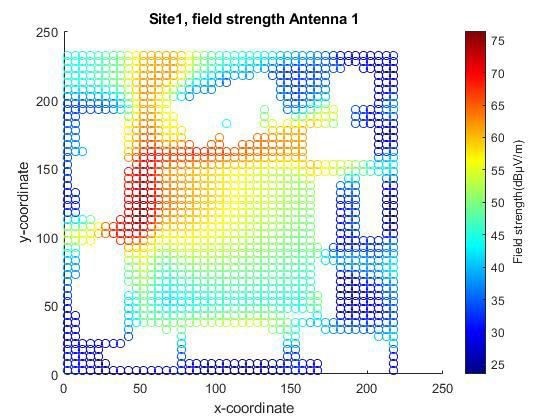
As we know, the world is rapidly moving towards 5G and B5G technology to achieve high data rates, massive communication capacity, connectivity, and low latency. 5G offers a latency of less than 1 ms and extremely high data volume compared to previous technologies. The main challenge is the complex nature of 5G network deployment, especially at high frequencies (3–300 GHz) on a university campus with varied building structures. In this paper, we will discuss a scenario for deploying 5G at the Mirpur University of Science and Technology (MUST) in Mirpur, Pakistan so that telecom operators and vendors who wish to deploy a 5G network on the campus in the future can draw on our research findings. This article aims to optimize RF planning for enhanced network performance using Altair WinProp for modeling and MATLAB for visualization. RF planning on campus is conducted to propose equipment for 5G deployment, considering environmental impact, socio-economic perspective, spectral efficiency, electrical effectiveness, and latency in the user project. This helps to identify key base station locations, analyzes path loss and field strength, and shows how high-frequency millimeter waves interact with real-world structures.
Graphical Abstract
Keywords
Data Availability Statement
Funding
Conflicts of Interest
Ethical Approval and Consent to Participate
References
- Osseiran, A., Boccardi, F., Braun, V., Kusume, K., Marsch, P., Maternia, M., ... & Fallgren, M. (2014). Scenarios for 5G mobile and wireless communications: the vision of the METIS project. IEEE communications magazine, 52(5), 26-35.
[CrossRef] [Google Scholar] - Dahlman, E., Mildh, G., Parkvall, S., Peisa, J., Sachs, J., & Selén, Y. (2014). 5G radio access. Ericsson review, 6(1). https://citeseerx.ist.psu.edu/document?repid=rep1&type=pdf&doi=9a06bcadf0f4e3770260e0193746d5365b6c9114
[Google Scholar] - Liang, Q., Durrani, T. S., Liang, J., & Wang, X. (2016). Enabling Technologies for 5G Mobile Systems. Mob. Inf. Syst., 2016, 1945783-1.
[CrossRef] [Google Scholar] - Akyildiz, I. F., Nie, S., Lin, S. C., & Chandrasekaran, M. (2016). 5G roadmap: 10 key enabling technologies. Computer Networks, 106, 17-48.
[CrossRef] [Google Scholar] - Osseiran, A., Monserrat, J. F., & Marsch, P. (Eds.). (2016). 5G mobile and wireless communications technology. Cambridge University Press.
[Google Scholar] - Elkashlan, M., Duong, T. Q., & Chen, H. H. (2014). Millimeter-wave communications for 5G: fundamentals: Part I [Guest Editorial]. IEEE Communications Magazine, 52(9), 52-54.
[CrossRef] [Google Scholar] - Sun, S., Rappaport, T. S., Thomas, T. A., Ghosh, A., Nguyen, H. C., Kovacs, I. Z., ... & Partyka, A. (2016). Investigation of prediction accuracy, sensitivity, and parameter stability of large-scale propagation path loss models for 5G wireless communications. IEEE transactions on vehicular technology, 65(5), 2843-2860.
[CrossRef] [Google Scholar] - Stefanovic, M., Panic, S. R., de Souza, R. A., & Reig, J. (2017). Recent advances in RF propagation modeling for 5G systems. International Journal of Antennas and Propagation , 2017(4701208), 1-5.
[CrossRef] [Google Scholar] - Samad, M. A., Choi, D. Y., & Choi, K. (2022). Path loss investigation in hall environment at centimeter and millimeter-wave bands. Sensors, 22(17), 6593.
[CrossRef] [Google Scholar] - MacCartney, G. R., Zhang, J., Nie, S., & Rappaport, T. S. (2013, December). Path loss models for 5G millimeter wave propagation channels in urban microcells. In 2013 IEEE global communications conference (GLOBECOM) (pp. 3948-3953). IEEE.
[CrossRef] [Google Scholar] - Dahlman, E., Parkvall, S., & Skold, J. (2016). 4G, LTE-Advanced Pro and the Road to 5G. Academic Press.
[Google Scholar] - Obeidat, H. (2024). Investigations on millimeter-wave indoor channel simulations for 5G networks. Applied Sciences, 14(19), 8972.
[CrossRef] [Google Scholar] - 5G Americas. (2017, November). 5G services and use cases (White paper). 5G Americas.
[Google Scholar] - 3rd Generation Partnership Project (3GPP). (2020, March). Service requirements for the 5G system; Stage 1 (3GPP TS 22.261, version 17.2.0). 3GPP.
[Google Scholar] - Zaidi, A., Athley, F., Medbo, J., Gustavsson, U., Durisi, G., & Chen, X. (2018). 5G Physical Layer: principles, models and technology components. Academic Press.
[Google Scholar] - Small Cell Forum. (2017, February). Hyperdense HetNets: Definition, drivers and barriers (Technical Report). Small Cell Forum.
[Google Scholar] - Mirjalili, S. M. (2019, October 10). Fifth-Generation (5G) of Wireless Data Networks. Concordia University.
[Google Scholar] - Oladimeji, T. T., Kumar, P., & Oyie, N. O. (2022). Propagation path loss prediction modelling in enclosed environments for 5G networks: A review. Heliyon, 8(11).
[CrossRef] [Google Scholar] - Liu, G., & Jiang, D. (2016). 5G: Vision and requirements for mobile communication system towards year 2020. Chinese Journal of Engineering, 2016(1), 5974586.
[CrossRef] [Google Scholar] - Sun, S., Rappaport, T. S., Rangan, S., Thomas, T. A., Ghosh, A., Kovacs, I. Z., ... & Jarvelainen, J. (2016, May). Propagation path loss models for 5G urban micro-and macro-cellular scenarios. In 2016 IEEE 83rd Vehicular Technology Conference (VTC Spring) (pp. 1-6). IEEE.
[CrossRef] [Google Scholar] - Morgado, A., Huq, K. M. S., Mumtaz, S., & Rodriguez, J. (2018). A survey of 5G technologies: regulatory, standardization and industrial perspectives. Digital Communications and Networks, 4(2), 87-97.
[CrossRef] [Google Scholar] - Qualcomm. (2016). Making 5G NR a reality: leading the technology inventions for a unified, more capable 5G air interface. White paper.
[Google Scholar] - Khawaja, W., Ozdemir, O., Erden, F., Ozturk, E., & Guvenc, I. (2020). Multiple ray received power modelling for mmWave indoor and outdoor scenarios. IET Microwaves, Antennas & Propagation, 14(14), 1825-1836.
[CrossRef] [Google Scholar] - Maccartney, G. R., Rappaport, T. S., Sun, S., & Deng, S. (2015). Indoor office wideband millimeter-wave propagation measurements and channel models at 28 and 73 GHz for ultra-dense 5G wireless networks. IEEE access, 3, 2388-2424.
[CrossRef] [Google Scholar] - Al-Saman, A., Cheffena, M., Elijah, O., Al-Gumaei, Y. A., Abdul Rahim, S. K., & Al-Hadhrami, T. (2021). Survey of millimeter-wave propagation measurements and models in indoor environments. Electronics, 10(14), 1653.
[CrossRef] [Google Scholar] - Guijarro, V. F., Vega-Sánchez, J. D., Paredes, M. P., Arévalo, F. G., & Osorio, D. M. (2024). Comparative Evaluation of Radio Network Planning for Different 5G-NR Channel Models on Urban Macro Environments in Quito City. IEEE Access.
[CrossRef] [Google Scholar] - Zhang, Z., Ryu, J., Subramanian, S., & Sampath, A. (2015, June). Coverage and channel characteristics of millimeter wave band using ray tracing. In 2015 IEEE international conference on communications (ICC) (pp. 1380-1385). IEEE.
[CrossRef] [Google Scholar] - Solomitckii, D. (2019). Evaluation of mmWave 5G performance by advanced ray tracing techniques. Academic Dissertation, Tampere University, Faculty of Information Technology and Communication Sciences Finland, Tampere, Finland. Available at https://core.ac.uk/download/pdf/250169884.pdf
[Google Scholar] - Sulyman, A. I., Nassar, A. T., Samimi, M. K., Maccartney, G. R., Rappaport, T. S., & Alsanie, A. (2014). Radio propagation path loss models for 5G cellular networks in the 28 GHz and 38 GHz millimeter-wave bands. IEEE communications magazine, 52(9), 78-86.
[CrossRef] [Google Scholar] - Andrews, J. G., Buzzi, S., Choi, W., Hanly, S. V., Lozano, A., Soong, A. C., & Zhang, J. C. (2014). What will 5G be?. IEEE Journal on selected areas in communications, 32(6), 1065-1082.
[CrossRef] [Google Scholar]
Cited By (10)
-
Jinwoo Kim, Hosung Choo, Youngwook Kim. RF Switch-Based Electrically Reconfigurable Parabolic Wire Antenna for Beam Steering.
IEEE Access, 2026 , 14 .
[CrossRef] -
Manoj Prasad Kunasegran, Wai Leong Pang, Swee King PHANG. Comprehensive Review of Optimization Techniques for User-Centric Distributed Network Slicing in 5G Networks.
IEEE Access, 2026 , 14 .
[CrossRef] -
Zhengyang Yao, Zhi Gao, Yubin Zhang, Hancheng Lin, Xiaohu Wang, Zeren Li. A Broadband High-Isolation Integrated Transmit–Receive Dual-Circularly Polarized Horn Antenna Based on an Orthomode Transducer.
IEEE Access, 2026 , 14 .
[CrossRef] -
Nguyen Van Cuong, Le Thi Trang, Tong Van Luyen, Nguyen Phi Long. Metaheuristic-Driven Hyperparameter Optimization for Deep Reinforcement Learning-Based Interference-Aware Beamforming in mmWave MIMO Systems.
IEEE Access, 2026 , 14 .
[CrossRef] -
Mohammed Imad Aal-Nouman, Haider A. H. Alobaidy, Aymen M. Al-Kadhimi. Trajectory-Aware Cooperative Wake-Up for Energy-Efficient Small Cells in Ultra-Dense B5G Networks.
IEEE Access, 2026 , 14 .
[CrossRef] -
Junzheng Jiang, Xinyi Liu, Fang Zhou. Distributed spectral conjugate gradient algorithm for node localization in wireless sensor networks.
Digital Signal Processing, 2025 , 162 .
[CrossRef] -
Habib M. Hussien, Zelalem A. Kelem. A Robust Pilot Decontamination Scheme in Massive MIMO Systems: Integrating Rateless Orthogonal STBC, Weighted Graph Coloring, and Channel Estimation.
IEEE Access, 2025 , 13 .
[CrossRef] -
Minsang Yoon, Jiseok Park, Bosung Park, Taekyeong Jin, Hosung Choo. Study of Optimal Base Station Deployment for UAM Operations in an Urban Environment Based on a Genetic Algorithm.
IEEE Access, 2025 , 13 .
[CrossRef] -
Xue-Bo Jin, Huijun Ma, Jing-Yi Xie, Jianlei Kong, Muhammet Deveci, Seifedine Kadry. Ada-STGMAT: An adaptive spatio-temporal graph multi-attention network for intelligent time series forecasting in smart cities.
Expert Systems with Applications, 2025 , 269 .
[CrossRef] -
Meishuang Yan, Lu Chen, Wei Hu, Zhihong Sun, Xueguang Zhou. Secure and Intelligent Single-Channel Blind Source Separation via Adaptive Variational Mode Decomposition with Optimized Parameters.
Sensors, 2025 , 25 (4).
[CrossRef]
Cite This Article
TY  - JOUR
AU  - Khokher, Adnan
AU  - Mushtaq, Bilal
AU  - Rehman, Muhammad Abdul
AU  - Abbas, Muhamamd Jamshed
PY  - 2024
DA  - 2024/10/21
TI  - RF Planning and Optimization of 5G on The City Campus (MUST) of Mirpur, Pakistan
JO  - ICCK Transactions on Sensing, Communication, and Control
T2  - ICCK Transactions on Sensing, Communication, and Control
JF  - ICCK Transactions on Sensing, Communication, and Control
VL  - 1
IS  - 1
SP  - 52
EP  - 59
DO  - 10.62762/TSCC.2024.670663
UR  - https://www.icck.org/article/abs/TSCC.2024.670663
KW  - 5G
KW  - RF
KW  - optimization
KW  - Pakistan
KW  - MUST
AB  - As we know, the world is rapidly moving towards 5G and B5G technology to achieve high data rates, massive communication capacity, connectivity, and low latency. 5G offers a latency of less than 1 ms and extremely high data volume compared to previous technologies. The main challenge is the complex nature of 5G network deployment, especially at high frequencies (3–300 GHz) on a university campus with varied building structures. In this paper, we will discuss a scenario for deploying 5G at the Mirpur University of Science and Technology (MUST) in Mirpur, Pakistan so that telecom operators and vendors who wish to deploy a 5G network on the campus in the future can draw on our research findings. This article aims to optimize RF planning for enhanced network performance using Altair WinProp for modeling and MATLAB for visualization. RF planning on campus is conducted to propose equipment for 5G deployment, considering environmental impact, socio-economic perspective, spectral efficiency, electrical effectiveness, and latency in the user project. This helps to identify key base station locations, analyzes path loss and field strength, and shows how high-frequency millimeter waves interact with real-world structures.
SN  - 3068-9287
PB  - Institute of Central Computation and Knowledge
LA  - English
ER  -
@article{Khokher2024RF,
  author = {Adnan Khokher and Bilal Mushtaq and Muhammad Abdul Rehman and Muhamamd Jamshed Abbas},
  title = {RF Planning and Optimization of 5G on The City Campus (MUST) of Mirpur, Pakistan},
  journal = {ICCK Transactions on Sensing, Communication, and Control},
  year = {2024},
  volume = {1},
  number = {1},
  pages = {52-59},
  doi = {10.62762/TSCC.2024.670663},
  url = {https://www.icck.org/article/abs/TSCC.2024.670663},
  abstract = {As we know, the world is rapidly moving towards 5G and B5G technology to achieve high data rates, massive communication capacity, connectivity, and low latency. 5G offers a latency of less than 1 ms and extremely high data volume compared to previous technologies. The main challenge is the complex nature of 5G network deployment, especially at high frequencies (3–300 GHz) on a university campus with varied building structures. In this paper, we will discuss a scenario for deploying 5G at the Mirpur University of Science and Technology (MUST) in Mirpur, Pakistan so that telecom operators and vendors who wish to deploy a 5G network on the campus in the future can draw on our research findings. This article aims to optimize RF planning for enhanced network performance using Altair WinProp for modeling and MATLAB for visualization. RF planning on campus is conducted to propose equipment for 5G deployment, considering environmental impact, socio-economic perspective, spectral efficiency, electrical effectiveness, and latency in the user project. This helps to identify key base station locations, analyzes path loss and field strength, and shows how high-frequency millimeter waves interact with real-world structures.},
  keywords = {5G, RF, optimization, Pakistan, MUST},
  issn = {3068-9287},
  publisher = {Institute of Central Computation and Knowledge}
}
Publisher's Note
ICCK stays neutral with regard to jurisdictional claims in published maps and institutional affiliations.
Rights and Permissions


Portico
