Volume 3, Issue 3


Volume 3, Issue 3 (September, 2026) – 4 articles
Citations: Crossref logo 0,   0   |   Viewed: 2377, Download: 353

Table of Contents

Free Access | Research Article | 27 September 2026
Non-Invasive Parkinson's Disease Screening from Vocal Biomarkers: A Subject-Level Machine Learning Framework with Bayesian Optimisation and Explainable AI
ICCK Transactions on Sensing, Communication, and Control | Volume 3, Issue 3: 197-209, 2026 | DOI: 10.62762/TSCC.2026.365257
Abstract
An estimated ten million people live with Parkinson's, yet timely diagnosis remains constrained by specialist assessment, costly imaging, and unequal care access. Phonation analysis offers a low-cost alternative: dopaminergic degeneration causes vocal impairments years before motor symptoms emerge, enabling community screening. However, existing ML approaches are limited by recording-level data leakage and opacity. This paper presents a four-phase acoustic framework-spanning signal acquisition, feature processing, and interpretable decision support-applied to a multi-type Parkinson's speech dataset (40 training, 28 blind-test). The framework enforces subject-level partitioning via GroupKFold... More >

Graphical Abstract
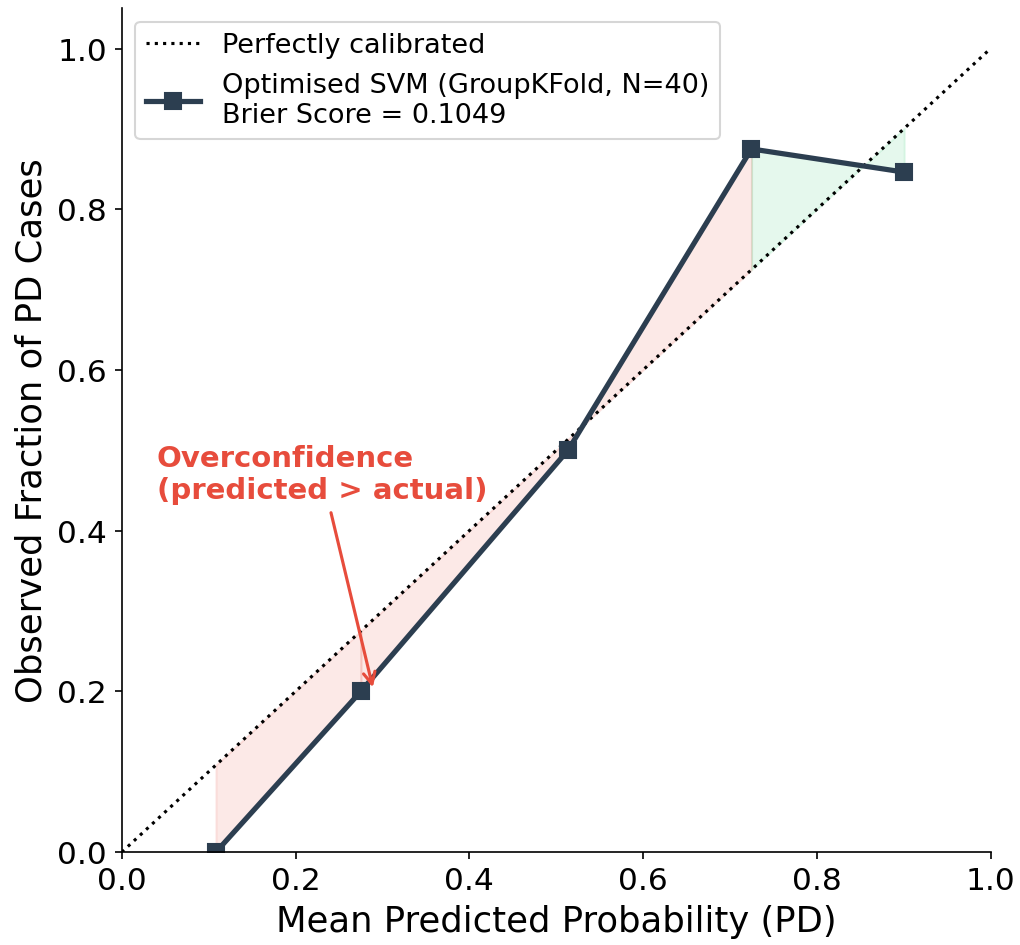
Non-Invasive Parkinson's Disease Screening from Vocal Biomarkers: A Subject-Level Machine Learning Framework with Bayesian Optimisation and Explainable AI
Free Access | Review Article | 23 September 2026
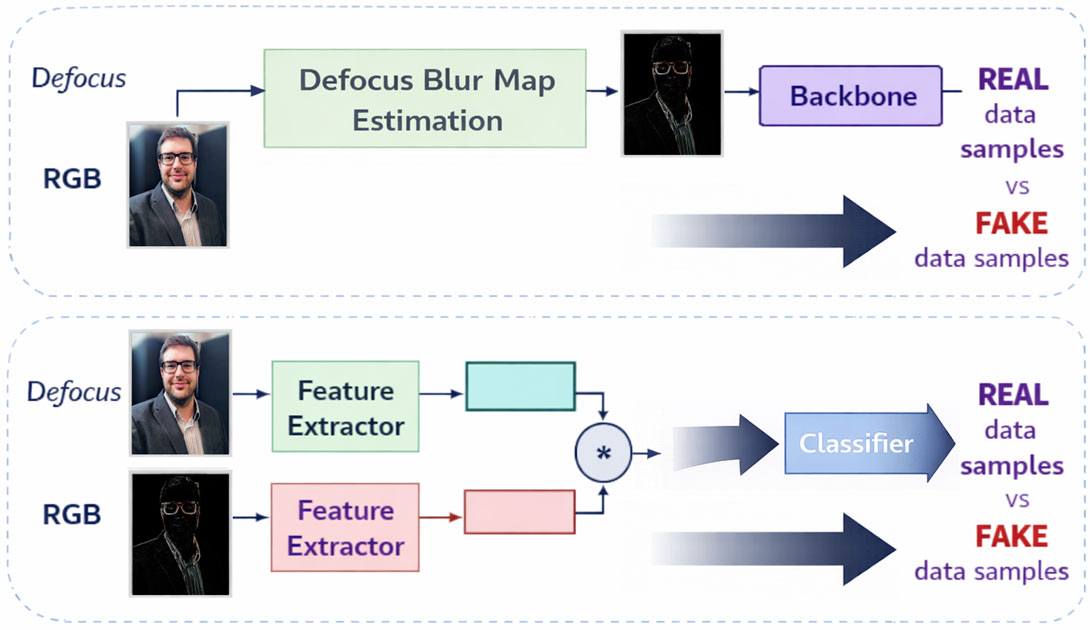
Sensing Deepfake Detection: A Survey of Detection Architectures, Adversarial Challenges, and Critical Applications in Political, Educational, and Military Domains
ICCK Transactions on Sensing, Communication, and Control | Volume 3, Issue 3: 176-196, 2026 | DOI: 10.62762/TSCC.2026.303040
Abstract
Deepfake technology has advanced swiftly, enabling the rapid production of hyper-realistic synthetic media that pose considerable threats to digital security, privacy, military operations, and information integrity. This paper extensively examines visual intelligence and computer vision methodologies for deepfake detection, covering recent developments in deep learning, adversarial strategies, and feature extraction. It reviews prevalent generation architectures—including GANs, autoencoders, neural rendering, and diffusion models—alongside novel adversarial tactics that enhance realism while evading detection, particularly in military and intelligence contexts. We also investigate visual... More >

Graphical Abstract
Sensing Deepfake Detection: A Survey of Detection Architectures, Adversarial Challenges, and Critical Applications in Political, Educational, and Military Domains
Free Access | Research Article | 17 September 2026
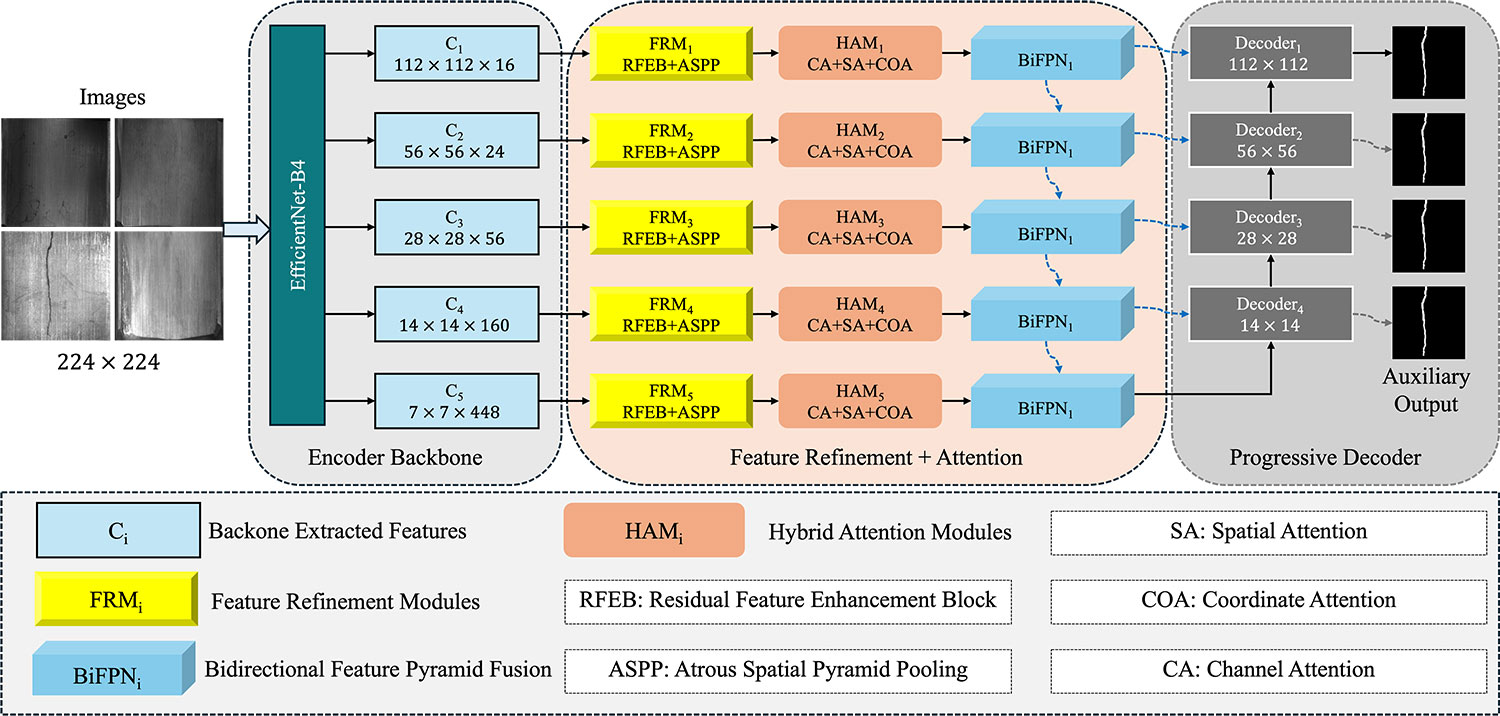
FocusNet: Feature Oriented Contextual Understanding via Bidirectional Supervision for Surface Defect Detection
ICCK Transactions on Sensing, Communication, and Control | Volume 3, Issue 3: 160-175, 2026 | DOI: 10.62762/TSCC.2026.978086
Abstract
Surface defect segmentation in metallic materials presents significant challenges due to irregular defect shapes, extreme scale variations ranging from small blowholes to large uneven regions, and low contrast with complex background textures. While Convolutional Neural Networks excel at local feature extraction, their limited receptive fields hinder effective global context modeling. Conversely, Vision Transformers capture long-range dependencies but struggle with fine-grained boundary details critical for accurate defect localization. To address these limitations, we propose FocusNet, a novel architecture integrating multi-scale feature refinement, hybrid attention mechanisms, and progress... More >

Graphical Abstract
FocusNet: Feature Oriented Contextual Understanding via Bidirectional Supervision for Surface Defect Detection
Free Access | Review Article | 10 September 2026
Semantic Fidelity for Intelligent 6G Communication: A Taxonomic Deep Dive into Knowledge-Driven Architectures, Benchmarks, and Challenges
ICCK Transactions on Sensing, Communication, and Control | Volume 3, Issue 3: 139-159, 2026 | DOI: 10.62762/TSCC.2026.286812
Abstract
Cognitive-semantic communication encodes task-relevant meaning rather than raw bits, improving 6G spectral efficiency and reducing latency, yet evidence remains fragmented across methods, evaluations, and deployments. This PRISMA-based review screens 782 records (2019-2025) from seven databases, retaining 73 studies organized into five method families: neural semantic codecs, KG-based pipelines, LLM-assisted codecs, cross-modal encoders, and semantic relays. We examine how goal-oriented semantics, knowledge graphs, and LLMs shape representation, compression, and task quality under rate and latency constraints across UAVs, NTNs, ISAC, Metaverse, and IoT. Reported gains include bandwidth reduc... More >

Graphical Abstract
Semantic Fidelity for Intelligent 6G Communication: A Taxonomic Deep Dive into Knowledge-Driven Architectures, Benchmarks, and Challenges