

Navigating Ethical Challenges in 6G-Enabled Smart Cities: Privacy, Equity, and Governance






Article Information
Abstract
The rapid urbanization and technological advancements have driven the development of smart cities, envisioned as sustainable, efficient, and interconnected urban spaces. The integration of sixth-generation (6G) wireless technology in smart cities promises unprecedented opportunities in connectivity, low-latency communication, and data management, which transforms urban living. However, this evolution raises critical ethical concerns related to privacy, inclusion, transparency, accountability, and environmental sustainability. This paper explores the ethical considerations inherent in designing smart cities with 6G, emphasizing data governance, equity, and human-centric approaches. It delves into frameworks such as utilitarianism, deontological ethics, and virtue-based ethics to address issues such as algorithmic bias, data privacy, and societal inclusion. The review highlights the challenges of ensuring equitable access to technology, minimizing surveillance risks, and fostering transparent decision-making in urban governance. It also underscores the importance of sustainable practices and environmental ethics, advocating for energy-efficient systems and the principles of circular economy in 6G-enabled urban ecosystems. By examining these dimensions, the paper offers actionable recommendations for stakeholders, including policymakers, urban planners, and technology developers, to balance technological innovation with ethical responsibility. This study serves as a critical guide to ensure that the future of smart cities is not only technologically advanced but also socially equitable, sustainable, and aligned with human dignity.
Graphical Abstract
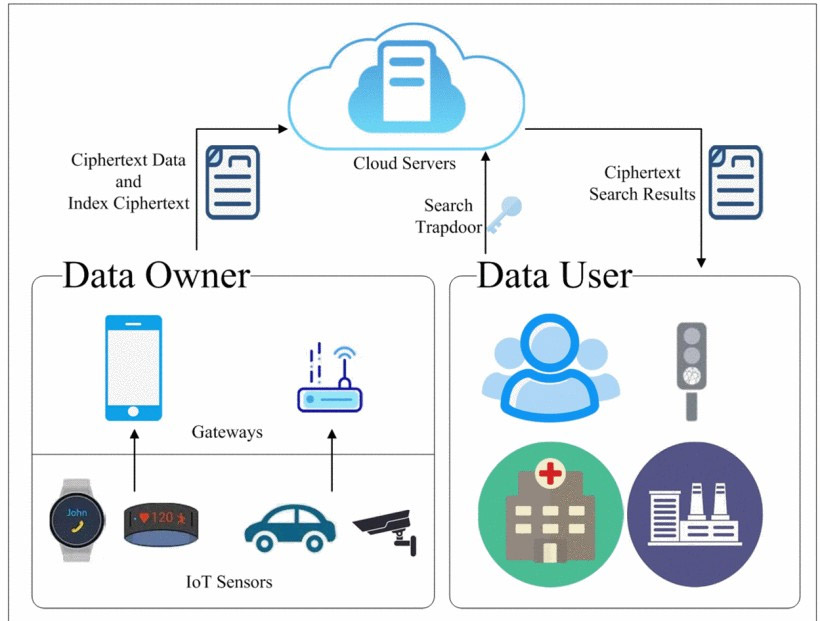
Keywords
Data Availability Statement
Funding
Conflicts of Interest
Ethical Approval and Consent to Participate
References
- Mao, B., Liu, J., Wu, Y., & Kato, N. (2023). Security and privacy on 6G network edge: A survey. IEEE communications surveys & tutorials, 25(2), 1095-1127.
[CrossRef] [Google Scholar] - Kummitha, R. K. R., & Crutzen, N. (2017). How do we understand smart cities? An evolutionary perspective. Cities, 67, 43-52.
[CrossRef] [Google Scholar] - Alraih, S., Shayea, I., Behjati, M., Nordin, R., Abdullah, N. F., Abu-Samah, A., & Nandi, D. (2022). Revolution or evolution? Technical requirements and considerations towards 6G mobile communications. Sensors, 22(3), 762.
[CrossRef] [Google Scholar] - Sharma, S., Popli, R., Singh, S., Chhabra, G., Saini, G. S., Singh, M., ... & Kumar, R. (2024). The role of 6G technologies in advancing smart city applications: Opportunities and challenges. Sustainability, 16(16), 7039.
[CrossRef] [Google Scholar] - Hussain, F., Hussain, R., Hassan, S. A., & Hossain, E. (2020). Machine learning in IoT security: Current solutions and future challenges. IEEE Communications Surveys & Tutorials, 22(3), 1686-1721.
[CrossRef] [Google Scholar] - Zanella, A., Bui, N., Castellani, A., Vangelista, L., & Zorzi, M. (2014). Internet of things for smart cities. IEEE Internet of Things journal, 1(1), 22-32.
[CrossRef] [Google Scholar] - Alahi, M. E. E., Sukkuea, A., Tina, F. W., Nag, A., Kurdthongmee, W., Suwannarat, K., & Mukhopadhyay, S. C. (2023). Integration of IoT-enabled technologies and artificial intelligence (AI) for smart city scenario: recent advancements and future trends. Sensors, 23(11), 5206.
[CrossRef] [Google Scholar] - Lyon, D. (2001). Surveillance society. McGraw-Hill Education (UK).
[Google Scholar] - Fracassi, C., & Magnuson, W. (2021). Data autonomy. Vand. L. Rev., 74, 327.
[Google Scholar] - Allam, Z., & Jones, D. S. (2021). Future (post-COVID) digital, smart and sustainable cities in the wake of 6G: Digital twins, immersive realities and new urban economies. Land use policy, 101, 105201.
[CrossRef] [Google Scholar] - Shelton, T., & Lodato, T. (2019). Actually existing smart citizens: Expertise and (non) participation in the making of the smart city. City, 23(1), 35-52.
[CrossRef] [Google Scholar] - Silva, B. N., Khan, M., & Han, K. (2018). Towards sustainable smart cities: A review of trends, architectures, components, and open challenges in smart cities. Sustainable cities and society, 38, 697-713.
[CrossRef] [Google Scholar] - Brin, D. (1999). The transparent society: Will technology force us to choose between privacy and freedom?. Basic Books.
[Google Scholar] - Kashef, M., Visvizi, A., & Troisi, O. (2021). Smart city as a smart service system: Human-computer interaction and smart city surveillance systems. Computers in Human Behavior, 124, 106923.
[CrossRef] [Google Scholar] - Imoize, A. L., Adedeji, O., Tandiya, N., & Shetty, S. (2021). 6G enabled smart infrastructure for sustainable society: Opportunities, challenges, and research roadmap. Sensors, 21(5), 1709.
[CrossRef] [Google Scholar] - Ahmad, K., Maabreh, M., Ghaly, M., Khan, K., Qadir, J., & Al-Fuqaha, A. (2022). Developing future human-centered smart cities: Critical analysis of smart city security, Data management, and Ethical challenges. Computer Science Review, 43, 100452.
[CrossRef] [Google Scholar] - Ramírez-Moreno, M. A., Keshtkar, S., Padilla-Reyes, D. A., Ramos-López, E., García-Martínez, M., Hernández-Luna, M. C., ... & Lozoya-Santos, J. D. J. (2021). Sensors for sustainable smart cities: A review. Applied Sciences, 11(17), 8198.
[CrossRef] [Google Scholar] - Gupta, S., Sehgal, M., Makkar, R., Reddy, A. P. C., & Khan, H. (2025). Using 6G to Boost Smart Cities: New Ways to Connect and Save Energy in Cities. In Building Tomorrow's Smart Cities With 6G Infrastructure Technology (pp. 79-112). IGI Global Scientific Publishing.
[CrossRef] [Google Scholar] - Anthopoulos, L. G. (2017). Understanding smart cities: A tool for smart government or an industrial trick? (Vol. 22, p. 293). Cham, Switzerland: Springer International Publishing.
[CrossRef] [Google Scholar] - Ylianttila, M., Kantola, R., Gurtov, A., Mucchi, L., Oppermann, I., Yan, Z., ... & Röning, J. (2020). 6G white paper: Research challenges for trust, security and privacy. arXiv preprint arXiv:2004.11665.
[CrossRef] [Google Scholar] - Murroni, M., Anedda, M., Fadda, M., Ruiu, P., Popescu, V., Zaharia, C., & Giusto, D. (2023). 6G—Enabling the new smart city: A survey. Sensors, 23(17), 7528.
[CrossRef] [Google Scholar] - Green, B. (2019). The smart enough city: Putting technology in its place to reclaim our urban future. MIT Press.
[Google Scholar] - Bibri, S. E. (2022). The social shaping of the metaverse as an alternative to the imaginaries of data-driven smart Cities: A study in science, technology, and society. Smart Cities, 5(3), 832-874.
[CrossRef] [Google Scholar] - Wheeler, S. (2013). Planning for sustainability: creating livable, equitable and ecological communities. Routledge.
[CrossRef] [Google Scholar] - Bibri, S. E., & Krogstie, J. (2020). The emerging data–driven Smart City and its innovative applied solutions for sustainability: The cases of London and Barcelona. Energy Informatics, 3(1), 5.
[CrossRef] [Google Scholar] - Townsend, A. M. (2013). Smart cities: Big data, civic hackers, and the quest for a new utopia. WW Norton & Company.
[Google Scholar] - Skubis, I., Wolniak, R., & Grebski, W. W. (2024). AI and Human-Centric Approach in Smart Cities Management: Case Studies from Silesian and Lesser Poland Voivodships. Sustainability, 16(18), 8279.
[CrossRef] [Google Scholar] - Kontokosta, C. E., & Hong, B. (2021). Bias in smart city governance: How socio-spatial disparities in 311 complaint behavior impact the fairness of data-driven decisions. Sustainable Cities and Society, 64, 102503.
[CrossRef] [Google Scholar] - Alverti, M. N., Themistocleous, K., Kyriakidis, P. C., & Hadjimitsis, D. G. (2018). A Human Centric Approach on the Analysis of the Smart City Concept: the case study of the Limassol city in Cyprus. Advances in Geosciences, 45, 305-320.
[CrossRef] [Google Scholar] - Jin, J., Gubbi, J., Marusic, S., & Palaniswami, M. (2014). An information framework for creating a smart city through internet of things. IEEE Internet of Things journal, 1(2), 112-121.
[CrossRef] [Google Scholar] - Javed, A. R., Shahzad, F., ur Rehman, S., Zikria, Y. B., Razzak, I., Jalil, Z., & Xu, G. (2022). Future smart cities: Requirements, emerging technologies, applications, challenges, and future aspects. Cities, 129, 103794.
[CrossRef] [Google Scholar] - Juvenile Ehwi, R., Holmes, H., Maslova, S., & Burgess, G. (2022). The ethical underpinnings of Smart City governance: Decision-making in the Smart Cambridge programme, UK. Urban Studies, 59(14), 2968-2984.
[CrossRef] [Google Scholar] - Ramu, S. P., Boopalan, P., Pham, Q. V., Maddikunta, P. K. R., Huynh-The, T., Alazab, M., ... & Gadekallu, T. R. (2022). Federated learning enabled digital twins for smart cities: Concepts, recent advances, and future directions. Sustainable Cities and Society, 79, 103663.
[CrossRef] [Google Scholar] - Pandya, S., Srivastava, G., Jhaveri, R., Babu, M. R., Bhattacharya, S., Maddikunta, P. K. R., ... & Gadekallu, T. R. (2023). Federated learning for smart cities: A comprehensive survey. Sustainable Energy Technologies and Assessments, 55, 102987.
[CrossRef] [Google Scholar] - Hayat, P. (2016). Smart cities: A global perspective. India Quarterly, 72(2), 177-191.
[CrossRef] [Google Scholar] - Adel, A., & HS Alani, N. (2024). Human-centric collaboration and Industry 5.0 framework in smart cities and communities: Fostering sustainable development goals 3, 4, 9, and 11 in Society 5.0. Smart Cities, 7(4), 1723-1775.
[CrossRef] [Google Scholar] - Oliveira, Á., Campolargo, M., & Martins, M. (2014, October). Human smart cities: A human-centric model aiming at the wellbeing and quality of life of citizens. In eChallenges e-2014 conference proceedings (pp. 1-8). IEEE.
[Google Scholar] - Colding, J., Nilsson, C., & Sjöberg, S. (2024). Smart cities for all? Bridging digital divides for socially sustainable and inclusive cities. Smart Cities, 7(3), 1044-1059.
[CrossRef] [Google Scholar] - Dashkevych, O., & Portnov, B. A. (2023). Human-centric, sustainability-driven approach to ranking smart cities worldwide. Technology in Society, 74, 102296.
[CrossRef] [Google Scholar] - Rani, S., Mishra, R. K., Usman, M., Kataria, A., Kumar, P., Bhambri, P., & Mishra, A. K. (2021). Amalgamation of advanced technologies for sustainable development of smart city environment: A review. IEEE Access, 9, 150060-150087.
[CrossRef] [Google Scholar] - Malek, J. A., Lim, S. B., & Yigitcanlar, T. (2021). Social inclusion indicators for building citizen-centric smart cities: A systematic literature review. Sustainability, 13(1), 376.
[CrossRef] [Google Scholar] - Bibri, S. E., Alexandre, A., Sharifi, A., & Krogstie, J. (2023). Environmentally sustainable smart cities and their converging AI, IoT, and big data technologies and solutions: an integrated approach to an extensive literature review. Energy informatics, 6(1), 9.
[CrossRef] [Google Scholar] - Ramirez Lopez, L. J., & Grijalba Castro, A. I. (2020). Sustainability and resilience in smart city planning: A review. Sustainability, 13(1), 181.
[CrossRef] [Google Scholar] - Rodríguez Bolívar, M. P., Alcaide Muñoz, L., & Alcaide Muñoz, C. (2022, October). Modelling strategic planning practices considering socially vulnerable groups in smart cities. In Proceedings of the 15th International Conference on Theory and Practice of Electronic Governance (pp. 440-448).
[CrossRef] [Google Scholar] - Bosco, G., Riccardi, V., Sciarrone, A., D’Amore, R., & Visvizi, A. (2024). AI-driven innovation in smart city governance: achieving human-centric and sustainable outcomes. Transforming Government: People, Process and Policy, 20(1), 98–123.
[CrossRef] [Google Scholar] - Helbing, D., Fanitabasi, F., Giannotti, F., Hänggli, R., Hausladen, C. I., van den Hoven, J., ... & Pournaras, E. (2021). Ethics of smart cities: Towards value-sensitive design and co-evolving city life. Sustainability, 13(20), 11162.
[CrossRef] [Google Scholar] - Chang, V. (2021). An ethical framework for big data and smart cities. Technological Forecasting and Social Change, 165, 120559.
[CrossRef] [Google Scholar] - Singh, M. P., & Murukannaiah, P. K. (2023). Toward an ethical framework for smart cities and the Internet of Things. IEEE Internet Computing, 27(2), 51-56.
[CrossRef] [Google Scholar] - Shahrokni, H., & Solacolu, A. (2015, November). Real-time ethics—A technology enabled paradigm of everyday ethics in smart cities: Shifting sustainability responsibilities through citizen empowerment. In 2015 IEEE International Symposium on Technology and Society (ISTAS) (pp. 1-5). IEEE.
[CrossRef] [Google Scholar] - Bibri, S. E. (2018). A foundational framework for smart sustainable city development: Theoretical, disciplinary, and discursive dimensions and their synergies. Sustainable Cities and Society, 38, 758-794.
[CrossRef] [Google Scholar] - Batty, M. (2013). Big data, smart cities and city planning. Dialogues in human geography, 3(3), 274-279.
[CrossRef] [Google Scholar] - Prajapati, Y., Gosai, K., Suthar, O., Singh, S. K., Usman, M. T., & Khan, H. (2025). Privacy and Security Concerns With 6G Smart City Infrastructure. In Building Tomorrow's Smart Cities With 6G Infrastructure Technology (pp. 113-136). IGI Global Scientific Publishing.
[CrossRef] [Google Scholar] - Li, M., Liu, Y., Tian, Z., & Shan, C. (2022). Privacy protection method based on multidimensional feature fusion under 6G networks. IEEE Transactions on Network Science and Engineering, 10(3), 1462-1471.
[CrossRef] [Google Scholar] - Shi, J., Yu, Y., Yu, Q., Li, H., & Wang, L. (2022). Toward data security in 6G networks: A public-key searchable encryption approach. IEEE Network, 36(4), 166-173.
[CrossRef] [Google Scholar] - Kitchin, R. (2016). The ethics of smart cities and urban science. Philosophical transactions of the royal society A: Mathematical, physical and engineering sciences, 374(2083), 20160115.
[CrossRef] [Google Scholar] - Daoudagh, S., Marchetti, E., Savarino, V., Bernabe, J. B., García-Rodríguez, J., Moreno, R. T., ... & Skarmeta, A. F. (2021). Data protection by design in the context of smart cities: A consent and access control proposal. Sensors, 21(21), 7154.
[CrossRef] [Google Scholar] - Wahab, F., Shah, A., Ullah, I., Khan, H., & Adhikari, D. (2024). The significance of artificial intelligence in cybersecurity. In Artificial Intelligence for Intelligent Systems (pp. 105-119). CRC Press.
[Google Scholar] - Shehab, M., Khattab, T., Kucukvar, M., & Trinchero, D. (2022, May). The role of 5G/6G networks in building sustainable and energy-efficient smart cities. In 2022 IEEE 7th International Energy Conference (ENERGYCON) (pp. 1-7). IEEE.
[CrossRef] [Google Scholar] - Kolotouchkina, O., Ripoll González, L., & Belabas, W. (2024). Smart cities, digital inequalities, and the challenge of inclusion. Smart Cities, 7(6), 3355-3370.
[CrossRef] [Google Scholar] - Brauneis, R., & Goodman, E. P. (2018). Algorithmic transparency for the smart city. Yale JL & Tech., 20, 103.
[CrossRef] [Google Scholar] - Kempin Reuter, T. (2019). Human rights and the city: Including marginalized communities in urban development and smart cities. Journal of Human Rights, 18(4), 382-402.
[CrossRef] [Google Scholar] - Ertl, T., Müller, C., Aal, K., Wulf, V., Tachtler, F., Scheepmaker, L., ... & Schuler, D. (2021, June). Ethical future environments: Smart thinking about smart cities means engaging with its most vulnerable. In Proceedings of the 10th International Conference on Communities & Technologies-Wicked Problems in the Age of Tech (pp. 340-345).
[CrossRef] [Google Scholar] - Suneetha, K., Sharma, B., & Shahid, M. (2023, December). Amalgamation of AI and Blockchain in Moving Towards Smart Cities. In 2023 International Conference on Power Energy, Environment & Intelligent Control (PEEIC) (pp. 1207-1212). IEEE.
[CrossRef] [Google Scholar] - Al Nuaimi, E., Al Neyadi, H., Mohamed, N., & Al-Jaroodi, J. (2015). Applications of big data to smart cities. Journal of Internet Services and Applications, 6(1), 1-15.
[CrossRef] [Google Scholar] - Soomro, K., Bhutta, M. N. M., Khan, Z., & Tahir, M. A. (2019). Smart city big data analytics: An advanced review. Wiley Interdisciplinary Reviews: Data Mining and Knowledge Discovery, 9(5), e1319.
[CrossRef] [Google Scholar] - Gharaibeh, A., Salahuddin, M. A., Hussini, S. J., Khreishah, A., Khalil, I., Guizani, M., & Al-Fuqaha, A. (2017). Smart cities: A survey on data management, security, and enabling technologies. IEEE Communications Surveys & Tutorials, 19(4), 2456-2501.
[CrossRef] [Google Scholar] - Shehab, M. J., Kassem, I., Kutty, A. A., Kucukvar, M., Onat, N., & Khattab, T. (2021). 5G networks towards smart and sustainable cities: A review of recent developments, applications and future perspectives. IEEE Access, 10, 2987-3006.
[CrossRef] [Google Scholar]
Cited By (10)
-
Yue Wang, Yupeng Liu, Chong Wu. Preserving Microscopic State Integrity for Adaptive Modeling of Complex Spatio-Temporal Systems.
Physica A: Statistical Mechanics and its Applications, 2026 , 684 .
[CrossRef] -
Lijun Mao, Tianxiang Zhou, Chenghui Nan. Rapid extraction of forest burned areas using Sentinel-2 satellite imagery on the PIE-engine platform.
Journal of Measurements in Engineering, 2026 , 14 (3).
[CrossRef] -
Renu Popli, Deepanshi Batra, Rajeev Kumar, Ashutosh Sharma. .
Synergies of 6G and IoT, 2026 .
[CrossRef] -
Jiaqi Gao, Yaru He, Daoqi Han, Yueming Lu, Yaojun Qiao. Spectrum-Aided Traffic Decomposition and Deep Learning Method for Network Traffic Prediction in Internet of Things.
IEEE Transactions on Industrial Informatics, 2026 , 22 (2).
[CrossRef] -
Yu Wan, Junpeng Ma, Chi Wang. Research on the remaining life assessment method of corrosive steel pipe structures in substations based on thickness measurement and testing.
Journal of Measurements in Engineering, 2026 , 14 (2).
[CrossRef] -
D. Yu. Belousov. Ethical, legal, and cultural‑anthropological aspects of non‑contact vital sign monitoring in 6G networks.
Real-World Data & Evidence, 2026 , 6 (3).
[CrossRef] -
Ang Li, Cheng Zhang. Physics-aware real-time estimation of multi-class travel time variability based on multi-source traffic data.
Knowledge-Based Systems, 2026 , 346 .
[CrossRef] -
Quazi Mamun, Md Mujibur Rahman, Md Mehedi Hasan, Muhammad Rana. Latency aware trust weighted federated intrusion detection for secure 6G vehicular IoT.
Discover Computing, 2026 , 29 (1).
[CrossRef] -
Xue-Bo Jin, Ye-Qing Wang, Jian-Lei Kong, Yu-Ting Bai, Ting-Li Su. AttSCNs: A Bayesian-Optimized Hybrid Model with Attention-Guided Stochastic Configuration Networks for Robust GPS Trajectory Prediction.
Entropy, 2025 , 27 (11).
[CrossRef] -
Abuh Ibrahim Sani, Omowunmi Folashayo Makinde, Olatunde Ayomide Olasehan, Jeremiah Folorunso, Adetunji Oludele Adebayo, Nathaniel Adeniyi Akande. Cybersecurity Challenges in 6G-Enabled Smart Cities: Toward Secure and Resilient Network Infrastructures.
Journal of Computer and Communications, 2025 , 13 (12).
[CrossRef]
Cite This Article
TY  - JOUR
AU  - Rafique, Sumaira
AU  - Iqbal, Sundas
AU  - Ali, Danish
AU  - Khan, Farhad
PY  - 2025
DA  - 2025/03/27
TI  - Navigating Ethical Challenges in 6G-Enabled Smart Cities: Privacy, Equity, and Governance
JO  - ICCK Transactions on Sensing, Communication, and Control
T2  - ICCK Transactions on Sensing, Communication, and Control
JF  - ICCK Transactions on Sensing, Communication, and Control
VL  - 2
IS  - 1
SP  - 48
EP  - 65
DO  - 10.62762/TSCC.2025.291581
UR  - https://www.icck.org/article/abs/TSCC.2025.291581
KW  - smart cities
KW  - 6G technology
KW  - ethical considerations
KW  - privacy, inclusivity
KW  - data governance
AB  - The rapid urbanization and technological advancements have driven the development of smart cities, envisioned as sustainable, efficient, and interconnected urban spaces. The integration of sixth-generation (6G) wireless technology in smart cities promises unprecedented opportunities in connectivity, low-latency communication, and data management, which transforms urban living. However, this evolution raises critical ethical concerns related to privacy, inclusion, transparency, accountability, and environmental sustainability. This paper explores the ethical considerations inherent in designing smart cities with 6G, emphasizing data governance, equity, and human-centric approaches. It delves into frameworks such as utilitarianism, deontological ethics, and virtue-based ethics to address issues such as algorithmic bias, data privacy, and societal inclusion. The review highlights the challenges of ensuring equitable access to technology, minimizing surveillance risks, and fostering transparent decision-making in urban governance. It also underscores the importance of sustainable practices and environmental ethics, advocating for energy-efficient systems and the principles of circular economy in 6G-enabled urban ecosystems. By examining these dimensions, the paper offers actionable recommendations for stakeholders, including policymakers, urban planners, and technology developers, to balance technological innovation with ethical responsibility. This study serves as a critical guide to ensure that the future of smart cities is not only technologically advanced but also socially equitable, sustainable, and aligned with human dignity.
SN  - 3068-9287
PB  - Institute of Central Computation and Knowledge
LA  - English
ER  -
@article{Rafique2025Navigating,
  author = {Sumaira Rafique and Sundas Iqbal and Danish Ali and Farhad Khan},
  title = {Navigating Ethical Challenges in 6G-Enabled Smart Cities: Privacy, Equity, and Governance},
  journal = {ICCK Transactions on Sensing, Communication, and Control},
  year = {2025},
  volume = {2},
  number = {1},
  pages = {48-65},
  doi = {10.62762/TSCC.2025.291581},
  url = {https://www.icck.org/article/abs/TSCC.2025.291581},
  abstract = {The rapid urbanization and technological advancements have driven the development of smart cities, envisioned as sustainable, efficient, and interconnected urban spaces. The integration of sixth-generation (6G) wireless technology in smart cities promises unprecedented opportunities in connectivity, low-latency communication, and data management, which transforms urban living. However, this evolution raises critical ethical concerns related to privacy, inclusion, transparency, accountability, and environmental sustainability. This paper explores the ethical considerations inherent in designing smart cities with 6G, emphasizing data governance, equity, and human-centric approaches. It delves into frameworks such as utilitarianism, deontological ethics, and virtue-based ethics to address issues such as algorithmic bias, data privacy, and societal inclusion. The review highlights the challenges of ensuring equitable access to technology, minimizing surveillance risks, and fostering transparent decision-making in urban governance. It also underscores the importance of sustainable practices and environmental ethics, advocating for energy-efficient systems and the principles of circular economy in 6G-enabled urban ecosystems. By examining these dimensions, the paper offers actionable recommendations for stakeholders, including policymakers, urban planners, and technology developers, to balance technological innovation with ethical responsibility. This study serves as a critical guide to ensure that the future of smart cities is not only technologically advanced but also socially equitable, sustainable, and aligned with human dignity.},
  keywords = {smart cities, 6G technology, ethical considerations, privacy, inclusivity, data governance},
  issn = {3068-9287},
  publisher = {Institute of Central Computation and Knowledge}
}
Publisher's Note
ICCK stays neutral with regard to jurisdictional claims in published maps and institutional affiliations.
Rights and Permissions


Portico
