Volume 3, Issue 2


Volume 3, Issue 2 (June, 2026) – 5 articles
Citations: Crossref logo 6,   4   |   Viewed: 4986, Download: 758

Table of Contents

Free Access | Research Article | 30 June 2026
MAFNet: Multi-level Attention Fusion Network for Precise Prominence Analysis in Visual Sensing Systems
ICCK Transactions on Sensing, Communication, and Control | Volume 3, Issue 2: 124-138, 2026 | DOI: 10.62762/TSCC.2025.390515
Abstract
Salient object detection aims to identify and segment the most visually prominent objects in images. Despite significant advances in deep learning, existing methods struggle to balance global context modeling, boundary preservation, and multi-scale feature integration. To address these limitations, we propose MAFNet (Multi-level Attention Fusion Network), a novel attention-driven framework that leverages specialized attention mechanisms tailored to different semantic levels. Our approach employs a Tokens-to-Token (T2T) Transformer backbone for hierarchical feature extraction, capturing both local structural details and global contextual relationships. The core contribution lies in a comprehe... More >

Graphical Abstract
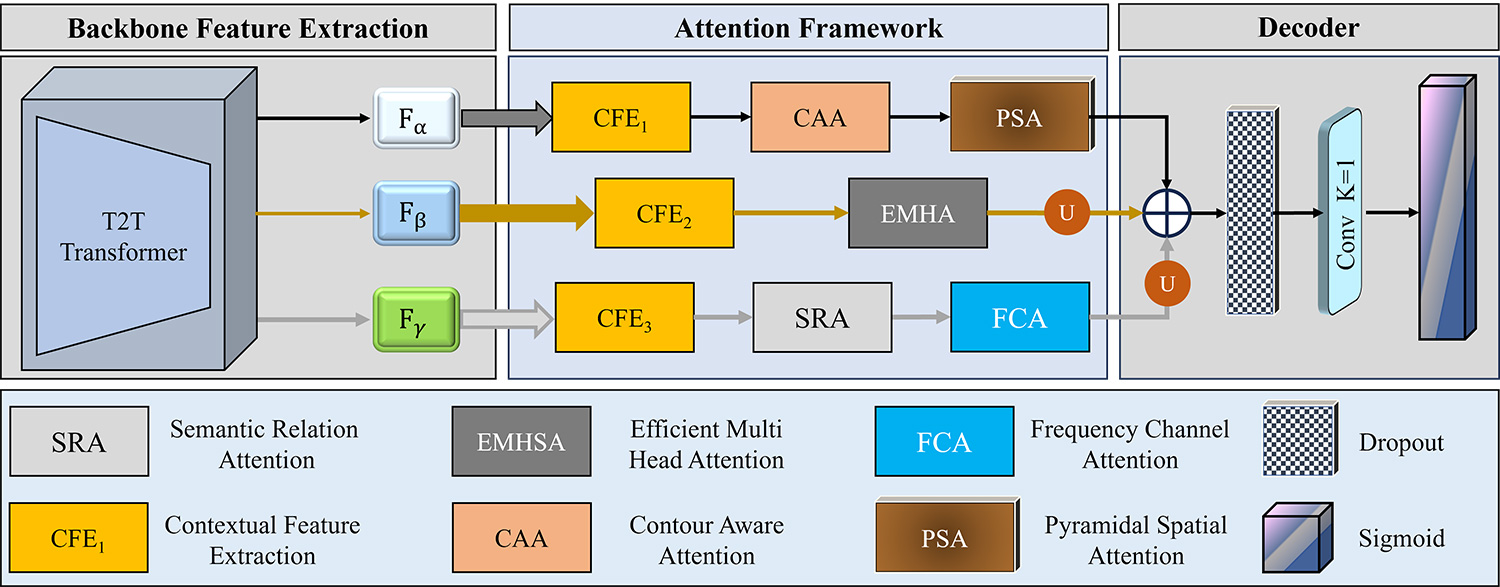
MAFNet: Multi-level Attention Fusion Network for Precise Prominence Analysis in Visual Sensing Systems
Free Access | Research Article | 28 June 2026
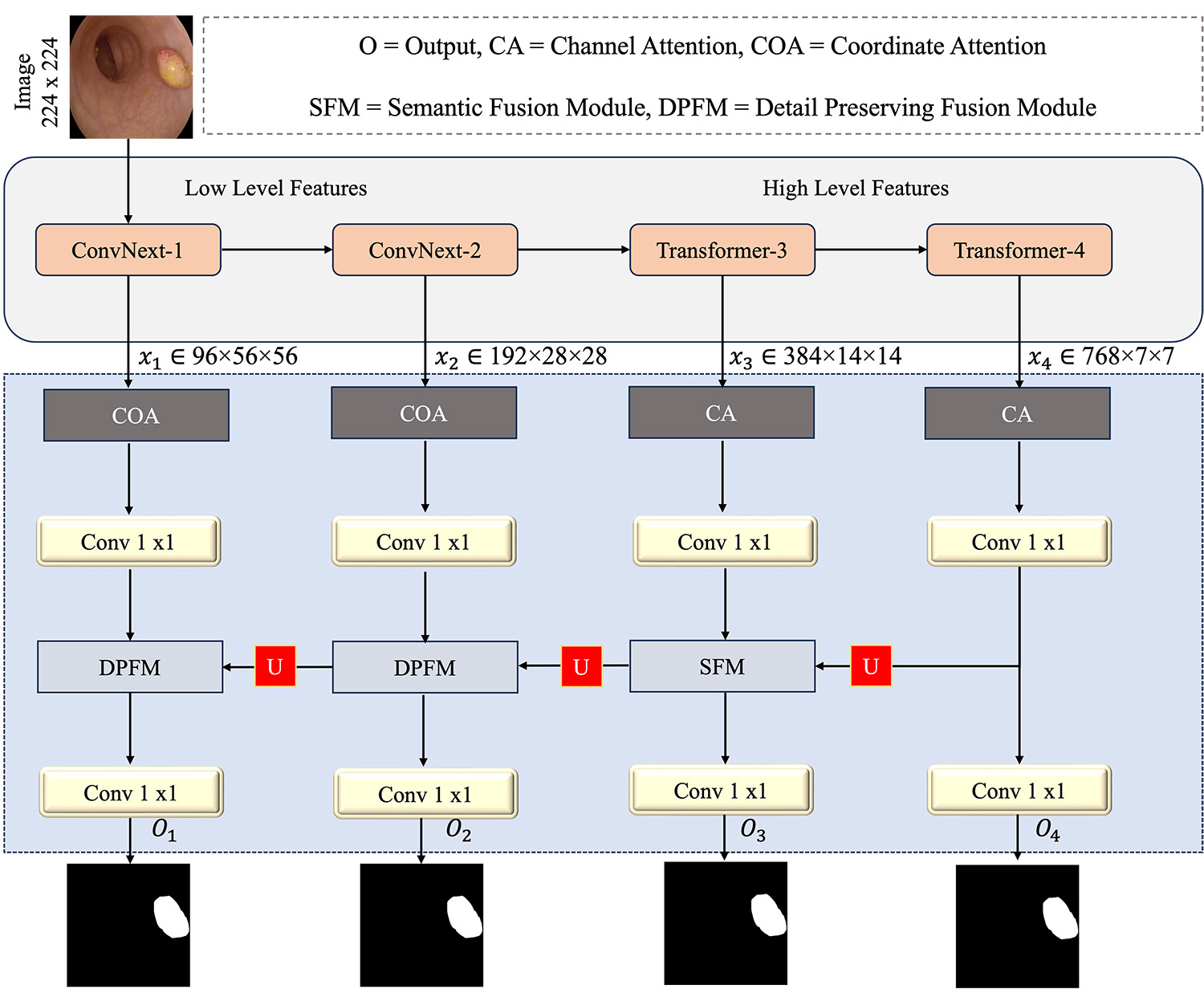
Scale-Specific Visual Sensing for Colonoscopy Polyp Segmentation via Hybrid CNN-Transformer Attention
ICCK Transactions on Sensing, Communication, and Control | Volume 3, Issue 2: 109-123, 2026 | DOI: 10.62762/TSCC.2026.664028
Abstract
Precise segmentation of colorectal polyps in colonoscopy images is essential for timely cancer diagnosis and prevention. Nevertheless, current segmentation methods contend with intrinsic variability in polyp appearance, differences in size, shape, and texture, while preserving computational efficiency necessary for clinical implementation. In this paper, we present a novel segmentation architecture that integrates scale-specific attention mechanisms within a hybrid CNN-Transformer backbone to address these challenges. Our model employs Coordinate Attention for high-resolution feature maps to preserve spatial details essential for boundary delineation, and Channel Attention for deep semantic... More >

Graphical Abstract
Scale-Specific Visual Sensing for Colonoscopy Polyp Segmentation via Hybrid CNN-Transformer Attention
Free Access | Review Article | 27 June 2026
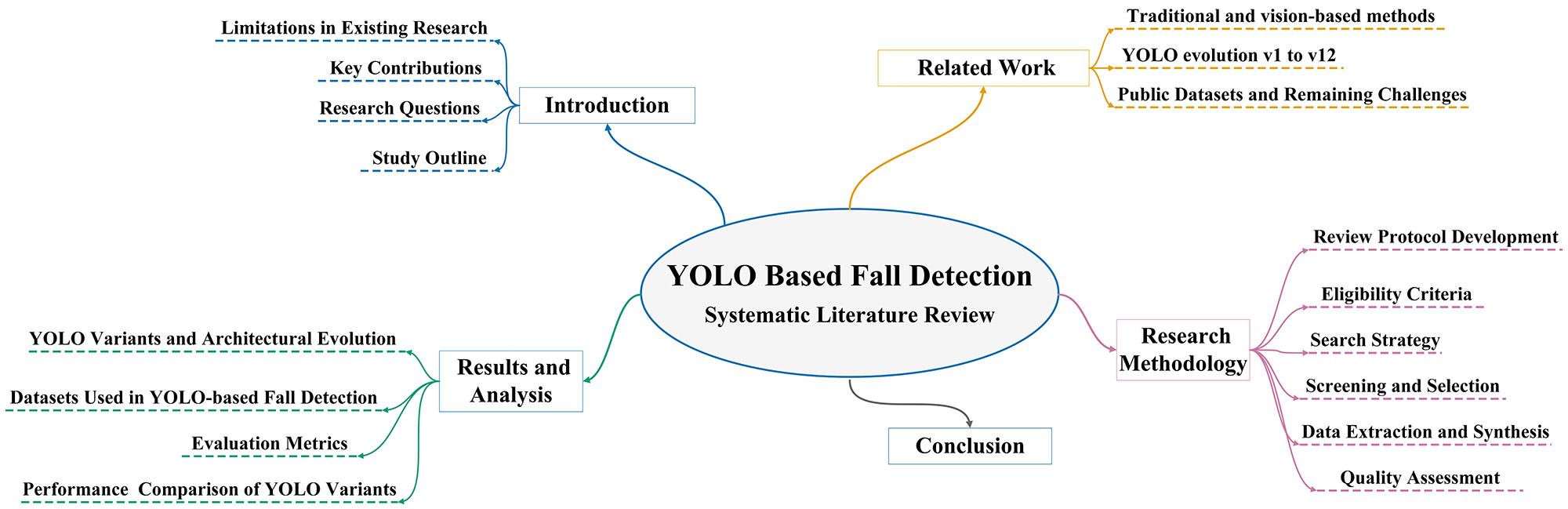
Visual Intelligence for Automated Fall Sensing: A Systematic Review of Architectures, Datasets, and Evaluation Gaps
ICCK Transactions on Sensing, Communication, and Control | Volume 3, Issue 2: 90-108, 2026 | DOI: 10.62762/TSCC.2026.604481
Abstract
Falls are a major cause of injury, hospitalization, and loss of independence among older adults, spurring interest in visual intelligence-based automated fall detection for timely response and continuous monitoring. This article presents a systematic review of such systems, focusing on YOLO-based approaches. Following PRISMA guidelines, the review covers 2016–2025 literature, identifying 637 records and including 63 studies after screening. We examine datasets, preprocessing strategies, evaluation protocols, metrics, and hardware platforms, comparing reported accuracy, efficiency, and real-time feasibility across different designs. Evidence is strongest for YOLOv3 through YOLOv9, while evi... More >

Graphical Abstract
Visual Intelligence for Automated Fall Sensing: A Systematic Review of Architectures, Datasets, and Evaluation Gaps
Free Access | Research Article | 12 May 2026 | Cited: Crossref logo  3 , Scopus 2
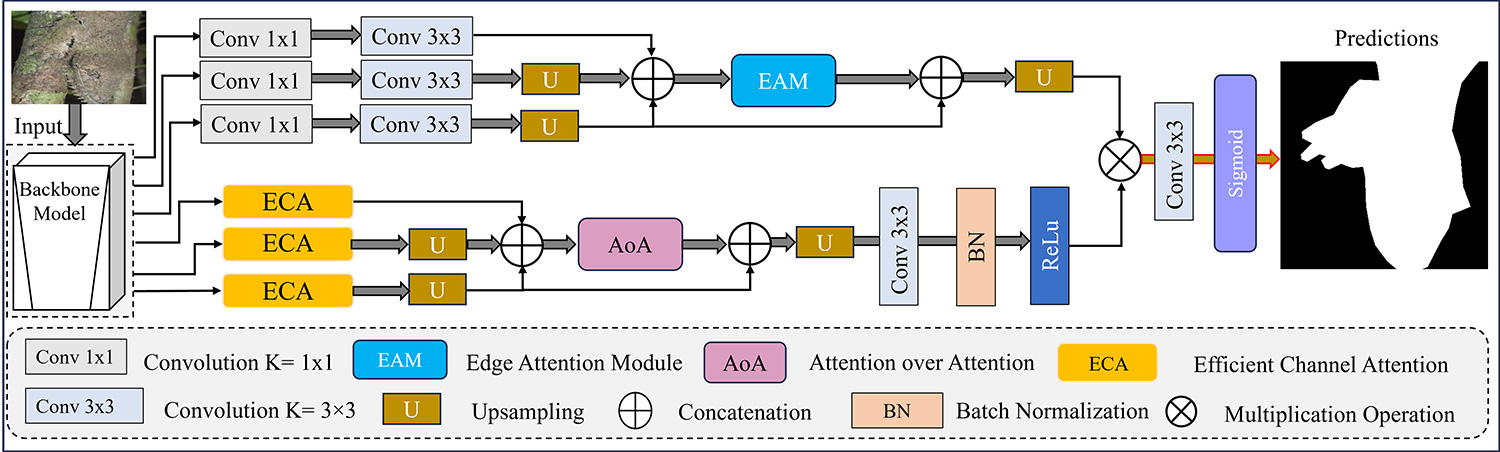
Visual Sensing via Multiscale Edge-Aware Learning with Hybrid Attention for Camouflaged Object Detection
ICCK Transactions on Sensing, Communication, and Control | Volume 3, Issue 2: 76-89, 2026 | DOI: 10.62762/TSCC.2025.439821
Abstract
Camouflaged object detection (COD) remains a significant challenge in computer vision. Existing approaches struggle to address both body immersion and structural ambiguity simultaneously, leading to inaccurate boundary delineations. This paper presents a novel Visual Sensing framework via Multiscale Edge-Aware Learning with Hybrid Attention. The proposed framework integrates hierarchical feature extraction, adaptive attention mechanisms, and progressive multi-scale fusion to achieve robust COD. We employ EfficientNetB7 as the backbone network to extract six-scale hierarchical features, capturing both fine-grained spatial details and high-level semantic representations. Initial shallow featur... More >

Graphical Abstract
Visual Sensing via Multiscale Edge-Aware Learning with Hybrid Attention for Camouflaged Object Detection
Free Access | Research Article | 23 April 2026 | Cited: Crossref logo  3 , Scopus 2
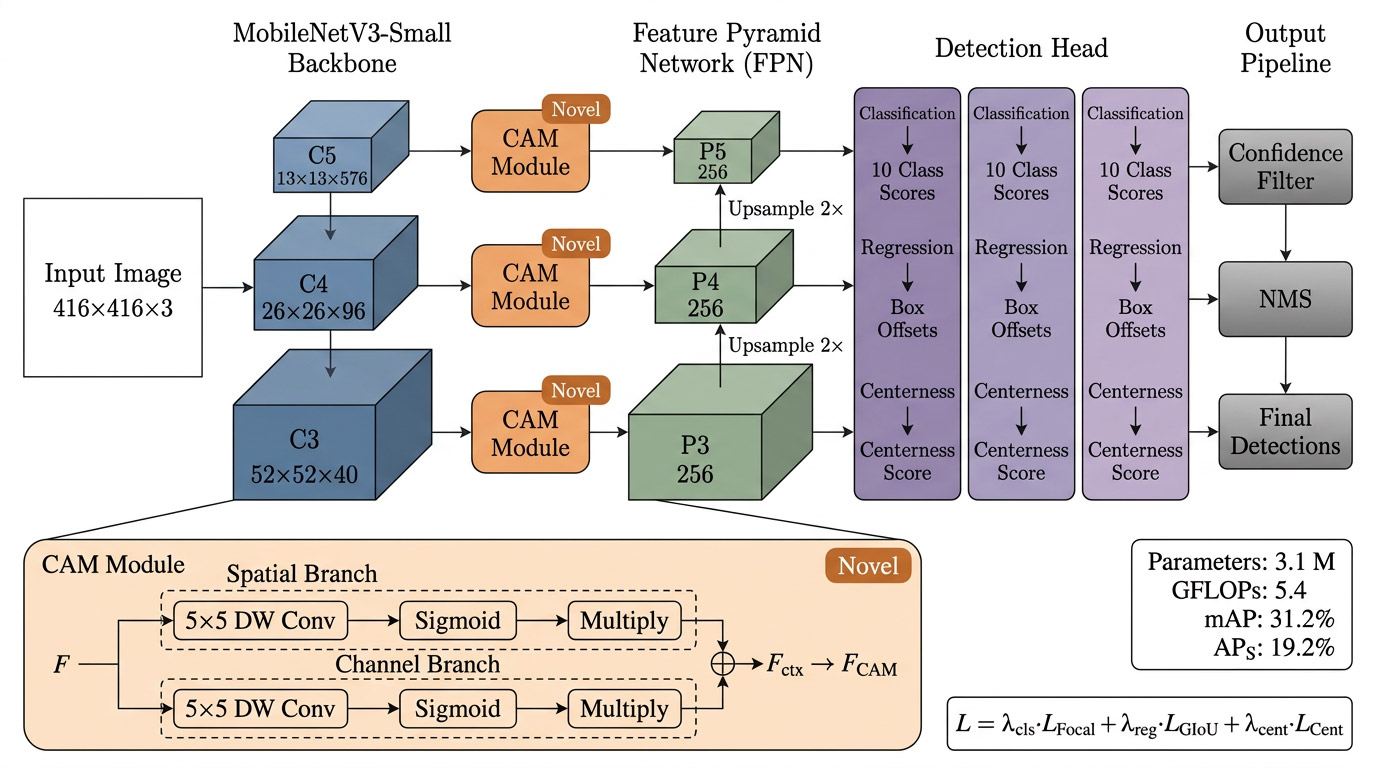
MS-CADNet: A Multi-Scale Context Attention Network for Efficient Object Detection in UAV Imagery
ICCK Transactions on Sensing, Communication, and Control | Volume 3, Issue 2: 64-75, 2026 | DOI: 10.62762/TSCC.2026.214827
Abstract
With the rapid advancement of unmanned aerial vehicle (UAV) technology, there is a need for lightweight and accurate object detection on resource-constrained platforms. This paper proposes MS-CADNet, an anchor-free network for small object detection in aerial imagery. It uses a MobileNetV3-Small backbone and a two-branch gated Context Attention Module (CAM) to enhance feature quality. On the VisDrone-DET benchmark, it achieves 31.2% mAP, surpassing YOLOv8-Small and CEASC. The model attains 19.2% AP for small objects with only 3.1M parameters and 5.4 GFLOPs, making it suitable for real-time UAV deployment. More >

Graphical Abstract
MS-CADNet: A Multi-Scale Context Attention Network for Efficient Object Detection in UAV Imagery