

Smart Ground Robot for Real-Time Detection of Tomato Diseases Using Deep Learning and IoT Technologies





Article Information
Abstract
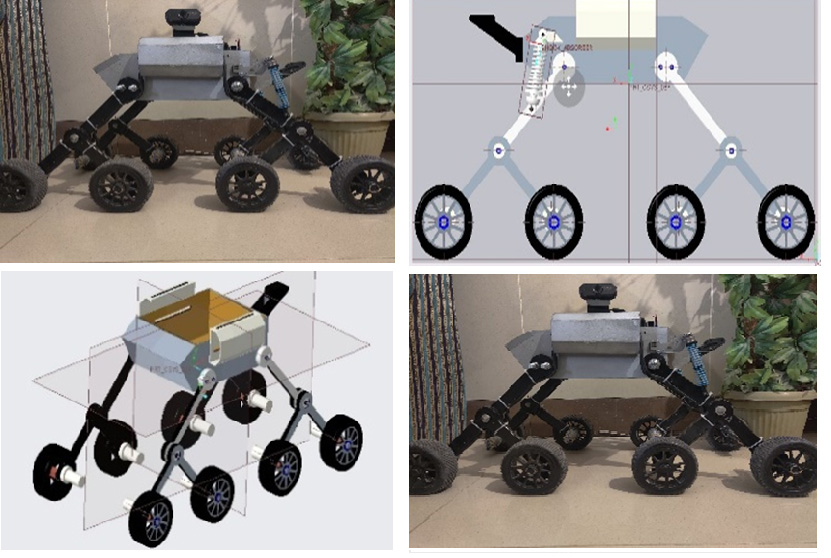
This study presents an intelligent automated system for real-time detection and classification of tomato diseases using a Convolutional Neural Network (CNN) integrated within an Internet of Things (IoT) based unmanned ground vehicle (UGV). The CNN was trained and evaluated using a dataset comprising over 20,000 images of tomato leaves categorized into ten distinct diseases—Late Blight, Early Blight, Septoria Leaf Spot, Tomato Yellow Leaf Curl Virus, Bacterial Spot, Target Spot, Tomato Mosaic Virus, Leaf Mold, Spider Mites Two-Spotted Spider Mite, Powdery Mildew—and healthy leaves. The developed CNN architecture, optimized for lightweight deployment on edge devices like Raspberry Pi 4, achieved an overall validation accuracy of approximately 83%, with notable variations across classes in precision, recall, and F1-score. Specifically, high precision scores (above 80%) were obtained for diseases such as Bacterial Spot, Late Blight, and Tomato Yellow Leaf Curl Virus, while moderate scores in diseases exhibiting subtle visual symptoms underscored areas for future refinement. The UGV autonomously navigates tomato fields, captures high-resolution images of leaves, and conducts on-site real-time disease classification, significantly reducing the labor, human error, and time associated with traditional manual inspections. Comprehensive quantitative analyses, including confusion matrices and visual assessments of classified samples, validate the practical viability and robustness of the proposed system, although certain misclassifications highlight opportunities to enhance training data diversity and model generalizability in future work. The integration of deep learning and IoT technologies demonstrated in this study substantially advances precision agriculture, improving disease management practices and promoting sustainable agricultural productivity.
Graphical Abstract
Keywords
Data Availability Statement
Funding
Conflicts of Interest
Ethical Approval and Consent to Participate
References
- Naseer, A., Shmoon, M., Shakeel, T., Ur Rehman, S., Ahmad, A., & Gruhn, V. (2024). A Systematic Literature review of the IoT in agriculture-global adoption, innovations, security privacy challenges. IEEE Access, 12, 60986-61021.
[CrossRef] [Google Scholar] - Liakos, K. G., Busato, P., Moshou, D., Pearson, S., & Bochtis, D. (2018). Machine learning in agriculture: A review. Sensors, 18(8), 2674.
[CrossRef] [Google Scholar] - Kassim, M. R. M. (2020). IoT applications in smart agriculture: Issues and challenges. In 2020 IEEE Conference on Open Systems (ICOS) (pp. 19-24). IEEE.
[CrossRef] [Google Scholar] - Kamilaris, A., & Prenafeta-Boldú, F. X. (2018). Deep learning in agriculture: A survey. Computers and electronics in agriculture, 147, 70-90.
[CrossRef] [Google Scholar] - Islam, M. P., Hatou, K., Aihara, T., Seno, S., Kirino, S., & Okamoto, S. (2022). Performance prediction of tomato leaf disease by a series of parallel convolutional neural networks. Smart Agricultural Technology, 2, 100054.
[CrossRef] [Google Scholar] - Saleem, M. H., Potgieter, J., & Arif, K. M. (2021). Automation in agriculture by machine and deep learning techniques: A review of recent developments. Precision Agriculture, 22(6), 2053-2091.
[CrossRef] [Google Scholar] - Fuentes, A., Yoon, S., Kim, S. C., & Park, D. S. (2017). A robust deep-learning-based detector for real-time tomato plant diseases and pests recognition. Sensors, 17(9), 2022.
[CrossRef] [Google Scholar] - Quy, V. K., Van Hau, N., Van Anh, D., Minh Quy, N., Tien Ban, N., Lanza, S., Randazzo, G., & Muzirafuti, A. (2022). IoT-enabled smart agriculture: architecture, applications, and challenges. Applied Sciences, 12(7), 3396.
[CrossRef] [Google Scholar] - Ristaino, J. B., Anderson, P. K., Bebber, D. P., Brauman, K. A., Cunniffe, N. J., Fedoroff, N. V., ... & Wei, Q. (2021). The persistent threat of emerging plant disease pandemics to global food security. Proceedings of the National Academy of Sciences, 118(23), e2022239118.
[CrossRef] [Google Scholar] - Ferentinos, K. P. (2018). Deep learning models for plant disease detection and diagnosis. Computers and electronics in agriculture, 145, 311-318.
[CrossRef] [Google Scholar] - Shoaib, M., Shah, B., Ei-Sappagh, S., Ali, A., Ullah, A., Alenezi, F., ... & Ali, F. (2023). An advanced deep learning models-based plant disease detection: A review of recent research. Frontiers in Plant Science, 14, 1158933.
[CrossRef] [Google Scholar] - Sarkar, C., Gupta, D., Gupta, U., & Hazarika, B. B. (2023). Leaf disease detection using machine learning and deep learning: Review and challenges. Applied Soft Computing, 145, 110534.
[CrossRef] [Google Scholar] - Gajjar, R., Gajjar, N., Thakor, V. J., Patel, N. P., & Ruparelia, S. (2022). Real-time detection and identification of plant leaf diseases using convolutional neural networks on an embedded platform. The Visual Computer, 38, 2923–2938.
[CrossRef] [Google Scholar] - Shafik, W., Tufail, A., Namoun, A., De Silva, L. C., & Apong, R. A. A. H. M. (2023). A systematic literature review on plant disease detection: Motivations, classification techniques, datasets, challenges, and future trends. IEEE Access, 11, 59174-59203.
[CrossRef] [Google Scholar] - Thakur, P. S., Sheorey, T., & Ojha, A. (2023). VGG-ICNN: A Lightweight CNN model for crop disease identification. Multimedia Tools and Applications, 82(1), 497-520.
[CrossRef] [Google Scholar] - Xie, B., Jin, Y., Faheem, M., Gao, W., Liu, J., Jiang, H., Cai, L., & Li, Y. (2023). Research progress of autonomous navigation technology for multi-agricultural scenes. Computers and Electronics in Agriculture, 211, 107963.
[CrossRef] [Google Scholar] - Dhanaraju, M., Chenniappan, P., Ramalingam, K., Pazhanivelan, S., & Kaliaperumal, R. (2022). Smart farming: Internet of Things (IoT)-based sustainable agriculture. Agriculture, 12(10), 1745.
[CrossRef] [Google Scholar] - Kumar, V., Sharma, K. V., Kedam, N., Patel, A., Kate, T. R., & Rathnayake, U. (2024). A comprehensive review on smart and sustainable agriculture using IoT technologies. Smart Agricultural Technology, 100487.
[CrossRef] [Google Scholar] - Motwani, A. (2022). Tomato leaves dataset [Data set]. Kaggle. Retrieved from https://www.kaggle.com/datasets/ashishmotwani/tomato
[Google Scholar] - Gonzalez-Huitron, V., León-Borges, J. A., Rodriguez-Mata, A. E., Amabilis-Sosa, L. E., Ramírez-Pereda, B., & Rodriguez, H. (2021). Disease detection in tomato leaves via CNN with lightweight architectures implemented in Raspberry Pi 4. Computers and Electronics in Agriculture, 181, 105951.
[CrossRef] [Google Scholar]
Cited By (12)
-
Jia Liu, Long Wu, Chunxi Yang, Xiufeng Zhang, Hongwei Sun. .
Advances in Bio-inspired System and Robotics, 2027 .
[CrossRef] -
N. M. Deepika, K. Sreeama Murthy. AgroAttenNet: A CNN–BiLSTM–Attention–Random Forest Hybrid Model for Temporal Groundnut Yield Forecasting.
Journal of Advances in Information Technology, 2026 , 17 (4).
[CrossRef] -
Mst Suraiya Farzana, Liuxiao Feng, Peiyin Chen, Md Owahedur Rahman, Muhammad Bilal Yaseen, Sadashiv Chaturvedi. Hierarchical transformer-based adaptive cross-modal gait recognition for lower-limb exoskeletons: Advancing real-time intent detection and predictive assistance.
Biomedical Signal Processing and Control, 2026 , 125 .
[CrossRef] -
Manikandan Rajendran, Manickam Muruganantham. Tomato leaf disease classification using a vision transformer with cascaded group attention (ViT-CGA) for real-time decision support in precision agriculture.
Journal of Plant Diseases and Protection, 2026 , 133 (3).
[CrossRef] -
Yantong Chen, Yuan Gao, Junsheng Wang. Identification method for multiple similar crop pests: A visual language model combined with coarse–finegrain cross‐modal matching.
Pest Management Science, 2026 , 82 (7).
[CrossRef] -
Swapna Jamal, John Edwin Judith. A quantum-generative AI-driven attention-guided image processing framework for leaf disease detection and severity estimation.
Optics & Laser Technology, 2026 , 203 .
[CrossRef] -
Xiangyan Wang, Shuangcheng Huang, Qingbo Lu, Xinyi Guo. Environmental Control for Edible Fungi Cultivation Based on Temporal Information and Deep Learning.
Food Bioengineering, 2026 .
[CrossRef] -
Adeeba Anis, Penghao Wang, Chengdao Li, Ferdous Sohel. A survey of deep learning techniques for image-based disease detection in dicot plants.
Information Processing in Agriculture, 2026 .
[CrossRef] -
Manoj Choudhary, Niranjan Singh, Meenakshi Malik, P N Meena, M K Khokhar, Anoop Kumar, S M Haldhar, Yukti Chandervanshi. Integrated pest management (IPM) in the AI era.
Smart Agricultural Technology, 2026 , 15 .
[CrossRef] -
Banghong Wu, Yang Cao, Jing Yang, Jiheng Wu. AR-FRSG: Fine-grained agricultural image recognition via feature space reconstruction and semantically guided fusion.
Expert Systems with Applications, 2026 , 316 .
[CrossRef] -
Munish Kumar Bhatia, Suresh Kaswan, Sandeep Singh Kang. .
2026 International Conference on Smart Electronic Devices and Intelligent Systems (ICSEDIS), 2026 .
[CrossRef] -
Vidisha Chaudhary, Mukesh Kumar, Veena Chaudhary, Ravi Kumar, Chetan Chauhan. Artificial intelligence in sustainable horticultural production: a systematic review.
Discover Plants, 2025 , 2 (1).
[CrossRef]
Cite This Article
TY  - JOUR
AU  - Farooq, Fahad
AU  - Muneer, Muhammad Haris
AU  - Babar, Muhammad
AU  - Zahid, Faizan
PY  - 2025
DA  - 2025/04/15
TI  - Smart Ground Robot for Real-Time Detection of Tomato Diseases Using Deep Learning and IoT Technologies
JO  - ICCK Transactions on Sensing, Communication, and Control
T2  - ICCK Transactions on Sensing, Communication, and Control
JF  - ICCK Transactions on Sensing, Communication, and Control
VL  - 2
IS  - 2
SP  - 66
EP  - 74
DO  - 10.62762/TSCC.2024.593301
UR  - https://www.icck.org/article/abs/TSCC.2024.593301
KW  - automated systems
KW  - agricultural robotics
KW  - internet of things (IoT)
KW  - deep learning
KW  - tomato disease detection
KW  - raspberry Pi 4
AB  - This study presents an intelligent automated system for real-time detection and classification of tomato diseases using a Convolutional Neural Network (CNN) integrated within an Internet of Things (IoT) based unmanned ground vehicle (UGV). The CNN was trained and evaluated using a dataset comprising over 20,000 images of tomato leaves categorized into ten distinct diseases—Late Blight, Early Blight, Septoria Leaf Spot, Tomato Yellow Leaf Curl Virus, Bacterial Spot, Target Spot, Tomato Mosaic Virus, Leaf Mold, Spider Mites Two-Spotted Spider Mite, Powdery Mildew—and healthy leaves. The developed CNN architecture, optimized for lightweight deployment on edge devices like Raspberry Pi 4, achieved an overall validation accuracy of approximately 83%, with notable variations across classes in precision, recall, and F1-score. Specifically, high precision scores (above 80%) were obtained for diseases such as Bacterial Spot, Late Blight, and Tomato Yellow Leaf Curl Virus, while moderate scores in diseases exhibiting subtle visual symptoms underscored areas for future refinement. The UGV autonomously navigates tomato fields, captures high-resolution images of leaves, and conducts on-site real-time disease classification, significantly reducing the labor, human error, and time associated with traditional manual inspections. Comprehensive quantitative analyses, including confusion matrices and visual assessments of classified samples, validate the practical viability and robustness of the proposed system, although certain misclassifications highlight opportunities to enhance training data diversity and model generalizability in future work. The integration of deep learning and IoT technologies demonstrated in this study substantially advances precision agriculture, improving disease management practices and promoting sustainable agricultural productivity.
SN  - 3068-9287
PB  - Institute of Central Computation and Knowledge
LA  - English
ER  -
@article{Farooq2025Smart,
  author = {Fahad Farooq and Muhammad Haris Muneer and Muhammad Babar and Faizan Zahid},
  title = {Smart Ground Robot for Real-Time Detection of Tomato Diseases Using Deep Learning and IoT Technologies},
  journal = {ICCK Transactions on Sensing, Communication, and Control},
  year = {2025},
  volume = {2},
  number = {2},
  pages = {66-74},
  doi = {10.62762/TSCC.2024.593301},
  url = {https://www.icck.org/article/abs/TSCC.2024.593301},
  abstract = {This study presents an intelligent automated system for real-time detection and classification of tomato diseases using a Convolutional Neural Network (CNN) integrated within an Internet of Things (IoT) based unmanned ground vehicle (UGV). The CNN was trained and evaluated using a dataset comprising over 20,000 images of tomato leaves categorized into ten distinct diseases—Late Blight, Early Blight, Septoria Leaf Spot, Tomato Yellow Leaf Curl Virus, Bacterial Spot, Target Spot, Tomato Mosaic Virus, Leaf Mold, Spider Mites Two-Spotted Spider Mite, Powdery Mildew—and healthy leaves. The developed CNN architecture, optimized for lightweight deployment on edge devices like Raspberry Pi 4, achieved an overall validation accuracy of approximately 83\%, with notable variations across classes in precision, recall, and F1-score. Specifically, high precision scores (above 80\%) were obtained for diseases such as Bacterial Spot, Late Blight, and Tomato Yellow Leaf Curl Virus, while moderate scores in diseases exhibiting subtle visual symptoms underscored areas for future refinement. The UGV autonomously navigates tomato fields, captures high-resolution images of leaves, and conducts on-site real-time disease classification, significantly reducing the labor, human error, and time associated with traditional manual inspections. Comprehensive quantitative analyses, including confusion matrices and visual assessments of classified samples, validate the practical viability and robustness of the proposed system, although certain misclassifications highlight opportunities to enhance training data diversity and model generalizability in future work. The integration of deep learning and IoT technologies demonstrated in this study substantially advances precision agriculture, improving disease management practices and promoting sustainable agricultural productivity.},
  keywords = {automated systems, agricultural robotics, internet of things (IoT), deep learning, tomato disease detection, raspberry Pi 4},
  issn = {3068-9287},
  publisher = {Institute of Central Computation and Knowledge}
}
Publisher's Note
ICCK stays neutral with regard to jurisdictional claims in published maps and institutional affiliations.
Rights and Permissions


Portico
