

High-Voltage Power Supply: Design Considerations and Optimization Techniques







Article Information
Abstract
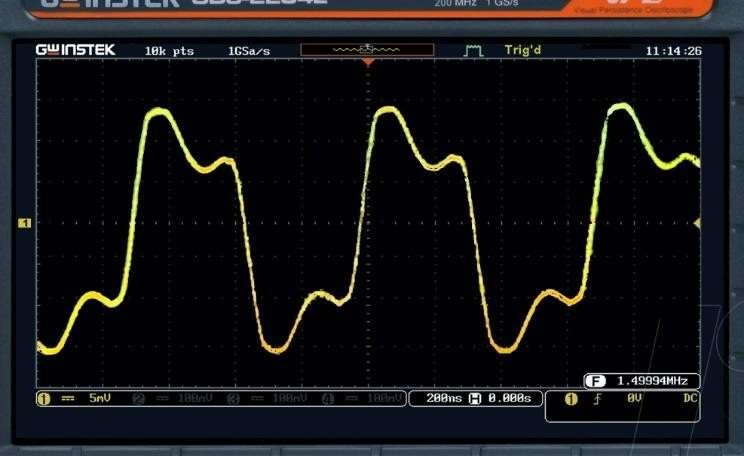
The main goal of this study is to design and develop a half-bridge inverter architecture specifically for high-voltage power supply applications. An effective, small, and affordable system that converts direct current (DC) to alternating current(AC) can be built, thanks to the IR2151 chip’s dependable characteristics and performance. To get the desired output voltage, the transformer first increases the voltage and then the voltage is increased with a voltage-doubling rectifier (VDR) circuit. The study emphasizes how crucial it is to choose components carefully and simulate the circuit design and implementation process to guarantee dependable performance. The experimental results validate the suggested architecture’s operational efficacy and viability. Moreover, the system’s control mechanisms are strengthened by integrating Fractional Order PID (FOPID) and Proportional-Integral-Derivative (PID) controllers. These controllers provide vital feedback for stable output voltage and improved flexibility under transient situations. This study significantly advances the field by addressing key challenges such as size reduction, cost optimization, and improved control strategies, which are critical for high-voltage applications.
Graphical Abstract
Keywords
Data Availability Statement
Funding
Conflicts of Interest
Ethical Approval and Consent to Participate
References
- Mohan, N., Undeland, T. M., & Robbins, W. P. (2003). Power Electronics: Converters, Applications, and Design (3rd ed.). John Wiley & Sons.
[Google Scholar] - Rashid, M. H. (Ed.). (2017). Power electronics handbook. Butterworth-heinemann.
[Google Scholar] - Kumar, N. S., & Jayasankar, V. (2013). Design and construction of low cost high voltage dc power supply for constant power operation. Journal of The Institution of Engineers (India): Series B, 94(2), 93-100.
[CrossRef] [Google Scholar] - Kazimierczuk, M. K. (2009). High-frequency magnetic components. John Wiley & Sons.
[Google Scholar] - Kim, S. H., Ehsani, M., & Kim, C. S. (2015). High-voltage power supply using series-connected full-bridge PWM converter for pulsed power applications. IEEE Transactions on Dielectrics and Electrical Insulation, 22(4), 1937-1944.
[CrossRef] [Google Scholar] - Obara, H., Wada, K., Miyazaki, K., Takamiya, M., & Sakurai, T. (2018). Active gate control in half-bridge inverters using programmable gate driver ICs to improve both surge voltage and converter efficiency. IEEE Transactions on Industry Applications, 54(5), 4603-4611.
[CrossRef] [Google Scholar] - Barsoum, N., & Stanley, G. I. (2015). Design of high voltage low power supply device. Universal Journal of Electrical & Electronic Engineering, 3(1), 6-12.
[CrossRef] [Google Scholar] - Petrescu, L. G., Petrescu, M. C., Ioniță, V., Cazacu, E., & Constantinescu, C. D. (2019). Magnetic properties of manganese-zinc soft ferrite ceramic for high frequency applications. Materials, 12(19), 3173.
[CrossRef] [Google Scholar] - Bandeira, D. G., Lazzarin, T. B., & Barbi, I. (2018). High voltage power supply using a T-type parallel resonant DC–DC converter. IEEE Transactions on Industry Applications, 54(3), 2459-2470.
[CrossRef] [Google Scholar] - Zhang, H., Tong, C., & Wang, Z. (2019). Normalized analysis and optimal design of DCM-LCC resonant converter for high-voltage power supply. IEEE Transactions on Industrial Electronics, 67(6), 4496-4506.
[CrossRef] [Google Scholar] - Badapanda, M. K., Tripathi, A., Upadhyay, R., & Lad, M. (2022). High voltage dc power supply with input parallel and output series connected dc-dc converters. IEEE Transactions on Power Electronics, 38(6), 6764-6768.
[CrossRef] [Google Scholar] - Abid, M., Ahmad, F., Ullah, F., Habib, U., Nawaz, S., Iqbal, M., & Farooq, A. (2020). High voltage DC power supply with power factor correction based on LLC resonant converter. Plos one, 15(9), e0239008.
[CrossRef] [Google Scholar] - Hwang, F., Shen, Y., & Jayaram, S. H. (2006). Low-ripple compact high-voltage DC power supply. IEEE Transactions on Industry Applications, 42(5), 1139-1145.
[CrossRef] [Google Scholar] - Balaji, B., & Krishnan, D. S. (2021, May). Fopid controlled high step-up super lift DC-DC converter with enhanced response. In 2021 3rd International Conference on Signal Processing and Communication (ICPSC) (pp. 176-179). IEEE.
[CrossRef] [Google Scholar] - He, J., Yuan, H., Nie, M., Guo, H., Yu, H., Liu, Z., & Sun, R. (2023). Soft magnetic materials for power inductors: State of art and future development. Materials Today Electronics, 100066.
[CrossRef] [Google Scholar] - Kiran, M. R., Farrok, O., Islam, M. R., & Zhu, J. (2021). Increase in the power transfer capability of advanced magnetic material based high frequency transformer by using a novel distributed winding topology. IEEE Transactions on Industry Applications, 57(6), 6306-6317.
[CrossRef] [Google Scholar] - Martin-Ramos, J. A., Pernía, A. M., Díaz, J., Nuño, F., & Martínez, J. A. (2008). Power supply for a high-voltage application. IEEE Transactions on power electronics, 23(4), 1608-1619.
[CrossRef] [Google Scholar] - Jang, S. R., Ryoo, H. J., Ahn, S. H., Kim, J., & Rim, G. H. (2011). Development and optimization of high-voltage power supply system for industrial magnetron. IEEE Transactions on Industrial Electronics, 59(3), 1453-1461.
[CrossRef] [Google Scholar] - Tepljakov, A., Alagoz, B. B., Yeroglu, C., Gonzalez, E., HosseinNia, S. H., & Petlenkov, E. (2018). FOPID controllers and their industrial applications: A survey of recent results. IFAC-PapersOnLine, 51(4), 25-30.
[CrossRef] [Google Scholar] - Monje, C. A., Chen, Y., Vinagre, B. M., Xue, D., & Feliu, V. (2010). Fractional-order systems and controls: fundamentals and applications. London: Springer London.
[CrossRef] [Google Scholar] - Shah, P., & Agashe, S. (2016). Review of fractional PID controller. Mechatronics, 38, 29-41.
[CrossRef] [Google Scholar] - Mao, S., Popović, J., & Ferreira, J. A. (2018). Diode reverse recovery process and reduction of a half-wave series Cockcroft–Walton voltage multiplier for high-frequency high-voltage generator applications. IEEE Transactions on Power Electronics, 34(2), 1492-1499.
[CrossRef] [Google Scholar] - Quraan, M., Zahran, A., Herzallah, A., & Ahmad, A. (2019). Design and model of series-connected high-voltage DC multipliers. IEEE Transactions on Power Electronics, 35(7), 7160-7174.
[CrossRef] [Google Scholar] - Küchler, A. (2018). High Voltage Engineering: Fundamentals-Technology-Applications. Springer.
[CrossRef] [Google Scholar] - Zhong, H., Xu, Z., Zou, X., Zou, Y., Yang, L., & Chao, Z. (2003, November). Current characteristic of high voltage capacitor charging power supply using a series resonant topology. In IECON'03. 29th Annual Conference of the IEEE Industrial Electronics Society (IEEE Cat. No. 03CH37468) (Vol. 1, pp. 373-377). IEEE.
[CrossRef] [Google Scholar]
Cited By (2)
-
Xiaoli Bai, Meixian Bai. MEPT-LLM: a multimodal generative AI model for identifying and understanding cultural-emotional barriers in the language classroom.
Frontiers in Psychology, 2026 , 17 .
[CrossRef] -
Mengyu Liu, Zhe Cheng, Yu Yang, Niaoqing Hu, Guoji Shen, Yi Yang. A reliable degradation prediction method for proton exchange membrane fuel cells based on uncertainty Bayesian self-attention.
Engineering Applications of Artificial Intelligence, 2025 , 162 .
[CrossRef]
Cite This Article
TY  - JOUR
AU  - Rajput, Summaiya
AU  - Zahid, Faizan
AU  - Dahri, Fida Hussain
AU  - Assar, Noaman Ajmal
AU  - Channa, Irfan Ali
PY  - 2025
DA  - 2025/02/10
TI  - High-Voltage Power Supply: Design Considerations and Optimization Techniques
JO  - ICCK Transactions on Sensing, Communication, and Control
T2  - ICCK Transactions on Sensing, Communication, and Control
JF  - ICCK Transactions on Sensing, Communication, and Control
VL  - 2
IS  - 1
SP  - 1
EP  - 10
DO  - 10.62762/TSCC.2024.741277
UR  - https://www.icck.org/article/abs/TSCC.2024.741277
KW  - high-voltage power supply
KW  - half-bridge inverter
KW  - IR2151 Chip
KW  - voltage doubling rectifier (VDR)
KW  - DC to AC Conversion
KW  - circuit design and simulation
KW  - fractional order PID
AB  - The main goal of this study is to design and develop a half-bridge inverter architecture specifically for high-voltage power supply applications. An effective, small, and affordable system that converts direct current (DC) to alternating current(AC) can be built, thanks to the IR2151 chip’s dependable characteristics and performance. To get the desired output voltage, the transformer first increases the voltage and then the voltage is increased with a voltage-doubling rectifier (VDR) circuit. The study emphasizes how crucial it is to choose components carefully and simulate the circuit design and implementation process to guarantee dependable performance. The experimental results validate the suggested architecture’s operational efficacy and viability. Moreover, the system’s control mechanisms are strengthened by integrating Fractional Order PID (FOPID) and Proportional-Integral-Derivative (PID) controllers. These controllers provide vital feedback for stable output voltage and improved flexibility under transient situations. This study significantly advances the field by addressing key challenges such as size reduction, cost optimization, and improved control strategies, which are critical for high-voltage applications.
SN  - 3068-9287
PB  - Institute of Central Computation and Knowledge
LA  - English
ER  -
@article{Rajput2025HighVoltag,
  author = {Summaiya Rajput and Faizan Zahid and Fida Hussain Dahri and Noaman Ajmal Assar and Irfan Ali Channa},
  title = {High-Voltage Power Supply: Design Considerations and Optimization Techniques},
  journal = {ICCK Transactions on Sensing, Communication, and Control},
  year = {2025},
  volume = {2},
  number = {1},
  pages = {1-10},
  doi = {10.62762/TSCC.2024.741277},
  url = {https://www.icck.org/article/abs/TSCC.2024.741277},
  abstract = {The main goal of this study is to design and develop a half-bridge inverter architecture specifically for high-voltage power supply applications. An effective, small, and affordable system that converts direct current (DC) to alternating current(AC) can be built, thanks to the IR2151 chip’s dependable characteristics and performance. To get the desired output voltage, the transformer first increases the voltage and then the voltage is increased with a voltage-doubling rectifier (VDR) circuit. The study emphasizes how crucial it is to choose components carefully and simulate the circuit design and implementation process to guarantee dependable performance. The experimental results validate the suggested architecture’s operational efficacy and viability. Moreover, the system’s control mechanisms are strengthened by integrating Fractional Order PID (FOPID) and Proportional-Integral-Derivative (PID) controllers. These controllers provide vital feedback for stable output voltage and improved flexibility under transient situations. This study significantly advances the field by addressing key challenges such as size reduction, cost optimization, and improved control strategies, which are critical for high-voltage applications.},
  keywords = {high-voltage power supply, half-bridge inverter, IR2151 Chip, voltage doubling rectifier (VDR), DC to AC Conversion, circuit design and simulation, fractional order PID},
  issn = {3068-9287},
  publisher = {Institute of Central Computation and Knowledge}
}
Publisher's Note
ICCK stays neutral with regard to jurisdictional claims in published maps and institutional affiliations.
Rights and Permissions


Portico
