
ICCK

Mohamed Mahmoud

King Fahd University of Petroleum and Minerals

Section 01

Academic Profile

No academic profile information available at the moment.

Section 02

Editorial Roles

This user currently does not serve as an editor for any ICCK journals.

Section 03

ICCK Publications

Open Access | Review Article | 01 October 2026
Chemical Pre-Flush and Additive Strategies to Enhance CO$_2$ Solubility and Injectivity in Deep Saline Aquifers: Mechanisms, Evidence, and Field Readiness
Reservoir Science | Volume 3, Issue 1: 1-25, 2026 | DOI: 10.62762/RS.2026.344933
Abstract
Deep saline aquifers offer the largest global capacity potential for geologic carbon storage, yet storage performance is frequently constrained by coupled limitations on \COtwo{} dissolution (solubility trapping) and injectivity under high-salinity conditions. Elevated ionic strength suppresses \COtwo{} solubility via ``salting-out'' effects. Meanwhile, near-wellbore dry-out during injection of dry or undersaturated \COtwo{} can concentrate brine and precipitate salts, reducing permeability and injectivity. Mineralogy and \COtwo{}-brine-rock wettability further control multiphase flow topology, interfacial area for dissolution, capillary trapping, and compatibility of additives with reservoi... More >

Graphical Abstract
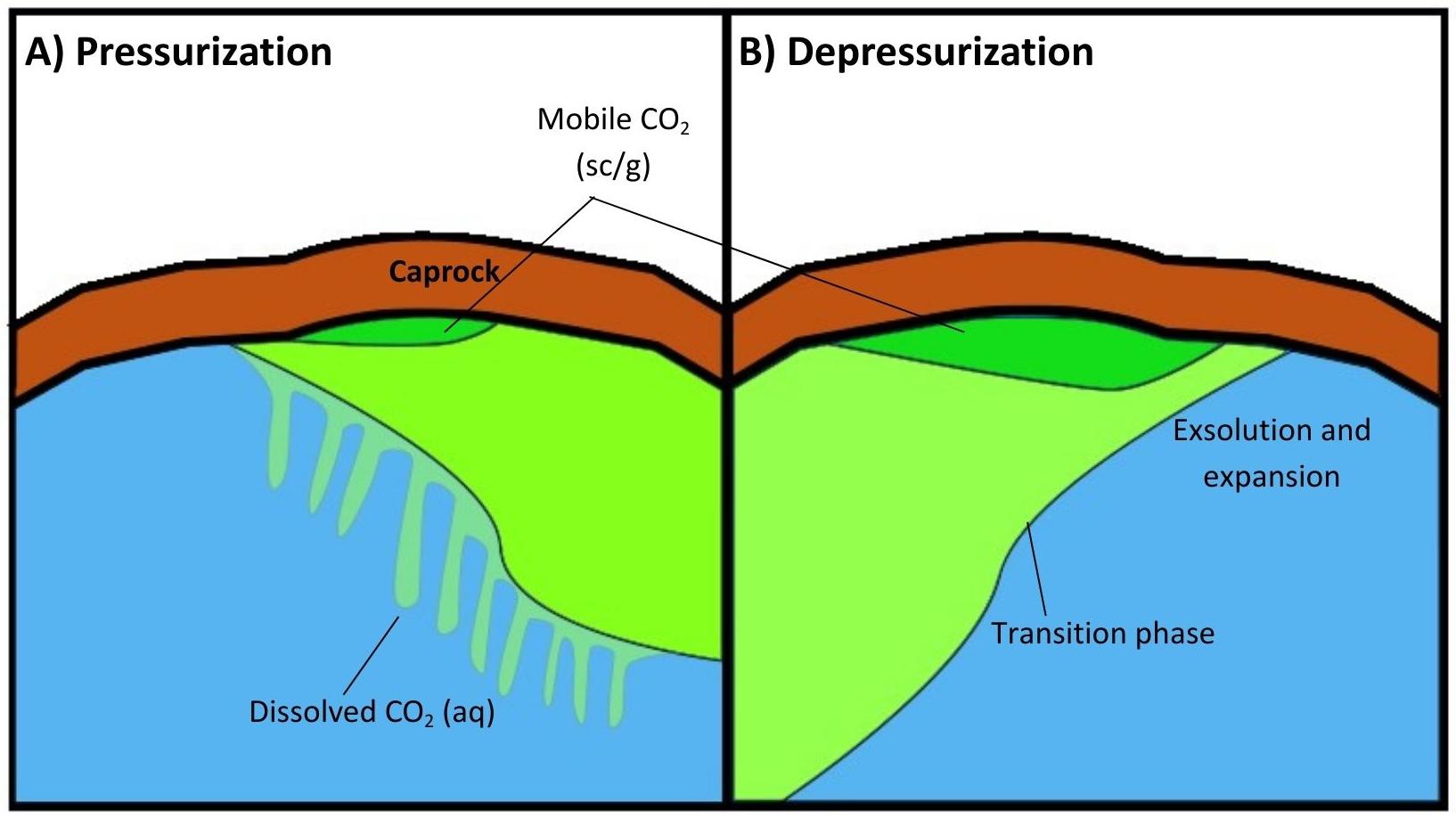
Chemical Pre-Flush and Additive Strategies to Enhance CO$_2$ Solubility and Injectivity in Deep Saline Aquifers: Mechanisms, Evidence, and Field Readiness
Open Access | Review Article | 25 September 2026
In-situ Hydrogen Production in Natural Gas Reservoirs: From Methane Conversion Mechanisms to Techno-economic and Environmental Feasibility
Reservoir Science | Volume 2, Issue 4: 324-364, 2026 | DOI: 10.62762/RS.2026.563836
Abstract
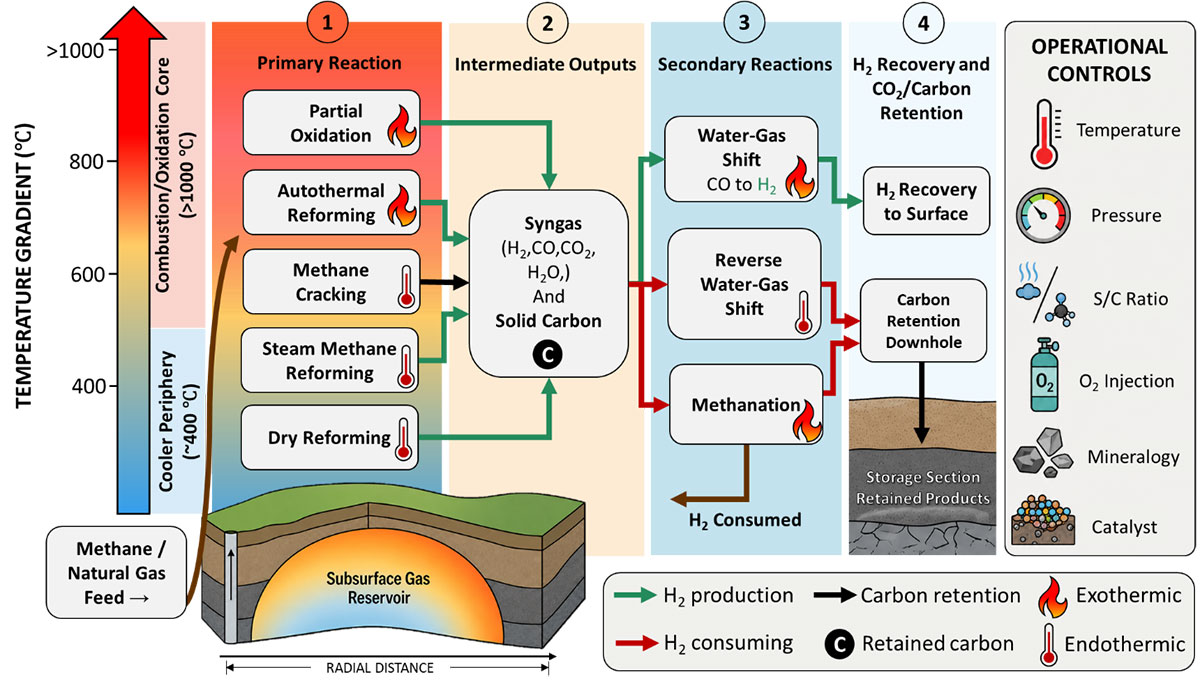
In-situ hydrogen production from natural gas reservoirs (IHP-NG) is an emerging pathway for low-carbon hydrogen by converting methane-rich subsurface resources while retaining carbon-bearing byproducts underground. This review critically evaluates the reaction mechanisms, experimental and modelling evidence, techno-economic position, life-cycle implications, and deployment challenges of IHP-NG. Unlike heavy-oil in-situ combustion gasification, IHP-NG is governed mainly by methane conversion reactions, including steam methane reforming, partial oxidation, autothermal reforming, methane cracking, dry reforming, and water--gas shift, alongside competing pathways such as methanation, reverse wat... More >

Graphical Abstract
In-situ Hydrogen Production in Natural Gas Reservoirs: From Methane Conversion Mechanisms to Techno-economic and Environmental Feasibility