

IRV2-hardswish Framework: A Deep Learning Approach for Deepfakes Detection and Classification




Article Information
Abstract
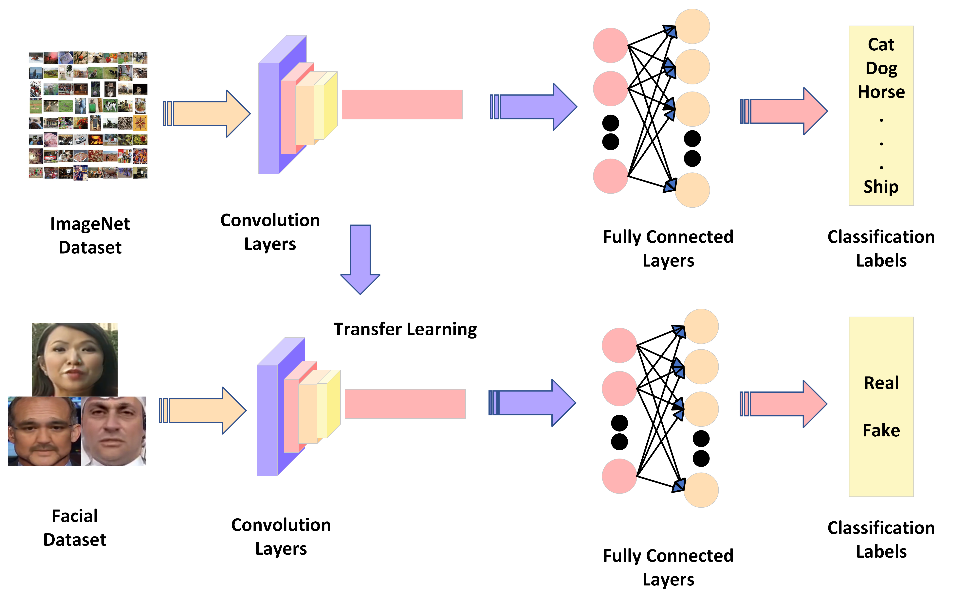
Deep learning models are pivotal in the advancements of Artificial Intelligence (AI) due to rapid learning and decision-making across various fields such as healthcare, finance, and technology. However, a harmful utilization of deep learning models poses a threat to public welfare, national security, and confidentiality. One such example is Deepfakes, which creates and modifies audiovisual data that humans cannot tell apart from the real ones. Due to the progression of deep learning models that produce manipulated data, accurately detecting and classifying deepfake data becomes a challenge. This paper presents a groundbreaking IRV2-Hardswish Framework for deepfake detection, leveraging a hybrid deep learning architecture that synergizes residual blocks in CNNs and the Inception-Resnet-v2 model. By incorporating residual blocks to capture underlying audiovisual data layers and enhancing Inception-Resnet-v2 with Hardswish activation for robust feature extraction, our framework achieves accurate detection of deepfakes. Furthermore, additional dense layers are integrated to ensure precise classification, establishing a comprehensive and effective solution for deepfake detection. Further, a detailed comparison of our framework with the state-of-the-art CNN models reports that our framework outperforms with 98% accuracy, 96% precision, and 95% AUC using the Deep Fake Detection Challenge (DFDC) dataset. The DFDC dataset is the largest, consisting of approximately 5,000 clips, including 1,132 actual and 4,118 false ones. The results report the efficiency of the proposed framework. These results demonstrate the framework's effectiveness in deepfake detection.
Graphical Abstract
Keywords
Data Availability Statement
Funding
Conflicts of Interest
Ethical Approval and Consent to Participate
References
- Ramanaharan, R., Guruge, D. B., & Agbinya, J. I. (2025). DeepFake video detection: Insights into model generalisation—A systematic review. Data and Information Management, 100099.
[CrossRef] [Google Scholar] - Siddiqui, F., Yang, J., Xiao, S., & Fahad, M. (2025). Enhanced deepfake detection with DenseNet and Cross-ViT. Expert Systems with Applications, 267, 126150.
[CrossRef] [Google Scholar] - Heidari, A., Jafari Navimipour, N., Dag, H., & Unal, M. (2024). Deepfake detection using deep learning methods: A systematic and comprehensive review. Wiley Interdisciplinary Reviews: Data Mining and Knowledge Discovery, 14(2), e1520.
[CrossRef] [Google Scholar] - Gao, J., Micheletto, M., Orrù, G., Concas, S., Feng, X., Marcialis, G. L., & Roli, F. (2024). Texture and artifact decomposition for improving generalization in deep-learning-based deepfake detection. Engineering Applications of Artificial Intelligence, 133, 108450.
[CrossRef] [Google Scholar] - Rossler, A., Cozzolino, D., Verdoliva, L., Riess, C., Thies, J., & Nießner, M. (2019). Faceforensics++: Learning to detect manipulated facial images. In Proceedings of the IEEE/CVF international conference on computer vision (pp. 1-11).
[CrossRef] [Google Scholar] - Mahum, R., Irtaza, A., & Javed, A. (2023). EDL-Det: A robust TTS synthesis detector using VGG19-based YAMNet and ensemble learning block. IEEE Access, 11, 134701-134716.
[CrossRef] [Google Scholar] - Mahum, R., Irtaza, A., Javed, A., Mahmoud, H. A., & Hassan, H. (2024). DeepDet: YAMNet with BottleNeck Attention Module (BAM) for TTS synthesis detection. EURASIP Journal on Audio, Speech, and Music Processing, 2024(1), 18.
[CrossRef] [Google Scholar] - Sohrawardi, S. J., Wu, Y. K., Hickerson, A., & Wright, M. (2024, May). Dungeons & deepfakes: Using scenario-based role-play to study journalists' behavior towards using AI-based verification tools for video content. In Proceedings of the 2024 CHI Conference on Human Factors in Computing Systems (pp. 1-17).
[CrossRef] [Google Scholar] - Maniyal, V., & Kumar, V. (2024). Unveiling the deepfake dilemma: Framework, classification, and future trajectories. IT Professional, 26(2), 32-38.
[CrossRef] [Google Scholar] - Abbas, F., & Taeihagh, A. (2024). Unmasking deepfakes: A systematic review of deepfake detection and generation techniques using artificial intelligence. Expert Systems with Applications, 124260.
[CrossRef] [Google Scholar] - Megahed, A., Han, Q., & Fadl, S. (2024). Exposing deepfake using fusion of deep-learned and hand-crafted features. Multimedia Tools and Applications, 83(9), 26797-26817.
[CrossRef] [Google Scholar] - Melnik, A., Miasayedzenkau, M., Makaravets, D., Pirshtuk, D., Akbulut, E., Holzmann, D., ... & Ritter, H. (2024). Face generation and editing with stylegan: A survey. IEEE Transactions on Pattern Analysis and Machine Intelligence, 46(5), 3557-3576.
[CrossRef] [Google Scholar] - Gupta, A., & Pandey, D. (2024, February). Deepfake videos generation and detection: A comprehensive survey. In 2024 IEEE International Conference on Computing, Power and Communication Technologies (IC2PCT) (Vol. 5, pp. 1939-1944). IEEE.
[CrossRef] [Google Scholar] - Rana, M. S., Nobi, M. N., Murali, B., & Sung, A. H. (2022). Deepfake detection: A systematic literature review. IEEE Access, 10, 25494-25513.
[CrossRef] [Google Scholar] - Guo, Z., Yang, G., Chen, J., & Sun, X. (2023). Exposing deepfake face forgeries with guided residuals. IEEE Transactions on Multimedia, 25, 8458-8470.
[CrossRef] [Google Scholar] - Chauhan, R., Sethi, M., & Ahuja, S. (2024, March). Fake Faces Unveiled: A Comprehensive Study on Detecting Generated Facial Images. In 2024 International Conference on Automation and Computation (AUTOCOM) (pp. 475-482). IEEE.
[CrossRef] [Google Scholar] - Patel, Y., Tanwar, S., Bhattacharya, P., Gupta, R., Alsuwian, T., Davidson, I. E., & Mazibuko, T. F. (2023). An improved dense CNN architecture for deepfake image detection. IEEE Access, 11, 22081-22095.
[CrossRef] [Google Scholar] - Luo, A., Kong, C., Huang, J., Hu, Y., Kang, X., & Kot, A. C. (2023). Beyond the prior forgery knowledge: Mining critical clues for general face forgery detection. IEEE Transactions on Information Forensics and Security, 19, 1168-1182.
[CrossRef] [Google Scholar] - Rafique, R., Gantassi, R., Amin, R., Frnda, J., Mustapha, A., & Alshehri, A. H. (2023). Deep fake detection and classification using error-level analysis and deep learning. Scientific Reports, 13(1), 7422.
[CrossRef] [Google Scholar] - Kiruthika, S., & Masilamani, V. (2023). Image quality assessment based fake face detection. Multimedia Tools and Applications, 82(6), 8691-8708.
[CrossRef] [Google Scholar] - Liu, Q., Xue, Z., Liu, H., & Liu, J. (2024). Enhancing deepfake detection with diversified self-blending images and residuals. IEEE Access, 12, 46109-46117.
[CrossRef] [Google Scholar] - Lai, Y., Luo, Z., & Yu, Z. (2023, December). Detect any deepfakes: Segment anything meets face forgery detection and localization. In Chinese Conference on Biometric Recognition (pp. 180-190). Singapore: Springer Nature Singapore.
[CrossRef] [Google Scholar] - Reis, P. M. G. I., & Ribeiro, R. O. (2024). A forensic evaluation method for DeepFake detection using DCNN-based facial similarity scores. Forensic Science International, 358, 111747.
[CrossRef] [Google Scholar] - Heo, Y. J., Yeo, W. H., & Kim, B. G. (2023). Deepfake detection algorithm based on improved vision transformer. Applied Intelligence, 53(7), 7512-7527.
[CrossRef] [Google Scholar] - Al-Dulaimi, O. A. H. H., & Kurnaz, S. (2024). A hybrid CNN-LSTM approach for precision deepfake image detection based on transfer learning. Electronics, 13(9), 1662.
[CrossRef] [Google Scholar] - Masud, U., Sadiq, M., Masood, S., Ahmad, M., & Abd El-Latif, A. A. (2023). LW-DeepFakeNet: A lightweight time distributed CNN-LSTM network for real-time DeepFake video detection. Signal, Image and Video Processing, 17(8), 4029-4037.
[CrossRef] [Google Scholar] - Saikia, P., Dholaria, D., Yadav, P., Patel, V., & Roy, M. (2022, July). A hybrid CNN-LSTM model for video deepfake detection by leveraging optical flow features. In 2022 International Joint Conference on Neural Networks (IJCNN) (pp. 1-7). IEEE.
[CrossRef] [Google Scholar] - Tang, L., Ye, D., Lu, Z., Zhang, Y., & Chen, C. (2024). Feature Extraction Matters More: An Effective and Efficient Universal Deepfake Disruptor. ACM Transactions on Multimedia Computing, Communications and Applications, 21(2), 1-22.
[CrossRef] [Google Scholar] - Nawaz, M., Javed, A., & Irtaza, A. (2023). ResNet-Swish-Dense54: A deep learning approach for deepfakes detection. The Visual Computer, 39(12), 6323-6344.
[CrossRef] [Google Scholar] - Wang, J., Qi, Y., Hu, J., & Hu, J. (2022, May). Face forgery detection with a fused attention mechanism. In 2022 3rd International Conference on Computer Vision, Image and Deep Learning & International Conference on Computer Engineering and Applications (CVIDL & ICCEA) (pp. 722-725). IEEE.
[CrossRef] [Google Scholar] - Suratkar, S., & Kazi, F. (2023). Deep fake video detection using transfer learning approach. Arabian Journal for Science and Engineering, 48(8), 9727-9737.
[CrossRef] [Google Scholar] - Nguyen, H. H., Fang, F., Yamagishi, J., & Echizen, I. (2019, September). Multi-task learning for detecting and segmenting manipulated facial images and videos. In 2019 IEEE 10th International Conference on Biometrics Theory, Applications and Systems (BTAS) (pp. 1-8). IEEE.
[CrossRef] [Google Scholar] - Montserrat, D. M., Hao, H., Yarlagadda, S. K., Baireddy, S., Shao, R., Horváth, J., ... & Delp, E. J. (2020). Deepfakes detection with automatic face weighting. In Proceedings of the IEEE/CVF Conference on Computer Vision and Pattern Recognition Workshops (pp. 668-669).
[CrossRef] [Google Scholar] - Rahman, A., Siddique, N., Moon, M. J., Tasnim, T., Islam, M., Shahiduzzaman, M., & Ahmed, S. (2022, September). Short and low resolution deepfake video detection using CNN. In 2022 IEEE 10th Region 10 Humanitarian Technology Conference (R10-HTC) (pp. 259-264). IEEE.
[CrossRef] [Google Scholar] - Avenash, R., & Viswanath, P. (2019). Semantic Segmentation of Satellite Images using a Modified CNN with Hard-Swish Activation Function. In VISIGRAPP (4: VISAPP).
[Google Scholar]
Cited By (1)
-
Adarsh Bhatnagar, Ramesh Chand Pandey, Vishal Vishal, Ayush Singh. .
2025 IEEE International Conference on Advances in Computing Research On Science Engineering and Technology (ACROSET), 2025 .
[CrossRef]
Cite This Article
TY  - JOUR
AU  - Akhtar, Farooq
AU  - Mahum, Rabbia
PY  - 2025
DA  - 2025/05/23
TI  - IRV2-hardswish Framework: A Deep Learning Approach for Deepfakes Detection and Classification
JO  - ICCK Journal of Image Analysis and Processing
T2  - ICCK Journal of Image Analysis and Processing
JF  - ICCK Journal of Image Analysis and Processing
VL  - 1
IS  - 2
SP  - 45
EP  - 56
DO  - 10.62762/JIAP.2025.421251
UR  - https://www.icck.org/article/abs/JIAP.2025.421251
KW  - deep learning
KW  - deepfakes
KW  - hardswish framework
KW  - DFDC dataset
AB  - Deep learning models are pivotal in the advancements of Artificial Intelligence (AI) due to rapid learning and decision-making across various fields such as healthcare, finance, and technology. However, a harmful utilization of deep learning models poses a threat to public welfare, national security, and confidentiality. One such example is Deepfakes, which creates and modifies audiovisual data that humans cannot tell apart from the real ones. Due to the progression of deep learning models that produce manipulated data, accurately detecting and classifying deepfake data becomes a challenge. This paper presents a groundbreaking IRV2-Hardswish Framework for deepfake detection, leveraging a hybrid deep learning architecture that synergizes residual blocks in CNNs and the Inception-Resnet-v2 model. By incorporating residual blocks to capture underlying audiovisual data layers and enhancing Inception-Resnet-v2 with Hardswish activation for robust feature extraction, our framework achieves accurate detection of deepfakes. Furthermore, additional dense layers are integrated to ensure precise classification, establishing a comprehensive and effective solution for deepfake detection. Further, a detailed comparison of our framework with the state-of-the-art CNN models reports that our framework outperforms with 98% accuracy, 96% precision, and 95% AUC using the Deep Fake Detection Challenge (DFDC) dataset. The DFDC dataset is the largest, consisting of approximately 5,000 clips, including 1,132 actual and 4,118 false ones. The results report the efficiency of the proposed framework. These results demonstrate the framework's effectiveness in deepfake detection.
SN  - 3068-6679
PB  - Institute of Central Computation and Knowledge
LA  - English
ER  -
@article{Akhtar2025IRV2hardsw,
  author = {Farooq Akhtar and Rabbia Mahum},
  title = {IRV2-hardswish Framework: A Deep Learning Approach for Deepfakes Detection and Classification},
  journal = {ICCK Journal of Image Analysis and Processing},
  year = {2025},
  volume = {1},
  number = {2},
  pages = {45-56},
  doi = {10.62762/JIAP.2025.421251},
  url = {https://www.icck.org/article/abs/JIAP.2025.421251},
  abstract = {Deep learning models are pivotal in the advancements of Artificial Intelligence (AI) due to rapid learning and decision-making across various fields such as healthcare, finance, and technology. However, a harmful utilization of deep learning models poses a threat to public welfare, national security, and confidentiality. One such example is Deepfakes, which creates and modifies audiovisual data that humans cannot tell apart from the real ones. Due to the progression of deep learning models that produce manipulated data, accurately detecting and classifying deepfake data becomes a challenge. This paper presents a groundbreaking IRV2-Hardswish Framework for deepfake detection, leveraging a hybrid deep learning architecture that synergizes residual blocks in CNNs and the Inception-Resnet-v2 model. By incorporating residual blocks to capture underlying audiovisual data layers and enhancing Inception-Resnet-v2 with Hardswish activation for robust feature extraction, our framework achieves accurate detection of deepfakes. Furthermore, additional dense layers are integrated to ensure precise classification, establishing a comprehensive and effective solution for deepfake detection. Further, a detailed comparison of our framework with the state-of-the-art CNN models reports that our framework outperforms with 98\% accuracy, 96\% precision, and 95\% AUC using the Deep Fake Detection Challenge (DFDC) dataset. The DFDC dataset is the largest, consisting of approximately 5,000 clips, including 1,132 actual and 4,118 false ones. The results report the efficiency of the proposed framework. These results demonstrate the framework's effectiveness in deepfake detection.},
  keywords = {deep learning, deepfakes, hardswish framework, DFDC dataset},
  issn = {3068-6679},
  publisher = {Institute of Central Computation and Knowledge}
}
Publisher's Note
ICCK stays neutral with regard to jurisdictional claims in published maps and institutional affiliations.
Rights and Permissions
 Copyright © 2025 by the Author(s). Published by Institute of Central Computation and Knowledge. This article is an open access article distributed under the terms and conditions of the Creative Commons Attribution (CC BY) license (https://creativecommons.org/licenses/by/4.0/), which permits use, sharing, adaptation, distribution and reproduction in any medium or format, as long as you give appropriate credit to the original author(s) and the source, provide a link to the Creative Commons licence, and indicate if changes were made.


Portico
