Volume 3, Issue 2 (In Progress)


In Progress
Citations: Crossref logo 0,   0   |   Viewed: 1233, Download: 308

Table of Contents

Open Access | Research Article | 22 June 2026
An Enhanced YOLOv9-Based Detection Method and Warning System for Indoor Electric Motorcycles
Chinese Journal of Information Fusion | Volume 3, Issue 2: 153-165, 2026 | DOI: 10.62762/CJIF.2026.420972
Abstract
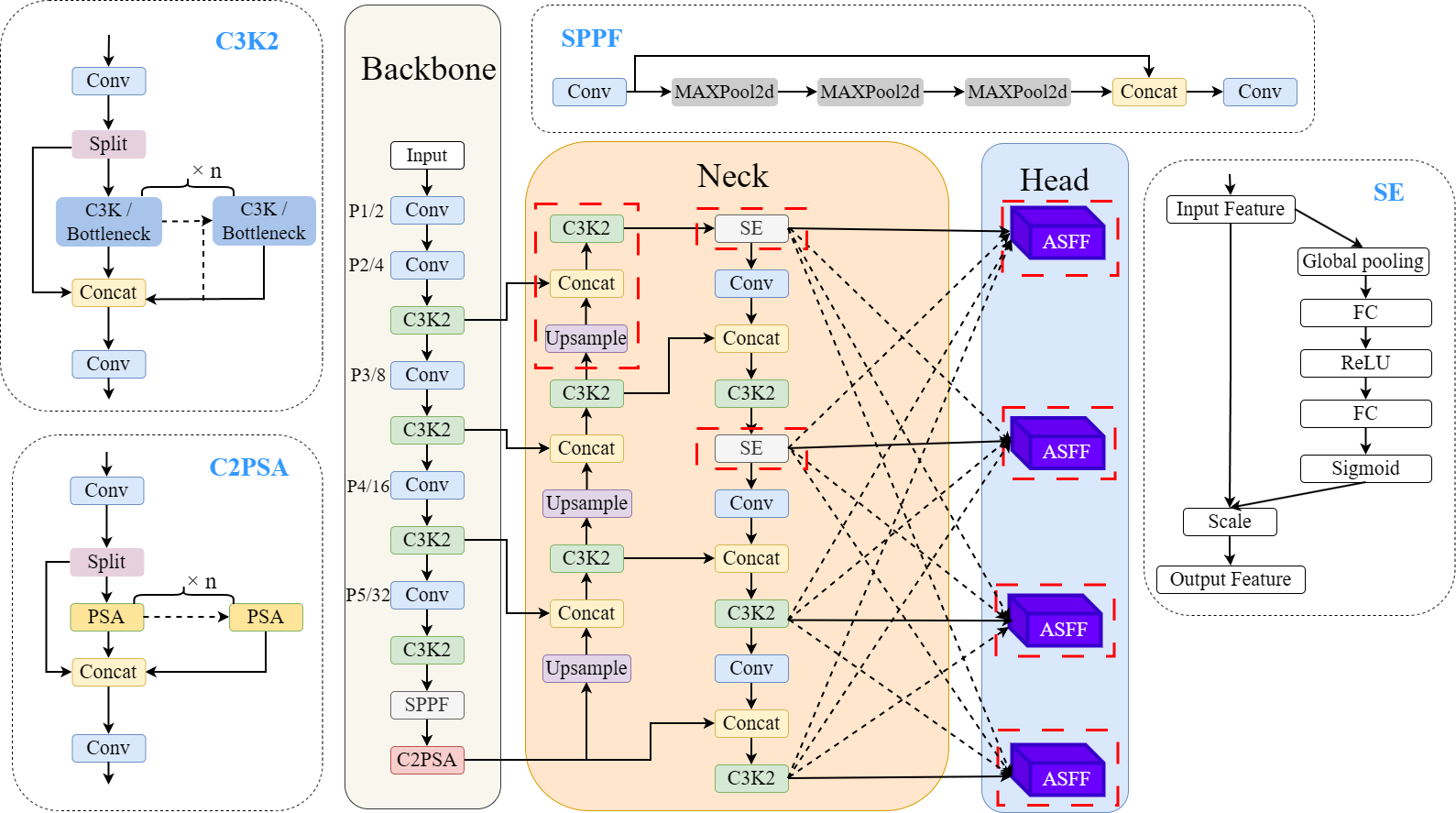
To address severe fire safety risks caused by electric motorcycles (EMs) and their batteries being illegally brought into building elevators, this paper presents a real-time EM detection and alarm system for elevator environments, built upon a multi-source information fusion framework and an improved YOLOv9. To elevate detection accuracy for EMs in confined elevator spaces, two core optimizations are embedded into the network: the Programmable Gradient Information (PGI) training strategy, and a lightweight Generalized Efficient Layer Aggregation Network (GELAN) backbone enhanced with depthwise separable convolution (DSConv). A dedicated dataset consisting of roughly 2,000 images is establish... More >

Graphical Abstract
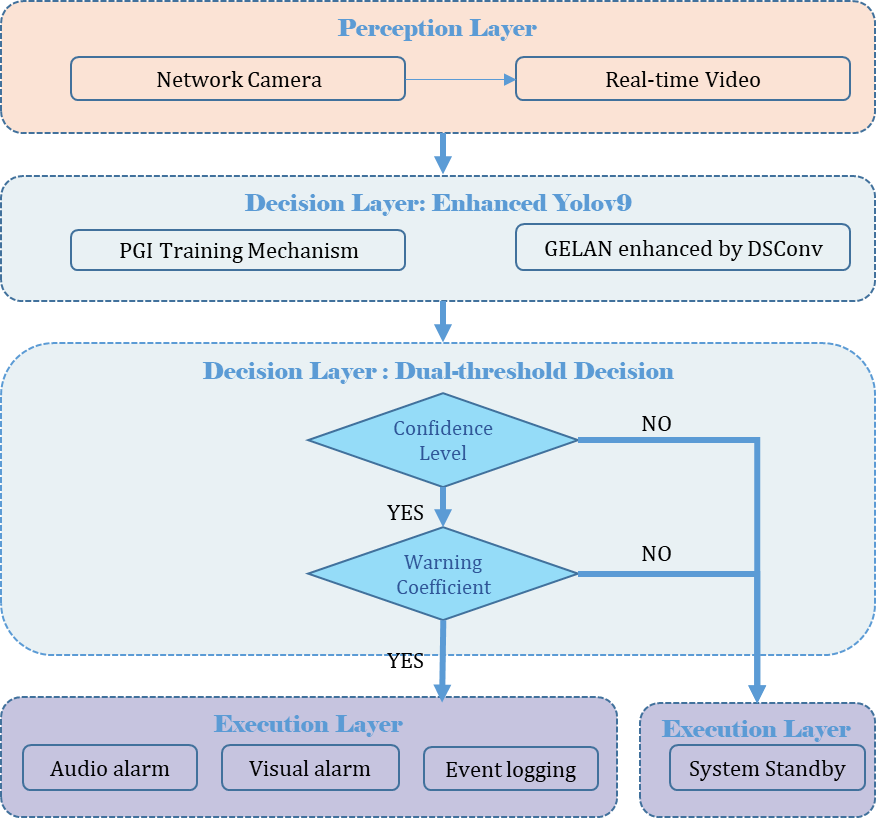
An Enhanced YOLOv9-Based Detection Method and Warning System for Indoor Electric Motorcycles
Open Access | Research Article | 13 June 2026
Lightweight SAR Ship Detection Network Based on Adaptive Spatial Feature Fusion and Channel Attention
Chinese Journal of Information Fusion | Volume 3, Issue 2: 138-152, 2026 | DOI: 10.62762/CJIF.2025.982112
Abstract
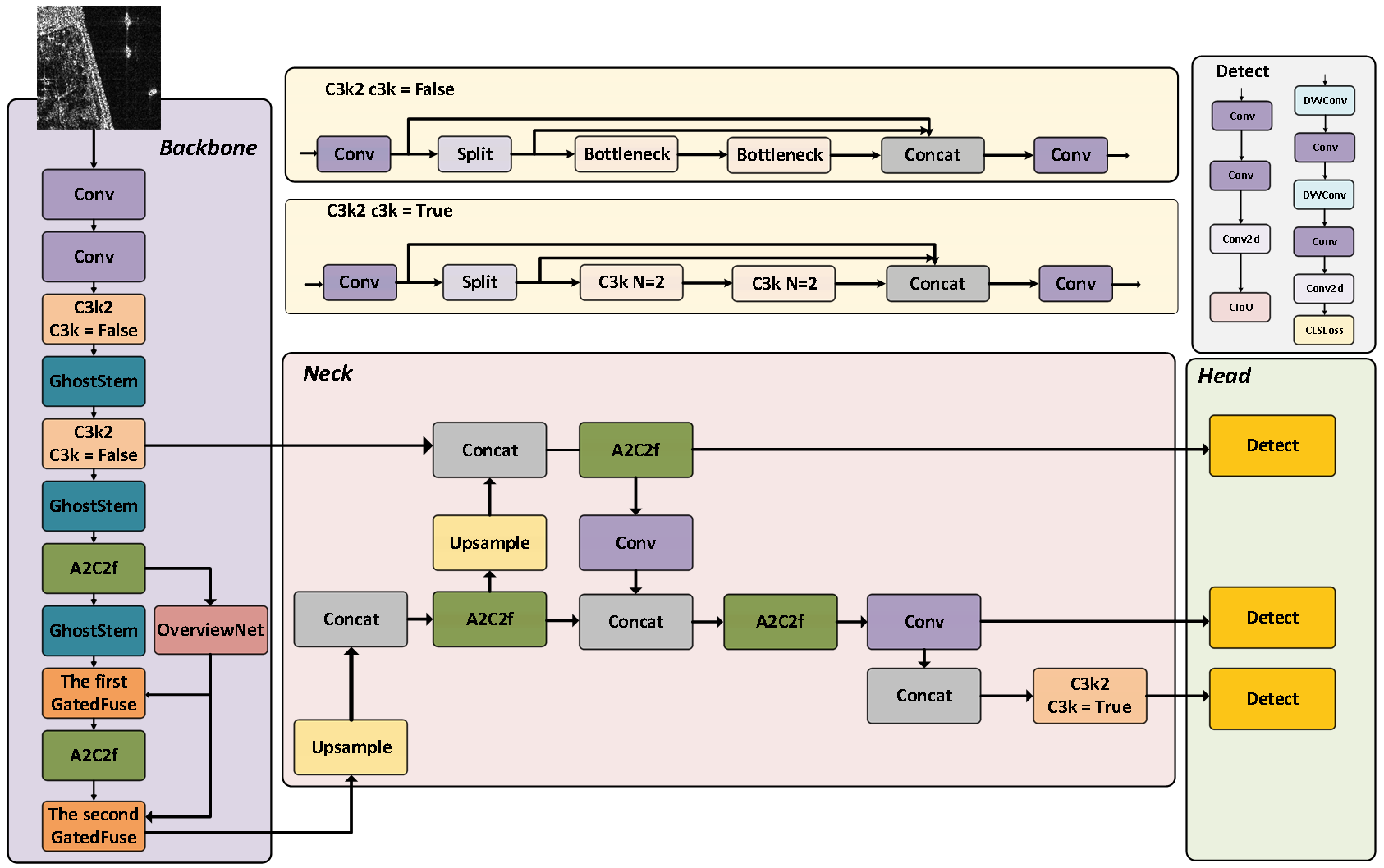
Ship detection in Synthetic Aperture Radar (SAR) images remains challenging due to coherent speckle noise, complex inshore clutter, and large variations in target scale, especially for tiny ships. To address these issues, this paper proposes a lightweight SAR ship detection network based on YOLOv11n. The proposed model introduces a high-resolution P2 detection branch to preserve fine spatial details that may be weakened during repeated downsampling. To improve multi-scale feature representation, a Four-Head Adaptive Spatial Feature Fusion (FASFF) structure is adopted to adaptively combine features from P2, P3, P4, and P5. In addition, the Squeeze-and-Excitation (SE) attention module is inser... More >

Graphical Abstract
Lightweight SAR Ship Detection Network Based on Adaptive Spatial Feature Fusion and Channel Attention
Open Access | Research Article | 11 June 2026
An Improved Yolov12-Based Object Detection Model For Ship Monitoring in SAR Images
Chinese Journal of Information Fusion | Volume 3, Issue 2: 125-137, 2026 | DOI: 10.62762/CJIF.2025.869982
Abstract
Ship detection in Synthetic Aperture Radar (SAR) imagery is crucial for maritime surveillance. However, it faces significant challenges, including small target sizes, complex sea clutter interference, and stringent requirements for computational efficiency in on-board processing. While detection frameworks like YOLOv12 have achieved a favorable balance between speed and accuracy by integrating attention mechanisms with convolutional neural networks (CNNs), their generic architectures are not optimized for the unique physical characteristics of SAR imagery and the scattering properties of ship targets. To develop a more suitable lightweight and high-precision model for SAR ship detection, thi... More >

Graphical Abstract
An Improved Yolov12-Based Object Detection Model For Ship Monitoring in SAR Images
Open Access | Research Article | 29 May 2026
Total Variation Diffusion-Guided Fuzzy Active Contour Model for Noisy Image Segmentation
Chinese Journal of Information Fusion | Volume 3, Issue 2: 93-124, 2026 | DOI: 10.62762/CJIF.2025.657389
Abstract
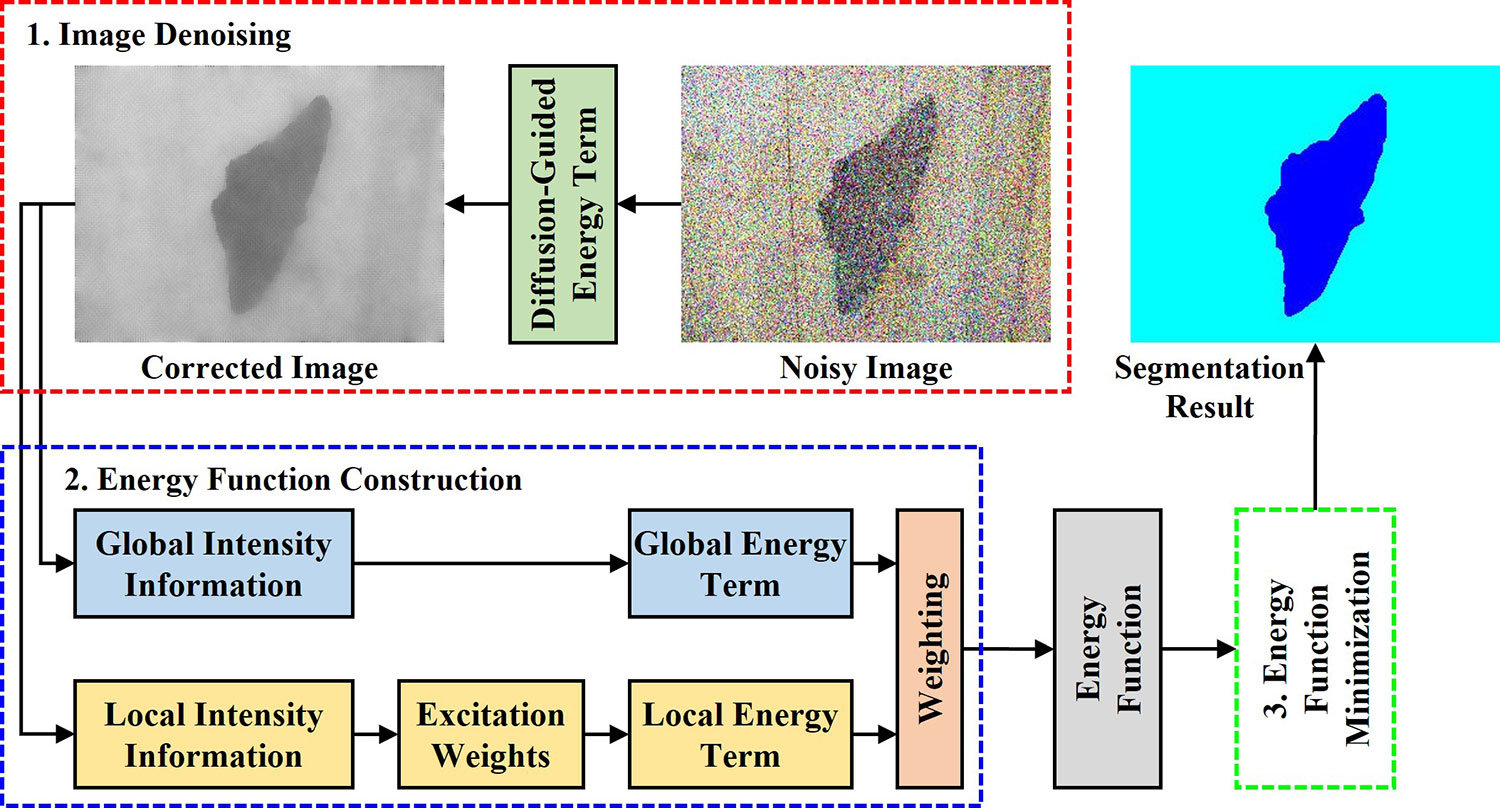
Image segmentation is an important task in computer vision and plays a critical role in many fields. Fuzzy Active Contour Model (FACM) has been widely applied in image segmentation because it can handle complex shape changes. However, it is difficult for current FACMs to obtain ideal performance when segmenting noisy images. Therefore, this paper proposes a Total Variation Diffusion-Guided Fuzzy Active Contour Model (TVDGFACM), which formulates noisy image segmentation as a hierarchical fusion process. Specifically, this model introduces total variation and adaptively fuses anisotropic and isotropic diffusion mechanisms to suppress noise interference while preserving image edges. Moreover, T... More >

Graphical Abstract
Total Variation Diffusion-Guided Fuzzy Active Contour Model for Noisy Image Segmentation
Open Access | Research Article | 17 April 2026
Salient Feature-Driven Bimodal Video Mimic Fusion Algorithm
Chinese Journal of Information Fusion | Volume 3, Issue 2: 74-92, 2026 | DOI: 10.62762/CJIF.2025.874404
Abstract
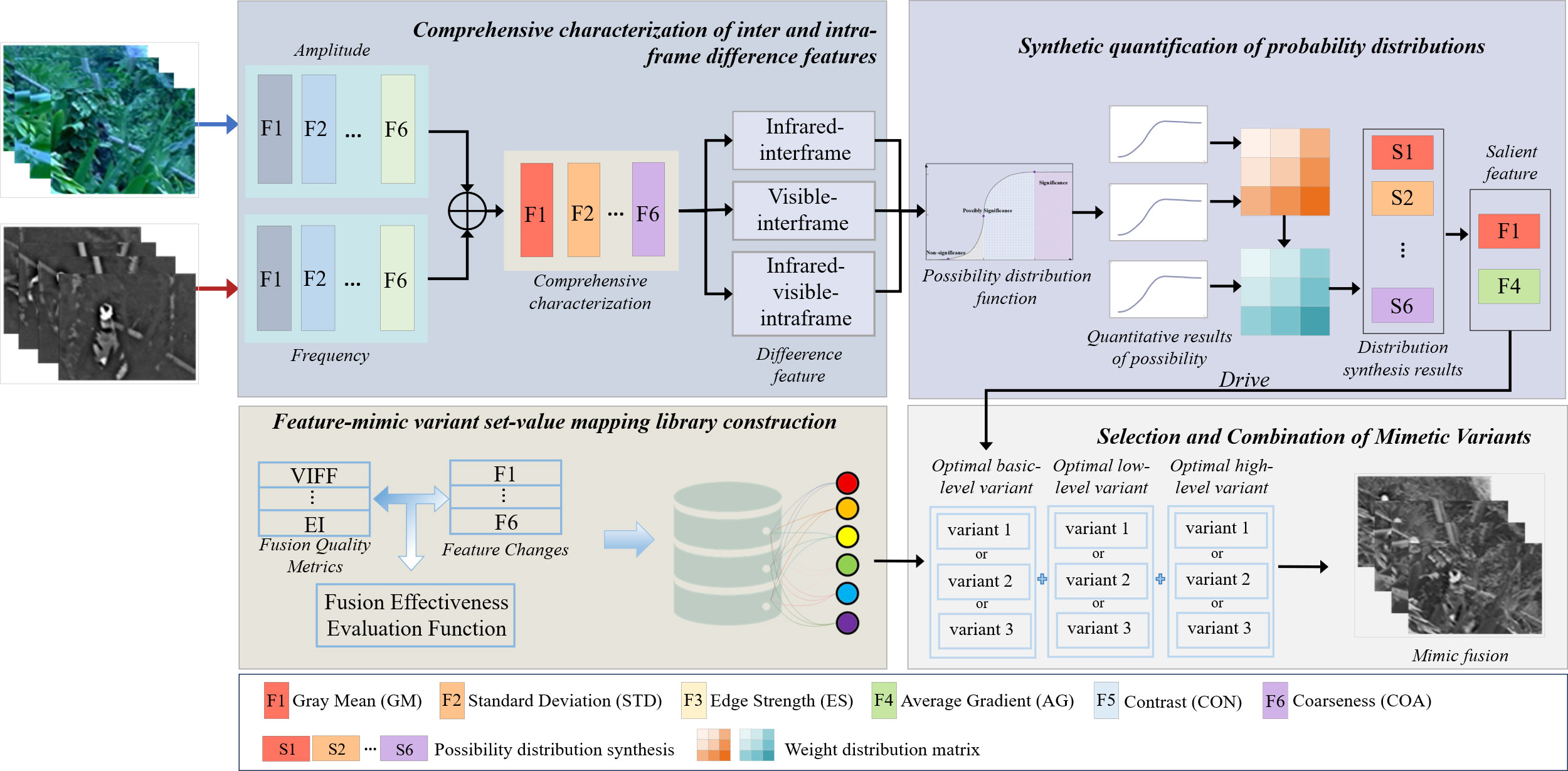
In complex dynamic environments, infrared and visible video sequences exhibit highly variable and unpredictable feature distributions. Existing fusion algorithms with fixed architectures cannot adaptively respond to these dynamic feature changes, resulting in blurred fusion outcomes and the loss of critical detail information. To address this limitation, we propose a salient feature-driven mimic fusion algorithm that continuously monitors feature variations and dynamically reconfigures the fusion architecture to maintain optimized fusion performance. First, we extract amplitude and frequency attributes from infrared and visible video features and perform weighted fusion to calculate single-m... More >

Graphical Abstract
Salient Feature-Driven Bimodal Video Mimic Fusion Algorithm