Volume 3, Issue 3


Volume 3, Issue 3 (September, 2026) – 5 articles
Citations: Crossref logo 0,   0   |   Viewed: 1336, Download: 385

Table of Contents

Open Access | Research Article | 29 September 2026
A Digital-Twin-Driven Cyber–Physical Framework for Real-Time Energy Management and Secure Operation of Renewable Energy Systems
Chinese Journal of Information Fusion | Volume 3, Issue 3: 226-237, 2026 | DOI: 10.62762/CJIF.2025.690291
Abstract
Real-time optimal operation and control acts as the intelligent core of renewable energy systems, yet intermittent generation and time-varying loads introduce uncertainties that hinder secure and efficient operation. To address this issue, this paper proposes a digital-twin-driven cyber–physical framework for real-time energy management and secure operation, enabling tight synchronization and closed-loop interaction between physical assets and their digital counterparts. A simplified multi-source data fusion Transformer is developed to improve forecasting accuracy by continuously integrating historical power data and key environmental factors (e.g., temperature, wind speed, and solar radia... More >

Graphical Abstract
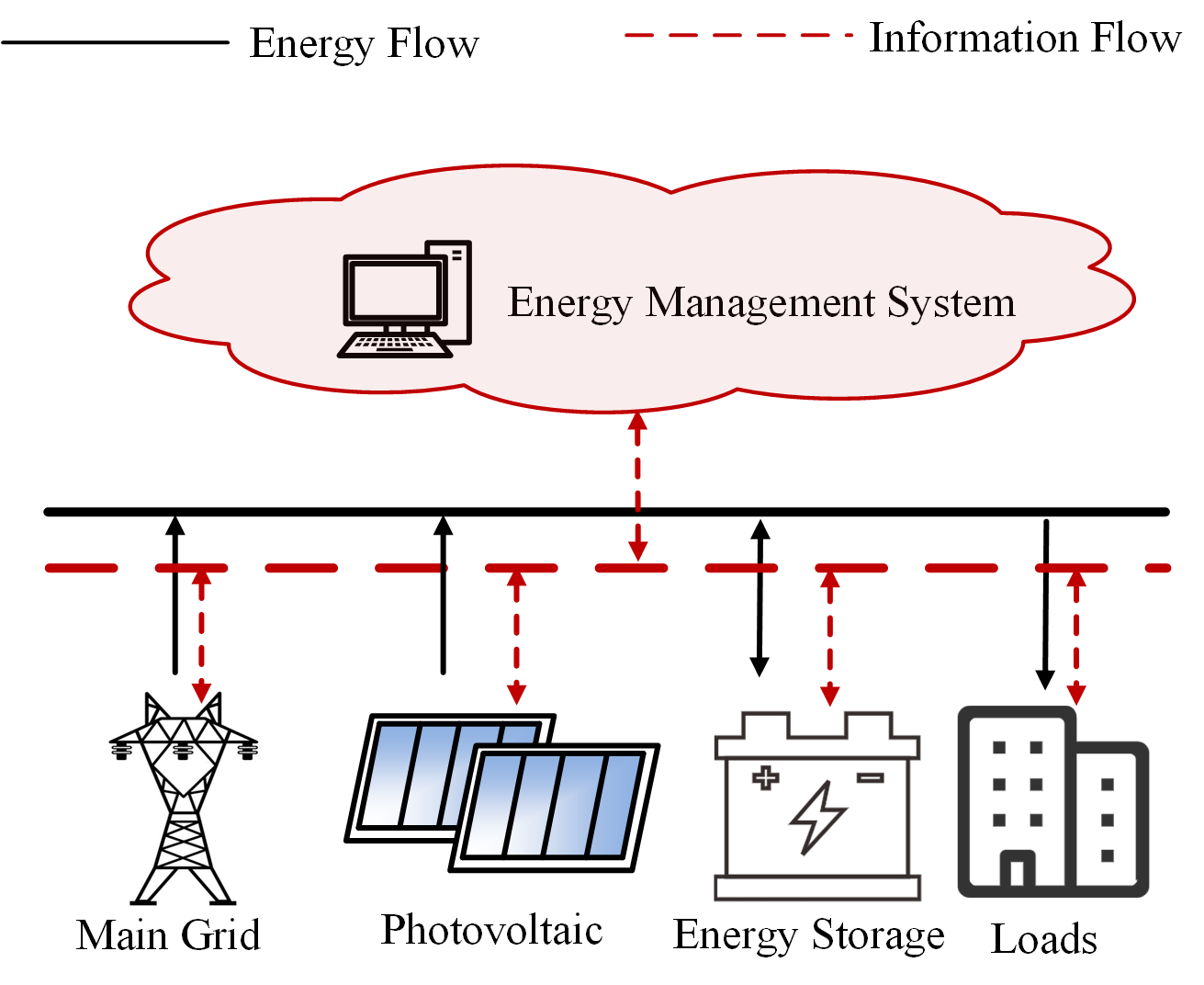
A Digital-Twin-Driven Cyber–Physical Framework for Real-Time Energy Management and Secure Operation of Renewable Energy Systems
Open Access | Research Article | 28 September 2026
Design and Verification of a Centralized Multi-Agent Visual SLAM System Based on Cloud Native Architecture
Chinese Journal of Information Fusion | Volume 3, Issue 3: 209-225, 2026 | DOI: 10.62762/CJIF.2026.632794
Abstract
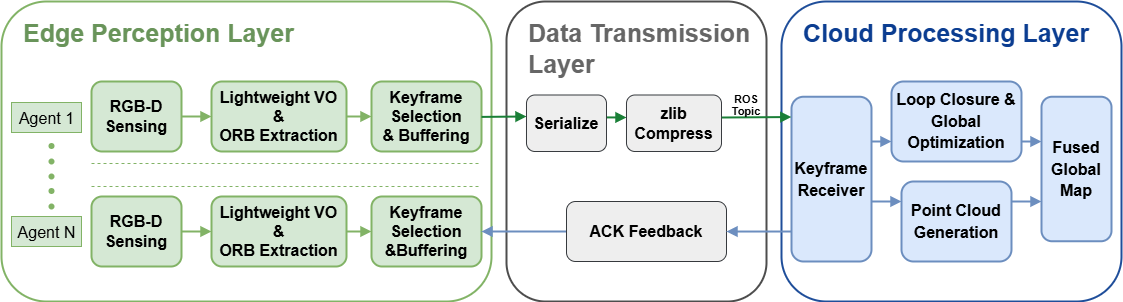
To alleviate the computational and memory pressure faced by resource-constrained edge platforms in large-scale homogeneous multi-agent visual SLAM tasks, this paper designs and validates a centralized homogeneous multi-agent visual SLAM system based on a cloud-native architecture. The system adopts a cloud-edge functional decoupling strategy: real-time perception modules, such as visual odometry, keyframe extraction, and local tracking, are retained on the edge side, while computationally intensive tasks, including loop-closure detection, pose graph optimization, global map management, and multi-source map fusion, are centrally executed in the cloud. To accommodate bandwidth fluctuations, tr... More >

Graphical Abstract
Design and Verification of a Centralized Multi-Agent Visual SLAM System Based on Cloud Native Architecture
Open Access | Research Article | 27 September 2026
Multi-Dimensional Visual Feature Fusion for UAV Maneuver Recognition in Power Transmission Line Protection
Chinese Journal of Information Fusion | Volume 3, Issue 3: 189-208, 2026 | DOI: 10.62762/CJIF.2026.661309
Abstract
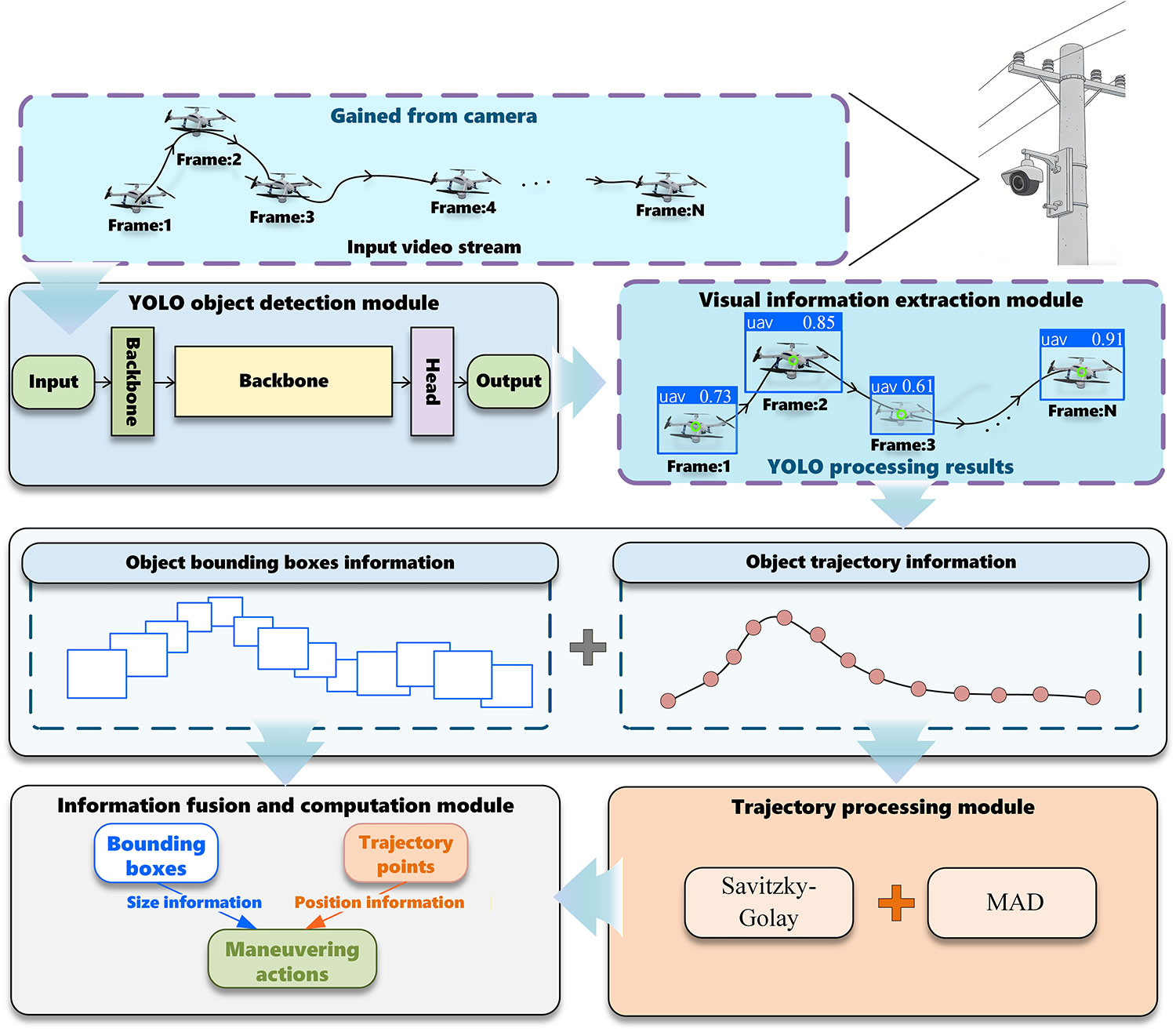
The increasing popularity of civilian unmanned aerial vehicles (UAVs) poses serious safety challenges to low-altitude airspace near power transmission and distribution lines. Existing monitoring technologies rely heavily on expensive radar or radio frequency devices that are susceptible to interference, while mainstream vision schemes are typically limited to object detection and fail to analyze flight intentions. To address these problems, this paper proposes a UAV maneuver recognition method for transmission and distribution line protection, providing precise semantic support for action-based risk warnings through multi-dimensional visual feature fusion. First, a YOLO object detection mode... More >

Graphical Abstract
Multi-Dimensional Visual Feature Fusion for UAV Maneuver Recognition in Power Transmission Line Protection
Open Access | Research Article | 26 September 2026
Adaptive Field-of-View Restriction Based on Sigmoid and Bézier Smoothing Control Functions
Chinese Journal of Information Fusion | Volume 3, Issue 3: 178-188, 2026 | DOI: 10.62762/CJIF.2025.472730
Abstract
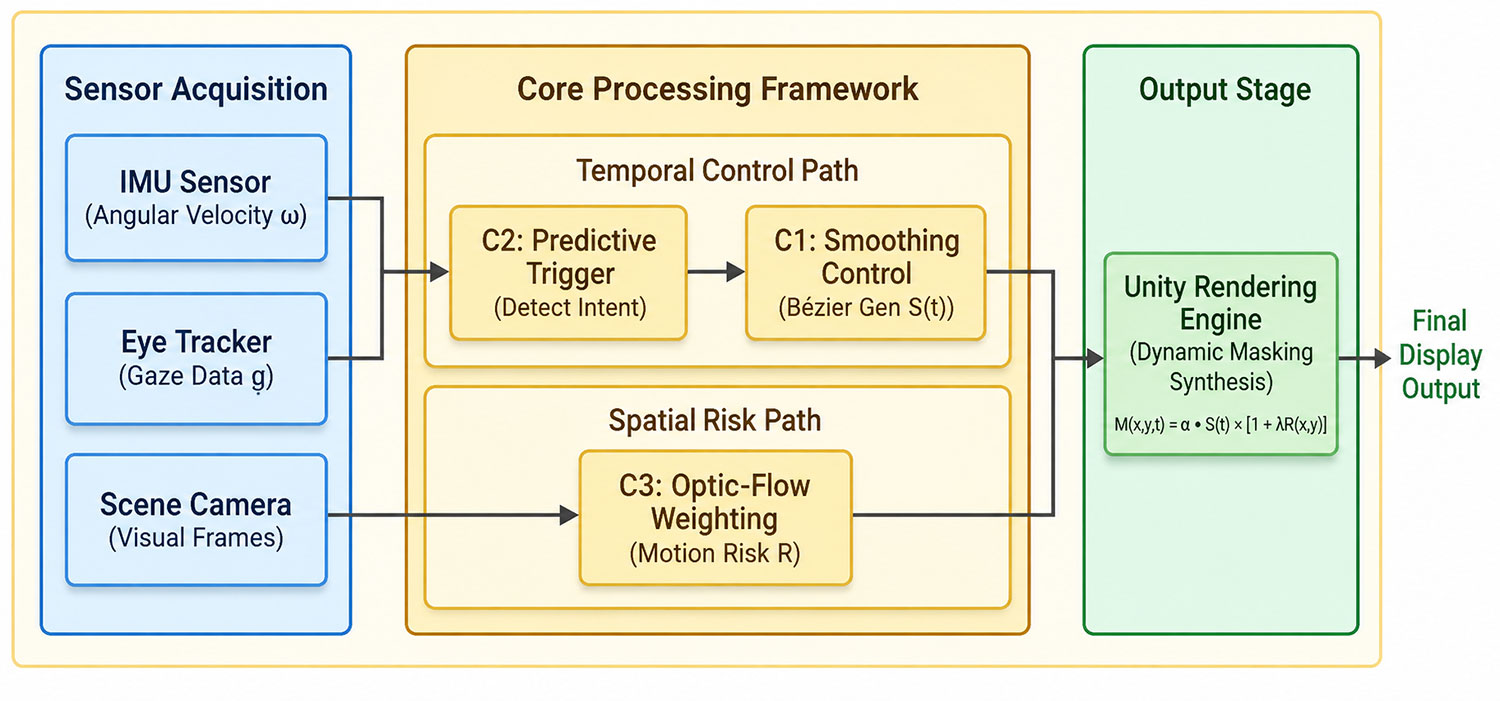
Virtual Reality (VR) systems require extremely low latency and accurate user intent prediction to ensure immersion. However, traditional visual modulation techniques primarily rely on single-sensor inputs (e.g., IMU angular velocity), which suffer from inherent mechanical delays and fail to capture complex spatial-temporal dynamics, ultimately leading to severe visually induced motion sickness (VIMS). Existing methods lack effective fusion of multi-source heterogeneous data, resulting in delayed responses and abrupt visual transitions. To address this, this study proposes a novel spatio-temporal information fusion framework for adaptive visual modulation in VR. The proposed architecture deep... More >

Graphical Abstract
Adaptive Field-of-View Restriction Based on Sigmoid and Bézier Smoothing Control Functions
Open Access | Research Article | 25 September 2026
A Multi-Scale UAV Cluster Detection and Counting Framework Based on Multi-Source Information Fusion and Enhanced YOLOv9
Chinese Journal of Information Fusion | Volume 3, Issue 3: 166-177, 2026 | DOI: 10.62762/CJIF.2026.233582
Abstract
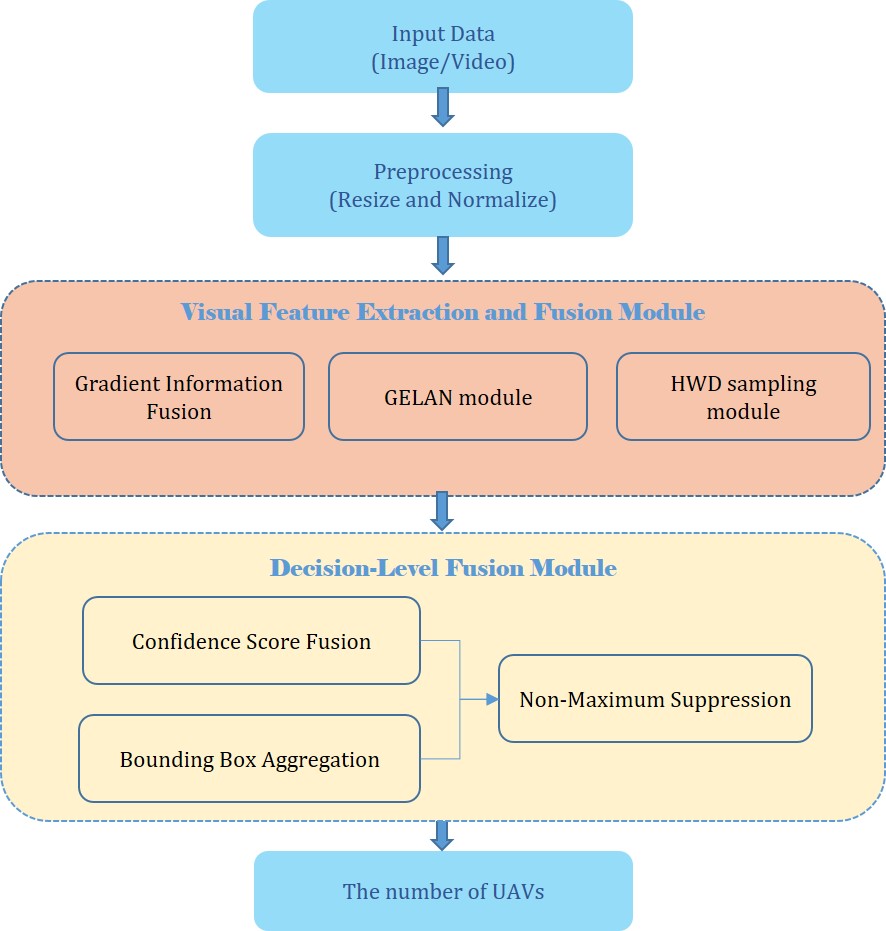
To address the safety hazards posed by unauthorized "black flight" of unmanned aerial vehicle (UAV) clusters, as well as the limitations of existing detection methods in tiny target recognition and complex environment adaptability, this paper proposes a real-time detection and counting method based on a feature fusion framework. The core contribution of this work is a novel multi-level fusion architecture that aggregates multi-scale visual features to enhance detection robustness under challenging conditions. First, we construct a multi scene UAV data set containing 7,113 images, and design a dedicated feature fusion module based on improved YOLOv9 backbone. The Haar Wavelet Down-sampling (H... More >

Graphical Abstract
A Multi-Scale UAV Cluster Detection and Counting Framework Based on Multi-Source Information Fusion and Enhanced YOLOv9