Volume 2, Issue 3 (In Progress)


In Progress
Citations: Crossref logo 0,   0   |   Viewed: 1272, Download: 497

Table of Contents

Open Access | Perspective | 18 August 2026
Sustainable Aviation Fuel 2.0: Carbon- and Contrail-Intensity Managed Refineries for Climate-Smart Aviation
Journal of Chemical Engineering and Renewable Fuels | Volume 2, Issue 3: 82-90, 2026 | DOI: 10.62762/JCERF.2026.855881
Abstract
Sustainable aviation fuel (SAF) is entering the mandate era while still representing a sub-percent share of global aviation fuel. This Perspective argues that the next bottleneck is not only production capacity, but climate allocation: which carbon sources, hydrogen, renewable electrons and molecular structures should become jet fuel, and where that fuel should be deployed to deliver the greatest avoided climate impact. SAF 2.0 is proposed as a carbon- and contrail-intensity managed refinery–airport architecture that links certified HEFA, Fischer–Tropsch, alcohol-to-jet, power-to-liquid/e-SAF and co-processing modules with molecular finishing, digital monitoring, reporting and verificati... More >

Graphical Abstract
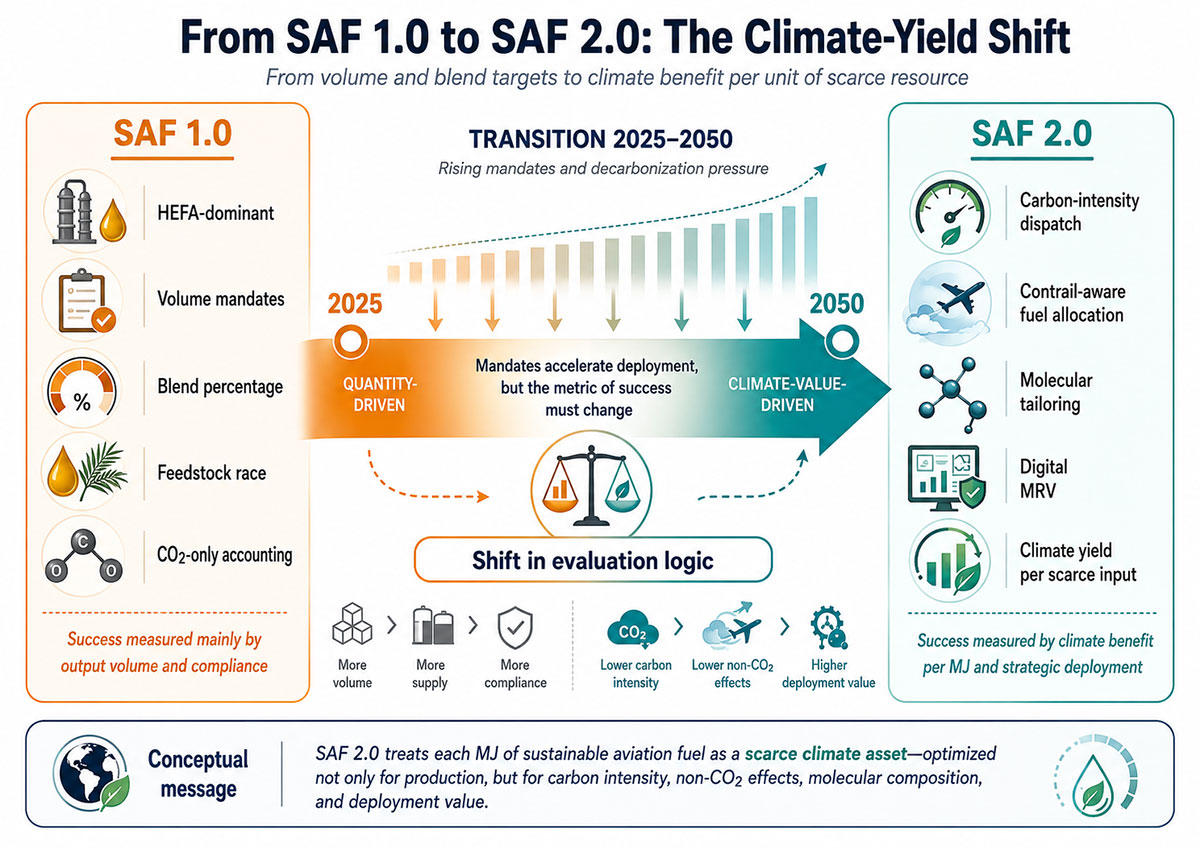
Sustainable Aviation Fuel 2.0: Carbon- and Contrail-Intensity Managed Refineries for Climate-Smart Aviation
Open Access | Communication | 12 August 2026
On the Structural Limitations of Neural Networks for Modeling Nonlinear CO$_2$ Adsorption Equilibria
Journal of Chemical Engineering and Renewable Fuels | Volume 2, Issue 3: 78-81, 2026 | DOI: 10.62762/JCERF.2026.725231
Abstract
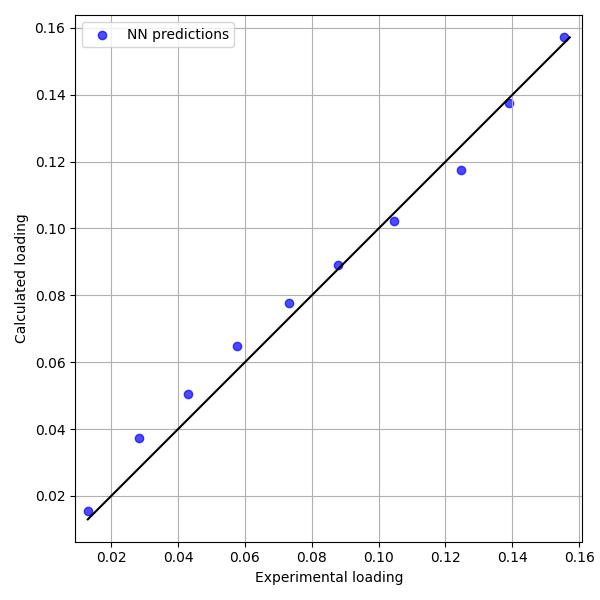
Machine learning has emerged as a flexible alternative for modeling adsorption equilibrium. However, its limitations in highly nonlinear systems remain unclear. In this work, a feedforward neural network was evaluated using experimental adsorption data for CO$_2$ and N$_2$ on zeolite 13X taken from the literature. While the model accurately reproduces N$_2$ adsorption behavior, it exhibits systematic deviations for CO$_2$, particularly at higher loadings. Training diagnostics reveal a persistent validation loss plateau, indicating a limitation in the model's ability to further reduce prediction error. These results suggest that the discrepancy is not due to data quality or overfitting, but r... More >

Graphical Abstract
On the Structural Limitations of Neural Networks for Modeling Nonlinear CO$_2$ Adsorption Equilibria
Open Access | Research Article | 02 June 2026
Investigation on the Feasibility to Produce Jet-A1 Aviation Fuel by Co-hydroprocessing Petroleum Kerosene with POME and Cardanol
Journal of Chemical Engineering and Renewable Fuels | Volume 2, Issue 3: 71-77, 2026 | DOI: 10.62762/JCERF.2026.810053
Abstract
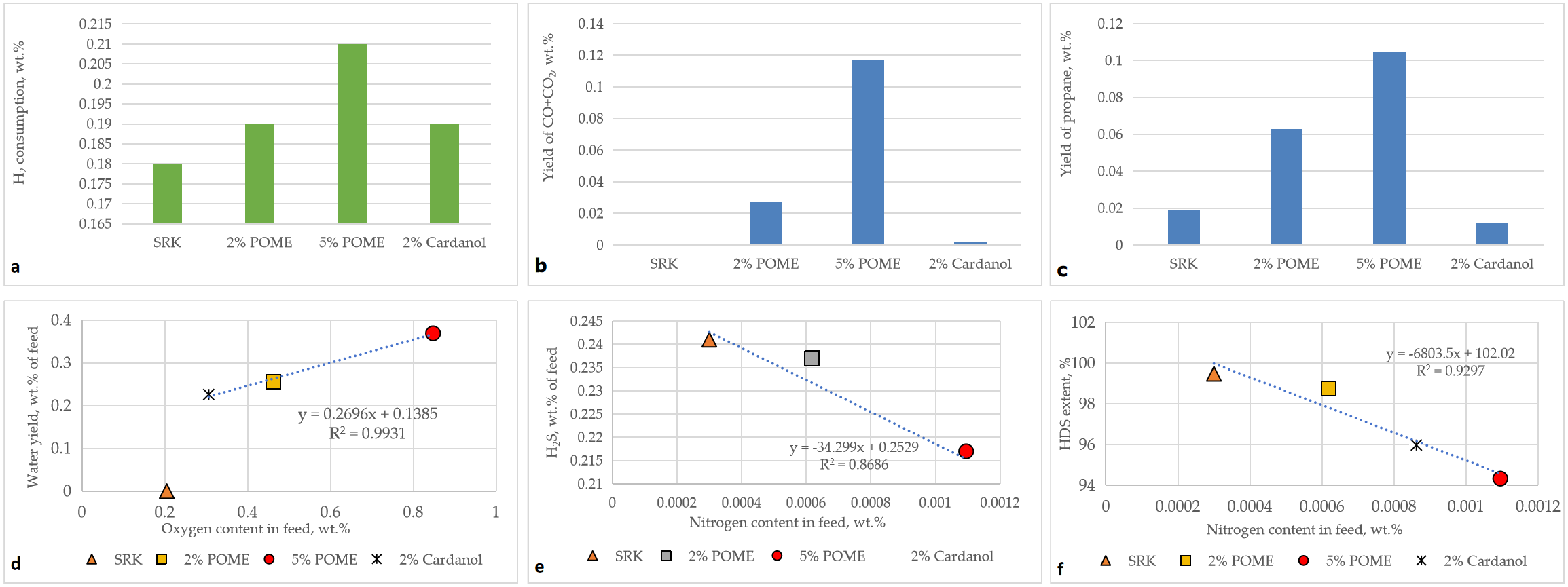
Petroleum kerosene (SRK) and its blends with the bio-components palm oil mill effluent (POME) and cardanol in amount of 2 and 5\% were hydrotreated on commercial Co-Mo catalyst in a laboratory trickle bed reactor at temperature of 290°C, liquid hourly space velocity (LHSV) of 1.28 h$^{-1}$, total pressure of 3.0 MPa, H$_2$/Oil ratio of 290 Nm$^3$/Nm$^3$ to simulate co-processing aiming at production of sustainable aviation fuel (SAF) in the existing hydrotreating technology employed to manufacture petroleum based Jet-A1 aviation fuel. It was found that increased hydrogen consumption during co-processing bio-feeds was mainly related to hydrodeoxygenation reaction leading to production of H$_... More >

Graphical Abstract
Investigation on the Feasibility to Produce Jet-A1 Aviation Fuel by Co-hydroprocessing Petroleum Kerosene with POME and Cardanol