
Journal of Mathematical Studies of Literature | Volume 1, Issue 1: 28-48, 2026 | DOI: 10.62762/JMSL.2026.283501
Abstract
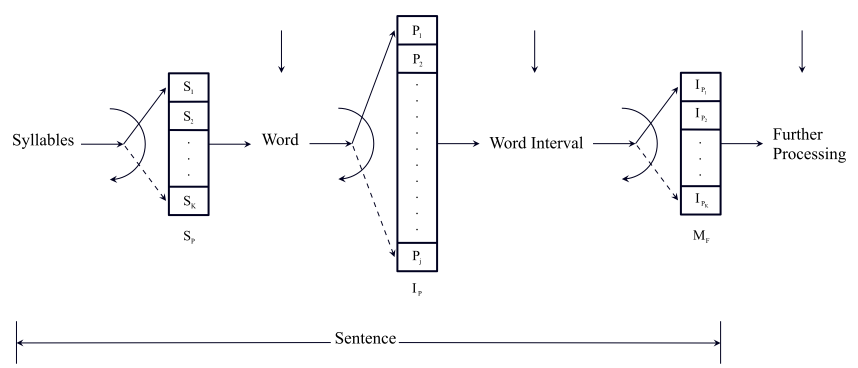
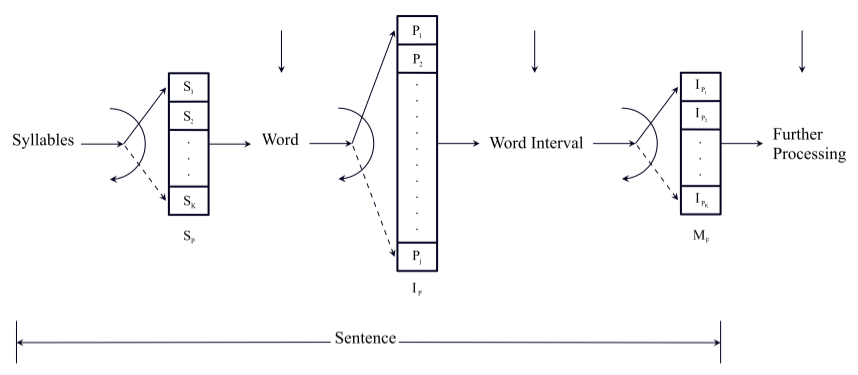
The hexameter of Greek and Latin epic and the Italian hendecasyllable are usually described in terms of syllables, feet and accents. This paper tests a different hypothesis: that both verses were shaped, without the poets being aware of it, by the number of words a line can hold, a number close to the central value of Miller's $7 \pm 2$ law. On this view the two metres are an imprint of short-term memory, the stage through which information must pass before it is stored in long-term memory and later recalled, as was required in societies where poetry was learned and recited by heart. The hypothesis is examined on Virgil's Aeneid and Lucretius' De Rerum Natura, both written in Latin hexameter... More >
Graphical Abstract