

ICCK

Syed Atif Hussain

Department of Computer Science, College of Electrical and Mechanical Engineering (E&ME), National University of Sciences and Technology (NUST), Rawalpindi 46000, Pakistan

Section 01

Academic Profile

No academic profile information available at the moment.

Section 02

ICCK Publications

Free Access | Research Article | 08 April 2026 | Cited: Crossref logo  7 , Scopus 4
Improving Financial Forecasting with a Synergistic LLM-Transformer Architecture: A Hybrid Approach to Stock Price Prediction
ICCK Transactions on Intelligent Systematics | Volume 3, Issue 2: 70-80, 2026 | DOI: 10.62762/TIS.2025.976754
Abstract
This study proposes a novel hybrid deep learning framework that integrates a Large Language Model (LLM) with a Transformer architecture for stock price forecasting. The research addresses a critical theoretical gap in existing approaches that empirically combine textual and numerical data without a formal understanding of their interaction mechanisms. We conceptualize a prompt-based LLM as a mathematically defined signal generator, capable of extracting directional market sentiment and an associated confidence score from financial news. These signals are then dynamically fused with structured historical price features through a noise-robust gating mechanism, enabling the Transformer to adapt... More >

Graphical Abstract
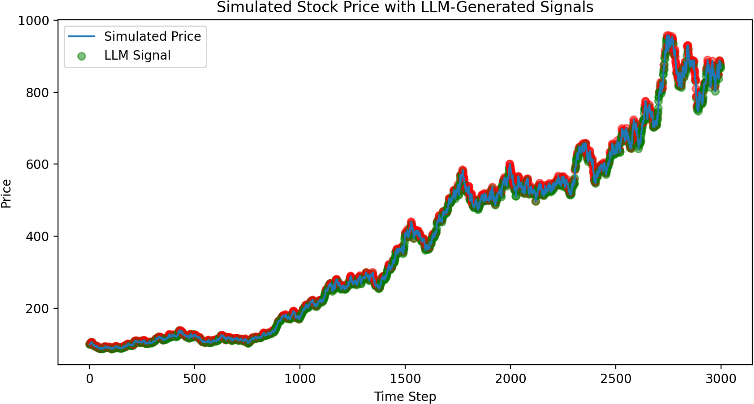
Improving Financial Forecasting with a Synergistic LLM-Transformer Architecture: A Hybrid Approach to Stock Price Prediction
Open Access | Research Article | 08 February 2026 | Cited: Crossref logo  1 , Scopus 1
Topological Optimization of a 2D Microfluidic Channel for Particle Separation
ICCK Transactions on Advanced Computing and Systems | Volume 2, Issue 2: 74-84, 2026 | DOI: 10.62762/TACS.2025.192275
Abstract
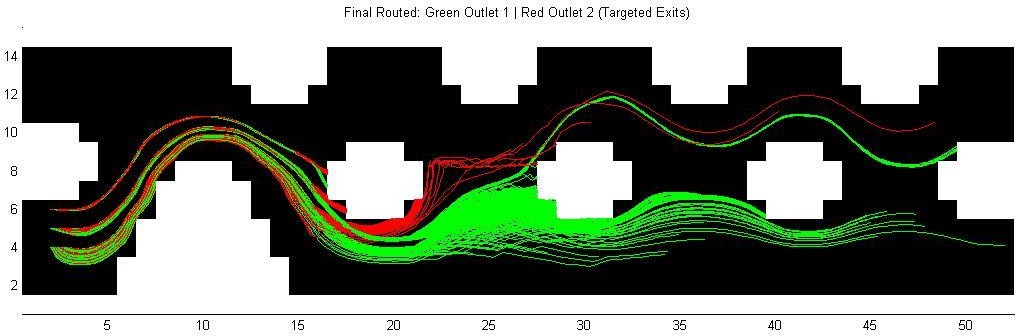
This study presents an advanced computational framework that integrates a finite-difference Navier--Stokes solver, a SIMP-based topology optimization engine, and a Lagrangian particle advection module into a unified, iteratively coupled pipeline for physics-driven geometric design. The framework autonomously evolves the internal material distribution of a 2D microchannel by minimizing an objective function that directly quantifies particle mis-sorting, eliminating reliance on manual heuristic design and external actuation forces. Applied to the problem of passive microfluidic particle separation, the computational approach generated manufacturable, binary-material topologies across five opti... More >

Graphical Abstract
Topological Optimization of a 2D Microfluidic Channel for Particle Separation
Open Access | Research Article | 07 January 2026 | Cited: Crossref logo  1 , Scopus 1
A Decision Support System for Reverse Logistics Network Design: Integrating Multi-Factorial Forecasting of Solar Panel End-of-Life Assets
ICCK Transactions on Emerging Topics in Artificial Intelligence | Volume 3, Issue 1: 33-44, 2026 | DOI: 10.62762/TETAI.2025.782328
Abstract
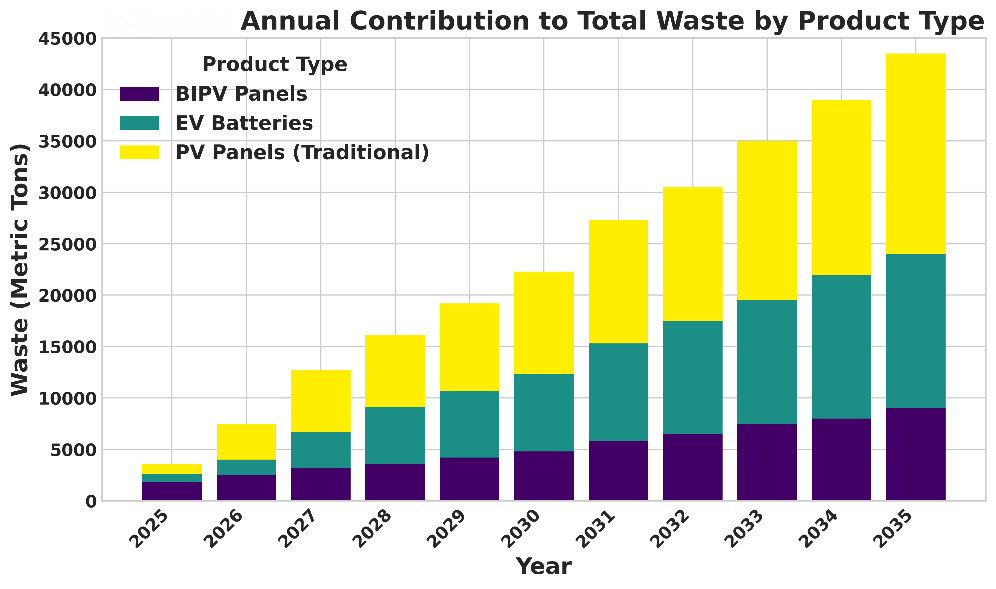
The rapid global deployment of solar photovoltaic (PV) technology presents a significant and often overlooked challenge: the effective management of end-of-life (EoL) solar panels. This issue is particularly acute in developing and emerging economies, where established reverse logistics infrastructure is often lacking. A critical limitation in current academic literature is the oversimplified forecasting of EoL waste streams, which fails to account for the dynamic interplay of socio-economic, policy, and environmental variables. To bridge this gap, we propose a novel decision support system (DSS) for the design of a sustainable reverse logistics network. Our system uniquely integrates a hybr... More >

Graphical Abstract
A Decision Support System for Reverse Logistics Network Design: Integrating Multi-Factorial Forecasting of Solar Panel End-of-Life Assets