ICCK

Mohamed Mahmoud

King Fahd University of Petroleum and Minerals, SA

Section 01

Academic Profile

No academic profile information available at the moment.

Section 02

ICCK Publications

Export all 2 BibTeX RIS
Open Access | Review Article | 01 October 2026
Chemical Pre-Flush and Additive Strategies to Enhance CO$_2$ Solubility and Injectivity in Deep Saline Aquifers: Mechanisms, Evidence, and Field Readiness
Reservoir Science | Volume 3, Issue 1: 1-25, 2026 | DOI: 10.62762/RS.2026.344933
Abstract
Deep saline aquifers offer the largest global capacity potential for geologic carbon storage, yet storage performance is frequently constrained by coupled limitations on \COtwo{} dissolution (solubility trapping) and injectivity under high-salinity conditions. Elevated ionic strength suppresses \COtwo{} solubility via ``salting-out'' effects. Meanwhile, near-wellbore dry-out during injection of dry or undersaturated \COtwo{} can concentrate brine and precipitate salts, reducing permeability and injectivity. Mineralogy and \COtwo{}-brine-rock wettability further control multiphase flow topology, interfacial area for dissolution, capillary trapping, and compatibility of additives with reservoi... More >

Graphical Abstract
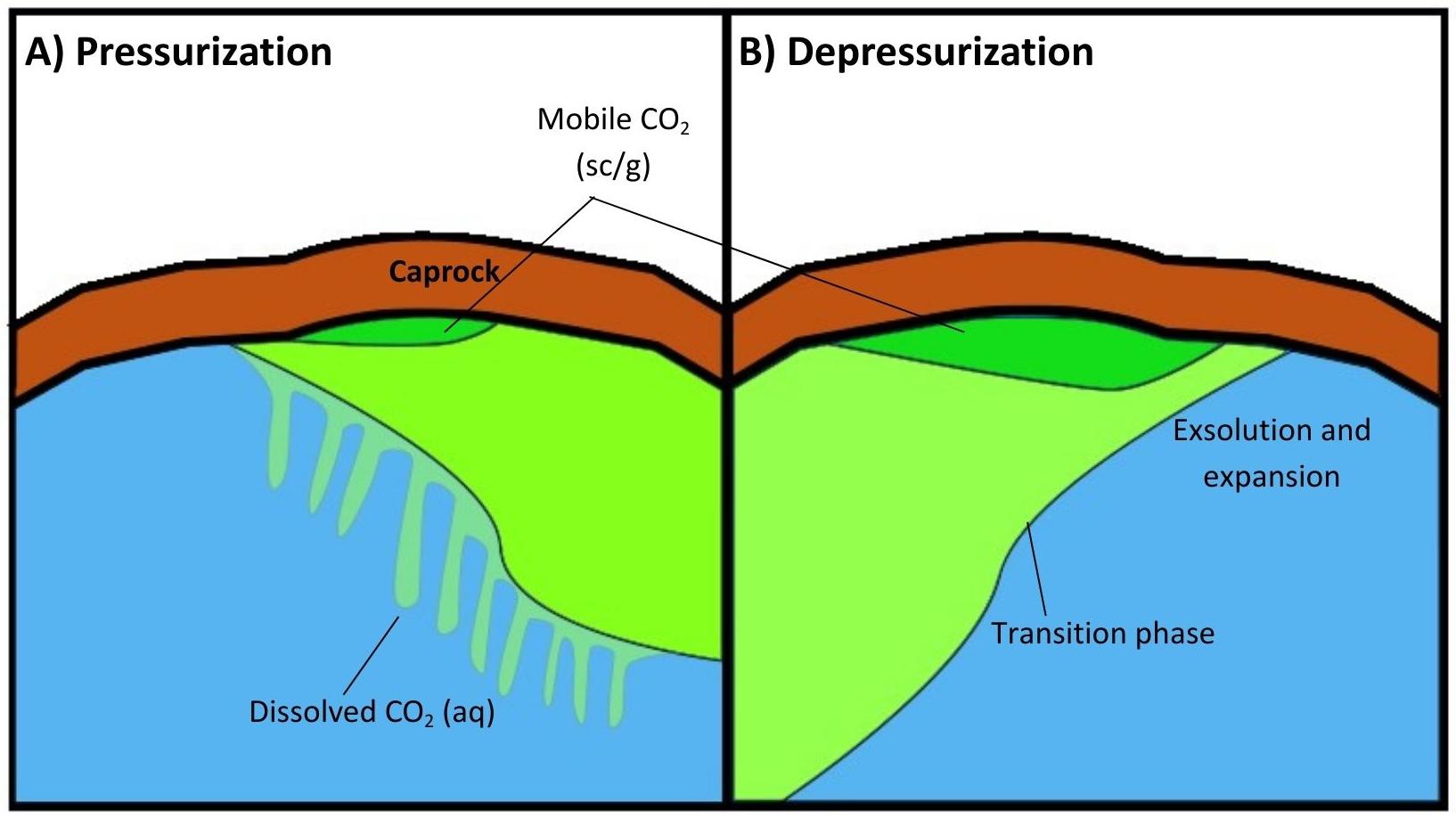
Chemical Pre-Flush and Additive Strategies to Enhance CO$_2$ Solubility and Injectivity in Deep Saline Aquifers: Mechanisms, Evidence, and Field Readiness
Open Access | Review Article | 25 September 2026
In-situ Hydrogen Production in Natural Gas Reservoirs: From Methane Conversion Mechanisms to Techno-economic and Environmental Feasibility
Reservoir Science | Volume 2, Issue 4: 324-364, 2026 | DOI: 10.62762/RS.2026.563836
Abstract
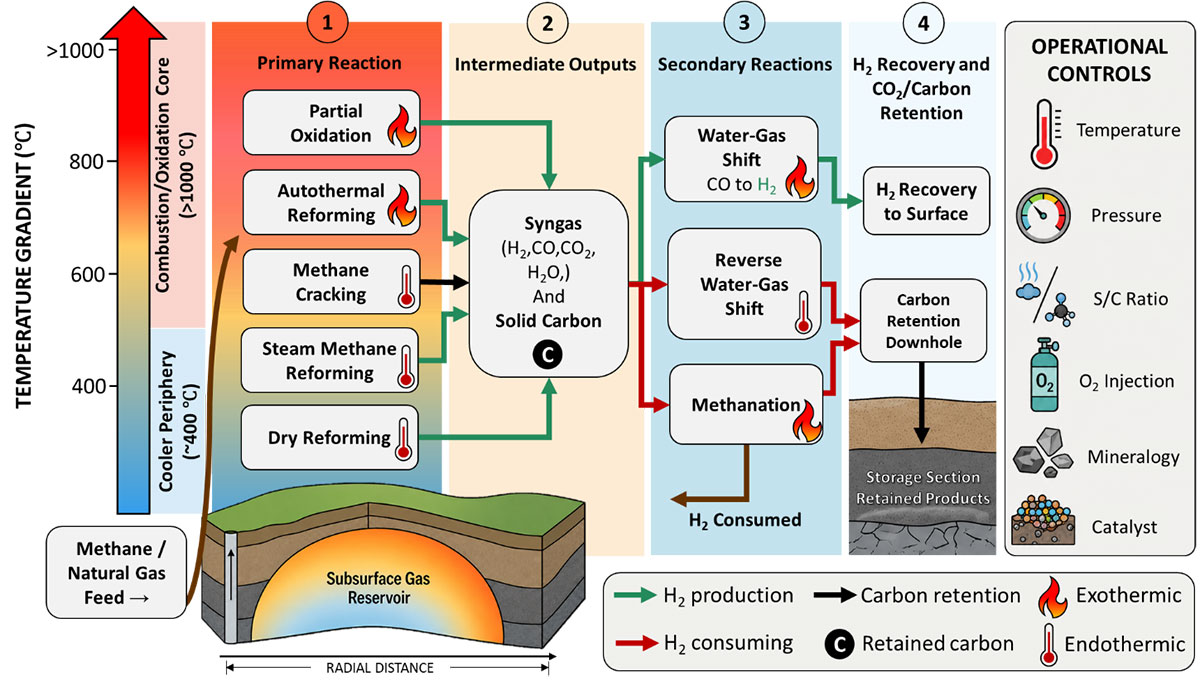
In-situ hydrogen production from natural gas reservoirs (IHP-NG) is an emerging pathway for low-carbon hydrogen by converting methane-rich subsurface resources while retaining carbon-bearing byproducts underground. This review critically evaluates the reaction mechanisms, experimental and modelling evidence, techno-economic position, life-cycle implications, and deployment challenges of IHP-NG. Unlike heavy-oil in-situ combustion gasification, IHP-NG is governed mainly by methane conversion reactions, including steam methane reforming, partial oxidation, autothermal reforming, methane cracking, dry reforming, and water--gas shift, alongside competing pathways such as methanation, reverse wat... More >

Graphical Abstract
In-situ Hydrogen Production in Natural Gas Reservoirs: From Methane Conversion Mechanisms to Techno-economic and Environmental Feasibility