


Chemical Pre-Flush and Additive Strategies to Enhance CO$_2$ Solubility and Injectivity in Deep Saline Aquifers: Mechanisms, Evidence, and Field Readiness




Article Information
Abstract
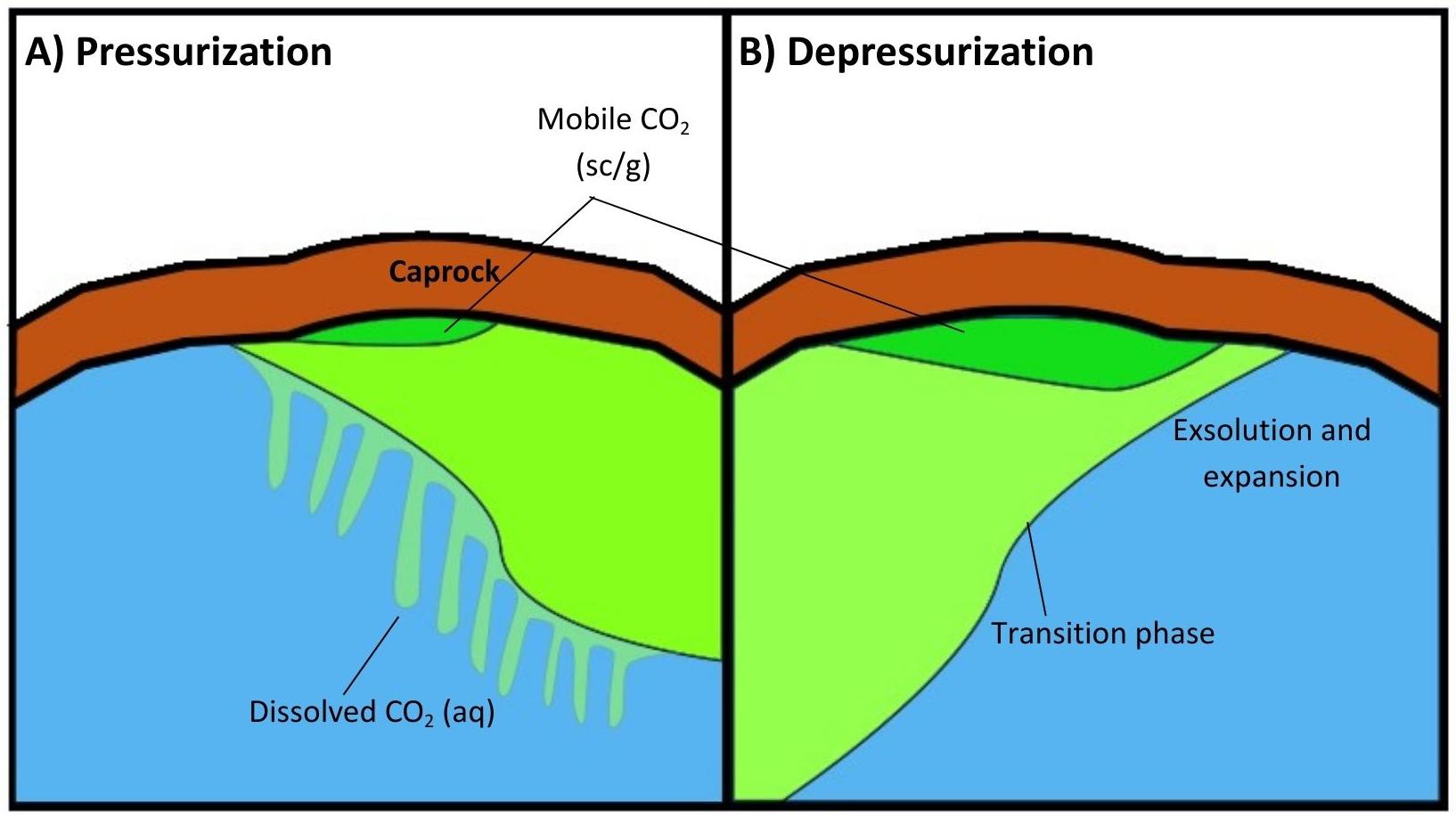
Deep saline aquifers offer the largest global capacity potential for geologic carbon storage, yet storage performance is frequently constrained by coupled limitations on \COtwo{} dissolution (solubility trapping) and injectivity under high-salinity conditions. Elevated ionic strength suppresses \COtwo{} solubility via ``salting-out'' effects. Meanwhile, near-wellbore dry-out during injection of dry or undersaturated \COtwo{} can concentrate brine and precipitate salts, reducing permeability and injectivity. Mineralogy and \COtwo{}-brine-rock wettability further control multiphase flow topology, interfacial area for dissolution, capillary trapping, and compatibility of additives with reservoir surfaces. This review critically evaluates chemical pre-flush and additive-enabled conditioning strategies intended to (i) increase local aqueous \COtwo{} dissolution capacity, (ii) mitigate or prevent dry-out-driven salt precipitation and near-wellbore formation damage, and (iii) enhance \COtwo{}-brine contact through mobility control. We synthesize and compare evidence for four strategy families: (1) freshwater and engineered low-salinity (LoSal) pre-flush slugs and intermittent re-wetting; (2) chelating agents (e.g., EDTA/GLDA/DTPA) that complex multivalent cations and alter dissolution/precipitation pathways; (3) surfactant-derived \COtwo{} foams, including \COtwo{}-soluble surfactants designed for foam generation at the displacement front with achievable injectivity; and (4) nanoparticle-assisted and hybrid foam systems that extend foam stability under harsh salinity and temperature.
Graphical Abstract
Keywords
Data Availability Statement
Funding
Conflicts of Interest
AI Use Statement
Ethical Approval and Consent to Participate
References
- Pörtner, H. O., Roberts, D. C., Poloczanska, E. S., Mintenbeck, K., Tignor, M., Alegría, A., ... & Okem, A. (2022). Summary for policymakers. IPCC 2022: Climate Change 2022: Impacts, Adaptation and Vulnerability. Contribution of Working Group II to the Sixth Assessment Report of the Intergovernmental Panel on Climate Change, 3-33.
[CrossRef] [Google Scholar] - Crippa, M., Guizzardi, D., Pagani, F., Banja, M., Muntean, M., Schaaf, E., ... & Pekar, F. (2024). GHG emissions of all world countries - 2024 Report. Publications Office of the European Union, Luxembourg. https://edgar.jrc.ec.europa.eu/report_2024
[Google Scholar] - Friedlingstein, P., O'Sullivan, M., Jones, M. W., Andrew, R. M., Hauck, J., et al. (2025). Global Carbon Budget 2024. Earth System Science Data, 17, 965-1039.
[CrossRef] [Google Scholar] - Pörtner, H. O., Roberts, D. C., Adams, H., Adler, C., Aldunce, P., Ali, E., ... & Birkmann, J. (2022). Climate change 2022: Impacts, adaptation and vulnerability. Contribution of Working Group II to the Sixth Assessment Report of the Intergovernmental Panel on Climate Change (pp. 3-33). Cambridge University Press.
[CrossRef] [Google Scholar] - Bui, M., Adjiman, C. S., Bardow, A., Anthony, E. J., Boston, A., Brown, S., ... & Mac Dowell, N. (2018). Carbon capture and storage (CCS): the way forward. Energy & environmental science, 11(5), 1062-1176.
[CrossRef] [Google Scholar] - Lackner, K. S. (2003). A guide to CO$_2$ sequestration. Science, 300(5626), 1677-1678.
[CrossRef] [Google Scholar] - Yasemi, S., Khalili, Y., Sanati, A., & Bagheri, M. (2023). Carbon capture and storage: Application in the oil and gas industry. Sustainability, 15(19), 14486.
[CrossRef] [Google Scholar] - Metz, B., Davidson, O., de Coninck, H. C., Loos, M., & Meyer, L. A. (Eds.) (2005). IPCC Special Report on Carbon Dioxide Capture and Storage. Prepared by Working Group III of the Intergovernmental Panel on Climate Change. Cambridge University Press. Retrieved from https://www.ipcc.ch/report/carbon-dioxide-capture-and-storage/
[Google Scholar] - Ali, M., Jha, N. K., Pal, N., Keshavarz, A., Hoteit, H., & Sarmadivaleh, M. (2022). Recent advances in carbon dioxide geological storage, experimental procedures, influencing parameters, and future outlook. Earth-Science Reviews, 225, 103895.
[CrossRef] [Google Scholar] - Michael, K., Golab, A., Shulakova, V., Ennis-King, J., Allinson, G., Sharma, S., & Aiken, T. (2010). Geological storage of CO$_2$ in saline aquifers-A review of the experience from existing storage operations. International Journal of Greenhouse Gas Control, 4(4), 659-667.
[CrossRef] [Google Scholar] - Bachu, S. (2015). Review of CO$_2$ storage efficiency in deep saline aquifers. International Journal of Greenhouse Gas Control, 40, 188-202.
[CrossRef] [Google Scholar] - Benson, S. M., & Cole, D. R. (2008). CO$_2$ sequestration in deep sedimentary formations. Elements, 4(5), 325-331.
[CrossRef] [Google Scholar] - Ringrose, P. S., Furre, A. K., Gilfillan, S. M., Krevor, S., Landrø, M., Leslie, R., ... & Zahid, A. (2021). Storage of carbon dioxide in saline aquifers: physicochemical processes, key constraints, and scale-up potential. Annual review of chemical and biomolecular engineering, 12, 471-494.
[CrossRef] [Google Scholar] - Furre, A.-K., Eiken, O., Alnes, H., Vevatne, J. N., & Ki{\aer, A. F. (2017). 20 years of monitoring CO$_2$-injection at Sleipner. Energy Procedia, 114, 3916-3926.
[CrossRef] [Google Scholar] - Chadwick, R. A. (2013). Offshore CO$_2$ storage: Sleipner natural gas field beneath the North Sea. In Geological Storage of Carbon Dioxide (CO$_2$) (pp. 227-253). Woodhead Publishing.
[CrossRef] [Google Scholar] - Yang, B., Shao, C., Hu, X., Ngata, M. R., & Aminu, M. D. (2023). Advances in carbon dioxide storage projects: Assessment and perspectives. Energy & Fuels, 37(3), 1757-1776.
[CrossRef] [Google Scholar] - De Silva, G. P. D., Ranjith, P. G., & Perera, M. S. A. (2015). Geochemical aspects of CO$_2$ sequestration in deep saline aquifers: A review. Fuel, 155, 128-143.
[CrossRef] [Google Scholar] - Dutta, R., Singh, R., Chakraborty, R., Kundu, G., & Mandal, A. (2025). Optimisation of CO$_2$ storage in saline aquifers: A field-scale mechanistic study on injection strategies, pressure management, and long-term containment. Environmental Earth Sciences, 84(13), 388.
[CrossRef] [Google Scholar] - Shukla Potdar, R., & Vishal, V. (2016). Trapping mechanism of CO$_2$ storage in deep saline aquifers: Brief review. In Geologic Carbon Sequestration (pp. 47-58). Springer, Cham.
[CrossRef] [Google Scholar] - Johnson, J. W., Nitao, J. J., & Knauss, K. G. (2004). Reactive transport modelling of CO$_2$ storage in saline aquifers to elucidate fundamental processes, trapping mechanisms and sequestration partitioning. Geological Society, London, Special Publications, 233, 107-128.
[CrossRef] [Google Scholar] - Jin, C., Liu, L., Li, Y., & Zeng, R. (2017). Capacity assessment of CO$_2$ storage in deep saline aquifers by mineral trapping and the implications for Songliao Basin, Northeast China. Energy Science & Engineering, 5, 81-89.
[CrossRef] [Google Scholar] - Celia, M. A., Bachu, S., Nordbotten, J. M., & Bandilla, K. W. (2015). Status of CO$_2$ storage in deep saline aquifers with emphasis on modeling approaches and practical simulations. Water Resources Research, 51(9), 6846-6892.
[CrossRef] [Google Scholar] - Emami-Meybodi, H., Hassanzadeh, H., Green, C. P., & Ennis-King, J. (2015). Convective dissolution of CO$_2$ in saline aquifers: Progress in modeling and experiments. International Journal of Greenhouse Gas Control, 40, 238-266.
[CrossRef] [Google Scholar] - Duan, Z., & Sun, R. (2003). An improved model calculating CO$_2$ solubility in pure water and aqueous NaCl solutions from 273 to 533 K and from 0 to 2000 bar. Chemical Geology, 193, 257-271.
[CrossRef] [Google Scholar] - Muller, N., Qi, R., Mackie, E., Pruess, K., & Blunt, M. J. (2009). CO$_2$ injection impairment due to halite precipitation. Energy Procedia, 1(1), 3507-3514.
[CrossRef] [Google Scholar] - Pruess, K., & Müller, N. (2009). Formation dry-out from CO$_2$ injection into saline aquifers: 1. Effects of solids precipitation and their mitigation. Water Resources Research, 45(3).
[CrossRef] [Google Scholar] - Yan, L., Niftaliyev, R., Voskov, D., & Farajzadeh, R. (2025). Dynamics of salt precipitation at pore scale during CO$_2$ subsurface storage in saline aquifer. Journal of Colloid and Interface Science, 678, 419-430.
[CrossRef] [Google Scholar] - Xu, R., Li, R., Ma, J., He, D., & Jiang, P. (2017). Effect of mineral dissolution/precipitation and CO$_2$ exsolution on CO$_2$ transport in geological carbon storage. Accounts of Chemical Research, 50(9), 2056-2066.
[CrossRef] [Google Scholar] - Miri, R., & Hellevang, H. (2016). Salt precipitation during CO$_2$ storage-A review. International Journal of Greenhouse Gas Control, 51, 136-147.
[CrossRef] [Google Scholar] - Nasiri, M. R., Rostami, B., Keramati Nejad, M., Riahi, S., Fathollahi, A., & Al-Masri, W. F. (2025). Experimental investigation of the intermittent injection of brine-scCO$_2$ to mitigate salt precipitation during CO$_2$ storage in saline aquifers. International Journal of Greenhouse Gas Control, 144, 104379.
[CrossRef] [Google Scholar] - Papi, A., Jahanbakhsh, A., & Maroto-Valer, M. M. (2025). Preventing salt precipitation in CO$_2$ storage processes in saline aquifers: Dissolved-water CO$_2$ injection method. Energy & Fuels, 39(8), 3926-3941.
[CrossRef] [Google Scholar] - Smith, N., Boone, P., Oguntimehin, A., van Essen, G., Guo, R., Reynolds, M. A., Friesen, L., Cano, M. C., & O'Brien, S. (2022). Quest CCS facility: Halite damage and injectivity remediation in CO$_2$ injection wells. International Journal of Greenhouse Gas Control, 119, 103718.
[CrossRef] [Google Scholar] - Kleinitz, W., Dietzsch, G., & Köhler, M. (2003). Halite scale formation in gas-producing wells. Chemical Engineering Research and Design, 81(3), 352-358.
[CrossRef] [Google Scholar] - Kim, M. J., & Jeon, J. (2020). Effects of Ca-ligand stability constant and chelating agent concentration on the CO$_2$ storage using paper sludge ash and chelating agent. Journal of CO$_2$ Utilization, 40, 101202.
[CrossRef] [Google Scholar] - Wang, J., Sekiai, R., Tamura, R., & Watanabe, N. (2024). CO$_2$ capture, geological storage, and mineralization using biobased biodegradable chelating agents and seawater. Science Advances, 10(46), eadq0515.
[CrossRef] [Google Scholar] - Zhao, H., Park, Y., Lee, D. H., & Park, A. H. A. (2013). Tuning the dissolution kinetics of wollastonite via chelating agents for CO$_2$ sequestration with integrated synthesis of precipitated calcium carbonates. Physical Chemistry Chemical Physics, 15(36), 15185-15192.
[CrossRef] [Google Scholar] - Alzobaidi, S., Lotfollahi, M., Kim, I., Johnston, K. P., & DiCarlo, D. A. (2017). Carbon dioxide-in-brine foams at high temperatures and extreme salinities stabilized with silica nanoparticles. Energy & Fuels, 31(10), 10680-10690.
[CrossRef] [Google Scholar] - Guo, F., Aryana, S. A., Wang, Y., McLaughlin, J. F., & Coddington, K. (2019). Enhancement of storage capacity of CO$_2$ in megaporous saline aquifers using nanoparticle-stabilized CO$_2$ foam. International Journal of Greenhouse Gas Control, 87, 134-141.
[CrossRef] [Google Scholar] - Rathnaweera, T. D., & Ranjith, P. G. (2020). Nano-modified CO$_2$ for enhanced deep saline CO$_2$ sequestration: A review and perspective study. Earth-Science Reviews, 200, 103035.
[CrossRef] [Google Scholar] - Burrows, L. C., Haeri, F., Tapriyal, D., Shah, P. G., Crandall, D., Enick, R. M., & Goodman, A. (2023). CO$_2$-soluble nonionic surfactants for enhanced CO$_2$ storage via in situ foam generation. Energy & Fuels, 37(16), 12089-12100.
[CrossRef] [Google Scholar] - Føyen, T., Brattekås, B., Fernø, M. A., Barrabino, A., & Holt, T. (2020). Increased CO$_2$ storage capacity using CO$_2$-foam. International Journal of Greenhouse Gas Control, 96, 103016.
[CrossRef] [Google Scholar] - Wu, Q., Ding, L., Zhao, L., Alhashboul, A. A., Almajid, M. M., Patil, P., Zhao, W., & Fan, Z. (2024). CO$_2$ soluble surfactants for carbon storage in carbonate saline aquifers with achievable injectivity: Implications from the continuous CO$_2$ injection study. Energy, 290, 130064.
[CrossRef] [Google Scholar] - Iranzi, J., Rwabuhungu Rwatangabo, D. E., & Son, H. (2025). Evaluation of the physical and economic potential of surfactant-based CO$_2$ capture and storage in a saline aquifer. Journal of Industrial and Engineering Chemistry, 147, 259-277.
[CrossRef] [Google Scholar] - Lyu, X., Voskov, D., & Rossen, W. R. (2021). Numerical investigations of foam-assisted CO2 storage in saline aquifers. International journal of greenhouse gas control, 108, 103314.
[CrossRef] [Google Scholar] - Hosa, A., Esentia, M., Stewart, J., & Haszeldine, S. (2011). Injection of CO2 into saline formations: Benchmarking worldwide projects. Chemical Engineering Research and Design, 89(9), 1855-1864.
[CrossRef] [Google Scholar] - Kikuta, K., Hongo, S., Tanase, D., & Ohsumi, T. (2005). Field test of CO$_2$ injection in Nagaoka, Japan. In Greenhouse Gas Control Technologies 7 (pp. 1367-1372). Elsevier.
[CrossRef] [Google Scholar] - Kalam, S., Olayiwola, T., Al-Rubaii, M. M., Amaechi, B. I., Jamal, M. S., & Awotunde, A. A. (2021). Carbon dioxide sequestration in underground formations: Review of experimental, modeling, and field studies. Journal of Petroleum Exploration and Production Technology, 11(1), 303-325.
[CrossRef] [Google Scholar] - Szymczak, P. D. (2025, January 15). Aramco, Linde, SLB ink agreement to build Saudi CCS hub [Industry news]. Journal of Petroleum Technology (SPE). Retrieved from https://jpt.spe.org/aramco-linde-slb-ink-agreement-to-build-saudi-ccs-hub
[Google Scholar] - Chadwick, A., Arts, R., Bernstone, C., May, F., Thibeau, S., & Zweigel, P. (2008). Best practice for the storage of CO$_2$ in saline aquifers-observations and guidelines from the SACS and CO2STORE projects (Vol. 14). British Geological Survey. http://nora.nerc.ac.uk/id/eprint/2959/
[Google Scholar] - Shiran, B. S., Sadaak, B., Solbakken, J., Toigo, C., & Zamani, N. (2024). Impact of salt precipitation on porosity-permeability correlations: Implications for CO$_2$ storage. In Fifth EAGE Global Energy Transition Conference & Exhibition (GET 2024) (pp. 1-5). EAGE.
[CrossRef] [Google Scholar] - Luo, A., Li, Y., Chen, X., Zhu, Z., & Peng, Y. (2022). Review of CO$_2$ sequestration mechanism in saline aquifers. Natural Gas Industry B, 9(4), 383-393.
[CrossRef] [Google Scholar] - Khan, A., Khan, F., Marapira, T. R., Alafnan, S., Raza, A., Mahmoud, M., & Kamal, M. S. (2026). A review on CO$_2$ mineralization in saline aquifers: Advances, challenges, and future prospects for sustainable carbon sequestration. Journal of Environmental Management, 397, 128358.
[CrossRef] [Google Scholar] - Kearns, J., Teletzke, G., Palmer, J., Thomann, H., Kheshgi, H., Chen, Y.-H. H., Paltsev, S., & Herzog, H. (2017). Developing a consistent database for regional geologic CO$_2$ storage capacity worldwide. Energy Procedia, 114, 4697-4709.
[CrossRef] [Google Scholar] - Knopf, S., & May, F. (2017). Comparing methods for the estimation of CO$_2$ storage capacity in saline aquifers in Germany: Regional aquifer based vs. structural trap based assessments. Energy Procedia, 114, 4710-4721.
[CrossRef] [Google Scholar] - Bachu, S., & Bennion, D. B. (2009). Dependence of CO$_2$-brine interfacial tension on aquifer pressure, temperature and water salinity. Energy Procedia, 1(1), 3157-3164.
[CrossRef] [Google Scholar] - Nordbotten, J. M., Celia, M. A., & Bachu, S. (2005). Injection and storage of CO$_2$ in deep saline aquifers: Analytical solution for CO$_2$ plume evolution during injection. Transport in Porous Media, 58(3), 339-360.
[CrossRef] [Google Scholar] - Rutqvist, J. (2012). The geomechanics of CO$_2$ storage in deep sedimentary formations. Geotechnical and Geological Engineering, 30(3), 525-551.
[CrossRef] [Google Scholar] - Li, H., Wang, Z., & Wang, C. (2025). Assessing CO$_2$ storage potential in saline aquifers with low porosity and strong heterogeneity in Permian Shiqianfeng formation in the Yulin area, Ordos Basin: Optimization based on a 3D geological model constrained by horizontal probability trend. Environmental Earth Sciences, 84(12), 329.
[CrossRef] [Google Scholar] - Eccles, J. K., Pratson, L., Newell, R. G., & Jackson, R. B. (2009). Physical and economic potential of geological CO$_2$ storage in saline aquifers. Environmental Science & Technology, 43(6), 1962-1969.
[CrossRef] [Google Scholar] - Wu, W., Zhou, N., Zhu, X., & Bai, M. (2025). Research on the rock pore structure and porosity-permeability characteristics of oilfield saline aquifer CCS. Chemistry and Technology of Fuels and Oils, 60(6), 1562-1568.
[CrossRef] [Google Scholar] - Krevor, S., Blunt, M. J., Benson, S. M., Pentland, C. H., Reynolds, C., Al-Menhali, A., & Niu, B. (2015). Capillary trapping for geologic carbon dioxide storage-From pore scale physics to field scale implications. International Journal of Greenhouse Gas Control, 40, 221-237.
[CrossRef] [Google Scholar] - Gaus, I. (2010). Role and impact of CO2--rock interactions during CO2 storage in sedimentary rocks. International journal of greenhouse gas control, 4(1), 73-89.
[CrossRef] [Google Scholar] - Kumar, V., Ren, G., Talabi, O., Misra, S., Odi, U., Silver, A., Gupta, A., & Temizel, C. (2024). Geological carbon storage in saline aquifers: Factors governing residual & solubility trapping. In Abu Dhabi International Petroleum Exhibition and Conference (ADIPEC). SPE-222767-MS.
[CrossRef] [Google Scholar] - Khan, A., Alafnan, S. F., Raza, A., Marapira, T. R., & Murtaza, M. (2025). Enforced carbon mineralization: Unlocking CO$_2$ storage potential in saline aquifers. In SPE Offshore Europe Conference & Exhibition. SPE-226713-MS.
[CrossRef] [Google Scholar] - Kelemen, P., Benson, S. M., Pilorgé, H., Psarras, P., & Wilcox, J. (2019). An overview of the status and challenges of CO2 storage in minerals and geological formations. Frontiers in Climate, 1, 9.
[CrossRef] [Google Scholar] - Pentland, C. H., El-Maghraby, R., Iglauer, S., & Blunt, M. J. (2011). Measurements of the capillary trapping of super-critical carbon dioxide in Berea sandstone. Geophysical Research Letters, 38(6).
[CrossRef] [Google Scholar] - Luquot, L., & Gouze, P. (2009). Experimental determination of porosity and permeability changes induced by injection of CO$_2$ into carbonate rocks. Chemical Geology, 265(1-2), 148-159.
[CrossRef] [Google Scholar] - Spycher, N., Pruess, K., & Ennis-King, J. (2003). CO$_2$-H$_2$O mixtures in the geological sequestration of CO$_2$. I. Assessment and calculation of mutual solubilities from 12 to 100\,$^{\circ$C and up to 600 bar. Geochimica et Cosmochimica Acta, 67(16), 3015-3031.
[CrossRef] [Google Scholar] - Duan, Z., Sun, R., Zhu, C., & Chou, I. M. (2006). An improved model for the calculation of CO$_2$ solubility in aqueous solutions containing Na$^{+$, K$^{+$, Ca$^{2+$, Mg$^{2+$, Cl$^{-$, and SO$_4^{2-$. Marine Chemistry, 98(2-4), 131-139.
[CrossRef] [Google Scholar] - Chen, Y., Saeedi, A., & Xie, Q. (2023). Interfacial interactions of CO$_2$-brine-rock system in saline aquifers for CO$_2$ geological storage: A critical review. International Journal of Coal Geology, 274, 104272.
[CrossRef] [Google Scholar] - Michel-Meyer, I., Shavit, U., Tsinober, A., & Rosenzweig, R. (2020). The role of water flow and dispersive fluxes in the dissolution of CO$_2$ in deep saline aquifers. Water Resources Research, 56(11), e2020WR028184.
[CrossRef] [Google Scholar] - Zuo, L., Krevor, S., Falta, R. W., & Benson, S. M. (2012). An experimental study of CO2 exsolution and relative permeability measurements during CO2 saturated water depressurization. Transport in porous media, 91(2), 459-478.
[CrossRef] [Google Scholar] - Khanal, A., Khan, M. I., & Shahriar, M. F. (2024). Comprehensive parametric study of CO$_2$ sequestration in deep saline aquifers. Chemical Engineering Science, 287, 119734.
[CrossRef] [Google Scholar] - Edem, D. E., Abba, M. K., Nourian, A., Babaie, M., & Naeem, Z. (2022). Experimental study on the interplay between different brine types/concentrations and CO$_2$ injectivity for effective CO$_2$ storage in deep saline aquifers. Sustainability, 14(2), 986.
[CrossRef] [Google Scholar] - Liu, Y., Hou, M., Yang, G., & Han, B. (2011). Solubility of CO$_2$ in aqueous solutions of NaCl, KCl, CaCl$_2$ and their mixed salts at different temperatures and pressures. The Journal of Supercritical Fluids, 56(2), 125-129.
[CrossRef] [Google Scholar] - Liu, B., Mahmood, B. S., Mohammadian, E., Khaksar Manshad, A., Rosli, N. R., & Ostadhassan, M. (2021). Measurement of solubility of CO$_2$ in NaCl, CaCl$_2$, MgCl$_2$ and MgCl$_2$ + CaCl$_2$ brines at temperatures from 298 to 373 K and pressures up to 20 MPa using the potentiometric titration method. Energies, 14(21), 7222.
[CrossRef] [Google Scholar] - Zhao, H., Fedkin, M. V., Dilmore, R. M., & Lvov, S. N. (2015). Carbon dioxide solubility in aqueous solutions of sodium chloride at geological conditions: Experimental results at 323.15, 373.15, and 423.15 K and 150 bar and modeling up to 573.15 K and 2000 bar. Geochimica et Cosmochimica Acta, 149, 165-189.
[CrossRef] [Google Scholar] - Edem, D., Abba, M., Nourian, A., Babaie, M., & Mohammed, N. (2020). The effects of different salt types and concentration on CO$_2$ injectivity during CO$_2$ sequestration in deep saline aquifers. In SPE Nigeria Annual International Conference and Exhibition. SPE-203744-MS.
[CrossRef] [Google Scholar] - Rosenbauer, R. J., Koksalan, T., & Palandri, J. L. (2005). Experimental investigation of CO$_2$-brine-rock interactions at elevated temperature and pressure: Implications for CO$_2$ sequestration in deep-saline aquifers. Fuel Processing Technology, 86(14-15), 1581-1597.
[CrossRef] [Google Scholar] - Deng, K., Lin, Y., Ning, H., Liu, W., Singh, A., & Zhang, G. (2018). Influences of temperature and pressure on CO$_2$ solubility in saline solutions in simulated oil and gas well environments. Applied Geochemistry, 99, 22-30.
[CrossRef] [Google Scholar] - Marapira, T., Alafnan, S., Raza, A., Mahmoud, M., Murtaza, M., & Kamal, M. S. (2025). Accelerated CO$_2$ dissolution and mineralization in saline aquifers using alkaline earth metals. Chemical Engineering Journal, 523, 168207.
[CrossRef] [Google Scholar] - Hassanzadeh, H., Pooladi-Darvish, M., & Keith, D. W. (2009). Accelerating CO$_2$ dissolution in saline aquifers for geological storage-Mechanistic and sensitivity studies. Energy & Fuels, 23(6), 3328-3336.
[CrossRef] [Google Scholar] - Sun, X., Ning, H., Shi, Y., Yu, G., Jia, Z., Han, M., & Zhang, Y. (2023). Study of CO$_2$ solubility enhancement by nanomaterials in carbonated water: Implications for enhanced oil recovery and CO$_2$ storage. Journal of Cleaner Production, 396, 136562.
[CrossRef] [Google Scholar] - Chen, Y., Chen, S., Li, D., & Jiang, X. (2023). Density-driven convection for CO$_2$ solubility trapping in saline aquifers: Modeling and influencing factors. Geotechnics, 3(1), 70-103.
[CrossRef] [Google Scholar] - Wang, J., Watanabe, N., Inomoto, K., Kamitakahara, M., Nakamura, K., Komai, T., & Tsuchiya, N. (2021). Enhancement of aragonite mineralization with a chelating agent for CO$_2$ storage and utilization at low to moderate temperatures. Scientific Reports, 11(1), 13956.
[CrossRef] [Google Scholar] - LePage, J. N., De Wolf, C., Bemelaar, J., & Nasr-El-Din, H. A. (2011). An environmentally friendly stimulation fluid for high-temperature applications. SPE Journal, 16(1), 104-110.
[CrossRef] [Google Scholar] - Smith, R. M., & Martell, A. E. (1987). Critical stability constants, enthalpies and entropies for the formation of metal complexes of aminopolycarboxylic acids and carboxylic acids. Science of the Total Environment, 64(1-2), 125-147.
[CrossRef] [Google Scholar] - Martell, A. E., & Hancock, R. D. (1996). Metal Complexes in Aqueous Solutions. Springer US, Boston, MA.
[CrossRef] [Google Scholar] - Almubarak, T., Ng, J. H., & Nasr-El-Din, H. (2017). Chelating agents in productivity enhancement: A review. In SPE Oklahoma City Oil and Gas Symposium. SPE-185097-MS.
[CrossRef] [Google Scholar] - Martell, A. E., & Calvin, M. (1952). Chemistry of the Metal Chelate Compounds. Prentice-Hall, New York. https://archive.org/details/chemistryofmetal00mart/page/n1/mode/2up
[Google Scholar] - Calvin, M., & Melchior, N. C. (1948). Stability of chelate compounds. IV. Effect of the metal ion. Journal of the American Chemical Society, 70(10), 3270-3273.
[CrossRef] [Google Scholar] - Cihan, A., Petrusak, R., Bhuvankar, P., Alumbaugh, D., Trautz, R., & Birkholzer, J. T. (2022). Permeability decline by clay fines migration around a low‐salinity fluid injection well. Groundwater, 60(1), 87-98.
[CrossRef] [Google Scholar] - Fredd, C. N., & Fogler, H. S. (1998). The influence of chelating agents on the kinetics of calcite dissolution. Journal of Colloid and Interface Science, 204(1), 187-197.
[CrossRef] [Google Scholar] - Hassan, A., Mahmoud, M., Bageri, B. S., Aljawad, M. S., Kamal, M. S., Barri, A. A., & Hussein, I. A. (2020). Applications of chelating agents in the upstream oil and gas industry: A review. Energy & Fuels, 34(12), 15593-15613.
[CrossRef] [Google Scholar] - Javadpour, F., & Nicot, J.-P. (2011). Enhanced CO$_2$ storage and sequestration in deep saline aquifers by nanoparticles: Commingled disposal of depleted uranium and CO$_2$. Transport in Porous Media, 89(2), 265-284.
[CrossRef] [Google Scholar] - Sadraei, R., Cucchiara, F., Magnacca, G., & Testa, M. L. (2021). Surface functionalization of handleable silica-based mesoporous materials for CO$_2$ sequestration: Synthesis, characterization and performance. Surfaces and Interfaces, 27, 101542.
[CrossRef] [Google Scholar] - Chaudhry, A. U., Muneer, R., Lashari, Z. A., Hashmet, M. R., Osei-Bonsu, K., Abdala, A., & Rabbani, H. S. (2024). Recent advancements in novel nanoparticles as foam stabilizer: Prospects in EOR and CO2 sequestration. Journal of Molecular Liquids, 407, 125209.
[CrossRef] [Google Scholar] - Ikeda, K., Shimoyama, Y., & Orita, Y. (2023). Efficient purification of surface modified nanoparticles from its nanosuspension by using supercritical CO$_2$ technology. The Journal of Supercritical Fluids, 199, 105966.
[CrossRef] [Google Scholar] - Li, X., Peng, B., Liu, Q., Liu, J., & Shang, L. (2023). Micro and nanobubbles technologies as a new horizon for CO$_2$-EOR and CO$_2$ geological storage techniques: A review. Fuel, 341, 127661.
[CrossRef] [Google Scholar] - Gang, S., Kang, I., Lee, J., & Jung, J. (2025). Effect of surface-treated silica nanofluid on supercritical CO2 injection efficiency: Application to deep saline aquifers. Journal of CO2 Utilization, 97, 103103.
[CrossRef] [Google Scholar] - Youns, Y. T., Manshad, A. K., & Ali, J. A. (2023). Sustainable aspects behind the application of nanotechnology in CO$_2$ sequestration. Fuel, 349, 128680.
[CrossRef] [Google Scholar] - Da, C., Alzobaidi, S., Jian, G., Zhang, L., Biswal, S. L., Hirasaki, G. J., & Johnston, K. P. (2018). Carbon dioxide/water foams stabilized with a zwitterionic surfactant at temperatures up to 150\,$^{\circ$C in high salinity brine. Journal of Petroleum Science and Engineering, 166, 880-890.
[CrossRef] [Google Scholar] - Alzobaidi, S., Da, C., Tran, V., Prodanović, M., & Johnston, K. P. (2017). High temperature ultralow water content carbon dioxide-in-water foam stabilized with viscoelastic zwitterionic surfactants. Journal of colloid and interface science, 488, 79-91.
[CrossRef] [Google Scholar] - Chen, Y., Elhag, A. S., Cui, L., Worthen, A. J., Reddy, P. P., Noguera, J. A., ... & Johnston, K. P. (2015). CO$_2$-in-water foam at elevated temperature and salinity stabilized with a nonionic surfactant with a high degree of ethoxylation. Industrial & Engineering Chemistry Research, 54(16), 4252-4263.
[CrossRef] [Google Scholar] - Føyen, T., Alcorn, Z. P., Fernø, M. A., Barrabino, A., & Holt, T. (2021). CO$_2$ mobility reduction using foam stabilized by CO2-and water-soluble surfactants. Journal of Petroleum Science and Engineering, 196, 107651.
[CrossRef] [Google Scholar] - Li, W., Wei, F., Xiong, C., Ouyang, J., Shao, L., Dai, M., Liu, P., & Du, D. (2019). A novel supercritical CO$_2$ foam system stabilized with a mixture of zwitterionic surfactant and silica nanoparticles for enhanced oil recovery. Frontiers in Chemistry, 7, 718.
[CrossRef] [Google Scholar] - Varghese, A. M., Ahmed, S., Stefanopoulos, K. L., Alamoodi, N., Alameri, W., & Karanikolos, G. N. (2025). Nanomaterials as CO$_2$ foam stabilizers: A comprehensive review. Journal of Molecular Liquids, 436, 128156.
[CrossRef] [Google Scholar] - Hansen, O., Gilding, D., Nazarian, B., Osdal, B., Ringrose, P., Kristoffersen, J. B., ... & Hansen, H. (2013). Snøhvit: The history of injecting and storing 1 Mt CO$_2$ in the fluvial Tubåen Fm. Energy procedia, 37, 3565-3573.
[CrossRef] [Google Scholar] - Ding, L., AlSofi, A. M., AlMajid, M. M., & Patil, P. (2024). CO$_2$ soluble surfactants assisted carbon storage under achievable pressure gradients: Effect of surfactant partitioning behavior during continuous CO$_2$ injection. In International Petroleum Technology Conference. IPTC-23958-MS.
[CrossRef] [Google Scholar] - Ghaffour, N., Missimer, T. M., & Amy, G. L. (2013). Technical review and evaluation of the economics of water desalination: Current and future challenges for better water supply sustainability. Desalination, 309, 197-207.
[CrossRef] [Google Scholar] - Zarzo, D., & Prats, D. (2018). Desalination and energy consumption. What can we expect in the near future?. Desalination, 427, 1-9.
[CrossRef] [Google Scholar] - Xie, Q., Saeedi, A., Delle Piane, C., Esteban, L., & Brady, P. V. (2017). Fines migration during CO2 injection: Experimental results interpreted using surface forces. International Journal of Greenhouse Gas Control, 65, 32-39.
[CrossRef] [Google Scholar] - Fredd, C. N., & Fogler, H. S. (1998). Alternative stimulation fluids and their impact on carbonate acidizing. SPE Journal, 3(1), 34-41.
[CrossRef] [Google Scholar] - Talebian, S. H., Masoudi, R., Tan, I. M., & Zitha, P. L. J. (2014). Foam assisted CO$_2$-EOR: A review of concept, challenges, and future prospects. Journal of Petroleum Science and Engineering, 120, 202-215.
[CrossRef] [Google Scholar] - Liang, S., Luo, W., Luo, Z., Wang, W., Xue, X., & Dong, B. (2023). Research of CO$_2$-soluble surfactants for enhanced oil recovery: Review and outlook. Molecules, 28(24), 8042.
[CrossRef] [Google Scholar] - Sokama-Neuyam, Y. A., Ginting, P. U. R., Timilsina, B., & Ursin, J. R. (2017). The coupled effect of fines mobilization and salt precipitation on CO$_2$ injectivity. Energies, 10(8), 1125.
[CrossRef] [Google Scholar] - Kampman, N., Busch, A., Bertier, P., Snippe, J., Hangx, S., Pipich, V., ... & Bickle, M. J. (2016). Observational evidence confirms modelling of the long-term integrity of CO2-reservoir caprocks. Nature Communications, 7(1), 12268.
[CrossRef] [Google Scholar]
Cite This Article
TY  - JOUR
AU  - Ahmed, Mohammed Mahtab
AU  - Hassan, Amjed
AU  - Khan, Fahad
AU  - Raza, Arshad
AU  - Gajbhiye, Rahul
AU  - Mahmoud, Mohamed
PY  - 2026
DA  - 2026/10/01
TI  - Chemical Pre-Flush and Additive Strategies to Enhance CO$_2$ Solubility and Injectivity in Deep Saline Aquifers: Mechanisms, Evidence, and Field Readiness
JO  - Reservoir Science
T2  - Reservoir Science
JF  - Reservoir Science
VL  - 3
IS  - 1
SP  - 1
EP  - 25
DO  - 10.62762/RS.2026.344933
UR  - https://www.icck.org/article/abs/RS.2026.344933
KW  - deep saline aquifers
KW  - solubility trapping
KW  - salt precipitation
KW  - low-salinity pre-flush
KW  - chelating agents
KW  - CO2 foam
KW  - CO2-soluble surfactants
KW  - nanoparticles
AB  - Deep saline aquifers offer the largest global capacity potential for geologic carbon storage, yet storage performance is frequently constrained by coupled limitations on \COtwo{} dissolution (solubility trapping) and injectivity under high-salinity conditions. Elevated ionic strength suppresses \COtwo{} solubility via ``salting-out'' effects. Meanwhile, near-wellbore dry-out during injection of dry or undersaturated \COtwo{} can concentrate brine and precipitate salts, reducing permeability and injectivity. Mineralogy and \COtwo{}-brine-rock wettability further control multiphase flow topology, interfacial area for dissolution, capillary trapping, and compatibility of additives with reservoir surfaces. This review critically evaluates chemical pre-flush and additive-enabled conditioning strategies intended to (i) increase local aqueous \COtwo{} dissolution capacity, (ii) mitigate or prevent dry-out-driven salt precipitation and near-wellbore formation damage, and (iii) enhance \COtwo{}-brine contact through mobility control. We synthesize and compare evidence for four strategy families: (1) freshwater and engineered low-salinity (LoSal) pre-flush slugs and intermittent re-wetting; (2) chelating agents (e.g., EDTA/GLDA/DTPA) that complex multivalent cations and alter dissolution/precipitation pathways; (3) surfactant-derived \COtwo{} foams, including \COtwo{}-soluble surfactants designed for foam generation at the displacement front with achievable injectivity; and (4) nanoparticle-assisted and hybrid foam systems that extend foam stability under harsh salinity and temperature.
SN  - 3070-2356
PB  - Institute of Central Computation and Knowledge
LA  - English
ER  -
@article{Ahmed2026Chemical,
  author = {Mohammed Mahtab Ahmed and Amjed Hassan and Fahad Khan and Arshad Raza and Rahul Gajbhiye and Mohamed Mahmoud},
  title = {Chemical Pre-Flush and Additive Strategies to Enhance CO\$\_2\$ Solubility and Injectivity in Deep Saline Aquifers: Mechanisms, Evidence, and Field Readiness},
  journal = {Reservoir Science},
  year = {2026},
  volume = {3},
  number = {1},
  pages = {1-25},
  doi = {10.62762/RS.2026.344933},
  url = {https://www.icck.org/article/abs/RS.2026.344933},
  abstract = {Deep saline aquifers offer the largest global capacity potential for geologic carbon storage, yet storage performance is frequently constrained by coupled limitations on \COtwo{} dissolution (solubility trapping) and injectivity under high-salinity conditions. Elevated ionic strength suppresses \COtwo{} solubility via ``salting-out'' effects. Meanwhile, near-wellbore dry-out during injection of dry or undersaturated \COtwo{} can concentrate brine and precipitate salts, reducing permeability and injectivity. Mineralogy and \COtwo{}-brine-rock wettability further control multiphase flow topology, interfacial area for dissolution, capillary trapping, and compatibility of additives with reservoir surfaces. This review critically evaluates chemical pre-flush and additive-enabled conditioning strategies intended to (i) increase local aqueous \COtwo{} dissolution capacity, (ii) mitigate or prevent dry-out-driven salt precipitation and near-wellbore formation damage, and (iii) enhance \COtwo{}-brine contact through mobility control. We synthesize and compare evidence for four strategy families: (1) freshwater and engineered low-salinity (LoSal) pre-flush slugs and intermittent re-wetting; (2) chelating agents (e.g., EDTA/GLDA/DTPA) that complex multivalent cations and alter dissolution/precipitation pathways; (3) surfactant-derived \COtwo{} foams, including \COtwo{}-soluble surfactants designed for foam generation at the displacement front with achievable injectivity; and (4) nanoparticle-assisted and hybrid foam systems that extend foam stability under harsh salinity and temperature.},
  keywords = {deep saline aquifers, solubility trapping, salt precipitation, low-salinity pre-flush, chelating agents, CO2 foam, CO2-soluble surfactants, nanoparticles},
  issn = {3070-2356},
  publisher = {Institute of Central Computation and Knowledge}
}
Article Metrics
Publisher's Note
ICCK stays neutral with regard to jurisdictional claims in published maps and institutional affiliations.
Rights and Permissions
 Copyright © 2026 by the Author(s). Published by Institute of Central Computation and Knowledge. This article is an open access article distributed under the terms and conditions of the Creative Commons Attribution (CC BY) license (https://creativecommons.org/licenses/by/4.0/), which permits use, sharing, adaptation, distribution and reproduction in any medium or format, as long as you give appropriate credit to the original author(s) and the source, provide a link to the Creative Commons licence, and indicate if changes were made.

