Volume 2, Issue 4 (In Progress)


In Progress
Citations: Crossref logo 0,   0   |   Viewed: 802, Download: 161

Table of Contents

Free Access | Research Article | 20 October 2026
Robust Skin Lesion Segmentation Using a Hybrid CNN Model and Compound Scaling
ICCK Transactions on Machine Intelligence | Volume 2, Issue 4: 213-223, 2026 | DOI: 10.62762/TMI.2026.565544
Abstract
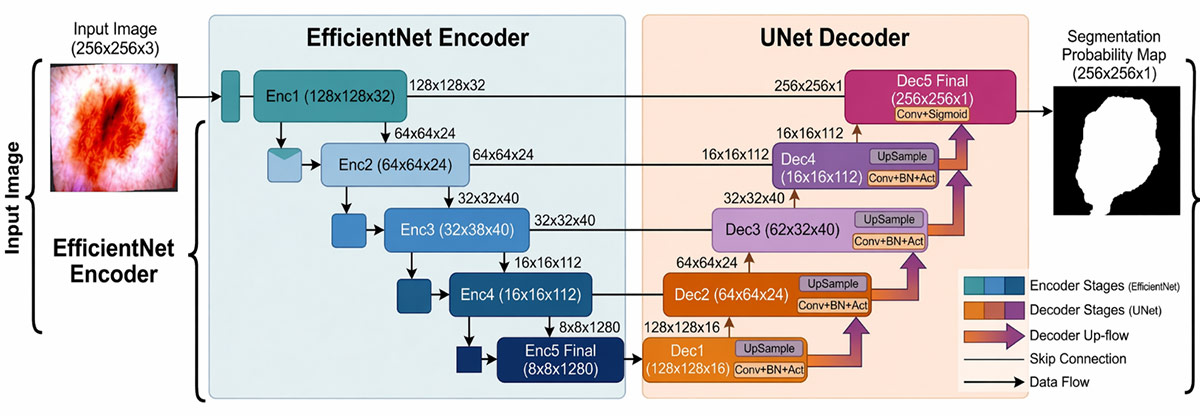
Medical image processing by computers has become an area of growing importance, with researchers shifting their attention to various groundbreaking state-of-the-art models that aim to ease the pressure on doctors. Notwithstanding, image segmentation and feature extraction are critical yet challenging tasks in clinical diagnostics, hindered by issues such as noise and artifacts, limited annotated data, and the need for high computational efficiency. This research focuses on developing an EfficientNet-U-Net model, which aims to improve medical image segmentation for detecting skin lesions utilizing the International Skin Imaging Collaboration Challenge (ISIC) 2018 dataset. The model combines t... More >

Graphical Abstract
Robust Skin Lesion Segmentation Using a Hybrid CNN Model and Compound Scaling
Free Access | Research Article | 19 October 2026
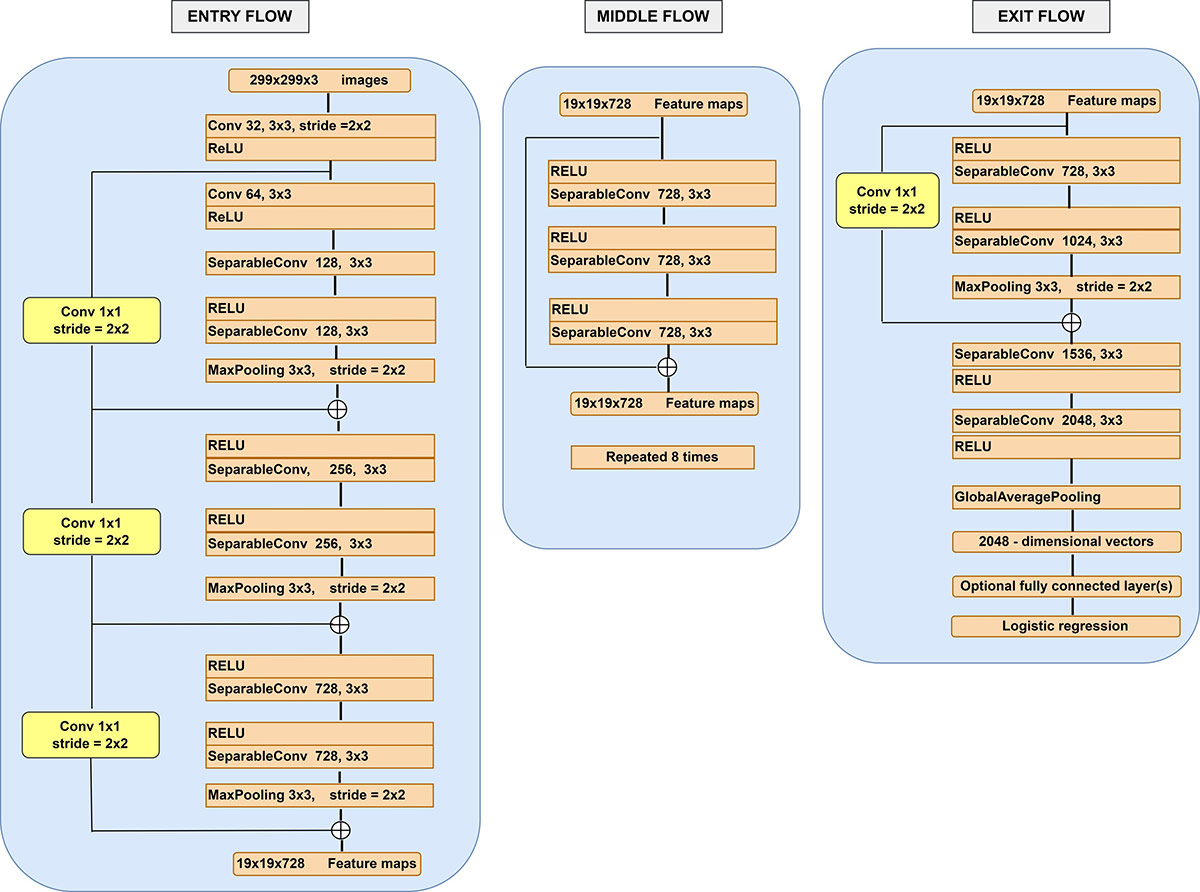
A Comparative Analysis of Various Transfer Learning-Based Deep Learning Frameworks Using Brain Tumor MRI
ICCK Transactions on Machine Intelligence | Volume 2, Issue 4: 200-212, 2026 | DOI: 10.62762/TMI.2025.919091
Abstract
Brain tumors are a critical and challenging health issue worldwide, and they often reduce patient survival if they are not identified at an early stage. This study presents an automatic approach to identify and classify brain tumor magnetic resonance imaging (MRI) scans using several pre-trained deep learning frameworks and compares their relative performance. Four popular frameworks, namely VGG16, Xception, ResNet50, and MobileNetV1, were fine-tuned with a transfer learning technique on 2870 brain tumor MRI training images to predict four classes (glioma, meningioma, pituitary tumor, and no tumor). A quantitative comparison among all applied frameworks was performed using accuracy, precisio... More >

Graphical Abstract
A Comparative Analysis of Various Transfer Learning-Based Deep Learning Frameworks Using Brain Tumor MRI
Free Access | Research Article | 26 August 2026
Context-Aware Large Language Model for Customer Support Chatbots
ICCK Transactions on Machine Intelligence | Volume 2, Issue 4: 190-199, 2026 | DOI: 10.62762/TMI.2026.469770
Abstract
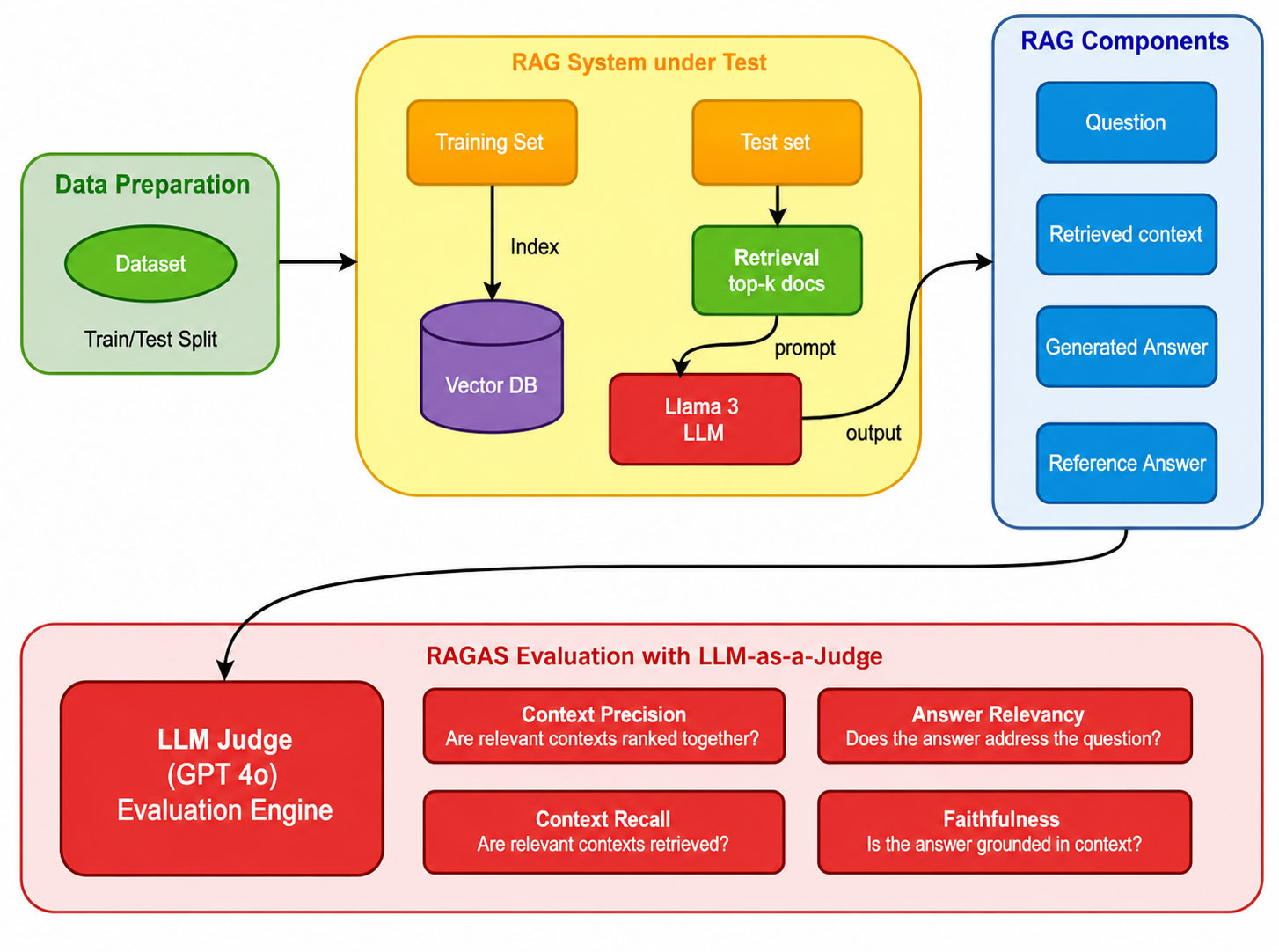
Despite their high conversational fluency, large language models (LLMs) tend to produce responses that are either contrived or factually inaccurate, a phenomenon known as hallucination. This constrains their dependability in areas where accuracy is crucial, like customer service. This study leverages a context-aware chatbot built on a Retrieval-Augmented Generation (RAG) pipeline to solve the problem. The system retrieves semantically relevant text from an external knowledge base by integrating neural information retrieval with LLMs to ensure factual correctness and enhanced contextual relevance. These externally retrieved documents are given as a reference during response generation. The LL... More >

Graphical Abstract
Context-Aware Large Language Model for Customer Support Chatbots